
Why Are There Chickens in Key West? History and Culture
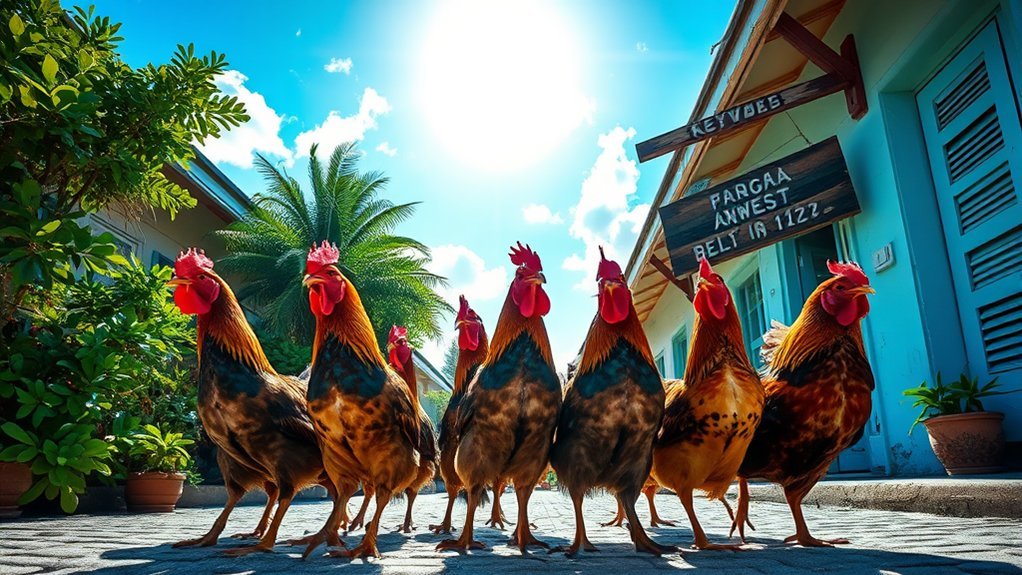
When you walk through the lively streets of Key West, you may hear chickens clucking. These birds are more than just a fun sight; they have a story that goes back to the late 1800s. Their history is tied to the settlers and sailors who came to the island. The presence of these chickens shows the charm and resilience of the Key West community. They are an important part of the island's unique culture. What makes these chickens so significant in Key West?
Key Takeaways
Key West chickens began to appear in the late 19th century. Sailors and settlers brought them to the island for companionship and for practical uses. These chickens now symbolize resilience and unity in the Key West community. They reflect the island's rich cultural history.
Chickens play a role in urban agriculture by providing eggs and helping to control pests. They embody sustainable living practices that many locals support. After Hurricane Irma, the community rallied to help chicken populations affected by the storm.
Chickens are also celebrated in local art and folklore, highlighting their unique charm. They reinforce the island's identity and add to the cultural tapestry of Key West.
The Origins of Key West Chickens
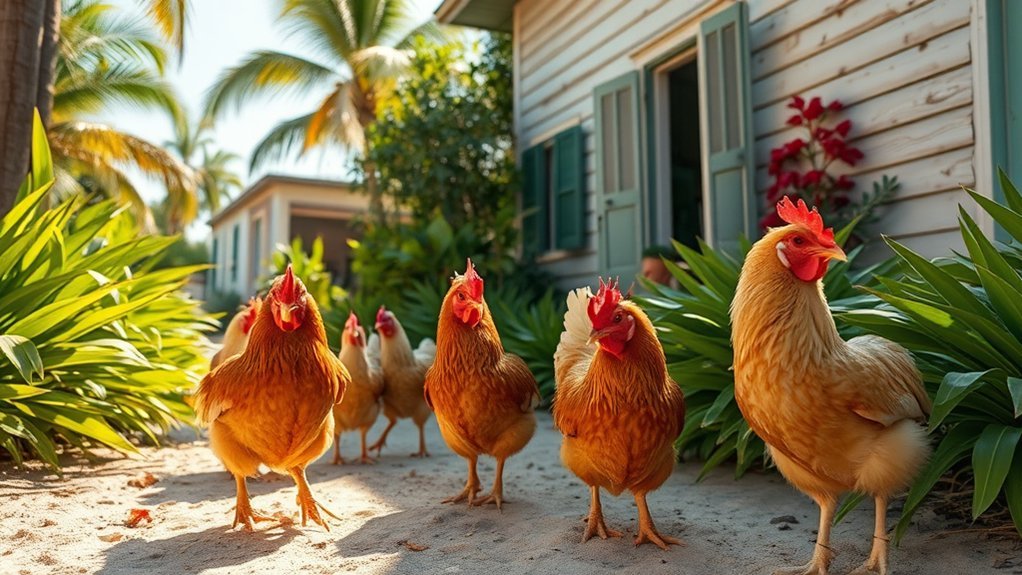
The origins of Key West's chickens can be traced back to the late 19th century when sailors and settlers brought the birds to the island for both practical purposes and companionship.
These colorful fowl, which include several chicken breeds like the game hen and bantam, quickly adapted to the island's laid-back lifestyle.
As you explore Key West, you might recognize the chickens as a living piece of history—symbolizing resilience and unity among the community. Their lively presence reflects the islands' rich cultural tapestry, melding practicality with a deeper historical significance.
You'll find that these chickens aren't just random visitors; they're a thread connecting you to the vibrant past of Key West, ensuring you feel a sense of belonging to this unique tradition.
The Arrival of Chickens in Key West
Despite their whimsical antics today, chickens first arrived in Key West as practical companions and sustenance for the early settlers. As you dig into the historical anecdotes, you'll discover that these resilient fowl played an essential role in the community.
Consider how various chicken breeds thrived in the island's unique environment:
- Layers provided eggs for nourishment.
- Meat birds offered sustenance during tough times.
- Game breeds contributed to local culture and sport.
- The colorful roosters became icons, defining Key West's charm.
These chickens didn't just serve a purpose; they became a symbol of the community's adaptability and spirit.
Their presence, rooted in necessity, has evolved, creating the vibrant atmosphere you experience today.
The Role of Chickens in Island Life

While you stroll through the vibrant streets of Key West, it's impossible not to notice how integral chickens have become to island life.
These feathered residents display fascinating chicken behavior, wandering freely and asserting their presence in parks and backyards alike. Their role transcends mere charm; they've become symbols of home and community.
Locals often embrace urban agriculture, nurturing small gardens where chickens contribute to a sustainable lifestyle by providing eggs and aiding in pest control.
You might find yourself reflecting on the harmony between chickens and islanders, as they both adapt to life in this unique environment.
Their resilience and carefree spirit remind you of the interconnectedness of nature and the everyday lives of those who call Key West home.
Cultural Significance of Chickens
Chickens in Key West don't just fill the streets; they carry significant cultural weight that's woven into the fabric of island life. Their presence serves as a symbolic representation of the unique cultural identity that residents cherish.
You might notice:
- Tradition – Reflecting the island's heritage and connection to its past.
- Community – Encouraging locals to embrace their quirky charm as a collective identity.
- Resilience – Embodying the spirit of survival amidst changing environments.
- Art Expression – Inspiring local artists to incorporate chickens into creative works, celebrating the island's essence.
Through these elements, chickens become more than mere animals; they embody the vibrant, enduring spirit of Key West, deeply resonating with those who call it home.
A Blend of Domestic and Wild

Although they may seem like domesticated pets wandering aimlessly, the chickens of Key West represent a fascinating blend of domestic and wild life.
You'll notice them thriving in this vibrant urban setting, embodying both the spirit and challenges of urban wildlife. Their presence is a quirky reminder of farm integration in a place that balances lush greenery with bustling streets.
Roaming freely, they forage and socialize, acting as symbols of resilience and adaptability. As you engage with these charismatic creatures, you'll discover how they foster a sense of community, bridging the gap between urban dwellers and nature.
Ultimately, these chickens connect you to a unique environment, inviting you to embrace both the wild and the familiar in your everyday life.
The Impact of Hurricane Irma on Chicken Populations
Hurricane Irma struck Key West in September 2017, leaving a significant mark on both the landscape and its avian inhabitants.
The hurricane's impact on the chicken population was noticeable yet complex. You might've seen chickens scattered throughout the community, but many faced challenges. Key factors included:
- Loss of Habitat: Storm damage destroyed nests and shelters.
- Food Scarcity: Debris and flooding made food harder to find.
- Increased Vulnerability: Predators capitalized on weakened populations.
- Community Resilience: Locals banded together, providing food and shelter.
Despite the chaos, the enduring spirit of Key West's chickens shone bright. They continued to roam, embodying both resilience and the community's strength.
This small population reflects the tenacity of life amid adversity.
How Chickens Contribute to the Local Ecosystem
While you might see chickens roaming freely in Key West, their presence plays an essential role in maintaining the local ecosystem.
These birds help promote ecological balance by providing natural pest control. As they peck around, they consume insects, ticks, and pests that might otherwise wreak havoc on local flora and fauna. This not only supports plant health but also reduces the need for chemical pest control, aligning with sustainable practices you might appreciate in your community.
As a resident or visitor, observing chickens contribute to this unique ecosystem fosters a sense of belonging and appreciation for the delicate interplay of life here.
In short, the chickens aren't just a quirky sight; they're critical players in Key West's environmental story.
The Laws Surrounding Chickens in Key West
As residents and visitors enjoy the sights and sounds of chickens in Key West, it's important to understand the unique laws governing their presence.
The city has specific chicken regulations that allow these charming birds to thrive while ensuring the community's welfare.
Here's what you should know:
- Chickens are considered urban livestock, and residents can keep them on their property.
- Limitations include a maximum of four chickens per household.
- Roosters aren't allowed due to noise concerns.
- Owners are responsible for the care and maintenance of their chickens, ensuring they don't become a nuisance.
Understanding these regulations fosters a sense of belonging in the community, allowing everyone to appreciate the quirks of Key West life.
Iconic Chicken Spotting Locations
Exploring Key West wouldn't be complete without encountering its famous chickens roaming freely around the island.
These vibrant birds have become iconic symbols, blending seamlessly into the local culture. One popular spot for chicken enthusiasts is at Mallory Square, where you can witness them mingling with street performers and tourists alike.
Another hotspot is the historic Old Town, where roosters strut along the charming streets, adding an unexpected flair to your exploration. As you sip your coffee at a local café, don't be surprised if a chicken stops by for a visit.
These iconic locations not only showcase the island's unique character but also invite you to revel in the communal spirit of Key West, fostering a sense of belonging among residents and travelers.
The Influence of Chickens on Local Art and Merchandise
Chickens have become more than just a quirky aspect of Key West's charm; they creatively influence the island's art scene and local merchandise.
You'll find vibrant chicken art adorning walls, canvases, and sculptures, capturing the spirit of this unique locale. As you explore, keep an eye out for:
- Local artists' chicken-themed paintings that evoke island life.
- Handcrafted chicken figurines made from local materials.
- Textiles featuring chicken motifs, ideal for home decor or apparel.
- Merchandise souvenirs like keychains and mugs that celebrate Key West's feathery residents.
These pieces not only reflect the island's quirky character but also foster a sense of belonging, connecting you to Key West's vibrant culture.
Embrace the charm of these feathered friends!
Famous Chicken Characters in Key West
Key West isn't just known for its breathtaking sunsets and vibrant nightlife; it also boasts a cast of famous chicken characters that roam freely among locals and visitors alike.
You might encounter the legendary rooster, "Rooster Bob," whose bold antics and charming presence have made him a local icon.
In chicken folklore, stories about these feathered friends often emphasize their quirky behavior and adventurous spirit, weaving them into the fabric of community life.
People love to share tales about the mischief or resilience of these birds, creating a sense of belonging among those who appreciate their unfiltered charm.
When you wander the streets of Key West, keep an eye out for these famed fowls; their stories are as colorful as the town itself.
Future of Chickens in Key West
What lies ahead for the feathered residents of Key West as the island continues to evolve? As urban farming trends gain traction, the embrace of chicken conservation will likely shape their future.
You might see:
- Increased awareness of the role chickens play in local ecosystems.
- Urban farms integrating these birds into their biodiversity strategies.
- Community initiatives promoting sustainable practices that guarantee chickens thrive alongside residents.
- Local businesses supporting chicken-friendly policies, enriching the culture.
As you walk the vibrant streets, you'll witness a growing harmony. The chickens aren't just a quirk of Key West; they symbolize resilience and community.
Frequently Asked Questions
Are Chickens in Key West Aggressive Towards Humans or Pets?
Chickens in Key West are generally not aggressive. They often display curious and bold behavior. To avoid conflicts, follow local rules. This will help you and the chickens coexist peacefully in this lively area. Enjoy your experience with these friendly birds!
How Can I Help Injured or Sick Chickens in Key West?
If you find injured or sick chickens in Key West, contact local chicken rescue groups. They can help you provide the right veterinary care or rehabilitation. These groups ensure the chickens get the necessary attention and love.
Are There Any Festivals Celebrating Chickens in Key West?
Key West hosts fun chicken celebrations. These events include parades and contests. Locals enjoy sharing their special bond with the chickens. The festivities foster a sense of community and bring everyone together.
What Types of Chickens Are Most Common in Key West?
In Key West, you will find Brahma and Bantam chickens. These breeds thrive in the warm climate, showcasing bright feathers and interesting personalities. Their presence adds charm to the local area, making it a delightful place for both residents and visitors.
Can I Raise Chickens as Pets While Visiting Key West?
You can raise chickens as pets while visiting Key West. Make sure to follow local pet regulations. Provide proper care for your chickens by ensuring they have a safe coop and proper food. This will allow you to enjoy your time with them and connect with the environment around you. Raising chickens can be a fun and rewarding experience.

Kashvi is a passionate bird enthusiast and nature lover who has been fascinated by the world of birds for years. With a keen eye for detail and a love for learning, Kashvi is dedicated to sharing her knowledge and insights with fellow bird enthusiasts on Avian Enthusiasts. Through her engaging and informative articles, Kashvi aims to inspire others to join her in exploring the fascinating world of birds and to promote a deeper appreciation for these incredible creatures.


