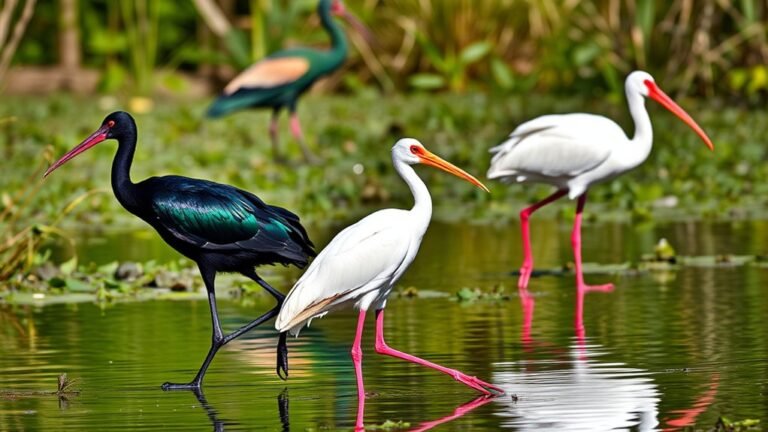
Herons in Texas: Habitat, Behavior, and Conservation
In Texas, herons such as the Great Blue Heron and Green Heron play important roles in wetland ecosystems. They thrive in various habitats, including marshes and urban ponds, showing their ability to adapt. Their feeding methods are interesting. They use sharp eyesight and different techniques to catch food. However, these birds face significant threats that can harm their populations. Recognizing these challenges is crucial for conservation efforts. By understanding these issues, we can find ways to help protect these remarkable species.
Key Takeaways
Texas is home to several heron species, including the Great Blue Heron, Green Heron, and Reddish Egret. These birds thrive in wetland ecosystems. Herons like shallow waters found in marshes and ponds for hunting and breeding. They can also adapt to urban parks.
Herons are effective hunters. They mainly eat fish, amphibians, and crustaceans. They often improve their foraging success by hunting in groups.
During breeding, herons perform elaborate courtship displays. They build nests close to water, and both parents care for the young.
Conservation efforts are important to protect heron habitats. Urban development, pollution, and climate change threaten these habitats. Protecting them helps ensure the future of herons in Texas.
Overview of Heron Species in Texas

While exploring the diverse avian life in Texas, you'll find that herons are some of the most fascinating species to observe. With several heron variations inhabiting the state, identifying them becomes an engaging pursuit for bird enthusiasts.
You'll encounter the Great Blue Heron, known for its striking height and long neck, and the smaller Green Heron, which sports a rich greenish plumage. The Reddish Egret, with its unique hunting dance, adds a splash of excitement to your observations.
Preferred Habitats of Herons
Herons thrive in specific habitats that cater to their hunting and nesting needs.
You'll commonly find them in wetland ecosystems, where shallow waters provide abundant food sources like fish and amphibians. These wetlands can range from sprawling marshes to smaller ponds, offering ideal breeding grounds.
Curiously, herons have adapted to urban environments, flocking to parks and water bodies in cities. Here, they exploit human-altered landscapes for hunting while nesting in trees or man-made structures.
The juxtaposition of nature and urbanization reflects their resilience. By protecting both natural wetlands and urban green spaces, you contribute to a thriving community where herons can flourish.
Embracing these habitats strengthens your connection to the ecosystem and guarantees that herons continue to grace Texas skies.
Feeding Behavior and Diet

Feeding behavior among herons showcases their adaptability and precision as skilled hunters.
You'll notice that herons employ various foraging techniques, adapting their methods based on the environment and available resources. Standing patiently in shallow waters, they rely on their exceptional vision to spot prey, moving with deliberate stealth to guarantee success.
Their prey preferences typically include fish, amphibians, and crustaceans, but they're not strictly limited to these. Seasonal changes can influence what's on the menu, prompting herons to diversify their diets.
You might find them hunting in groups at times, which enhances their foraging efficiency. Observing these elegant birds reveals not only their hunting prowess but also their essential role in the delicate balance of Texas ecosystems.
Breeding and Nesting Habits
Understanding the breeding and nesting habits of herons reveals the complexity of their life cycle and the strategies they employ to raise their young. During courtship displays, herons engage in intricate rituals, including posturing and vocalizations, to attract mates.
Once paired, they initiate nest construction in trees or tall shrubs, favoring sites near water sources for ideal food access. The nests, built from twigs, grasses, and reeds, are often large and platform-like, providing stability for their young.
Female herons typically lay two to six eggs, which both parents incubate. As the chicks hatch, they're nurtured through regurgitated food, showcasing the dedicated parenting that characterizes these birds.
Understanding these behaviors fosters a deeper appreciation for herons within our shared ecosystems.
Migratory Patterns and Seasonal Presence

While various factors influence migratory patterns, herons exhibit a remarkable adaptability that allows them to thrive in diverse environments throughout the seasons.
You may notice how herons respond to seasonal shifts, often following migratory routes that lead them to more favorable habitats.
They're not strictly tied to one area, and their movements can vary yearly based on food availability and weather conditions.
Key aspects of their migratory behavior include:
- Flexible routes adapting to weather
- Seasonal nesting choices
- Foraging strategies during migration
- Social behaviors within flocks
Threats to Heron Populations
Herons face several significant threats that impact their populations in Texas and beyond. One of the most pressing issues is habitat destruction, as urban development and agriculture encroach on their nesting areas. This loss of habitat leads to a decline in suitable locations for reproduction and feeding.
Additionally, pollution effects, such as contaminated water sources, can harm herons directly or through a reduction in their prey availability. Invasive species further complicate their survival, as they compete for resources and disrupt local ecosystems.
Ultimately, climate change is altering weather patterns, affecting migratory routes and breeding cycles. Addressing these threats is vital, as these elegant birds play an important role in maintaining ecological balance and connecting us to our natural heritage.
Conservation Efforts and Initiatives
As habitat loss accelerates and pollution increases, conservation efforts for herons in Texas have become more critical than ever. You can play an integral role in these initiatives by engaging in habitat restoration and community involvement.
- Participate in local habitat restoration projects
- Advocate for policies protecting wetland areas
- Join citizen science programs for monitoring heron populations
- Educate your community about heron conservation
These efforts not only help herons thrive but also foster a sense of belonging among residents dedicated to preserving their environment.
How to Observe and Appreciate Herons in Texas
Ever wondered how to spot these majestic birds in their natural habitats? Start by visiting marshes, wetlands, and coastal areas in Texas, especially during dawn and dusk when herons are most active.
Keep your distance; this guarantees you don't disturb their natural behavior. For heron watching, invest in binoculars to see details like feather patterns and hunting techniques. If you're into photography, use a telephoto lens for stunning close-ups without intruding.
Patience is key—waiting quietly often yields the best results as these birds engage in their graceful movements.
Additionally, consider joining local birdwatching groups, which can enhance your experiences and connect you with fellow wildlife enthusiasts, enriching your appreciation for these incredible creatures in the Texan landscape.
Frequently Asked Questions
How Can I Identify Different Heron Species in Texas?
To identify heron species in Texas, focus on their color patterns and feeding behaviors. Observe the differences in their plumage colors, sizes, and hunting methods. Knowing these characteristics will help you tell the species apart and appreciate their distinct actions. For a better experience, consider visiting local wetlands and parks where herons are commonly found. Enjoy watching these beautiful birds as they hunt and interact in their habitats.
Are Herons Aggressive Towards Other Bird Species?
Heron aggression differs by species and situation. They may act aggressively when defending their area from other birds. Observing these interactions can help you understand the social behaviors of herons and their relationships with other birds in shared spaces.
What Is the Lifespan of Herons in the Wild?
Herons in the wild usually live for 15 to 25 years. Their lifespan can be affected by predators and their breeding habits. To survive, herons use different strategies when faced with threats.
How Do Herons Adapt to Urban Environments?
Herons adapt to urban environments by altering their nesting habits. They often select rooftops or parks for nesting sites. In cities, they find food by foraging in ponds and lakes. This ability helps them thrive in areas with human activity. Herons demonstrate resilience and flexibility, allowing them to succeed in diverse urban settings.
Can Herons Be Kept as Pets in Texas?
Keeping herons as pets in Texas is challenging. These birds have specific care needs and legal restrictions. Their wild nature and unique habitat requirements make them unsuitable for domestic life. If you're interested in herons, it's best to admire them in their natural environment.

Kashvi is a passionate bird enthusiast and nature lover who has been fascinated by the world of birds for years. With a keen eye for detail and a love for learning, Kashvi is dedicated to sharing her knowledge and insights with fellow bird enthusiasts on Avian Enthusiasts. Through her engaging and informative articles, Kashvi aims to inspire others to join her in exploring the fascinating world of birds and to promote a deeper appreciation for these incredible creatures.