Types of Cranes: A Global Guide to These Majestic Birds
Cranes are fascinating birds, known for their diversity and unique traits. Each species, from the Whooping Crane to the Black Crowned Crane, interacts with its environment in specific ways. Observing how they migrate and socialize helps us understand their survival strategies. However, these beautiful creatures face many challenges in a changing world.
Key Takeaways
- There are about 15 crane species that show different migratory paths and habitat choices, such as marshes and grasslands.
- The Whooping Crane and Sandhill Crane stand out for their striking feathers and their ability to migrate up to 3,000 miles.
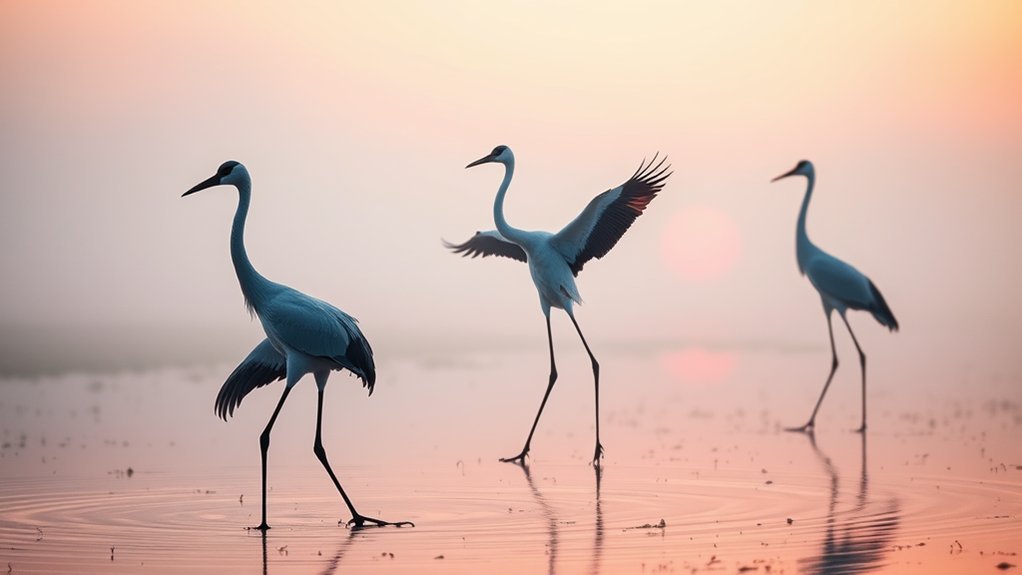
- Cranes perform intricate courtship dances and use calls to build social ties and attract partners.
- Protecting and restoring habitats is crucial for conserving crane species, as they face threats from human activities.
- Engaging communities and increasing public awareness is vital for the global survival of crane species.
Overview of Crane Species
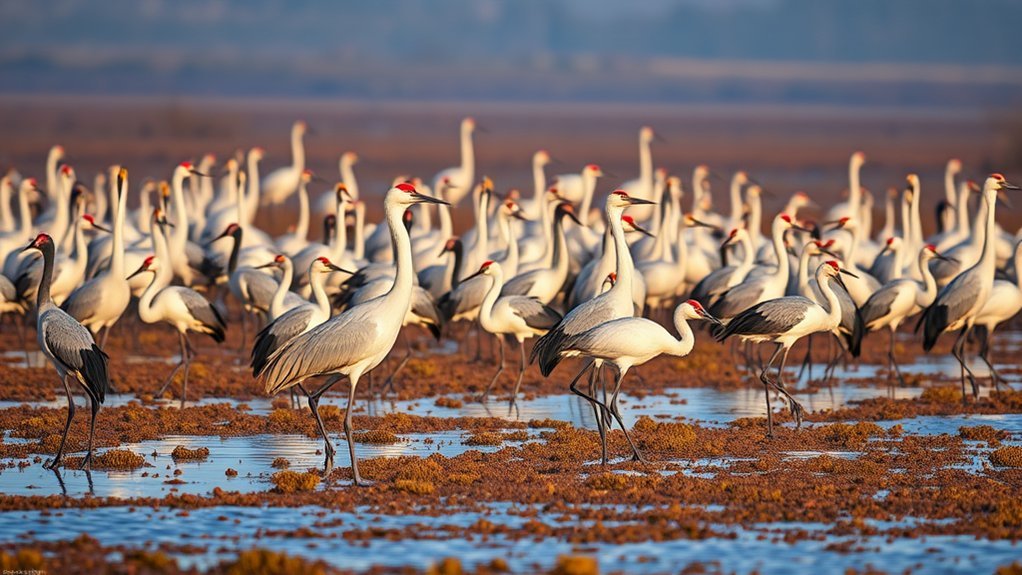
Cranes, with around 15 distinct species, captivate bird watchers and naturalists alike due to their stunning plumage and intricate behaviors.
As you observe these majestic creatures, you'll notice their migratory patterns, which vary considerably among species, often spanning thousands of miles. Some, like the Sandhill Crane, have established routes that lead them to wetlands for breeding, while others prefer grasslands and agricultural areas.
Their habitat preferences reflect their adaptive nature; they thrive in diverse environments ranging from marshes to uplands.
The Whooping Crane
The Whooping Crane stands out as one of the most iconic species of the crane family, easily recognized by its striking white plumage and long, slender legs. You may find these majestic birds in wetlands, prairies, and estuaries, which make up their significant whooping crane habitat.
Sadly, their populations have dwindled, prompting vital whooping crane conservation efforts to guarantee their survival. Here are three fascinating aspects of this magnificent species:
- Their courtship dance is a spectacular display of grace and coordination.
- They can migrate up to 3,000 miles between breeding and wintering grounds.
- Their vocalizations resemble loud whoops, which is how they earned their name.
The Sandhill Crane
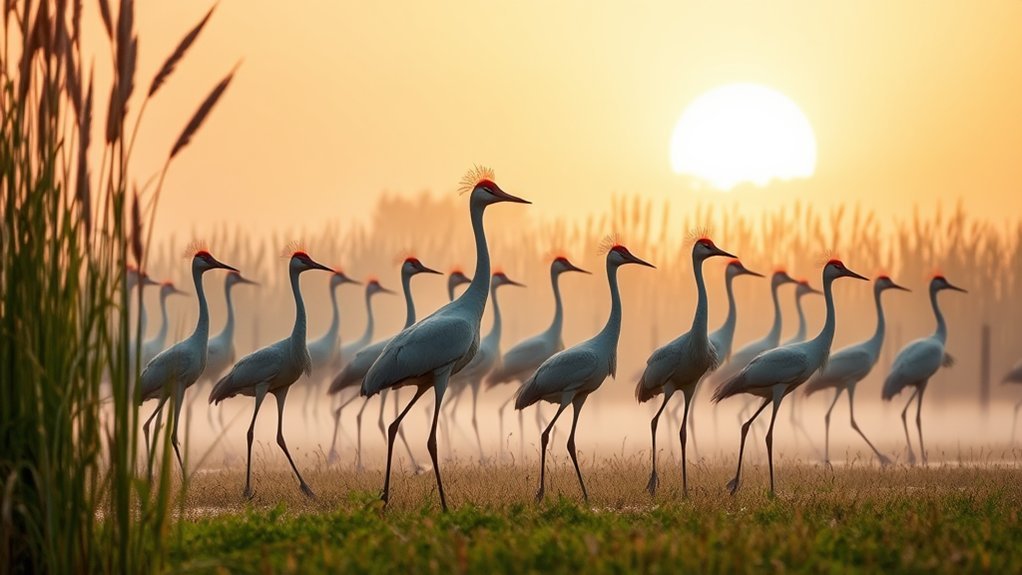
Among the various species of cranes, Sandhill Cranes are particularly notable for their adaptability and impressive migratory patterns.
You'll find them thriving in diverse sandhill habitats, from wetlands to grasslands. These habitats provide essential resources, including food and nesting sites.
As you observe their graceful movements, you'll notice how they form strong family bonds, often traveling in large groups during sandhill migration. Their journey can span thousands of miles, showcasing their remarkable navigation skills.
During migration, you might see them engage in intricate courtship dances, reinforcing social connections.
Understanding the dynamics of their habitat and migration patterns fosters a deeper appreciation for these majestic birds, revealing the intricacies of their life cycle and the importance of preserving their environments.
The Common Crane
While Sandhill Cranes exemplify remarkable adaptability, the Common Crane showcases its own unique traits that deserve attention.
These elegant birds thrive in various environments, from wetlands to grasslands, creating essential common crane habitats that support their lifestyle. As they commence on their impressive common crane migration, which spans thousands of miles, you can witness their breathtaking journey.
Here are three fascinating aspects to reflect on:
- Vocal Communication: Their distinctive calls strengthen family bonds and signal their presence to potential mates.
- Social Behavior: Common Cranes often gather in large groups, providing a sense of community.
- Nesting Habits: They construct nests in shallow water, enhancing protection against predators.
These elements make the Common Crane particularly intriguing to observe in the wild.
The Red-crowned Crane
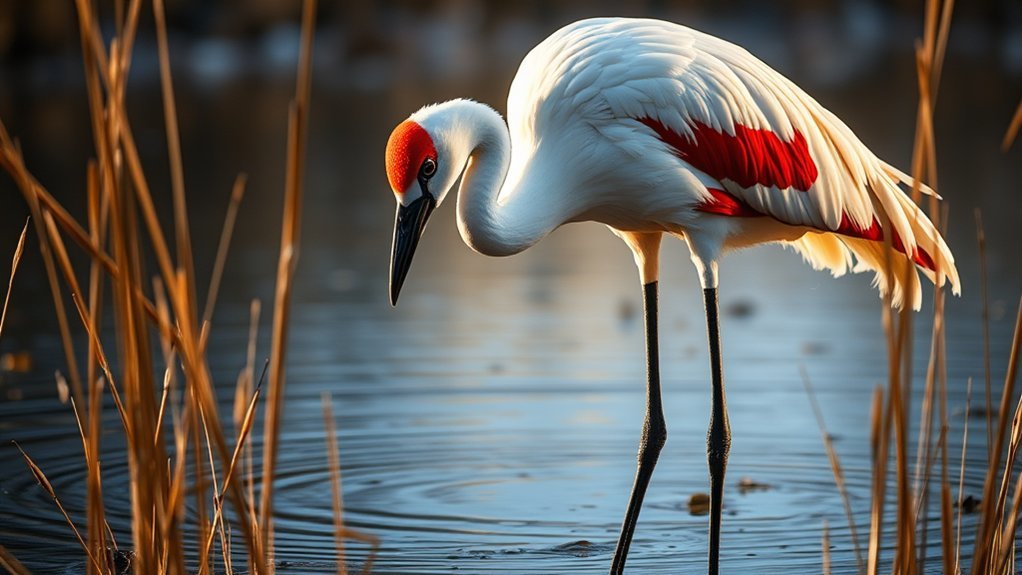
Known for their striking appearance, Red-crowned Cranes capture attention with their vivid plumage and iconic red crown, which adds to their allure.
These cranes inhabit wetlands, grasslands, and shallow marshes, showcasing a preference for a rich red-crowned habitat. This delicate ecosystem not only supports their diet of aquatic plants and small animals but also highlights the importance of preserving these environments for their survival.
Culturally, Red-crowned Cranes hold significant symbolism in various East Asian traditions, representing longevity and fidelity.
This deep connection illustrates how you can foster a sense of belonging, embracing the beauty and fragility of their existence. By understanding their role within broader ecosystems and cultural narratives, you become part of a shared heritage that values these majestic birds.
The Black Crowned Crane
The Black Crowned Crane stands out with its striking black-and-white plumage and a distinctive golden crest, creating an elegant silhouette against the horizon.
Found primarily in the wetlands and grasslands of Africa, this bird thrives in a diverse black crowned habitat, which includes savannas and marshes. As you observe these cranes, you'll notice their intricate social behaviors and graceful movements.
Here are three fascinating aspects of the Black Crowned Crane:
- Diet: They primarily feast on seeds, insects, and small vertebrates, showcasing their foraging skills.
- Mating Rituals: Their elaborate dances during courtship are an enchanting display of connection.
- Adaptability: They navigate different environments, showcasing resilience and adaptability as they thrive in changing conditions.
The Grey Crowned Crane
Strikingly beautiful, the Grey Crowned Crane captures attention with its elegant posture and elaborate plumes. You'll notice its regal golden crown that fans out majestically, making it one of the most stunning members of the crane family.
These birds favor wetland habitats, often found in grasslands and marshes where they can forage for food. Their habitat preferences revolve around water sources, as they thrive in areas rich in invertebrates and plants.
Watching a pair perform their sophisticated courtship dance is nothing short of mesmerizing; they communicate through rhythmic, complex movements.
As you explore their world, you'll appreciate these cranes not just for their beauty, but for their role in the ecosystem, bringing connectivity and harmony to their environments.
The Demoiselle Crane
While observing the Demoiselle Crane, you may find yourself captivated by its slender build and graceful movements. This elegant bird thrives in a variety of demoiselle habitats, often favoring open grasslands and wetlands during breeding season.
You'll be fascinated by its annual migration, as these cranes journey thousands of miles between their breeding and wintering grounds.
Here are three remarkable aspects of the Demoiselle Crane:
- Mating Rituals: Their dance-like courtship displays are a sight to behold, involving leaps and intricate movements.
- Nesting: They construct nests hidden amongst vegetation, providing safety for their young.
- Social Structure: Demoiselles often form strong familial bonds, showcasing their deep sense of community.
Engaging with these creatures enriches your understanding of nature's wonders.
The Brolga Crane
Brolga Cranes, known for their impressive stature and enchanting dance, are a true marvel of the Australian wetlands.
You'll often spot these elegant birds in the shallow waters of marshes and grasslands, where their Brolga habitat provides ample food and space for their dramatic courtship rituals.
During breeding season, their intricate dances and synchronized movements capture the attention of onlookers, creating a sense of connection to the natural world.
As winter approaches, Brolgas commence seasonal Brolga migration, journeying to warmer areas to escape colder temperatures.
This migratory behavior showcases their adaptability and resilience, allowing them to thrive in various environments.
Observing these birds in action fosters a deep appreciation for the delicate balance of our ecosystems and the beauty of wildlife.
The Siberian Crane
The Siberian Crane, a symbol of grace and endurance, captivates observers with its stunning white plumage and slender figure.
You'll find it embodies resilience, particularly during its remarkable migration. Understanding its Siberian migration patterns reveals not just its journey, but its connection to diverse ecosystems.
Here are three key aspects that define the Siberian Crane's existence:
- Habitat: Preferring wetlands and shallow lakes, these cranes thrive in open landscapes.
- Conservation: Active Siberian habitat conservation efforts are vital for protecting their dwindling numbers.
- Culture: Revered in various cultures, the Siberian Crane represents happiness and longevity.
Observing this elegant bird reminds you of the importance of environmental stewardship and fostering a world where such majestic creatures can flourish.
The White-naped Crane
With its striking white neck and distinctive red crown, the White-naped Crane stands as a symbol of both beauty and vulnerability in the avian world.
You'll find these cranes primarily in their white-naped habitat, which includes wetlands, grasslands, and agricultural fields across Mongolia, China, and parts of Japan. Their habitat is vital not just for foraging but also for their elaborate mating rituals.
During the white-naped mating seasons, they engage in synchronized dances and calls that strengthen pair bonds. Observing these birds reveals their social structure and devotion to their territory, fostering a deep sense of connection among those who watch.
Protecting their habitat is essential, ensuring that future generations can experience the elegance of the White-naped Crane.
Crane Behavior and Courtship Dances
Observing the White-naped Crane's expressive courtship rituals reveals much about the intricate social dynamics of these magnificent birds. Their courtship displays aren't just a spectacle; they showcase emotional connectivity and bonding.
You'll notice how both partners engage in synchronized dancing and trumpeting, a mesmerizing performance that strengthens their pair bond.
- Vocalizations – Mated pairs communicate through a series of calls, marking their presence.
- Dancing – Their graceful movements convey courtship intent while demonstrating physical readiness.
- Territorial Behavior – These cranes display assertiveness during mating season, defending their territory from intruders.
Together, these behaviors illuminate the complexities of crane relationships, underscoring the importance of social interaction in their lives.
Conservation Efforts for Cranes
As human activities increasingly threaten crane habitats, dedicated conservation efforts have become essential in ensuring these majestic birds' survival.
These initiatives focus on habitat preservation, restoring wetlands and grasslands vital for cranes' breeding and feeding. By collaborating with local communities, conservationists foster a sense of stewardship, empowering you and others to play an active role in protecting these environments.
Awareness campaigns raise public understanding of the challenges cranes face, engaging everyone in the mission. You might see initiatives that promote sustainable land-use practices, preventing habitat destruction.
Participation in citizen science projects can deepen your connection to cranes and their ecosystems. Together, small efforts can lead to significant impacts, showcasing the collective responsibility toward preserving these incredible creatures for future generations.
Frequently Asked Questions
What Is the Typical Lifespan of Cranes in the Wild?
Cranes in the wild usually live between 20 and 25 years. Their lifespan can be affected by predators and difficult habitats. These challenges test their ability to survive and adapt. Cranes show impressive strength and resilience in facing these threats.
How Do Cranes Communicate With Each Other?
Cranes communicate with each other using different sounds. These vocalizations express their needs and feelings. They also engage in dances and calls. This behavior helps them strengthen their social bonds and mark their territory. Through these actions, cranes show their connection with one another.
What Do Cranes Eat in Their Natural Habitat?
Cranes eat grains, seeds, and small animals. They adapt well to different environments, which helps them find food successfully. Observing cranes can be enjoyable, as they display interesting feeding behaviors while maintaining the balance of their habitats.
Are Cranes Monogamous or Polygamous?
Cranes are generally monogamous. They form strong pairs through courtship rituals. These rituals include dancing and synchronized movements. Such activities help strengthen their bond and promote teamwork in raising their young. Cranes stick together throughout the breeding season, ensuring effective parenting.
How Do Cranes Migrate and Navigate During Travel?
Cranes migrate with specific patterns. They use landmarks and the Earth's magnetic field to find their way. Their journey shows coordination and unity as they select the best routes. This behavior helps them travel efficiently and safely.

Kashvi is a passionate bird enthusiast and nature lover who has been fascinated by the world of birds for years. With a keen eye for detail and a love for learning, Kashvi is dedicated to sharing her knowledge and insights with fellow bird enthusiasts on Avian Enthusiasts. Through her engaging and informative articles, Kashvi aims to inspire others to join her in exploring the fascinating world of birds and to promote a deeper appreciation for these incredible creatures.