Doves in Arkansas: Identification and Cultural Significance
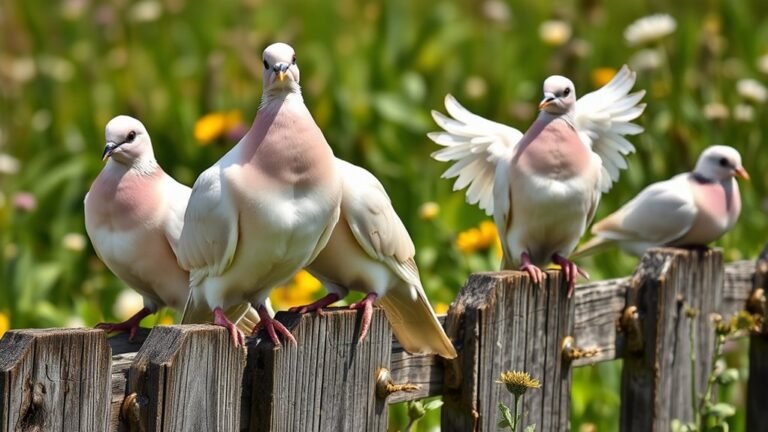
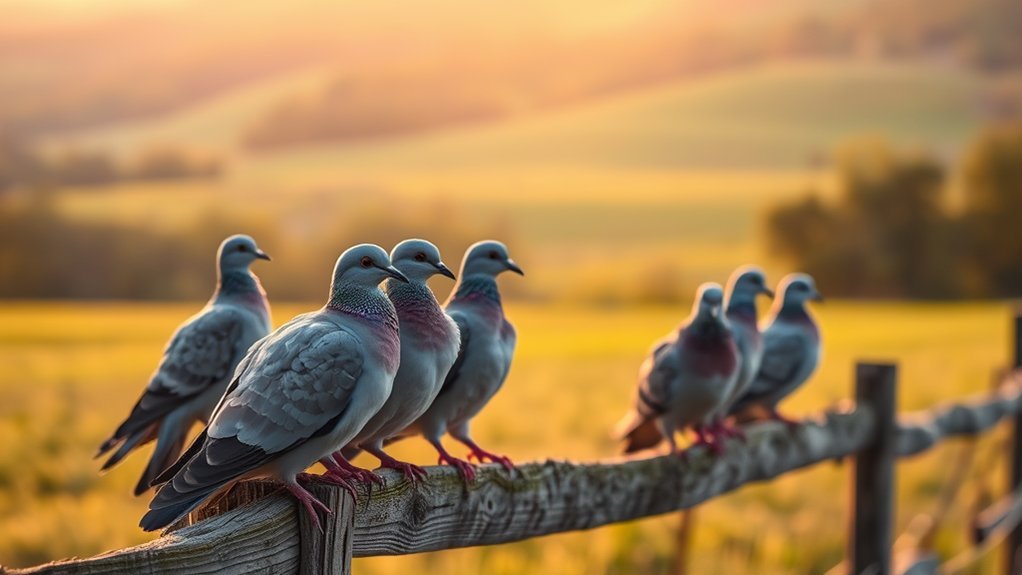
Doves are commonly seen in Arkansas. Two species, mourning doves and Eurasian collared doves, have distinct features that make them easy to identify. These birds play important roles in the local ecosystem and culture. They symbolize peace and community in many regions. Recognizing their significance may change how you appreciate these birds in your surroundings. What do you think about their importance in your area?
Key Takeaways
- In Arkansas, there are two main dove species: the mourning dove and the Eurasian collared dove. They have different physical traits and sounds.
- Mourning doves are slender with gray-brown feathers, long tails, and soft cooing sounds. Eurasian collared doves are pale gray and have a distinct black crescent on their necks.
- Doves help the local ecosystem by eating seeds and fruits, which promotes biodiversity.
- Culturally, doves represent peace and love in Arkansas. They appear in local art, stories, and events that focus on community and unity.
- Conservation efforts work to protect doves by preserving their habitats, regulating hunting, and raising community awareness.
Overview of Dove Species in Arkansas
Doves are important to the ecosystems in Arkansas. The two main species are the mourning dove and the white-winged dove.
These birds migrate during early fall and late spring to find warmer climates, which they need for survival. Doves search for seeds and grains in open areas, helping to spread seeds and support ecosystem health. Their presence boosts local biodiversity and aids other wildlife.
Learning about dove species in Arkansas enhances your understanding of nature's balance.
Identifying Mourning Doves
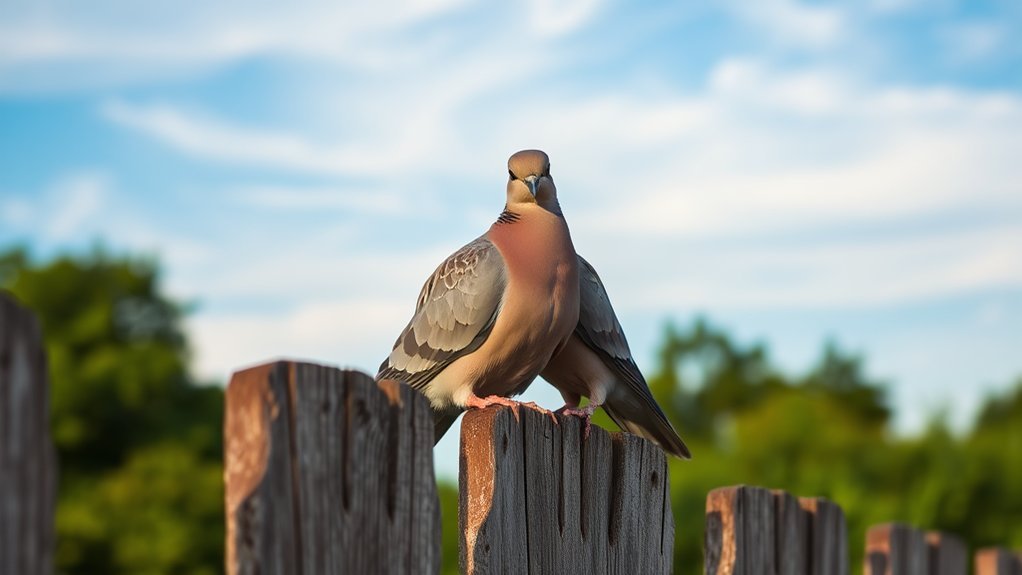
Mourning doves have slender bodies and make gentle cooing sounds. To identify them, look for their gray-brown feathers with small black spots on the wings and a long, pointed tail.
Their colors help them blend into their surroundings, making them a challenge to see.
Pay attention to their sounds. The mourning dove's coos are soft and soothing, but they can also make a sharp whistling noise when startled.
By noticing these features, you'll gain a better understanding of mourning doves and their place in Arkansas's nature.
Watching these birds connects you with others who enjoy observing wildlife.
Identifying Eurasian Collared Doves
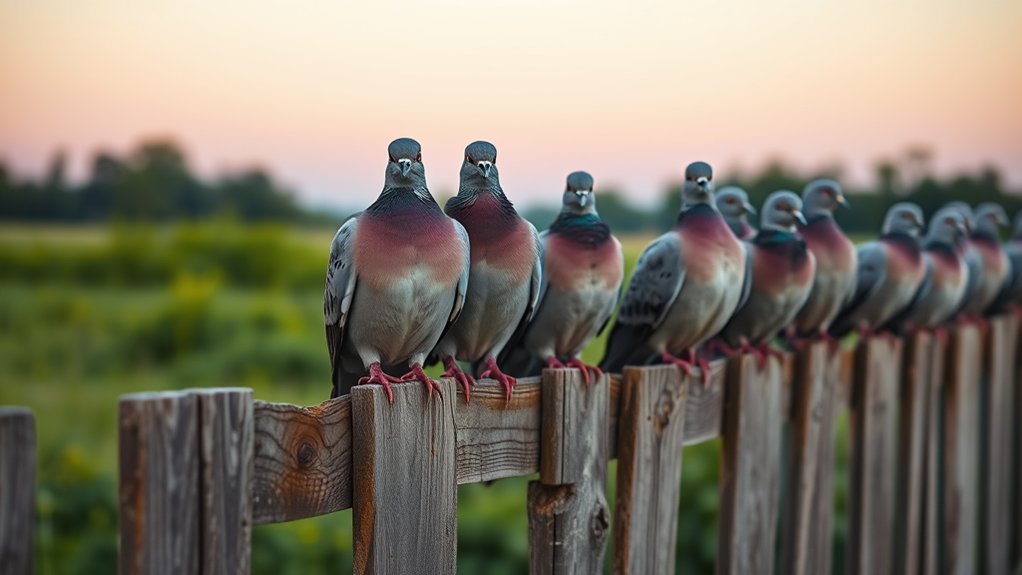
How can you identify Eurasian collared doves? Here are simple and clear features to look for:
- Color: Eurasian collared doves have a pale gray body and a slightly darker head.
- Collar: Notice the black crescent-shaped line around the back of their neck.
- Tail: Their tail is long and squared off at the end, with white tips.
These characteristics make it easy to recognize Eurasian collared doves among other dove species.
Enjoy observing these unique birds!
Habitats and Behavior of Doves
Doves live in many environments. They prefer urban areas, farmlands, and parks where they can find food and places to nest.
Doves show adaptability in their nesting. They often build nests in trees, shrubs, or on building ledges. This behavior helps them thrive in both natural and human-influenced areas.
Doves mainly eat seeds and fruits. They search for food on the ground or at bird feeders.
They use a gentle pecking motion to eat, which helps them process their food efficiently. By learning about doves, you can enjoy watching them in your area and appreciate their role in the local ecosystem.
Cultural Significance of Doves in Arkansas
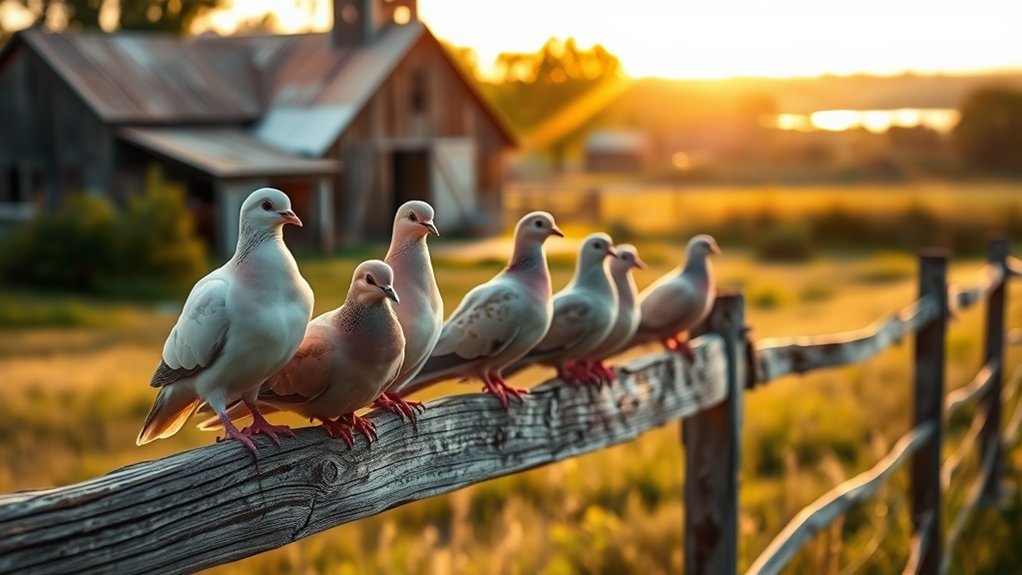
Doves are important symbols in Arkansas, representing peace and love in different communities. They've significant spiritual meanings and bring people together. You can see dove symbolism in local art, literature, and ceremonies, which promote harmony.
- Dove Festivals: These events celebrate community and unity.
- Artistic Expressions: Local artists create murals and crafts featuring doves.
- Religious Ceremonies: Doves are part of rituals that signify purity and hope.
Conservation Efforts for Doves in the Region
As awareness of environmental conservation increases, efforts to protect doves in Arkansas are growing. Local organizations and state agencies work together to preserve dove habitats. Healthy ecosystems help support dove populations.
Initiatives include restoring native plants and creating safe nesting sites. These actions are vital for dove survival.
Hunting regulations also play a key role. They help manage dove populations sustainably. These regulations ensure hunting aligns with conservation goals. This prevents overhunting and allows responsible hunters to participate in the sport.
Public awareness of these rules is essential for building a community that values and protects doves.
You can contribute to these efforts. Participate in conservation programs or advocate for regulations. Together, we can help preserve Arkansas's dove populations for future generations.
Frequently Asked Questions
What Do Doves Eat and How Do They Find Food?
Doves eat seeds and prefer various grains. They forage by pecking at the ground. Doves often gather in flocks, which helps them find food while enjoying social interactions.
Are Doves Common Backyard Birds in Arkansas?
Doves are common backyard birds in Arkansas. They are gentle and add beauty to outdoor spaces. You can attract doves by providing proper food and creating suitable nesting areas. Enjoy watching these lovely birds in your yard.
How Can I Attract Doves to My Garden?
To attract doves to your garden, place dove feeders filled with seeds near native plants. These plants provide cover and food, creating a friendly space for doves. Regularly refill the feeders to keep the doves coming back. You can also add water sources, like bird baths, to make your garden even more appealing. Enjoy watching these gentle birds visit your well-planned space!
What Predators Pose a Threat to Doves in Arkansas?
Hawks and raccoons threaten doves in Arkansas. Hawks hunt doves from the sky, using their sharp eyesight and swift flight. Raccoons find doves on the ground, taking advantage of their nest sites. These predators can decrease dove populations significantly. Understanding how these animals operate can help create safer areas for doves to thrive.
Do Doves Migrate, and if So, When?
Yes, doves migrate. They typically move in late summer and early fall. Understanding their migration patterns can enhance your appreciation for nature and wildlife. Watching doves during this time can be enjoyable and rewarding.

Kashvi is a passionate bird enthusiast and nature lover who has been fascinated by the world of birds for years. With a keen eye for detail and a love for learning, Kashvi is dedicated to sharing her knowledge and insights with fellow bird enthusiasts on Avian Enthusiasts. Through her engaging and informative articles, Kashvi aims to inspire others to join her in exploring the fascinating world of birds and to promote a deeper appreciation for these incredible creatures.