
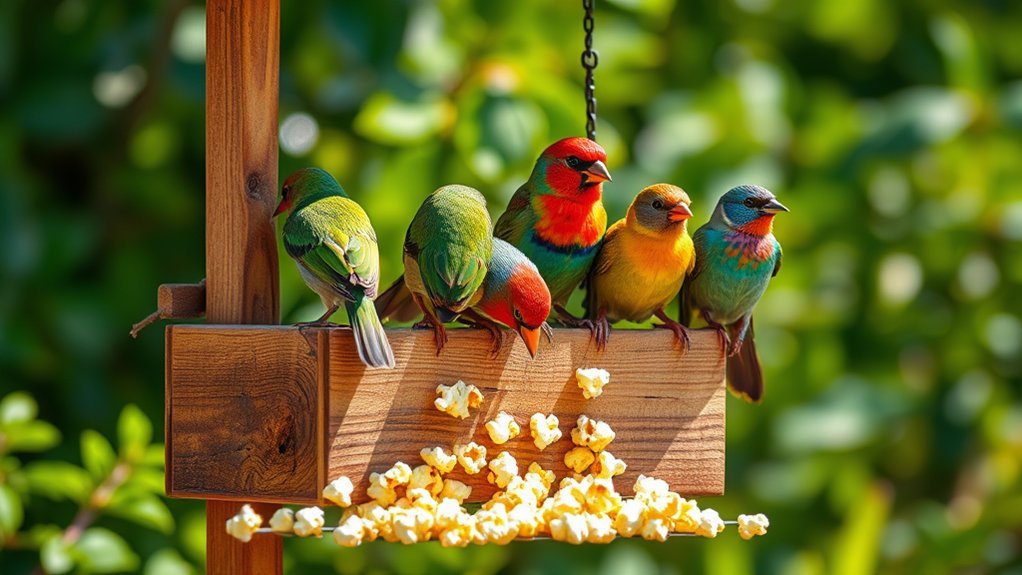
Can Birds Eat Popcorn? Safe Feeding Practices Explained
When you think about treats for your bird, popcorn may come to mind. However, it is important to know how to serve it safely. Not all popcorn is safe for birds, and some types can be harmful. Which varieties are safe, and how should you prepare them? Let's look at how to add popcorn to your bird's diet safely.
First, only offer plain, air-popped popcorn without salt, butter, or oil. These additives can be harmful to birds. Always check that the popcorn is fully popped and free of unpopped kernels, as these can pose choking hazards.
Limit popcorn to an occasional treat. It should not replace your bird's regular diet, which should consist mainly of seeds, fruits, and vegetables.
In summary, plain, air-popped popcorn can be a fun and safe treat for your bird when offered correctly. Always prioritize your bird's health by avoiding harmful additives and keeping treats moderate. Enjoy sharing this snack with your feathered friend!
Key Takeaways
Birds can eat unbuttered, air-popped popcorn as a treat. However, it should not replace their regular diet. Popcorn is low in essential nutrients and has high starch levels, which can upset a bird's digestion.
Avoid flavored or seasoned popcorn, as these can contain harmful ingredients for birds. Pay attention to portion sizes to keep their diet balanced. Always watch your bird's health. If you notice any strange behavior or digestive problems after feeding popcorn, contact an avian veterinarian.
Offering popcorn occasionally can be fun, but remember, it's only a snack, not a meal!
Understanding Birds' Dietary Needs
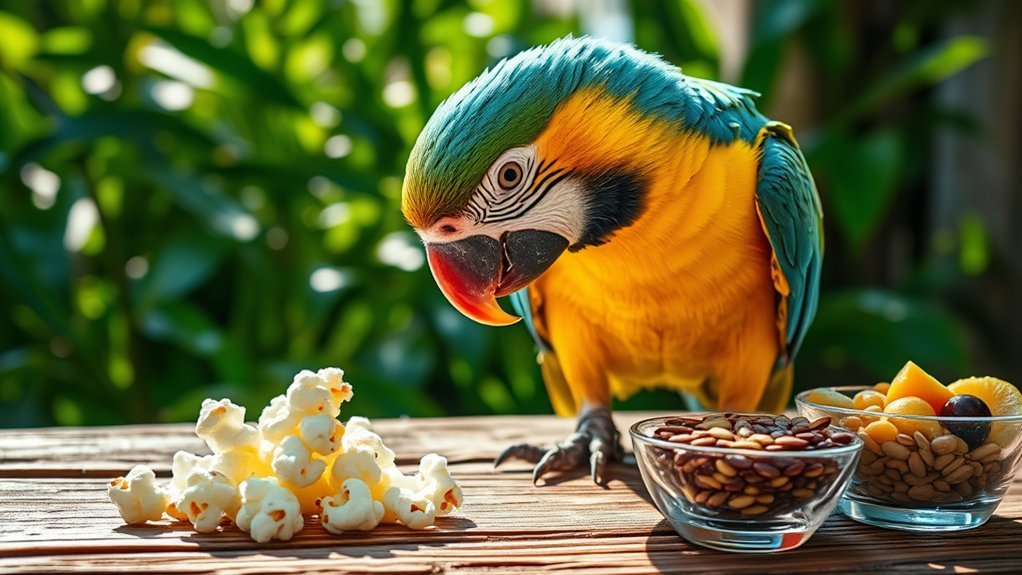
Birds need a specific diet to stay healthy. Their needs differ by species but generally include carbohydrates, proteins, fats, vitamins, and minerals.
A proper diet for birds includes seeds, fruits, vegetables, and high-quality pellets meant for their type. For example, parrots often need more protein, while finches prefer seeds and grains.
Fresh water is also essential for all birds. By meeting these nutritional needs, you can help your birds stay active and healthy.
Focusing on their specific diet will strengthen your bond with these wonderful animals.
Nutritional Value of Popcorn
Popcorn can be a fun treat for birds, but it doesn't provide all the nutrients they need. Here are some important points to consider:
- Popcorn has low protein, which is important for bird growth.
- It contains few vitamins and minerals, missing essential nutrients.
- The high starch content can cause digestive problems if eaten too much.
- Popcorn has low fiber, which may affect digestion and regularity.
- Compared to seeds and fruits, it has limited antioxidant properties.
If you want to add popcorn to your bird's diet, make sure to incorporate other nutrient-rich foods to keep them healthy and happy.
Is Popcorn Safe for Birds?
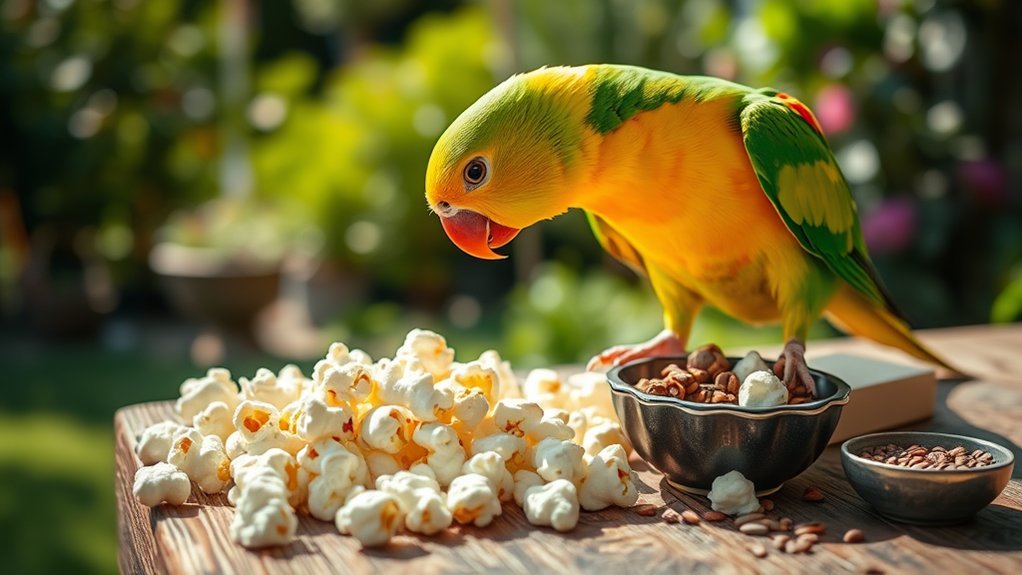
Popcorn can be a fun treat for your bird, but it's essential to choose the right type. Unbuttered, air-popped popcorn is safe and enjoyed by many birds. This simple snack can be given occasionally without adding extra calories or unhealthy ingredients to their diet.
Keep portions small to avoid disrupting their balanced diet.
Avoid flavored or seasoned popcorn, as these can contain harmful substances. By making careful choices, you can ensure that popcorn is a safe and enjoyable option for your bird.
Types of Popcorn to Avoid
Don't share popcorn with your bird. Some types of popcorn can harm birds.
Avoid the following:
- Butter popcorn: It has too much fat and salt for birds.
- Cheese popcorn: Many birds can't digest dairy well.
- Caramel popcorn: This is high in sugar and can cause obesity.
- Flavored popcorn: Spices and additives can upset your bird's stomach.
- Microwave popcorn with additives: It often has unhealthy oils and preservatives.
Stick to bird-safe snacks for a healthy treat!
Preparing Popcorn for Your Birds
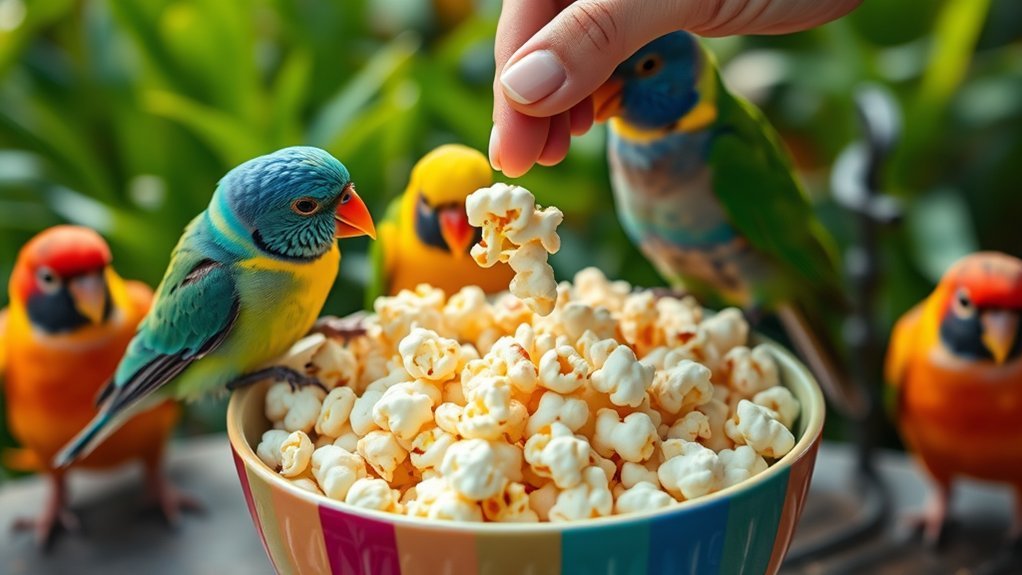
Prepare popcorn for your birds safely. Start with plain, air-popped popcorn.
Don't add salt or butter. Use an air popper or a stovetop with little oil. Ensure the kernels don't burn.
Let the popcorn cool completely before serving. Hot kernels can hurt their beaks. You may want to break the popcorn into smaller pieces for easier eating.
These steps help keep your birds healthy and create a positive feeding experience.
Enjoy bonding with your birds over this nutritious treat!
Portion Sizes and Frequency of Feeding
After you prepare popcorn for your birds, decide on the right portion sizes and how often to feed them. Portion control helps ensure your birds get a proper serving without overeating.
Set a regular feeding schedule for their health. Here are some guidelines:
- Small birds: Feed 1-2 tablespoons of popcorn per serving.
- Medium birds: Give 2-3 tablespoons.
- Large birds: Provide 3-4 tablespoons.
- Limit popcorn to 2-3 times a week.
- Always pair this treat with a balanced diet.
Following these tips will keep your birds happy and healthy!
Alternative Healthy Snack Options for Birds
Popcorn can be a fun treat for your birds, but they need a balanced diet for good health.
Offer fruits like apples, berries, and bananas. These fruits give them important vitamins and hydration.
Add a variety of seeds such as hemp, millet, and flax to give them a well-rounded mix.
Nuts like walnuts and almonds are great too; they provide healthy fats and protein.
Include vegetable snacks, such as carrots and leafy greens, for fiber and nutrients.
You can also give them grain mixes with quinoa, oats, and barley for carbohydrates.
These food options help keep your birds happy and healthy.
Signs of Food Sensitivity in Birds
Birds can show signs of food sensitivity in various ways. Pay attention to these signs:
- A sudden drop in energy or increased lethargy
- Unusual aggression or signs of withdrawal
- Changes in their vocalizations
- Digestive problems like diarrhea or vomiting
- Feather plucking or a dull appearance of their feathers
These signs may indicate that your bird is uncomfortable or in distress due to its diet.
Digestive issues can also affect how well they absorb nutrients, leading to further health problems. By recognizing and addressing these signs early, you can help keep your birds happy and healthy.
If you think your bird has a food sensitivity, consult a veterinarian for advice and support.
Creating a Balanced Diet for Your Avian Friends
Identifying food sensitivities is important for your birds' health. A balanced diet is key to their well-being.
Provide high-quality pellets, fresh fruits, and vegetables for essential vitamins and minerals. Add seeds in moderation for flavor, but they shouldn't be the main part of their diet.
Variety in their food is crucial; change their meals often to keep them interested and encourage exploration. This helps meet their nutritional needs.
Avoid processed or sugary foods, as these can be harmful. By focusing on balanced nutrition and diverse offerings, you'll support your birds in thriving and enjoying a healthy life.
Best Practices for Feeding Treats to Birds
Treats can improve your birds' diets when given carefully and in small amounts.
To make feeding effective, consider these best practices:
- Give treats in small portions to avoid overeating.
- Change treats often to keep your birds interested.
- Know the specific dietary needs of your birds; different birds need different treats.
- Introduce new treats slowly to ensure they're accepted.
- Remove any uneaten treats after a few hours to keep them fresh.
Following these guidelines will help keep your birds healthy and happy while enjoying their treats.
Monitoring Your Bird's Health After Snacking
After adding popcorn or any new treat to your bird's diet, pay close attention to their health. Watch for changes in eating habits, which might indicate discomfort or digestive issues.
Keep track of their weight; sudden changes can signal health problems. Weigh your bird regularly to establish a baseline, so you can easily notice any fluctuations.
Also, observe their behavior. Changes in activity levels, vocalizations, or social interactions can be important. If your bird seems less energetic or unusually agitated, contact an avian veterinarian.
A balanced diet is important for your bird's health. Understanding how treats like popcorn fit into their nutrition will help ensure their well-being.
Regularly monitoring your bird will support a healthy and happy pet.
Frequently Asked Questions
Can Baby Birds Eat Popcorn Safely?
You should not feed baby birds popcorn. Baby birds need foods that are easy to digest. Popcorn can lead to stomach problems for them. It is better to give them a diet that meets their specific needs for health and growth. Choose appropriate foods that support their development.
What Toppings Are Safe for Popcorn Given to Birds?
When you season popcorn for birds, choose healthy toppings like unsalted nuts or seeds. You can also use safe seasonings like mild herbs and spices to add flavor. Always remember to keep the birds' health as the main priority when feeding them.
Is Buttered Popcorn Harmful to Birds?
Buttered popcorn is not healthy for birds. It can harm their health. Instead, offer them healthier snacks like seeds or fresh fruits. These options support their well-being and keep them happy and active.
Can Wild Birds Eat Popcorn?
Yes, wild birds can eat popcorn. Offer them plain, air-popped popcorn. This type of popcorn provides some nutrients. However, it's important to balance their diet with seeds, fruits, and other foods to keep them healthy.
How Often Can I Feed Popcorn to My Birds?
Feed popcorn to your birds as an occasional treat. Do not let it replace their essential nutrients. Offer popcorn once a week. Pair it with a variety of other healthy foods to maintain balance in their diet.

Kashvi is a passionate bird enthusiast and nature lover who has been fascinated by the world of birds for years. With a keen eye for detail and a love for learning, Kashvi is dedicated to sharing her knowledge and insights with fellow bird enthusiasts on Avian Enthusiasts. Through her engaging and informative articles, Kashvi aims to inspire others to join her in exploring the fascinating world of birds and to promote a deeper appreciation for these incredible creatures.


