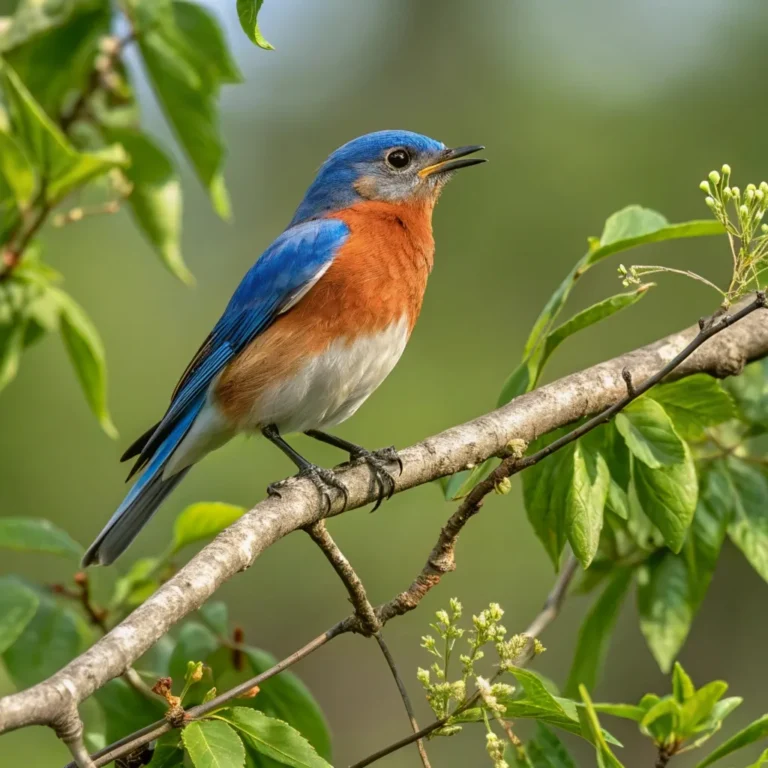
Blue Bird With Red-Orange Chest: Identification and Facts
When you see a blue bird with a red-orange chest, you are likely looking at the Eastern Bluebird. Males have bright colors, while females are more muted. This bird lives in grassy areas and fields. It mainly eats insects and berries. During breeding, bluebirds show interesting social behaviors. They have unique features that help them adapt to changes in their habitat. Learning about these traits helps us understand their connection with nature.
Key Takeaways
The Eastern Bluebird has bright blue feathers and a warm chestnut-red chest. Male Eastern Bluebirds have more vibrant colors than females.
These birds live in grasslands, orchards, and lowland forests. They like open ground for finding food and places to perch while hunting insects.
Their diet includes insects during spring and summer. In autumn, they start eating fruits and seeds to store energy for winter.
During breeding, Eastern Bluebirds show social behavior. They form loose groups to forage and communicate, which helps them survive better.
They usually nest in tree cavities or man-made structures. Female Eastern Bluebirds build strong nests using various natural materials.
Key Characteristics of the Blue Bird With Red-Orange Chest

The Eastern Bluebird is a striking blue bird recognized for its red-orange chest. This bird features bright blue feathers on its back and a warm chestnut-red throat in males.
Females have softer color patterns. The Eastern Bluebird's call is a melodious, cheerful warble that can bring joy to those who enjoy nature.
Noticing these features allows you to appreciate its beauty in different settings. Learning about its behaviors and sounds deepens your connection with these charming birds.
Observing them can enhance your experience outdoors, making you feel more connected to nature.
Habitat and Distribution
Bluebirds can be found in various environments across North America. They thrive in grasslands, orchards, and lowland forests. Bluebirds prefer areas with plenty of perches to hunt insects and open ground for foraging.
During migration, bluebirds travel south to find warmth in winter. This migration affects where they breed in spring. Understanding their movement patterns can enhance your appreciation of how they relate to their habitat.
Diet and Feeding Habits

Bluebirds' habitat influences their diet and feeding habits. These birds use effective foraging skills and adjust their diets based on food availability throughout the year.
Their typical diet includes:
- Insects, like beetles and caterpillars.
- Fruits and berries, especially during migration.
- Seeds in the winter.
In spring and summer, bluebirds depend on insects to feed their young. This shows their natural hunting abilities.
As autumn comes, they shift their focus to fruits and seeds. This change helps them store energy for colder months.
Observing bluebirds while they feed enhances your appreciation for these birds and connects you to the balance of nature.
Behavior and Social Structure
Bluebirds often appear solitary, but their behavior shows they've a rich social life, especially during breeding seasons.
While foraging, bluebirds interact socially, which helps them adapt. Outside nesting times, they form loose flocks. These flocks improve foraging and offer protection from predators.
This social setup creates a sense of community, as bluebirds communicate through sounds and body movements, strengthening their connections.
Watching their behavior can help you appreciate their social nature. Even birds that seem alone depend on social groups for survival and to face challenges in their environment.
Understanding this social structure enhances your connection to bluebirds.
Breeding and Nesting Practices

When bluebirds are ready to breed, they follow specific nesting behaviors that show their ability to adapt to different environments.
During the breeding season, they carefully choose sites for their nests. They often select tree cavities or man-made structures.
Bluebirds gather various materials for nesting, including:
- Grasses and leaves
- Feathers from other birds
- Pine needles and other soft fibers
These materials create a comfortable and safe space for their eggs.
The female bluebird usually builds the nest, ensuring it's strong enough to protect against the weather.
This careful nesting process helps keep their young safe and increases the chances of survival for their chicks, showcasing the bluebird's adaptability.
Tips for Identifying the Bird in the Wild
To identify a bluebird in nature, start by noticing their colors. Male bluebirds have bright blue feathers and a red-orange chest. Female bluebirds have softer colors.
Watch their behavior; they like to sit on fences or low branches while looking for insects. Listen for their cheerful songs, which can help you find them.
Bluebirds prefer open fields and suburban areas with some trees. Be patient and take your time in nature.
Use these tips to boost your chances of spotting these lovely bluebirds and enjoy a deeper connection with wildlife.
Fascinating Facts About the Blue Bird With Red-Orange Chest
After learning to identify bluebirds, you may want to explore their unique traits and behaviors.
Here are some interesting facts about the blue bird with a red-orange chest:
- Their bright colors help attract mates and provide camouflage in their environment.
- These birds migrate long distances to find suitable breeding sites and food.
- They help control insect populations, playing an important role in their ecosystem.
By observing and learning about these birds, you can appreciate their lives and their contributions to nature.
Connecting with these beautiful creatures enhances your experience in nature.
Frequently Asked Questions
What Is the Lifespan of the Blue Bird With a Red-Orange Chest?
The lifespan of the blue bird with a red-orange chest varies based on its breeding and feeding habits. These factors play a key role in its survival. The bird looks for good conditions to build nests and find food.
Are There Any Cultural Significances Associated With This Bird Species?
This bird carries important cultural meanings in many societies. It often appears in folklore as a sign of hope and renewal. This connection helps people feel linked to their traditions and strengthens their sense of belonging.
How Does Climate Change Affect This Bird's Population?
Climate change affects this bird's population by altering its habitat. Rising temperatures and shifting weather patterns reduce available food sources. As food becomes scarce, birds face increased competition and difficulty in survival. This situation poses a serious threat to the species, making it harder for them to thrive in their environment.
What Threats Do They Face in Their Natural Habitat?
In their natural habitat, birds face significant threats. Habitat destruction reduces their living spaces. Urban expansion and increased farming limit available resources like food and nesting sites. These challenges make survival difficult for birds in their ecosystems.
Do They Migrate, and if So, Where Do They Go?
Yes, they migrate. Their migration patterns change with the seasons. In winter, they travel south to find warmer weather. In spring, they return north to breed. This movement helps them survive and maintain their population.

Kashvi is a passionate bird enthusiast and nature lover who has been fascinated by the world of birds for years. With a keen eye for detail and a love for learning, Kashvi is dedicated to sharing her knowledge and insights with fellow bird enthusiasts on Avian Enthusiasts. Through her engaging and informative articles, Kashvi aims to inspire others to join her in exploring the fascinating world of birds and to promote a deeper appreciation for these incredible creatures.