Types of Ibis: A Fascinating Guide to These Wading Birds
Ibises are fascinating wading birds with unique features and behaviors. They adapt well to their wetland habitats. Different species showcase various traits. For example, the Sacred Ibis has a long, curved beak, while the American Ibis displays vibrant colors. Observing these birds reveals important information about wetland ecosystems and the challenges they encounter. Learning about ibises can deepen your appreciation for these remarkable creatures and their roles in nature.
Key Takeaways
Ibises are wading birds found in wetlands. They come in various species, each with its own adaptations and behaviors.
The Sacred Ibis is known for long migrations. This bird is significant in ancient cultures and plays an important role in its ecosystem.
American Ibises have bright colors. These colors help them communicate and blend into their surroundings.
Ibises often feed together. They use cooperative techniques as they search for food, demonstrating strong social connections.
Conservation efforts are essential for ibis habitats. Urbanization and agriculture pose threats to these birds, making community involvement crucial for their protection.
Overview of Ibis Species

Ibises are wading birds found in wetlands. They belong to a diverse group with many species, each showing unique adaptations and behaviors. These birds come in different sizes and colors and are more than just marsh inhabitants.
They exhibit strong social structures and often forage together, displaying intelligence and teamwork.
Their mating rituals are interesting, involving elaborate displays and sounds that help form strong pair bonds. For example, during courtship, ibises may perform synchronized movements or engage in mutual preening.
These behaviors reveal their social nature and ecological importance as they thrive in various environments. Watching ibises can deepen your appreciation for their unique strategies in life.
Habitat and Distribution
Ibises live mainly in wetlands. Their habitats include swamps, marshes, and floodplains. These areas provide food and places to nest.
Ibises like shallow waters and rich plant life, where they hunt for invertebrates and crustaceans. During breeding seasons, they create safe areas with plenty of food for their young.
Some ibises migrate long distances to find better conditions. For example, the sacred ibis moves between Africa and the Mediterranean.
Locally, ibises often gather in groups. This behavior helps them build social bonds and improve their foraging success.
Observing ibises can help you appreciate their role in the ecosystem and their beauty.
Unique Physical Characteristics

Ibises have unique physical traits that set them apart from other birds. A key feature is their long, curved beak. This beak helps them dig into mud to find hidden crustaceans and insects, which is essential for their survival.
When you see these birds, you'll also notice their colorful feathers. Different species display various colors, like the shiny, iridescent shades of the Sacred Ibis and the bright white feathers of the American Ibis.
The colors of their feathers serve purposes in social interactions and help them blend into their environments. These physical characteristics define ibises and connect them to the evolution of wading birds.
Behavior and Feeding Habits
Ibises display interesting feeding behaviors in their natural habitat. These wading birds often forage in groups. This social behavior helps them find food more easily.
They use several techniques to locate their prey:
- Probing: Ibises use their long, curved bills to feel for food under mud or water.
- Tactile Foraging: They search for insects or crustaceans by touch in the ground.
- Cooperative Feeding: Ibises work together to drive out fish. This teamwork shows their strong social bonds.
These feeding methods illustrate their adaptability and the value of working together to find food successfully.
Observing ibises can be a fascinating experience, as their behaviors offer insight into the important roles of both individual skill and social interaction in their lives.
Conservation Status and Threats
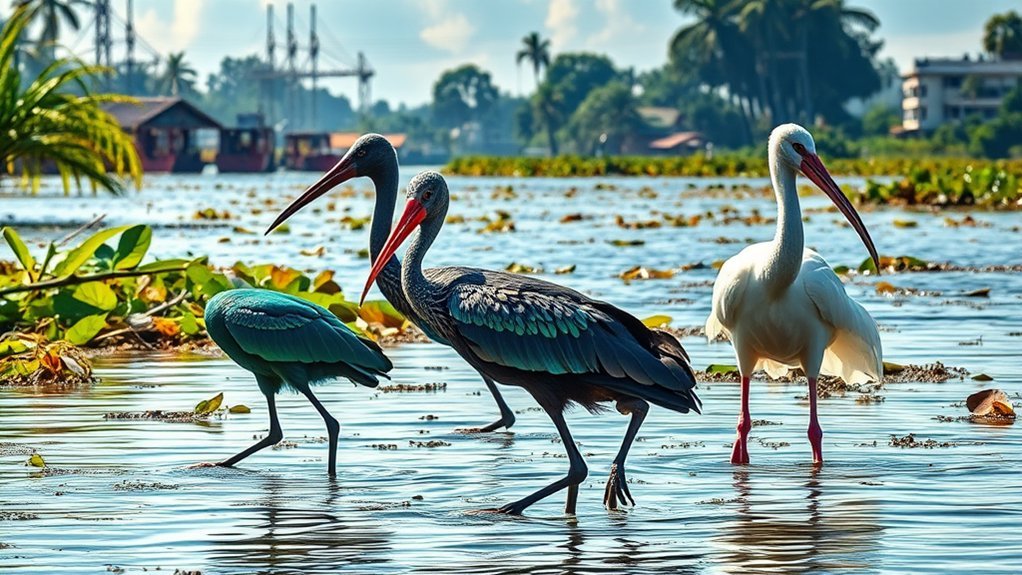
Ibises face many challenges that threaten their populations in different areas. Habitat destruction from urbanization and agriculture has reduced their nesting and feeding sites. As these areas decrease, you may see fewer ibises around.
This trend results from their struggle to survive. Conservation efforts are essential to address these threats, focusing on restoring and protecting habitats. Organizations work hard to create safe environments for these birds.
However, their success relies on community support. By backing local initiatives, you can help improve the situation for these birds. Your involvement makes a difference and ensures future generations can enjoy the beauty of ibises.
Frequently Asked Questions
What Are the Common Predators of Ibis Species?
Common predators of ibis species include birds of prey, foxes, and snakes. These animals pose significant threats to ibises. To survive, ibises must avoid these dangers. This situation highlights the balance in their ecosystems that helps support their existence.
How Do Ibises Communicate With Each Other?
Ibises communicate through vocal calls and body language. They produce different sounds to express alarm or attraction. Their postures and movements show their intentions. This helps build connections within their social groups. Observing ibises can provide insight into their social interactions.
Can Ibises Be Kept as Pets?
You can keep ibises as pets, but you need to provide special care and a proper environment. They do best in settings that resemble their natural habitats. You must meet their social needs and feed them the right diet to keep them healthy and happy.
What Is the Lifespan of an Ibis in the Wild?
In the wild, ibises usually live between 10 and 20 years. Their lifespan varies based on their habitat. Ibises adapt their behavior to survive in different environments. They find food and shelter in wetlands, mudflats, and coastal areas. This adaptability helps them thrive in diverse settings.
Are There Any Cultural Significances Associated With Ibises?
Ibises have deep cultural meaning in many societies. They often symbolize wisdom, communication, and spiritual connection. These birds appear in various myths and stories, showcasing their significance across cultures. People admire ibises for their beauty and intelligence, which adds to their allure and importance in different traditions. Their presence in folklore highlights humanity's respect for nature and the lessons we can learn from it.

Kashvi is a passionate bird enthusiast and nature lover who has been fascinated by the world of birds for years. With a keen eye for detail and a love for learning, Kashvi is dedicated to sharing her knowledge and insights with fellow bird enthusiasts on Avian Enthusiasts. Through her engaging and informative articles, Kashvi aims to inspire others to join her in exploring the fascinating world of birds and to promote a deeper appreciation for these incredible creatures.