

Birds of Wisconsin: 12 Most Common Species
In Wisconsin, you can see many bird species that play important roles in the ecosystem. Some of the most common birds are the American Robin, Northern Cardinal, and Blue Jay. Each bird has unique behaviors and calls. Observing these birds can help you learn more about their habits and interactions in the environment. This exploration can lead to a deeper appreciation of their adaptations and contributions to the local wildlife.
Key Takeaways
- The American Robin has a bright orange-red breast. It is often seen in Wisconsin's yards and parks during spring.
- Northern Cardinals are vibrant red birds. They symbolize hope and are known for their beautiful songs in winter.
- Blue Jays have bright blue feathers. They are intelligent and often forage in groups.
- Downy Woodpeckers are small birds. They make drumming sounds while searching for insects and help control pest populations.
- Common Grackles are social birds with iridescent bodies. They thrive in urban areas and show dynamic foraging behaviors.
American Robin

The American Robin is a common bird in Wisconsin's yards and parks. It has a bright orange-red breast and a pleasant song. These birds migrate to Wisconsin in spring, indicating warmer weather. They go south for winter to find food like berries and insects.
During nesting, robins build nests in trees or shrubs. They use grass, twigs, and mud to create strong structures.
The female lays three to five blue eggs and takes care of the young birds. Learning about their migration and nesting habits helps you connect with nature and feel part of Wisconsin's vibrant ecosystem.
Northern Cardinal
The Northern Cardinal is a vibrant bird with bright red feathers and a unique crest. You can often spot this bird in gardens, wetlands, and wooded areas, which are its favorite habitats.
Male cardinals sing beautiful songs to mark territory and attract mates, showcasing their interesting behaviors.
- Their bright colors bring feelings of joy and warmth.
- Watching them move from trees to bird feeders creates a sense of connection.
- Their sweet, whistling calls bring daily happiness.
- Cardinals symbolize hope, appearing during the coldest months.
- Seeing a pair of cardinals together highlights the beauty of companionship.
Enjoy the beauty of these amazing birds in your yard!
Blue Jay

Blue Jays are easy to recognize in Wisconsin due to their bright blue feathers and lively behavior.
They show intelligence and engage in complex social interactions. You can often see them foraging in groups, highlighting their ability to find food together. Their diet mainly includes acorns, seeds, and insects, which supports the local ecosystem.
Blue Jays are known for their loud calls and assertive nature. They often dominate bird feeders and defend their territory.
If you watch them closely, you may see them storing food for later use, showcasing their smart survival skills. Learning about their behavior and diet can deepen your appreciation for these colorful birds and connect you more to Wisconsin's nature.
Downy Woodpecker
Downy Woodpeckers are small birds found in Wisconsin's forests and urban areas. They live in various habitats like parks and woodlands. Their behavior shows how well they adapt to different environments. They're known for their drumming sounds as they look for insects hidden under the bark of trees.
- Downy Woodpeckers bring joy and life to quiet neighborhoods.
- Their foraging helps control pests and supports local ecosystems.
- Spotting one perched quietly can brighten your day.
- Their graceful movements highlight the beauty of nature.
- Their resilience and charm showcase the wonders of wildlife.
Learning about Downy Woodpeckers enhances your connection to the diverse wildlife around you and helps you feel more at home in your environment.
Common Grackle
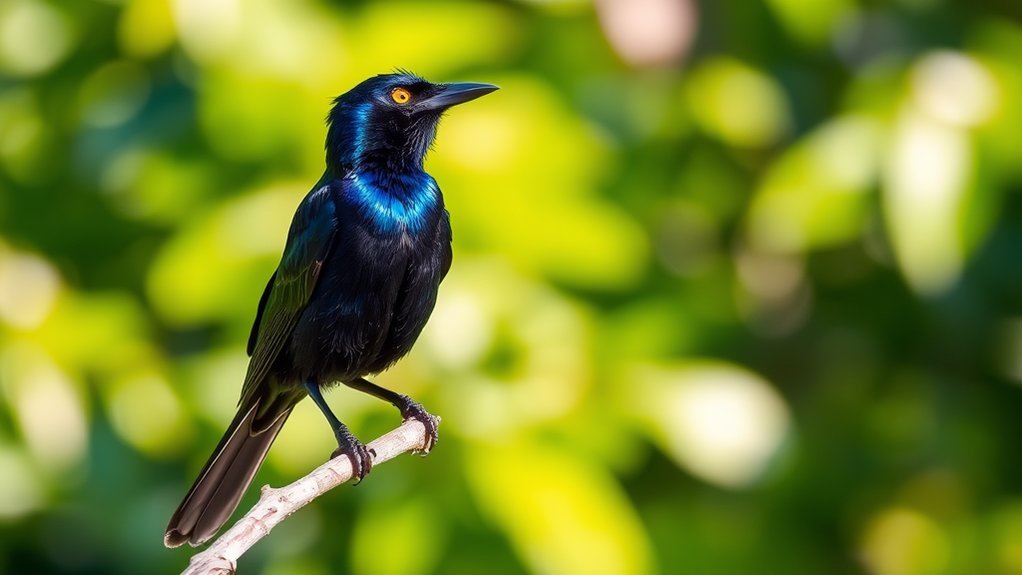
When you visit a park or backyard in Wisconsin, you may notice the Common Grackle. This bird has a shiny, iridescent body, a long tail, and bright yellow eyes.
Grackles often forage in groups, showing their social behavior. They look for seeds, insects, and scraps from humans. Grackles adapt well to urban areas by using various food sources.
You can hear their distinct calls, making them a memorable part of the Wisconsin bird scene. Watch their lively interactions and enjoy their role in the ecosystem. Experience the charm of the Common Grackle near you!
American Goldfinch
The American Goldfinch has bright yellow feathers that make it a joyful sight in Wisconsin's gardens and fields. These birds are playful and sing soft, cheerful calls as they move around.
They usually breed later in summer to match the time when thistle seeds are available. Their diet mainly consists of seeds, especially from sunflowers and dandelions, creating a colorful scene for both the birds and viewers.
- A flash of yellow can brighten your day.
- Their cheerful songs bring happiness to the environment.
- Spotting a goldfinch connects you to nature.
- They showcase the beauty found within your community.
- Watching them fosters a sense of calm and companionship.
White-breasted Nuthatch
The White-breasted Nuthatch is a small bird known for its unique ability to climb down tree trunks headfirst.
This behavior makes it easy to spot while it searches for insects, seeds, and nuts. It particularly likes acorns and uses its sharp beak to crack open tough shells.
For nesting, the White-breasted Nuthatch prefers tree cavities.
It often creates its own nest in decaying wood. This behavior shows its resourcefulness and adds value to the ecosystem by providing homes for other animals after it moves on.
Seeing this bird enriches local birdwatching experiences and promotes a stronger connection to nature.
House Sparrow
In Wisconsin, you'll likely see the House Sparrow. This small, social bird thrives in urban and suburban areas. It enjoys places where people gather, making it a familiar sight.
The House Sparrow adapts well and nests in various spots, such as gardens and rooftops, where it raises its young.
- Their cheerful chirps add energy to your neighborhood.
- Watching them interact builds a sense of community.
- Their resilience reflects your daily challenges.
- You'll feel connected as they thrive alongside you.
- Their playful antics can brighten your day.
Welcome the House Sparrow into your birdwatching experience in Wisconsin. They're charming and lively companions.
Mourning Dove
The Mourning Dove glides through Wisconsin's skies, making soft, mournful coos. These doves prefer open spaces like fields and parks, where they find seeds and berries. They adapt well to both urban and rural settings, making them often seen.
Mourning Doves have interesting behavior. They forage on the ground and show a gentle, social nature. You may see them in pairs, displaying courtship behaviors or preening each other.
Their plaintive calls are common in many areas, creating a distinct presence in the landscape. By learning about their habitat and behavior, you can deepen your appreciation for these peaceful birds in your community.
Eastern Bluebird
The Eastern Bluebird's vibrant colors attract attention, but its behavior and habitat reveal its importance in Wisconsin's ecosystem.
These birds thrive in open fields and meadows, where they find insects and berries. Their diet includes:
- Grasshoppers and beetles
- Berries in warmer months
- Fruits in late summer
- Seeds in winter
- Small arthropods for protein
They often hunt with acrobatic flight, helping to control pest populations.
Observing the Eastern Bluebird highlights its beauty and its essential role in maintaining ecological balance in your area.
Black-capped Chickadee
Black-capped Chickadees have black caps and cheerful calls. They add energy to Wisconsin's woodlands and backyards. These small birds flit among branches and display curious behaviors. They can live in many places, from dense forests to urban gardens. You may see them often in your community.
Chickadees readily visit feeders. They show intelligence by remembering where food is and recognizing human faces. Their social nature leads to lively flocking, especially in winter.
You can attract these birds by providing food through feeders or planting native plants. This action creates a welcoming space for them and helps you connect with nature.
Red-winged Blackbird
The Red-winged Blackbird stands out with its shiny black feathers and bright red shoulder patches. It lives in wetlands and grassy areas in Wisconsin.
You'll often see these birds sitting on cattails, singing to mark their territory. Their aggressive behavior in defending their nests is interesting.
- Their bright colors attract your attention during a peaceful walk.
- Their calls create a lively soundscape.
- You may see a male chasing away intruders, showing their courage.
- Watching them feed with their partners deepens your appreciation for nature.
- Seeing their courtship dances brings a sense of joy.
Frequently Asked Questions
What Is the Best Time of Year to Spot These Birds?
To spot birds, focus on the seasons. Spring and fall are the best times for migration. Visit different habitats, like forests, wetlands, and fields, to find various species. Stay quiet and patient to increase your chances of seeing birds. Enjoy the experience of watching these creatures throughout the year.
Are Any of These Birds Endangered or Threatened?
Some birds in this region are endangered. Conservation efforts focus on protecting and restoring their habitats. These actions help prevent their decline and ensure they continue to thrive in our environment. It's important to support these efforts to keep these beautiful birds safe for future generations.
How Can I Attract These Birds to My Backyard?
To attract birds to your backyard, set up bird feeders filled with seeds and suet. Add native plants that give birds food and shelter. Make your space inviting to create a bond between you and your feathered friends. Enjoy watching them visit and thrive in your garden.
What Are Common Feeding Habits of These Species?
Common feeding habits of different species show distinct preferences for seeds and foraging styles. Many birds prefer sunflower seeds and millet. Others look for insects on the ground. These habits highlight their varied diets and ability to adapt to their environments.
What Are the Migration Patterns of These Birds in Wisconsin?
Birds in Wisconsin show clear migration patterns throughout the year. When winter arrives, they head south to find warmer climates. In spring, they return north to breed and seek food. This seasonal movement helps them thrive and support their communities.

Kashvi is a passionate bird enthusiast and nature lover who has been fascinated by the world of birds for years. With a keen eye for detail and a love for learning, Kashvi is dedicated to sharing her knowledge and insights with fellow bird enthusiasts on Avian Enthusiasts. Through her engaging and informative articles, Kashvi aims to inspire others to join her in exploring the fascinating world of birds and to promote a deeper appreciation for these incredible creatures.


