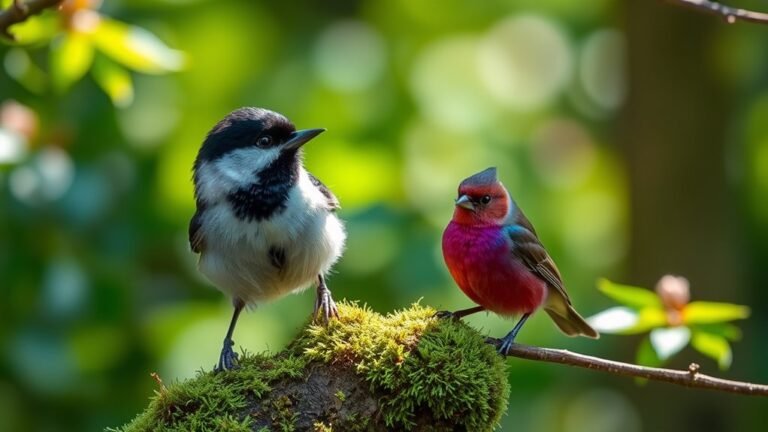
Common Winter Birds in Michigan: From Cardinals to Snow Buntings
In Michigan during winter, birds show unique traits that help them survive cold weather. Species like the Northern Cardinal and the Snow Bunting bring bright colors to the landscape. They are important to the ecosystem and have specific behaviors, including how they feed, establish territories, and interact socially. Observing these birds can reveal how they adapt to winter conditions. What traits help them survive this season?
Key Takeaways
- The male Northern Cardinal features bright red plumage. It represents hope in Michigan's snowy scenery during winter.
- Chickadees are active and make distinctive calls. They thrive in mixed forests and urban parks throughout winter.
- Blue Jays have striking blue feathers. They are confident birds and play a significant role in winter ecosystems by caching acorns.
- Snow Buntings have white feathers that stand out. They migrate from the Arctic tundra to Michigan, gathering in flocks in open fields.
- The American Goldfinch shows bright yellow feathers. It forages for seeds and adapts well to the winter climate.
The Cardinal: A Symbol of Winter's Color
The Northern Cardinal is a bright red bird that stands out against the snowy winter landscape. This vibrant color brings beauty to dull winter days.
The male cardinal's red feathers come from carotenoid pigments found in his food. Female cardinals have softer colors but still show beauty, demonstrating balance in nature.
During winter, cardinals eat seeds and search through shrubs for food. This behavior shows that they adapt well to their environment.
Cardinals symbolize hope and resilience, reminding us that life continues even in harsh conditions. Their presence offers a splash of color and a message of renewal during the cold months.
The Chickadee: Nature's Little Acrobats
As you observe chickadees flitting about, you'll notice their remarkable agility in maneuvering branches and feeders.
Their distinctive vocalizations add a unique charm to the winter landscape, serving essential communication functions within their social structure.
In understanding their habitat preferences, you gain insight into how these small birds thrive in Michigan's varied environments during the colder months.
Agile Feeding Behaviors
Chickadees are highly adaptable birds. They've agile feeding behaviors that interest both birdwatchers and scientists.
These small birds perform aerial maneuvers, often hanging upside down or darting between branches with precision. Their movements allow them to access food sources that other birds might miss.
Chickadees can easily move through dense leaves to find seeds, insects, and berries. They also store food in different places to help them survive during winter.
This ability to think ahead helps them maximize their energy intake and reduce competition for food. Watching these behaviors gives us a better understanding of their role in Michigan's winter landscape.
Distinctive Vocalizations
Chickadees communicate effectively during winter using distinct vocalizations. Their calls, especially the "chick-a-dee-dee-dee" sound, serve multiple functions. This call acts as a greeting and provides warnings about nearby predators.
Chickadees vary their calls based on the level of threat. Higher "dee" notes signal a greater danger. These vocal variations help alert other chickadees and mark territories.
Their ability to communicate plays a vital role in their survival during harsh winter conditions.
Listening to chickadee calls offers insights into their social structure and awareness. Studying their communications in winter makes chickadees an interesting subject for birdwatchers and nature enthusiasts in Michigan.
Habitat Preferences
Chickadees live in many types of habitats, showing they can adapt to Michigan's cold winters. You can find them in mixed forests, suburban neighborhoods, and urban parks. They prefer areas with a mix of different plants.
In mature woodlands, chickadees use the shrub layer, moving between evergreen trees and deciduous branches. This helps them find food and protects them from predators.
Birdwatching spots often attract chickadees, especially those with various trees and open areas. They help local ecosystems by controlling insects and spreading seeds.
Watching their quick movements gives us a look at how these small birds use different environments to survive.
The Blue Jay: Bold and Beautiful
Blue Jays stand out in Michigan's winter landscape with their bright blue feathers. These birds create a striking contrast against the white snow.
They're known for their bold behavior, often dominating other birds at feeders and in trees. Blue Jays are intelligent; they can mimic hawk calls to scare away competitors and warn about predators. Their sounds communicate alarm and distress clearly.
Additionally, Blue Jays play an important role in the ecosystem. They help disperse seeds by caching acorns, supporting forest growth.
Watching these birds highlights their interactions within Michigan's winter bird community.
The Snow Bunting: Winter's Aerial Dancer
As winter covers Michigan, the Snow Bunting appears, adding charm to the cold landscape. This bird stands out with its bright white feathers, symbolizing winter beauty.
You can find them in open fields and along roads, where they search for seeds and grains.
The Snow Bunting has an interesting migratory pattern. It breeds in the Arctic tundra during summer and migrates south, arriving in Michigan by late fall. Here, they gather in small flocks, performing delightful aerial displays as they flutter through the cold air.
Their breeding habits show their ability to adapt to tough conditions. They often build nests in snowbanks.
Watching Snow Buntings offers insight into how birds can thrive in harsh climates.
The American Goldfinch: Bright Against the Snow
In the winter landscape of Michigan, the American Goldfinch stands out with its bright yellow feathers against the white snow. As the season progresses, these birds change to a more muted olive-brown color, adapting to the cold.
They search for seeds to eat, especially from conifers and thistles. American Goldfinches often hang upside down to reach seeds. They prefer seeds over insects during winter, showing their ability to adjust to their environment.
These finches thrive in the winter, creating a lively scene in the snow. Watching them can teach us about their adaptability and their role in Michigan's winter bird life.
The Nuthatch: Clinging to Winter's Branches
Nuthatches are fascinating birds that thrive in Michigan's winter weather.
Their unique ability to climb down trees headfirst helps them find food like insects and seeds that other birds miss. Their specialized feet have long toes and sharp claws that grip tree bark effectively.
Nuthatches prefer trees with rough, textured bark. These trees provide good places to search for food.
In winter, nuthatches cache food, hiding seeds to eat later when supplies are low. This smart behavior shows their adaptability and highlights the connection between nuthatches and their winter environment, helping them survive through tough conditions.
Frequently Asked Questions
What Bird Feeders Attract Winter Birds in Michigan?
To attract winter birds in Michigan, use feeders such as tube, hopper, and platform types. Place these feeders near trees or bushes for safety. Keep the feeders clean to ensure birds visit often. Using the right seeds can also help attract a variety of birds. Enjoy watching the birds as they come to feed!
When Is the Best Time for Winter Birdwatching in Michigan?
The best time for winter birdwatching in Michigan is early morning and late afternoon. During these times, birds are most active as they search for food. Visit local parks and nature reserves; these places are excellent for spotting a variety of bird species. Grab your binoculars and enjoy the beauty of birds in winter!
How Can I Identify Different Winter Birds by Their Calls?
To identify winter birds by their calls, pay attention to their vocal patterns. Listen for variations in pitch, rhythm, and repetition. Take notes on what you hear. Then, compare your notes with bird call recordings or guides. This will help you improve your ability to recognize different bird calls effectively. Enjoy the process of learning and connecting with nature through these sounds!
Are Any Winter Birds in Michigan Endangered or Threatened?
Yes, some winter birds in Michigan are endangered. The Piping Plover is one example. Conservation efforts aim to restore and protect their habitats. These actions help ensure the survival of these birds as they face environmental challenges and urban development.
What Foods Should I Provide for Winter Birds in My Backyard?
To attract winter birds, offer a variety of seeds. Use sunflower seeds and millet, as these are popular choices. Place bird feeders near cover, like bushes or trees. This helps birds find safety from predators while feeding. Make sure the feeders are easily accessible for the birds during winter.

Kashvi is a passionate bird enthusiast and nature lover who has been fascinated by the world of birds for years. With a keen eye for detail and a love for learning, Kashvi is dedicated to sharing her knowledge and insights with fellow bird enthusiasts on Avian Enthusiasts. Through her engaging and informative articles, Kashvi aims to inspire others to join her in exploring the fascinating world of birds and to promote a deeper appreciation for these incredible creatures.