Pacific Northwest Birds With White, Purple, and Black Features
In the Pacific Northwest, birdwatchers can find a diverse range of birds with striking white, purple, and black features. The Great Egret stands out with its bright white feathers, often seen in wetland areas. Another notable bird is the Purple Martin, known for its graceful flight. These birds contribute to the ecosystem and showcase unique traits that help them survive. Their colors and behaviors add charm to the local environment and provide opportunities to appreciate nature.
Key Takeaways
- The Great Egret is a large white wading bird. It has excellent hunting skills and a striking appearance that captivates observers.
- The Belted Kingfisher has blue-gray feathers and a white collar. It catches fish effectively with sharp eyesight and a strong beak.
- The Purple Martin displays iridescent colors and shows exceptional aerial agility. It prefers to nest in man-made structures and is often found in groups.
- The Black-capped Chickadee has a charming look with a black cap and bib. It is known for its pleasant vocalizations and nimble feeding habits.
- The Common Raven has glossy black feathers and high intelligence. It uses problem-solving skills and adapts well to its environment.
Great Egret: The Elegant Hunter
The Great Egret is a large, white wading bird recognized for its beauty and hunting skills. It has a long, slender neck and striking plumage, which make it an elegant sight in wetland areas.
This bird uses various hunting methods. Often, it stands still and waits for fish or amphibians to come close. Its excellent eyesight helps it notice slight movements in the water. When it spots prey, it strikes quickly with its sharp beak.
Sometimes, the Great Egret employs a technique called "foot-stirring." In this method, it taps the water with its feet to confuse and disorient fish.
The Great Egret combines its attractive appearance with effective hunting skills, making it a captivating predator in the ecosystems of the Pacific Northwest.
Purple Martin: The Aerial Acrobat
When you observe Purple Martins, you'll notice their unique nesting habits that often involve using human-made structures like birdhouses.
Their aerial hunting techniques showcase remarkable agility, allowing them to catch insects mid-flight with precision.
This combination of behaviors makes them fascinating subjects for both bird watchers and researchers alike.
Unique Nesting Habits
The Purple Martin is known for its interesting nesting habits. These social birds prefer to nest in cavities and often select man-made structures like birdhouses or gourds. This choice shows their adaptable breeding habits.
When they build their nests, Purple Martins collect materials such as grass, feathers, and plant fibers to make their nesting sites comfortable. This careful selection helps them raise more young each season.
Watching these birds can be quite enjoyable, as they often work together in groups. Several adult Purple Martins can assist in caring for the young, highlighting their social nature.
Aerial Hunting Techniques
Purple Martins are skilled aerial hunters. They catch insects while flying, using quick movements and fast reflexes. Watch them fly smoothly as they chase insects, striking accurately.
Their long wings and slim bodies help them move swiftly and change direction easily, which is vital for hunting successfully.
Purple Martins also show impressive skills in recognizing their prey. They can quickly identify insects based on size, shape, and how they fly. This ability helps them find food among many flying creatures.
Their combination of flying skill and keen observation makes Purple Martins effective hunters in the Pacific Northwest.
Black-capped Chickadee: The Charming Songster
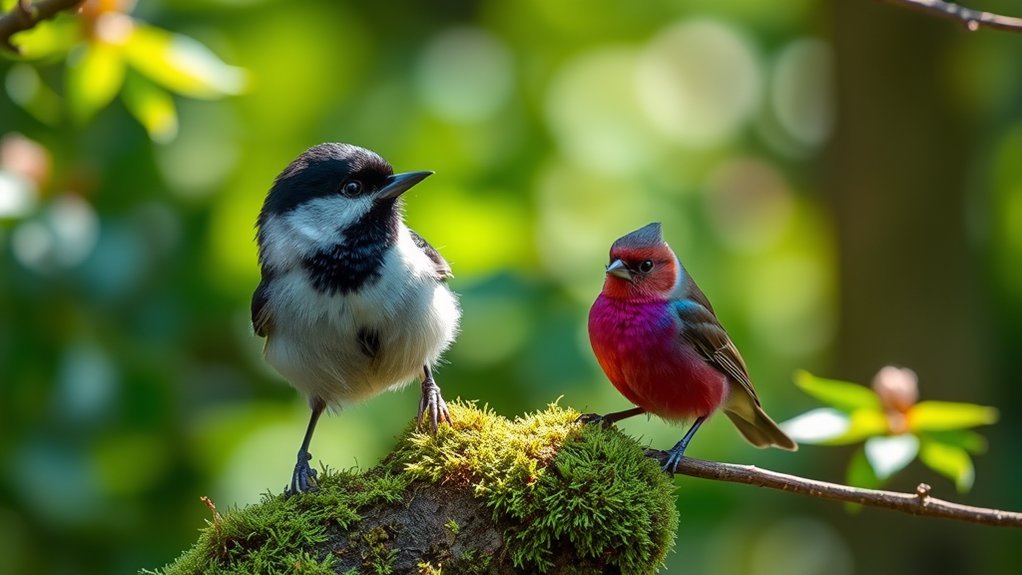
When you spot a Black-capped Chickadee, you'll immediately notice its distinctive black cap and bib contrasting with its white cheeks and warm brownish wings.
As these small birds flit among the branches, they employ their acrobatic feeding habits, often hanging upside down to explore for insects and seeds.
Their melodious vocalizations, which include the iconic "chick-a-dee-dee-dee," serve as both communication and a charming hallmark of their presence in the Pacific Northwest.
Identification and Appearance
The Black-capped Chickadee is a small and energetic songbird. You can identify this bird by its black cap and bib, which contrast with its white cheeks and light gray body. Adult chickadees are about 4.7 to 5.5 inches long. They've a short, sturdy bill and a slightly rounded tail.
When observing these birds, use binoculars to watch their playful behavior. They're often found in mixed woodlands and shrubs.
Protecting their natural habitats is important for their survival, allowing future generations to enjoy their cheerful songs. Listen for their familiar call, "chick-a-dee-dee-dee," which adds fun to your birdwatching experience.
Feeding Habits
Black-capped chickadees are fascinating birds known for their unique look and feeding habits.
They eat seeds, insects, and berries, changing their diet with the seasons. A notable feeding behavior is "hiding," where they store food in tree crevices or under leaves for later. This shows their excellent memory, as they can recall where they put thousands of food items.
When searching for food, chickadees are agile and can move through branches and even hang upside down. This ability helps them survive and plays a key role in the ecosystem by dispersing seeds.
Watching them forage can be a delightful experience.
Vocalizations and Calls
Black-capped chickadees exhibit fascinating vocalizations and calls. Their well-known "chick-a-dee-dee-dee" call features various patterns that serve different functions.
These calls can warn others of danger or mark their territory. You might hear changes in their calls that indicate their feelings. For example, a higher number of "dee" notes often signals the presence of a predator.
During courtship, chickadees sing softer, sweeter melodies, highlighting their social behavior. These vocalizations help them communicate with each other and add to the rich sounds of the Pacific Northwest.
Watching them as they call can reveal their social interactions and behaviors in their environment.
Anna's Hummingbird: The Iridescent Jewel
While observing nature, you may see the vibrant Anna's Hummingbird. This bird shines with iridescent colors that attract attention. It moves quickly between flowers and hovers to gather nectar using its specialized bill.
Males have plumage that shifts from emerald green to deep magenta.
Anna's Hummingbird migrates but stays in the Pacific Northwest throughout the year because of the many blooming flowers. Their ability to adapt helps them thrive in cooler climates.
Watching their rapid wingbeats and agile flight reveals the beauty of this remarkable bird.
Western Sandpiper: The Coastal Forager
The Western Sandpiper is a small shorebird found along the beaches and mudflats of the Pacific Northwest. You can see these birds migrating in large groups, displaying their unique migration patterns. They search for food by probing the sand for invertebrates and foraging in a rhythmic manner.
Here are key behaviors to observe:
- Wading in shallow waters to find food.
- Feeding by quickly moving their bills in the sand.
- Foraging together with other shorebirds.
- Performing courtship displays during breeding season.
During breeding, the Western Sandpiper nests in the tundra of northern Canada and Alaska.
Their ability to adapt helps ensure their survival.
Common Raven: The Intelligent Opportunist
When you encounter a Common Raven, its glossy black feathers and sturdy, curved bill immediately catch your eye.
You'll notice not just its distinctive appearance but also its remarkable problem-solving behavior, which showcases its intelligence and adaptability.
Observing these birds reveals how they cleverly manipulate their environment to secure food and navigate challenges.
Distinctive Physical Characteristics
Common ravens are known for their shiny black feathers and unique wedge-shaped tails. These features help them stand out among other birds.
Here are some key physical traits:
- They've a strong build that helps them move quickly and fly far.
- Their large beaks are designed for picking up a variety of foods.
- Their wing feathers shine in the sunlight, giving them a gleaming look.
- They experience slight changes in feather appearance with the seasons, which can impact their warmth in winter.
In addition to their appearance, common ravens display interesting behaviors, including a range of sounds and social interactions that show their intelligence.
These traits help them adapt to different environments, making them fascinating creatures to observe.
Problem-Solving Behavior
Common ravens display impressive problem-solving skills and intelligence in their natural habitats. They can manipulate objects, such as dropping stones to get food.
Their ability to learn from each other is clear when they observe other ravens solving tasks and then copy those actions. For example, when one raven finds food using a tool, others will often imitate this method, showcasing their adaptability.
This problem-solving ability reflects both individual intelligence and shared knowledge, which improves their chances of survival. Observing their interactions helps you understand how solving problems influences their behavior and adaptation in various environments.
Barn Owl: The Mysterious Nocturnal Hunter
The Barn Owl is a skilled nocturnal hunter. It lives in open areas like grasslands and farmland. These owls use their sharp hearing to find food.
Their hunting methods include:
- Flying quietly to avoid being noticed.
- Hovering briefly to locate prey.
- Using good night vision to see in low light.
- Striking quickly and accurately to catch small animals.
Barn Owls have distinct heart-shaped faces. This shape helps them hear sounds better.
Spotted Towhee: The Colorful Ground Forager
The Spotted Towhee is a colorful bird that stands out due to its bright feathers and unique patterns.
It lives in shrubby areas, backyards, and the edges of forests, where it likes to stay among thick plants. This bird prefers to forage on the ground, turning over leaves to find seeds and insects.
Unlike many other songbirds, it stays low to the ground and quickly moves through the brush to escape from predators.
During breeding season, males often call out with a distinct "chewy" sound.
When you spot a Spotted Towhee, you'll see its spotted breast, which contrasts nicely with its deep black and rufous colors. This makes it a charming sight in the diverse habitats of the Pacific Northwest.
Harlequin Duck: The Riverine Beauty
The Harlequin Duck is a stunning bird known for its bright colors and distinct patterns. It thrives in fast-moving rivers and coastal areas.
Here are some key facts about the Harlequin Duck's behavior:
- They dive to find small animals to eat.
- Their swimming skills allow them to handle rough waters.
- During mating season, they perform unique courtship displays.
- They typically nest near rocky shores, which helps them blend in.
These traits make the Harlequin Duck a fascinating and beautiful sight in the Pacific Northwest. Keep an eye out for this remarkable bird in its natural habitat!
Belted Kingfisher: The Dashing Fisherman
As you travel through the beautiful waterways of the Pacific Northwest, keep an eye out for the Belted Kingfisher. This sharp-looking bird is skilled at catching fish.
It has striking blue-gray feathers and a white collar that make it stand out. You might see it hovering over the water or sitting still on a branch, ready to dive for a meal. The Kingfisher's sharp beak and great eyesight help it grab fish quickly and accurately.
Belted Kingfishers like to nest in burrows along freshwater streams, rivers, and ponds. They raise their young in these burrows and ensure they've plenty of fish to eat.
Spotting a Belted Kingfisher can make your outdoor adventure even more exciting!
Frequently Asked Questions
What Is the Best Time to Spot These Birds in the Pacific Northwest?
To spot birds in the Pacific Northwest, pay attention to their seasonal migration. You will see the most birds in spring and fall. Early mornings and late afternoons are the best times to catch their colorful displays. Plan your outings during these times for the best birdwatching experience.
Are There Any Birdwatching Tours Available in the Region?
Yes, there are several guided birdwatching tours available in the region. These tours help you learn about different bird species and their behaviors. Many tours also recommend birdwatching apps to assist you in identifying birds. This combination makes for a better and more enjoyable birdwatching experience.
How Can I Attract These Birds to My Backyard?
To attract birds to your backyard, start by setting up bird feeders with seeds they like. Also, plant local plants that provide food and shelter. Pay attention to how they eat and where they build nests. Make your garden a safe and welcoming place for them to live.
What Habitats Do These Birds Prefer in the Pacific Northwest?
These birds prefer diverse habitats such as forests and wetlands. They occupy areas with dense trees and near water sources. In these environments, they find plenty of food and suitable places to build their nests. This combination of factors allows them to thrive in the Pacific Northwest.
Are Any of These Birds Endangered or Threatened?
Yes, some birds in the Pacific Northwest are endangered. Conservation efforts focus on preserving and restoring their habitats. These efforts aim to increase bird populations and ensure their survival in changing conditions.

Kashvi is a passionate bird enthusiast and nature lover who has been fascinated by the world of birds for years. With a keen eye for detail and a love for learning, Kashvi is dedicated to sharing her knowledge and insights with fellow bird enthusiasts on Avian Enthusiasts. Through her engaging and informative articles, Kashvi aims to inspire others to join her in exploring the fascinating world of birds and to promote a deeper appreciation for these incredible creatures.