
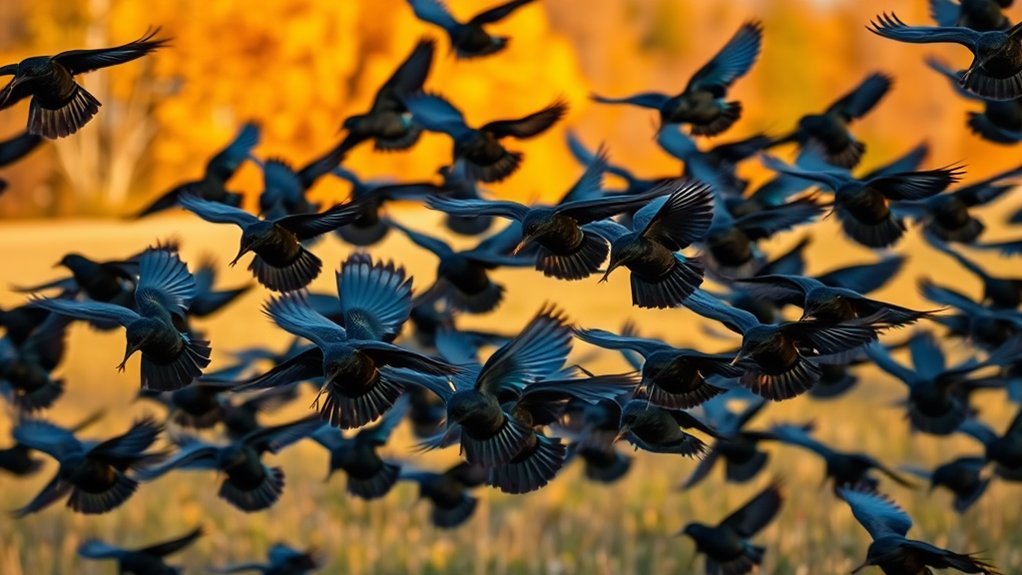
Indiana Black Birds: Midwestern Favorites
Indiana is home to various black birds, including the red-winged blackbird and the common grackle. These birds play an important role in the local ecosystem. Their social behavior and foraging habits help control insect populations. By studying these birds, we gain insight into Indiana's natural environment. Their vibrant colors and lively presence make them a fascinating part of our landscape. What interesting traits do these birds have?
Key Takeaways
- The Red-Winged Blackbird stands out for its bright shoulder patches and beautiful songs. It prefers wetlands and grasslands.
- Common Grackles are popular for their social behavior. They gather in large groups, making loud sounds and interacting with one another.
- The Tri-Color Blackbird is known for its bright colors and ability to adapt. It thrives in marshy areas and helps to control insects.
- Blackbirds play key ecological roles. They contribute to environmental balance through foraging and socializing.
- The seasonal behaviors of blackbirds, like migration and courtship displays, connect them to Indiana's natural landscape.
Overview of Indiana's Black Birds
Indiana's black birds, especially those from the Icteridae family, are important for the ecosystem. They adapt well to urban and rural areas.
These birds live in wetlands, grasslands, and open woodlands, where they find plenty of insects and seeds to eat.
During migration, black birds travel in large groups, which shows their social nature. Their migration patterns depend on climate and food availability.
This makes them good indicators of environmental health.
By observing their behavior, you can learn more about Indiana's ecological balance.
Connecting with these birds enhances your appreciation for the local environment.
The Fascinating Red-Winged Blackbird
The red-winged blackbird (Agelaius phoeniceus) is a striking black bird found in Indiana.
Males have bright red and yellow shoulder patches that they display during mating rituals. These displays are both territorial and attract mates.
Red-winged blackbirds produce various calls that convey messages of dominance or attraction. Their rich, melodic songs can be heard in wetlands and grasslands.
Observing their behavior can enhance your appreciation for nature and connect you with fellow bird watchers who share your interest in these fascinating birds.
Common Grackles: Social Butterflies of the Sky
In Indiana, you can often see common grackles (Quiscalus quiscula) flying in groups. These birds are known for their social behavior. They form large, loud flocks that interact with each other. You may notice their vocalizations, showing displays, and coordinated movements as they fly together. This creates an interesting view of their social life.
Common grackles prefer living in groups. This helps them find food more efficiently and stay safe from predators. Their shiny feathers reflect light, making them stand out in the sky.
As you watch these birds, you gain a better understanding of their social structures. This enhances your appreciation of their beauty and the connections they've with each other. By observing them, you also feel more connected to the nature around you in Indiana.
Understanding the Tri-Color Blackbird
The Tricolored Blackbird (Agelaius tricolor) is a remarkable bird known for its distinct colors: glossy black, bright red, and white. This color combination sets it apart from other blackbirds found in Indiana.
During the breeding season, these birds form large colonies and display interesting social behaviors. Male Tricolored Blackbirds sing to show their strength and attract mates.
They often feed in marshes, demonstrating their ability to thrive in different environments. Learning about these birds improves our appreciation for them and highlights their importance in controlling insect populations while interacting with other blackbirds.
The Unique Characteristics of the Eastern Meadowlark
The Eastern Meadowlark (Sturnella magna) is a distinctive bird found in Indiana. Its song features sweet and flute-like notes that fill meadows and fields. This song is important for communication, marking territory, and attracting mates.
The Eastern Meadowlark enjoys open grasslands and farmland, where low vegetation provides a suitable habitat. It nests on the ground, showcasing its adaptation to these areas.
Observing this colorful bird enhances appreciation for Indiana's biodiversity.
Seasonal Behaviors of Black Birds in Indiana
Observing blackbirds in Indiana reveals their seasonal behavior changes, which affect their breeding, foraging, and migration.
- Spring: Blackbirds return from migration as temperatures rise. They establish territories and display courtship behaviors. Males sing to attract mates.
- Summer: During the summer, blackbirds actively forage for insects and seeds while raising their young. They demonstrate adaptability in using available resources.
- Fall: Before heading south, blackbirds form large flocks. This gathering indicates their social structure and enhances safety during migration.
Learning about these seasonal behaviors helps you appreciate the ecological roles of blackbirds. It also strengthens your connection to Indiana's natural environment.
Feeding Habits and Diet Preferences
Blackbirds in Indiana have varied feeding habits and diet preferences. They eat seeds, fruits, insects, and small aquatic organisms. Their diets change based on the season and the availability of food, showing their ability to adapt.
You can see them foraging in fields, gardens, and wetlands, often in large groups. This helps them find food more efficiently.
Blackbirds use different methods to gather food, such as pecking at the ground or picking it from plants. Watching how they interact with their environment can help you appreciate their importance in local ecosystems.
The Role of Black Birds in the Ecosystem
In Indiana, blackbirds have important functions in the ecosystem. They help with seed dispersion and pest control. Their presence is vital for keeping the ecosystem balanced.
Here are three key roles that blackbirds perform:
- Pest Control: Blackbirds eat many insects. This helps decrease the number of pests in gardens and farms.
- Seed Dispersal: They eat seeds, which helps in the growth of new plants and supports biodiversity.
- Predatory Role: Blackbirds sometimes eat smaller birds, which helps maintain balance in predator and prey relationships.
These actions by blackbirds create a healthy environment that benefits plants, other animals, and people.
Enjoy observing their lively behaviors while recognizing their contributions to nature.
Birdwatching Tips for Spotting Black Birds
To improve your chances of spotting blackbirds in Indiana, pay attention to the time of day and season. Early morning and late afternoon are the best times to see them feeding.
Look for blackbirds in diverse habitats, such as wetlands and open fields, where vegetation is thick. Using binoculars with 8x to 10x magnification will help you see them at a distance.
Move slowly and carefully while you scan these areas to avoid startling the birds. Also, listen for their distinct calls, which can help you find them.
Joining local birdwatching groups can provide valuable experiences and insights, making your birdwatching more enjoyable.
Conservation Efforts for Indiana's Avian Life
Indiana's avian life, particularly its various blackbird species, faces many challenges that need focused conservation work. Understanding these efforts helps you see the importance of protecting our environment.
- Habitat Preservation: Safeguarding wetlands and grasslands provides blackbirds with safe places to nest and find food.
- Species Protection: Laws like the Migratory Bird Treaty Act protect birds from hunting and loss of their habitats.
- Community Engagement: Local projects invite people to take part in bird counts and habitat restoration, building a strong community connection.
Your participation in these efforts helps blackbirds and their habitats, while also bringing people together. Together, we can protect Indiana's natural heritage for future generations.
Stories and Legends of Black Birds in Hoosier Culture
Blackbirds feature prominently in Hoosier culture, appearing in numerous stories and legends. They often symbolize important messages and changes in life. In local folklore, blackbirds serve as connections between the physical and spiritual worlds.
Many tales describe them as signs of upcoming storms or personal growth. Spotting a blackbird can carry special meaning for individuals, reminding them of community and resilience.
Frequently Asked Questions
What Are the Best Times to Observe Black Birds in Indiana?
To see blackbirds in Indiana, visit from late March to early July during their breeding season. During this time, male blackbirds are active and display colorful behaviors. Early mornings and late afternoons are the best times to observe their feeding and social activities. Enjoy the sights and sounds of these birds as they interact with each other in their natural habitat.
How Can I Attract Black Birds to My Backyard?
To attract black birds, put out bird feeders with sunflower seeds. Plant shrubs and tall grasses to create nesting areas. Watch their activity to learn what they like. This helps make your backyard a nice place for these birds to visit. Enjoy the experience of observing them!
Are Black Birds in Indiana Migratory or Resident Species?
Black birds in Indiana show both migratory and resident behavior. Some species migrate to find food during different seasons. Other species choose to stay year-round. These resident birds adapt to their environment and become part of their local communities.
What Are Some Common Predators of Indiana's Black Birds?
Common predators of black birds in Indiana include hawks and other raptors. These birds of prey often target nests and young black birds. This predation affects the populations and behaviors of black birds. Understanding these relationships adds to our appreciation of how black birds adapt and survive in Indiana.
How Do I Report a Sighting of a Rare Black Bird?
To report a sighting of a rare black bird, follow these steps:
- Document the sighting with clear details. Include the date, location, and description of the bird's behavior.
- Keep a respectful distance to avoid disturbing the bird.
- Submit your observations to local conservation groups. They will analyze the information for future efforts.
Your contribution helps protect these rare birds and supports wildlife conservation. Thank you for observing responsibly!

Kashvi is a passionate bird enthusiast and nature lover who has been fascinated by the world of birds for years. With a keen eye for detail and a love for learning, Kashvi is dedicated to sharing her knowledge and insights with fellow bird enthusiasts on Avian Enthusiasts. Through her engaging and informative articles, Kashvi aims to inspire others to join her in exploring the fascinating world of birds and to promote a deeper appreciation for these incredible creatures.


