
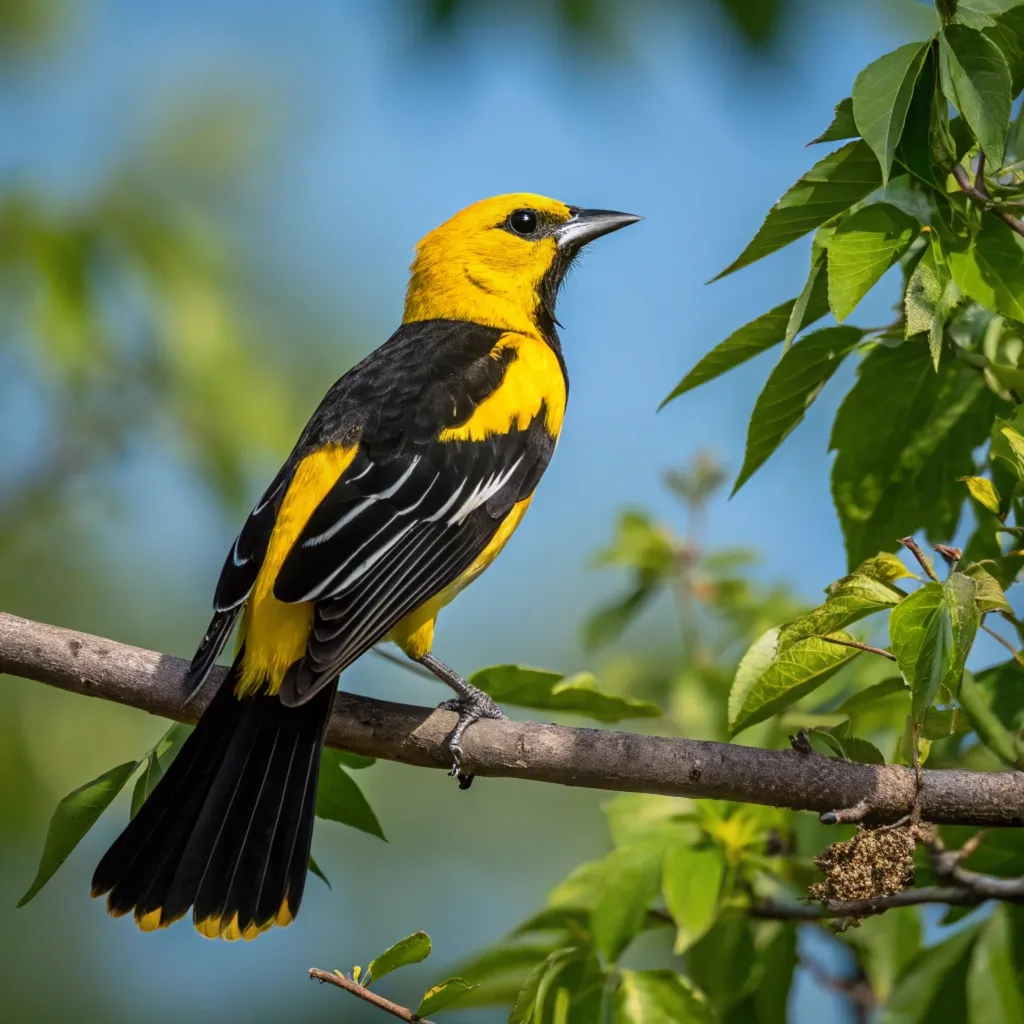
The Yellow and Black Birds of North America: A Vibrant Avian Spectacle
Have you ever seen a bird that looks like it’s wearing a bright yellow shirt with a black jacket? That’s what many of the yellow and black birds in North America look like!
These colorful birds are a joy to watch. They fly through our skies, adding splashes of sunshine to forests, fields, and even our backyards.
In this post, we’ll explore these amazing birds. We’ll learn about where they live, what they eat, and how they behave. Get ready to discover the wonderful world of yellow and black birds right here in North America!
Key Takeaways

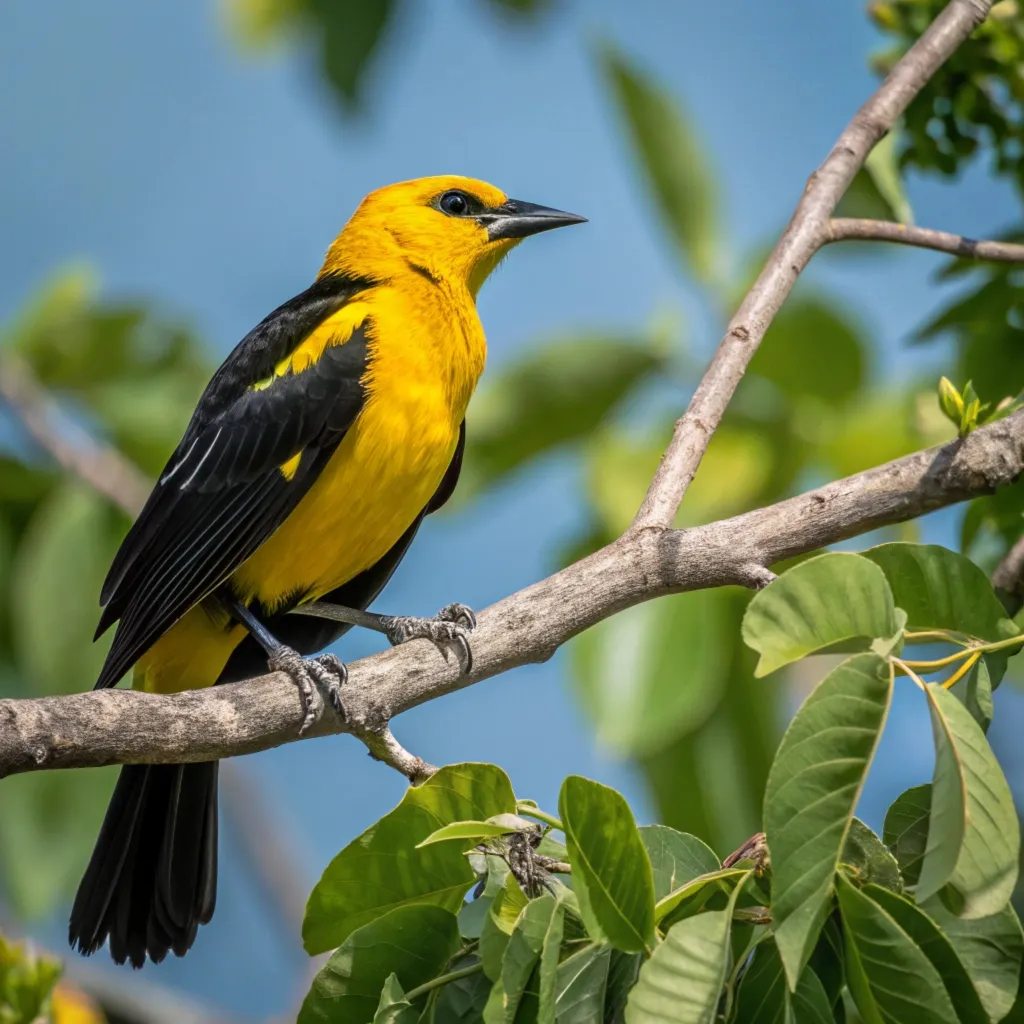
- Yellow-headed Blackbird: A medium-sized bird with a distinctive golden head and black body, found in western North American marshes.
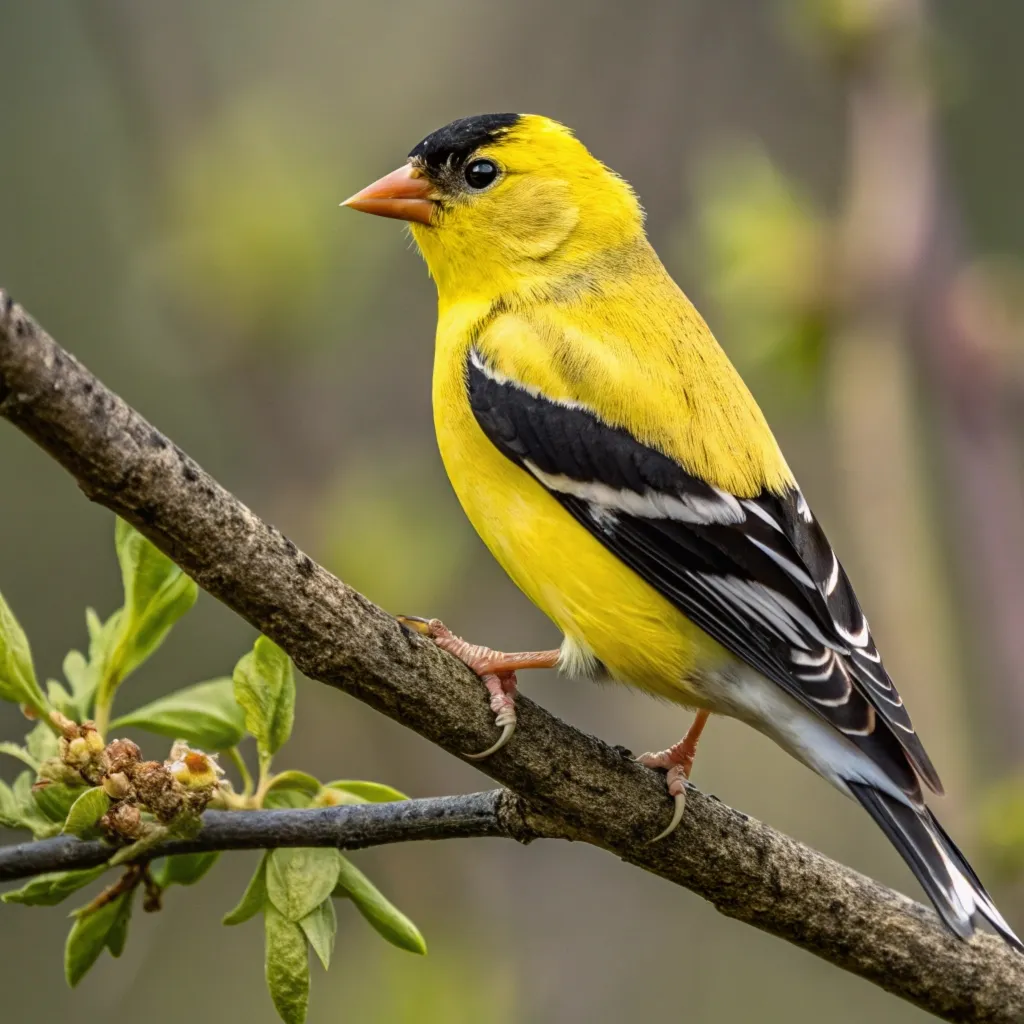
- American Goldfinch: Bright yellow males with black wings and a cap during breeding season, common in open fields and meadows.
- Yellow Warbler: A small, entirely yellow bird with reddish streaks on the chest, often seen in wetlands and open woodlands.
- Common Yellowthroat: Features a bright yellow underside and a distinctive black mask, preferring dense undergrowth and marshy areas.
- Habitat Diversity: These birds occupy various environments, from wetlands and marshes to open fields and urban areas.
- Feeding Habits: Diets range from insects and spiders to seeds and grains, adapting to seasonal availability.
- Migratory Patterns: Many of these species undertake long-distance migrations between breeding and wintering grounds.
- Conservation: Some species face challenges due to habitat loss and climate change, highlighting the need for conservation efforts.
- Birdwatching Opportunities: These colorful birds offer excellent opportunities for both novice and experienced birdwatchers.
- Ecological Importance: Yellow and black birds play crucial roles in seed dispersal and insect control in their ecosystems.
The Yellow-headed Blackbird: A Marsh Dweller

The Yellow-headed Blackbird (Xanthocephalus xanthocephalus) stands out as a striking example of yellow and black birds in North America.
This medium-sized blackbird boasts a golden head that contrasts sharply with its black body. Males display a white patch on their black wings, adding to their distinctive appearance.
Habitat and Distribution
Yellow-headed Blackbirds prefer freshwater marshes in western and prairie regions of North America. They build their nests in cattails, bulrushes, and common reeds, often directly over water. These birds show a strong preference for marshes with water depths of two to four feet.
Behavior and Feeding

During the breeding season, male Yellow-headed Blackbirds are highly territorial. They perch on reed stalks, displaying and chasing off intruders. Their call resembles a rusty farm gate opening, a unique sound in the marsh ecosystem.
Yellow-headed Blackbirds feed by gleaning insects and seeds from plants and the ground. They also catch insects in flight, a behavior known as hawking. In summer, their diet consists mainly of insects, while in winter, they switch to seeds and grains from crops.
Yellow-headed Blackbirds are special birds that live near water. They make their homes in tall plants that grow in wet places. These birds are good at finding food.
They eat bugs in the summer and seeds in the winter. The males have a funny way of singing. It sounds like an old gate that needs oil. These birds are smart and know how to live well in their watery homes.
The American Goldfinch: A Bright Meadow Resident

The American Goldfinch adds a burst of sunshine to North American landscapes. Male goldfinches sport bright yellow plumage with black wings and a distinctive cap during the breeding season.
Habitat and Preferences
These birds favor open fields, roadsides, and meadows. They show a particular liking for areas with shrubs and grasses, which provide both food and shelter.
Feeding Habits

American Goldfinches are primarily seed-eaters. They have a strong preference for thistle and sunflower seeds, making them frequent visitors to backyard feeders.
American Goldfinches are like little flying suns. They love to live in open spaces where they can fly freely. These birds are crazy about seeds. They especially like thistle and sunflower seeds.
If you put out a bird feeder with these seeds, you might see these pretty yellow birds visit your yard. They’re fun to watch because they’re so bright and cheerful.
The Yellow Warbler: A Woodland Songster
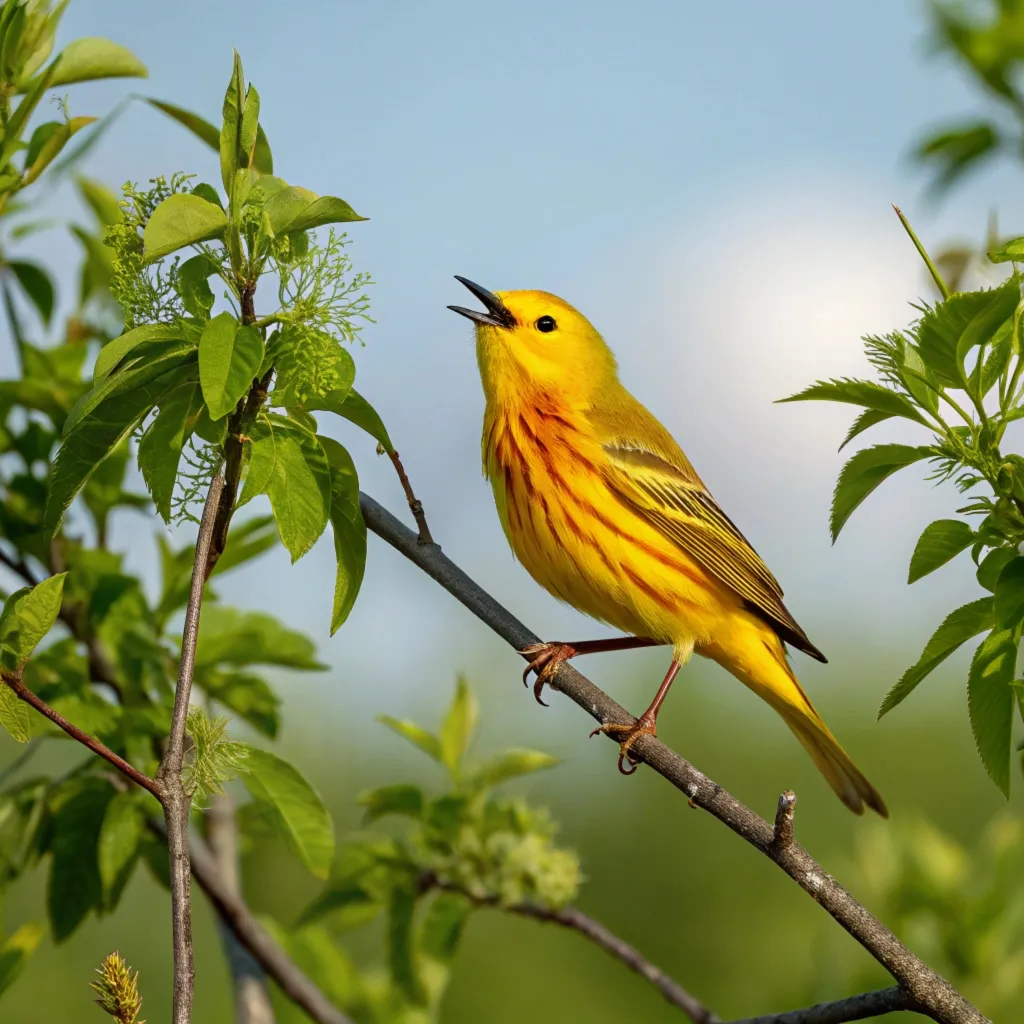
The Yellow Warbler is a small but vibrant bird, easily recognized by its entirely yellow plumage. Males often display reddish streaks on their chest, adding to their colorful appearance.
Preferred Environments
Yellow Warblers inhabit wetlands, open woodlands, and shrublands, particularly near water sources. This habitat preference aligns with their feeding habits and nesting requirements.
Insectivorous Diet
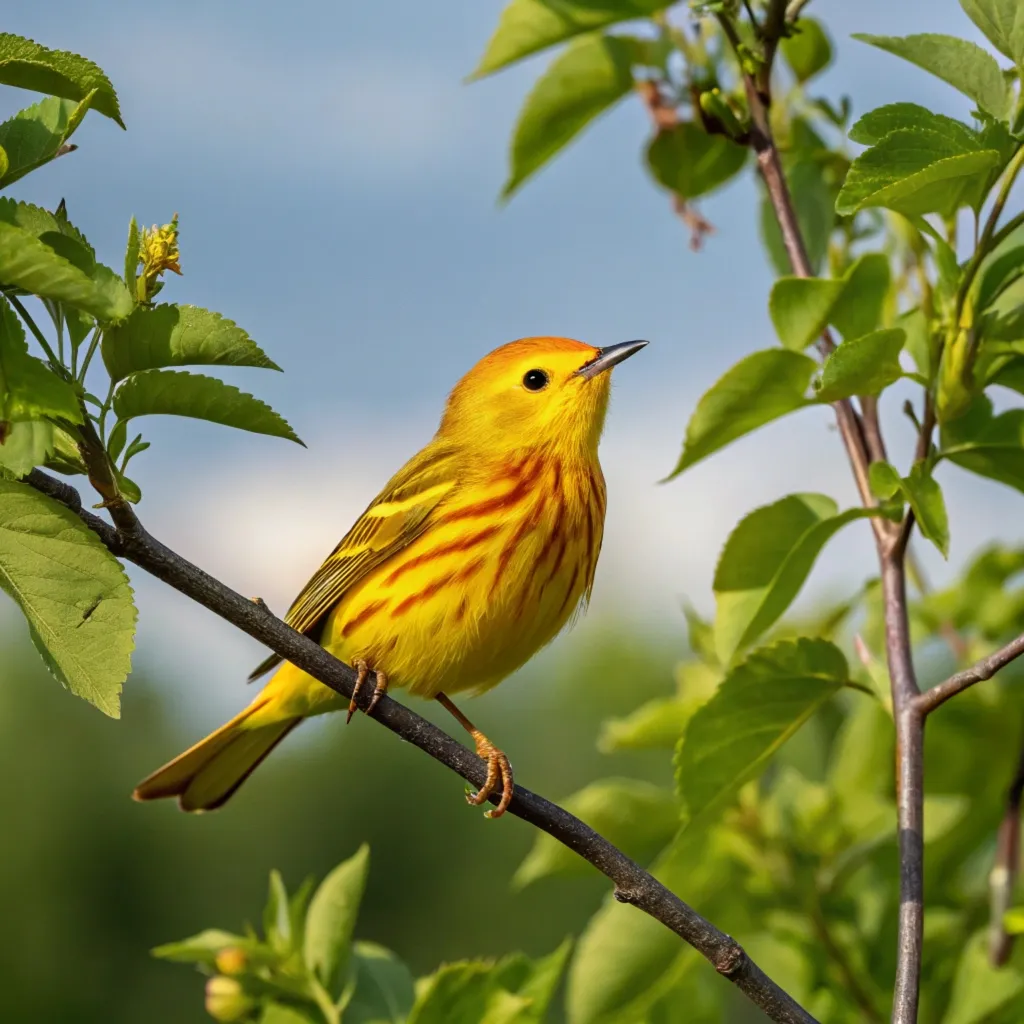
These warblers are insectivorous, feeding on a variety of insects including caterpillars, flies, and beetles. They forage actively among branches, playing a crucial role in controlling insect populations in their habitats.
Yellow Warblers are tiny birds that look like they’re made of sunshine. They live in places with lots of trees and bushes, especially near water. These little birds are bug-eaters.
They love to munch on caterpillars, flies, and beetles. By eating these insects, Yellow Warblers help keep the bug population under control. This is good for the plants and other animals in their homes.
The Common Yellowthroat: A Masked Beauty
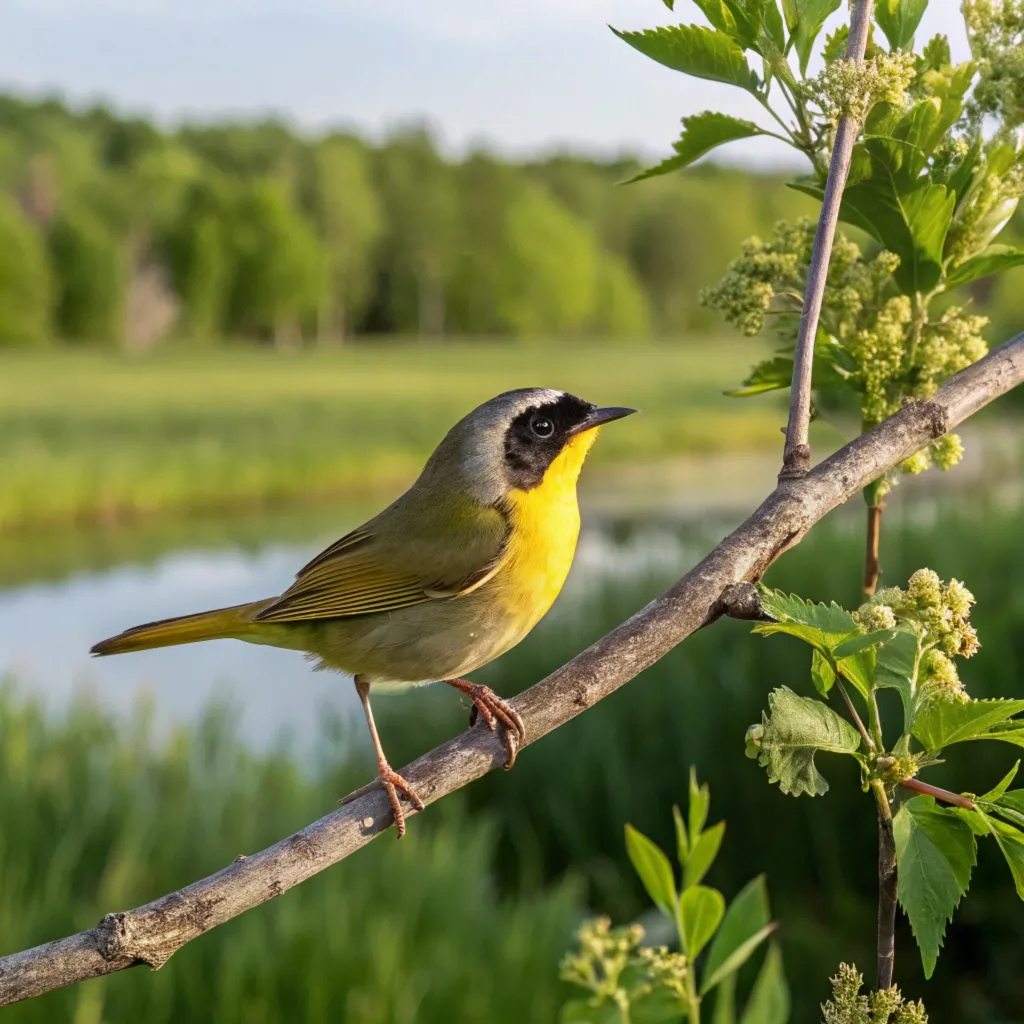
The Common Yellowthroat is easily identified by its bright yellow underside and distinctive black mask across the face, giving it a charming, bandit-like appearance.
Habitat Preferences
These birds thrive in dense undergrowth, marshy areas, and wetlands. Their preference for thick vegetation provides them with ample cover and foraging opportunities.
Feeding Behavior

Common Yellowthroats primarily eat insects and spiders. They search for food on or near the ground and water, utilizing their small size to navigate through dense vegetation effectively.
Common Yellowthroats are like little masked superheroes of the bird world. They wear a black mask over their eyes, which makes them look very cool.
These birds love to hide in thick bushes and plants near wet areas. They’re really good at finding bugs and spiders to eat. Their small size helps them move easily through the thick plants where they live.
Migratory Patterns and Seasonal Behaviors

Many yellow and black birds in North America exhibit fascinating migratory patterns. The Yellow-headed Blackbird, for instance, migrates to the western and central regions of the United States and Canada during summer for breeding. In winter, they move south to areas ranging from California to Texas and into Mexico.
Seasonal Adaptations
These birds adapt their behaviors and diets to seasonal changes. For example, the Yellow-headed Blackbird shifts from an insect-based diet in summer to seeds and grains in winter, reflecting the changing availability of food sources.
Yellow and black birds are great travelers. Many of them fly long distances every year. They go north in the spring to have babies. Then, when it gets cold, they fly south where it’s warmer.
These birds are smart. They change what they eat based on the season. In summer, they eat lots of bugs. In winter, they switch to eating seeds because there aren’t as many bugs around.
Conservation Challenges and Efforts

Yellow and black birds face various conservation challenges, primarily due to habitat loss and climate change. Wetland drainage and agricultural expansion have reduced suitable nesting areas for species like the Yellow-headed Blackbird.
Conservation Initiatives
Efforts to protect and restore wetland habitats are crucial for the survival of these species. Conservation organizations work to preserve marshes and educate the public about the importance of these ecosystems for bird populations.
Yellow and black birds need our help. People are changing the places where these birds live. Some wet areas are being drained, and farms are getting bigger.
This means the birds have fewer places to make their nests. But there’s good news! Many people are working hard to save these birds.
They’re trying to protect the wet areas and teach others why these places are important for birds.
Birdwatching Tips for Yellow and Black Birds
Observing these colorful birds can be a rewarding experience for birdwatchers. Here are some tips:
- Listen for Calls: Many of these birds have distinctive calls. The Yellow-headed Blackbird’s unique vocalization can help locate them in dense marshes.
- Visit Diverse Habitats: Explore a range of environments from wetlands to open fields to increase your chances of spotting different species.
- Use Binoculars: These birds can be small and quick. A good pair of binoculars enhances your viewing experience.
- Be Patient: Some species, like the Yellow-headed Blackbird, may spend time hidden in reeds. Patience often rewards birdwatchers with excellent sightings.
Watching yellow and black birds can be super fun. It’s like a treasure hunt in nature. You can listen for bird sounds to find them.
Some birds have funny or pretty calls. It’s good to look in different places like wet areas and open fields. Using binoculars helps you see the birds up close.
Remember, sometimes you need to wait quietly. The birds might be hiding, but if you’re patient, you might see something amazing!
Ecological Importance of Yellow and Black Birds
These birds play significant roles in their ecosystems:
- Insect Control: Many species help control insect populations, benefiting both natural habitats and agricultural areas.
- Seed Dispersal: Birds like the American Goldfinch contribute to plant dispersal by consuming and spreading seeds.
- Indicator Species: The presence and health of these bird populations can indicate the overall health of an ecosystem, particularly wetlands.
Yellow and black birds are very important for nature. They help in many ways. These birds eat lots of bugs, which is good for plants and farms.
Some birds also spread seeds when they eat fruits. This helps new plants grow in different places. Scientists watch these birds closely.
If the birds are healthy and there are many of them, it usually means the place where they live is healthy too.
Adaptations for Survival
Yellow and black birds have developed various adaptations to thrive in their environments:
- Coloration: The bright colors serve multiple purposes, from attracting mates to camouflage in certain habitats.
- Bill Shape: Different bill shapes are adapted for specific diets, whether for catching insects or cracking seeds.
- Nesting Behavior: Species like the Yellow-headed Blackbird build nests over water, providing protection from predators.
Yellow and black birds have special tricks to stay safe and healthy. Their bright colors help them find mates and sometimes hide from danger.
Their beaks are shaped in different ways to help them eat different foods. Some birds are very clever about where they build their nests.
For example, some make nests over water to keep their babies safe from animals that might want to eat them.
Interactions with Other Species
These birds often interact with other species in their habitats:
- Competition: Yellow-headed Blackbirds may compete with Red-winged Blackbirds for nesting sites in marshes.
- Predator-Prey Relationships: They are prey for various predators and in turn prey on insects and small organisms.
- Mutualistic Relationships: Some species may have beneficial relationships with plants through pollination or seed dispersal.
Yellow and black birds don’t live alone. They share their homes with many other animals and plants. Sometimes they have to compete with other birds for the best places to build nests.
These birds have to be careful because bigger animals might try to eat them. But they also eat smaller creatures like insects.
Some of these birds help plants grow by moving pollen or seeds around. It’s like they’re part of a big nature team where everyone has a job to do.
Impact of Climate Change on Yellow and Black Birds
Climate change poses significant challenges to these bird species:
- Habitat Shifts: Changing temperatures and precipitation patterns may alter suitable habitats.
- Migration Timing: Warmer temperatures can affect the timing of migrations, potentially leading to mismatches with food availability.
- Breeding Patterns: Changes in climate can impact breeding success and population dynamics.
The Earth’s changing weather is making life harder for yellow and black birds. As it gets warmer, the places where these birds live might change.
This can make it hard for them to find food and safe places to live. The warmer weather can also confuse the birds about when to fly to new places.
Sometimes they might arrive too early or too late to find enough food. These changes can make it harder for the birds to have babies and keep their families healthy.
FAQs
What is the most common yellow and black bird in North America?
The American Goldfinch is one of the most common yellow and black birds in North America, widely distributed across the continent.
Do yellow and black birds migrate?
Many yellow and black birds, including the Yellow Warbler and Yellow-headed Blackbird, are migratory, moving between breeding and wintering grounds.
What do yellow and black birds eat?
Diets vary by species but generally include insects, seeds, and sometimes fruits. The Yellow-headed Blackbird, for example, eats insects in summer and seeds in winter.
Where can I see yellow and black birds?
These birds can be seen in various habitats including wetlands, open fields, and woodlands. Specific locations depend on the species and season.
Are any yellow and black birds endangered?
While not all are endangered, some species face challenges due to habitat loss. Conservation efforts are ongoing to protect vulnerable populations.
How can I attract yellow and black birds to my backyard?
Planting native plants, providing water sources, and offering appropriate seeds can attract species like the American Goldfinch to your backyard.
What is the largest yellow and black bird in North America?
The Yellow-headed Blackbird is one of the larger yellow and black birds in North America, known for its distinctive appearance.
Do yellow and black birds sing?
Yes, many species have unique songs or calls. The Yellow Warbler, for instance, is known for its sweet, musical song.
How long do yellow and black birds typically live?
Lifespan varies by species, but many small songbirds live for several years in the wild, with some individuals reaching 10 years or more.
Can yellow and black birds be kept as pets?
It’s generally illegal and not recommended to keep wild birds as pets. Enjoying these birds in their natural habitats is the best way to appreciate them.

Kashvi is a passionate bird enthusiast and nature lover who has been fascinated by the world of birds for years. With a keen eye for detail and a love for learning, Kashvi is dedicated to sharing her knowledge and insights with fellow bird enthusiasts on Avian Enthusiasts. Through her engaging and informative articles, Kashvi aims to inspire others to join her in exploring the fascinating world of birds and to promote a deeper appreciation for these incredible creatures.


