

Yellow Birds in Colorado: Ultimate Guide to Identification
To identify yellow birds in Colorado, recognize their features and know where they live. Birds like the American Goldfinch and Western Tanager have unique colors and patterns that help you tell them apart. They like to inhabit places such as riversides and open fields. Observing their actions can reveal important information about their role in nature. What other wildlife might you discover in Colorado's diverse environments?
Key Takeaways
Colorado hosts several bright yellow bird species that attract birdwatchers. These include the American Goldfinch, Western Tanager, and Yellow Warbler.
To identify these birds, look for key features like their plumage color, size, and distinct markings. The American Goldfinch is bright yellow, while the Western Tanager has a red head.
For the best birdwatching experience, visit during early mornings and late afternoons. This is when yellow birds are most active and visible.
To attract yellow birds, use specialized feeders filled with nyjer seeds. Provide water sources and plant native plants in your landscape.
Conservation efforts are important. They help protect bird habitats and support migratory patterns, ensuring these species thrive in Colorado.
Overview of Yellow Birds in Colorado
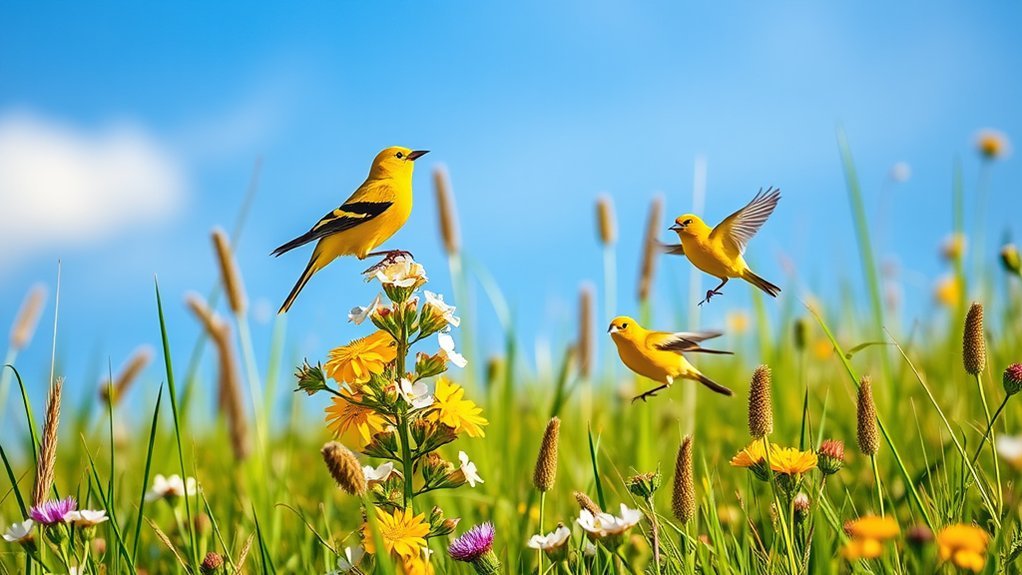
When you explore the diverse avian population of Colorado, you'll encounter several species of yellow birds that stand out against the rich backdrop of the state's landscapes.
Among them, the American Goldfinch and Yellow Warbler are particularly notable for their vibrant plumage. To enhance your birdwatching experience, keep your binoculars handy and visit various habitats, from wetlands to meadows.
Early morning and late afternoon are ideal times for spotting these dazzling birds. Additionally, understanding yellow bird conservation efforts is essential; you can participate by supporting local organizations focused on habitat preservation.
Engaging with fellow birdwatchers fosters a sense of belonging in this rewarding hobby. So, take the time to identify these charming species while advocating for their protection.
American Goldfinch: The Stunning Yellow Feeder
The American Goldfinch, known for its striking yellow plumage, easily captures the attention of birdwatchers and nature enthusiasts alike.
This vibrant bird is a frequent visitor at various feeder types, particularly tube feeders and thistle socks, which cater to its specific feeding habits. Goldfinches prefer nyjer seeds, and their agile nature allows them to cling to feeders with ease.
They're social creatures, often seen in flocks, bringing joy to your backyard with their lively antics.
To attract more goldfinches, guarantee you're providing fresh seeds and maintaining clean feeders. Observing these stunning birds not only enriches your outdoor experience but also fosters a sense of belonging in the wonderful community of birdwatchers enthusiastic to connect with the beauty of nature.
Western Tanager: A Splash of Color in the Trees
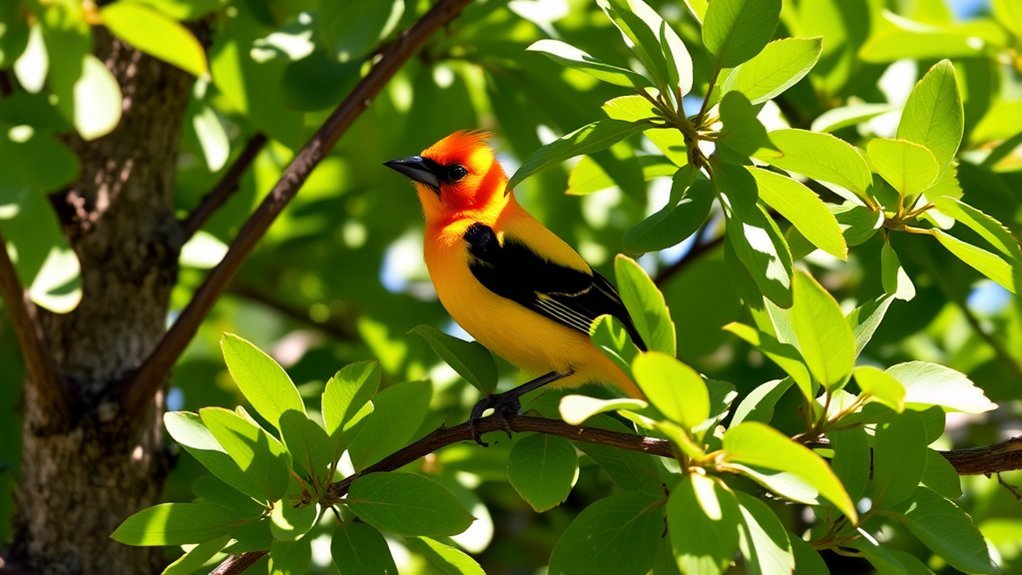
While the American Goldfinch dazzles at feeders, the Western Tanager brings an equally vibrant display to Colorado's wooded areas.
This striking bird, with its bright yellow body and fiery red head, can often be found foraging in the tree canopy. Its feeding habits include a diet of insects, fruits, and berries, showcasing its adaptability.
During spring and summer, you'll notice the Western Tanager in Colorado, but as autumn approaches, it begins its southward migration to Central America and Mexico.
This fascinating journey emphasizes the importance of habitat conservation for these colorful travelers. Observing their feeding and migration patterns not only connects you to nature but also deepens your appreciation for the dynamic ecosystems that support such beautiful wildlife.
Townsend's Warbler: A Unique Beauty
Although often overshadowed by more flamboyant species, the Townsend's Warbler captivates birdwatchers in Colorado with its unique beauty and distinct markings.
You'll encounter this striking bird in coniferous forests, particularly in mountainous regions. Its vibrant yellow underparts and bold black-and-yellow head make it easily identifiable.
Observing Townsend's behavior is equally fascinating; they flit through treetops, foraging for insects and nectar. This dynamic movement adds to the thrill of spotting them.
Their habitat range extends from the Rockies to the Pacific Northwest, showcasing adaptability.
Whether you're an experienced birder or just starting, the Townsend's Warbler offers an inviting opportunity to connect with nature and deepen your understanding of the avian world around you.
Yellow Warbler: The Sweet Songster of Wetlands
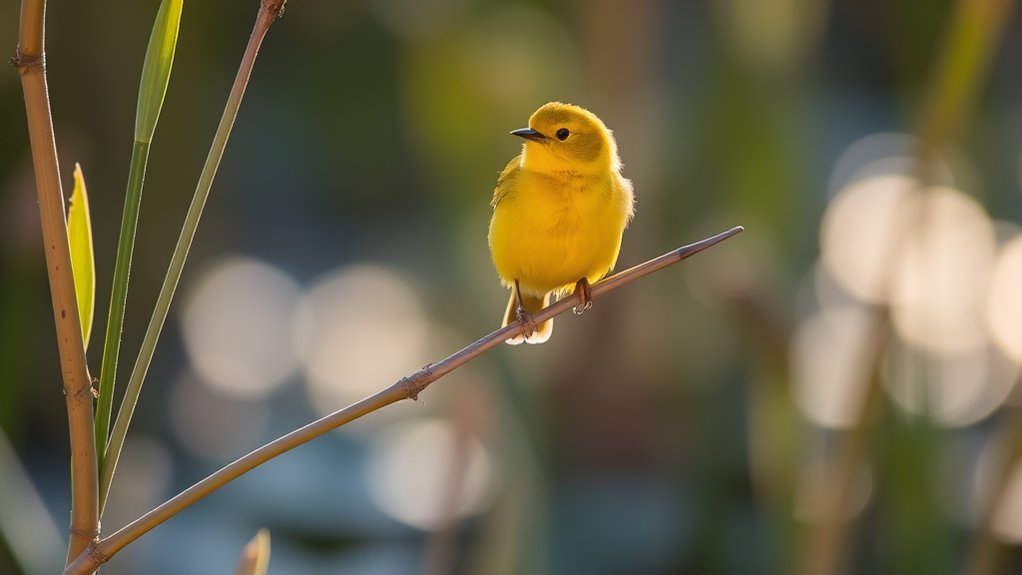
A familiar sight and sound in Colorado's wetlands, the Yellow Warbler enchants birdwatchers with its melodious song and brilliant yellow plumage. These small songbirds thrive in lush, shrubby habitats, typically nesting near water.
You'll often observe their intricate breeding behavior, where males serenade females, establishing territory with vibrant calls. Their song rings through the foliage, marking spring's arrival and inviting connection amongst fellow bird enthusiasts.
However, the Yellow Warbler faces challenges due to habitat loss, making habitat conservation critical. By participating in local preservation efforts, you can help maintain the delicate ecosystems they depend on.
Engaging with conservation initiatives fosters a sense of belonging and supports the survival of this charming songster and its wetland home.
Bullock's Oriole: A Bright Visitor in Backyards
As you step into your backyard during the warmer months, the striking presence of Bullock's Oriole can often catch your eye with its vivid orange and black plumage.
These birds, known for their delightful songs, exhibit fascinating Bullock's oriole behavior. They're often seen hanging upside down while foraging, showcasing their agility and adaptability.
When it comes to Bullock's oriole feeding, they primarily enjoy nectar, fruits, and insects, making them a colorful addition to gardens with feeders offering sugar-water solutions or fresh fruit.
Observing these lively visitors not only enhances your outdoor experience but can also deepen your connection to nature.
Common Yellowthroat: The Inhabitant of Marshes
While Bullock's Oriole brightens backyards, the Common Yellowthroat thrives in the wetlands of Colorado.
This small, secretive warbler prefers dense vegetation, making it a challenge to spot. Its feeding habits mainly involve foraging through reeds and grasses for insects and spiders, essential for their protein intake.
During breeding season, which peaks in late spring, you'll notice the male's vibrant yellow throat and black mask, vital for attracting females. Their breeding behavior consists of establishing territories and constructing cup-shaped nests low to the ground, often hidden from predators.
Observing the Common Yellowthroat in its natural habitat reinforces the value of wetland ecosystems, showcasing the intricate relationship between this bird and its environment.
Connecting with nature through their presence deepens your appreciation for Colorado's rich biodiversity.
Cedar Waxwing: The Elegant Yellow Wonder
When you spot a Cedar Waxwing flitting among the trees, its striking yellow plumage instantly captures your attention. This elegant bird showcases a mix of cedar behavior and social dynamics, often gathering in flocks to feed.
As you observe, consider these key points about their migration and lifestyle:
- Cedar Waxwings undergo short-distance Waxwing migration, moving primarily in search of food.
- They're known for their unique feeding habits, often indulging in berries, which impacts their seasonal movements.
- Their playful interactions with each other highlight their strong social bonds.
Understanding these aspects enhances your appreciation for this stunning species and helps foster a deeper connection to Colorado's avian community.
Celebrate their presence and recognize how they enrich your local environment!
Pine Siskin: Small, but Full of Personality
Though small in size, the Pine Siskin boasts a vibrant personality that captivates birdwatchers and casual observers alike. Known for its lively and spirited nature, Pine Siskin behavior showcases social interaction within flocks, often filling the air with cheerful chirps.
These birds frequently visit feeders, not shy about competing for seeds with larger species. When it comes to Pine Siskin feeding, they particularly favor nyjer and sunflower seeds, deftly extracting kernels thanks to their slender beaks.
Observing their rapid movements and acrobatic antics can be a delightful experience. These charming little birds not only add life to your backyard but also remind you of the beauty of nature's intricacies, creating a sense of connection and belonging among fellow bird enthusiasts.
Evening Grosbeak: A Colorful Visitor to Feeders
Following the lively presence of Pine Siskins, the Evening Grosbeak stands out as a striking visitor at feeders, known for its vibrant yellow plumage and robust physique.
This colorful bird exhibits fascinating feeding habits, often favoring sunflower seeds and peanuts.
You can attract these beautiful visitors by:
- Providing a feeder with mixed seeds to appeal to their preferences.
- Ensuring a quiet location where they can feed comfortably without disturbances.
- Maintaining fresh food, as they're drawn to well-stocked feeders.
When the Evening Grosbeak visits, you'll appreciate its bold appearance and delightful antics.
Observing these gorgeous birds not only brightens your backyard but also fosters a connection with nature that brings joy and belonging to all bird enthusiasts.
Lesser Goldfinch: The Tiny but Vibrant Gem
The Lesser Goldfinch, a small yet strikingly vibrant bird, often graces Colorado backyards with its presence.
Typically found in areas rich with seeds and flowers, this bird thrives in residential neighborhoods, parks, and open spaces.
Its behavior is equally enchanting; you'll notice that they're social creatures, often flocking in small groups, flitting about playfully.
These finches are known for their acrobatic feeding habits, hanging upside down to reach seeds.
Their cheerful songs, featuring a series of high-pitched notes, add a delightful soundtrack to any garden.
Habitat Preferences: Where to Spot Yellow Birds in Colorado
Yellow birds like the Lesser Goldfinch often inhabit diverse environments across Colorado, making them relatively easy to spot if you know where to look. Identifying their preferred habitats can enhance your birdwatching experience, especially during seasonal migrations.
Here are some key areas to explore:
- Riparian zones near water sources
- Open fields with scattered trees and shrubs
- Urban parks with native vegetation
Frequently Asked Questions
What Time of Year Are Yellow Birds Most Commonly Seen in Colorado?
You most commonly see yellow birds in Colorado during spring and early summer. These birds migrate back from warmer areas, making them easier to spot. Knowing their seasonal habits can improve your birdwatching experience and deepen your connection to nature. Enjoy the sights and sounds of these vibrant birds as they return to the state.
How Can I Attract Yellow Birds to My Backyard?
To attract yellow birds to your backyard, set up bird feeders with seeds they enjoy, such as sunflower seeds. Plant native plants that offer food and shelter for these birds. Keep your backyard clean and free of debris. By creating a welcoming atmosphere, you will be able to enjoy the bright and cheerful presence of yellow birds in your space.
Are Yellow Birds Found in Urban Areas of Colorado?
Yes, yellow birds can be found in urban areas of Colorado. These areas provide homes for species like goldfinches and warblers. Creating inviting spaces in your backyard can attract these colorful birds and enhance your outdoor experience. Enjoy observing their vibrant colors and cheerful songs.
What Are the Best Binoculars for Bird Watching in Colorado?
For birdwatching in Colorado, choose binoculars with wide fields of view and excellent light transmission. Brands like Nikon and Zeiss offer models that ensure clarity and comfort for long viewing sessions. Look for features such as adjustable eye relief and waterproof designs to enhance your experience in various conditions. Sharp images and lightweight construction are also important for easy handling. Enjoy observing the rich birdlife that Colorado has to offer.
How Can I Help Conserve Yellow Bird Populations in My Area?
To help conserve yellow bird populations in your area, focus on preserving their habitats and encouraging community participation. Organize events that teach people about local ecosystems. This approach builds a sense of community and responsibility for conservation efforts. Engage friends and neighbors in activities like tree planting and clean-up drives. Share information through social media to raise awareness. By working together, we can protect these beautiful birds and their homes.

Kashvi is a passionate bird enthusiast and nature lover who has been fascinated by the world of birds for years. With a keen eye for detail and a love for learning, Kashvi is dedicated to sharing her knowledge and insights with fellow bird enthusiasts on Avian Enthusiasts. Through her engaging and informative articles, Kashvi aims to inspire others to join her in exploring the fascinating world of birds and to promote a deeper appreciation for these incredible creatures.


