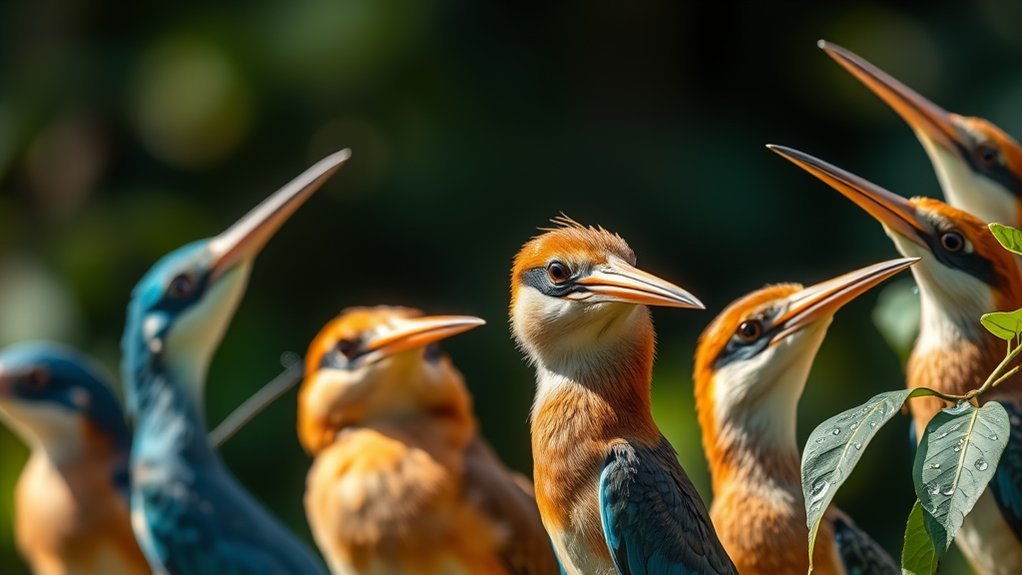
Birds With Long Beaks: Adaptations and Species Guide
Birds with long beaks display various adaptations for their roles in the environment. Species like hummingbirds and herons have distinct beak shapes that help them find food effectively. These adaptations result from evolutionary changes and highlight the link between a bird's structure and its ability to survive.
The diversity of beaks shows how different species compete for food and interact with their surroundings. Long beaks enable birds to access different food sources, from nectar to fish. Understanding these adaptations helps us appreciate the relationship between a bird's beak and its habitat.
Key Takeaways
Birds with long beaks are well-adapted to their environments. Hummingbirds have slender bills to reach nectar deep inside flowers. This helps them pollinate plants and supports ecosystem health. Toucans have large, colorful bills that allow them to eat fruit, help regulate their body temperature, and communicate socially, which aids in attracting mates.
Shorebirds exhibit different beak shapes to hunt various aquatic creatures. This variety shows how these birds adapt their feeding strategies. Woodpeckers, herons, and cranes use their long beaks to find food accurately, demonstrating different ways to obtain meals. Each bird's beak plays a crucial role in its survival and success.
The Evolution of Long Beaks in Birds

As you explore the evolution of long beaks in birds, you'll find that this fascinating adaptation arose primarily from environmental pressures and feeding strategies.
Beak morphology plays a significant role in bird survival, as species with elongated beaks can access food resources that others cannot. For instance, birds that feed on nectar or insects tucked away in crevices benefit from this specialized morphology.
The evolutionary advantages are compelling; longer beaks increase foraging efficiency, allowing these birds to exploit specific niches in their ecosystems.
Over generations, natural selection favored those with longer beaks, leading to greater reproductive success.
Understanding this evolutionary journey helps you appreciate the intricate relationship between species and their environments, reinforcing the idea that adaptability is essential for survival.
Hummingbirds: Masters of Nectar Extraction
While many birds have specialized beaks for their feeding habits, hummingbirds truly stand out as the masters of nectar extraction. Their long, slender bills allow you to explore deep into flowers, accessing nectar that other birds can't reach.
In the domain of nectar competition, hummingbirds exhibit remarkable agility, darting from blossom to blossom, ensuring they capitalize on scarce resources. Their rapid wing beats and specialized tongues further enhance their efficiency, making them expert pollinators.
Through these intricate pollination strategies, they play a crucial role in ecosystem health, supporting plant reproduction. By understanding these adaptations, you can appreciate the delicate balance within nature, where every species, including hummingbirds, plays an essential part in sustaining biodiversity.
Toucans: Colorful Beaks for Fruity Feasts

Toucans, with their vibrant, oversized bills, exemplify how specialized beaks can enhance dietary preferences and foraging efficiency.
Exploring various toucan species, you'll notice their beak colors range from striking yellow to deep black, which not only provide visual appeal but also play a role in thermoregulation.
These adaptations allow toucans to reach fruit deep within dense foliage, giving them an advantage in resource-rich environments.
Their unique beaks enable them to handle bulky fruits easily, reducing competition for food.
The coloration of their beaks might also be a factor in social signaling and mate attraction.
Shorebirds: Adaptations for Hunting in Water
Although shorebirds are often seen wading along coastlines and marshes, their long, specialized beaks serve an important purpose in hunting aquatic prey. Beak morphology varies among species, adapting to specific feeding strategies.
For instance, some shorebirds, like the curlew, possess long, curved beaks, allowing them to probe deep into mudflats for buried crustaceans. Others, like the sandpiper, use straight, slender beaks to pick off small insects and larvae. Their unique hunting techniques enhance efficiency; while some search visually, others rely on tactile cues.
Woodpeckers: Specialized Tools for Bark Boring

As you observe woodpeckers in their natural habitat, you'll notice their remarkable adaptations for drilling into tree bark, a behavior central to their foraging strategy.
Their elongated, pointed beaks are specialized tools, allowing them to bore into wood with impressive precision. This drilling, paired with their distinct drumming behaviors, not only marks territory but also helps locate hidden insects within the bark.
When engaged in bark feeding, woodpeckers use their long tongues, which can extend far beyond their beaks, to extract beetles and larvae from crevices.
This unique combination of anatomical adaptations and behaviors illustrates how woodpeckers efficiently exploit their environment, contributing to the ecosystem by controlling insect populations and facilitating tree health.
Herons and Cranes: Precision in Fishing and Foraging
When you watch herons and cranes in action, their long, slender beaks become evident as essential instruments for obtaining food. These beaks are perfectly designed for precision fishing and foraging, allowing herons to spear fish with remarkable accuracy and cranes to probe mud for hidden insects and seeds.
Observing heron behavior reveals their patient hunting style; they often stand still for extended periods, waiting for the perfect moment to strike.
Meanwhile, crane migration showcases their adaptability and teamwork, as they travel in flocks, utilizing thermal updrafts for efficient flight.
Both species illustrate the remarkable connection between morphology and behavior, highlighting how well-adapted these birds are to their environments, fostering a sense of wonder in their elegant pursuit of sustenance.
Frequently Asked Questions
How Do Long Beaks Impact a Bird's Overall Health?
Long beaks improve a bird's ability to find different types of food. This access to various food sources can boost the bird's health. A balanced diet offers essential nutrients that help maintain energy levels, which are crucial for the bird's survival and well-being.
Can Long-Beaked Birds Mate With Short-Beaked Species?
Long-beaked birds can mate with short-beaked birds if their beaks fit well together. However, these birds usually prefer to mate with others that have similar beaks. This preference affects the variety of their genes, which can influence whether the offspring survive and thrive in their environment.
What Environmental Factors Influence the Evolution of Long Beaks?
Environmental factors significantly influence the evolution of long beaks. Key elements include food availability and changes in habitat. When food sources shift, species must adapt. This adaptation often results in longer beaks, which help them feed more efficiently. Over time, these changes support survival in various ecosystems. Understanding these connections reveals how species evolve in response to their environments, highlighting the interplay between nature and adaptation.
How Do Long Beaks Affect a Bird's Feeding Habits?
Long beaks help birds find food more easily. They improve how birds pick and eat different types of food. This makes it simple for them to get what they need to survive in various places where food might be hard to find. Birds with long beaks can reach into flowers for nectar, probe into mud for insects, or extract seeds from cones. This ability allows them to thrive in different environments and adapt to what is available around them.
Are There Any Threats to Long-Beaked Bird Species?
Long-beaked bird species face serious threats from habitat loss and climate change. As their environments deteriorate, their feeding areas decrease. This reduction leads to food shortages, which harm their survival and ability to reproduce. It is crucial to address these issues to protect these bird species and ensure their future.

Kashvi is a passionate bird enthusiast and nature lover who has been fascinated by the world of birds for years. With a keen eye for detail and a love for learning, Kashvi is dedicated to sharing her knowledge and insights with fellow bird enthusiasts on Avian Enthusiasts. Through her engaging and informative articles, Kashvi aims to inspire others to join her in exploring the fascinating world of birds and to promote a deeper appreciation for these incredible creatures.