

Black Birds in Michigan: A Complete Identification Guide
To identify black birds in Michigan, focus on their distinct features. Different species, like the Red-winged Blackbird and the American Crow, have specific traits that help with identification. Pay attention to their behaviors and habitats, as this will improve your skills. You may want to explore what makes the Common Grackle unique compared to similar birds.
Key Takeaways
- Red-winged Blackbird: This bird has black feathers and red patches on its shoulders. It prefers to breed and nest in wetland areas.
- Common Grackle: This bird shows shiny, iridescent feathers. It is often found in open spaces and forages in groups, making a distinct "grackle" sound.
- American Crow: American Crows have shiny black feathers. They live in various environments and are known for their intelligence and ability to mimic sounds. They often gather in large flocks.
- Identification Tips: To identify these birds, pay attention to their size, shape, bill shape, and unique calls.
- Social Behavior: Watching how these birds interact, sing, and show dominance can help you recognize different species.
Overview of Black Birds in Michigan
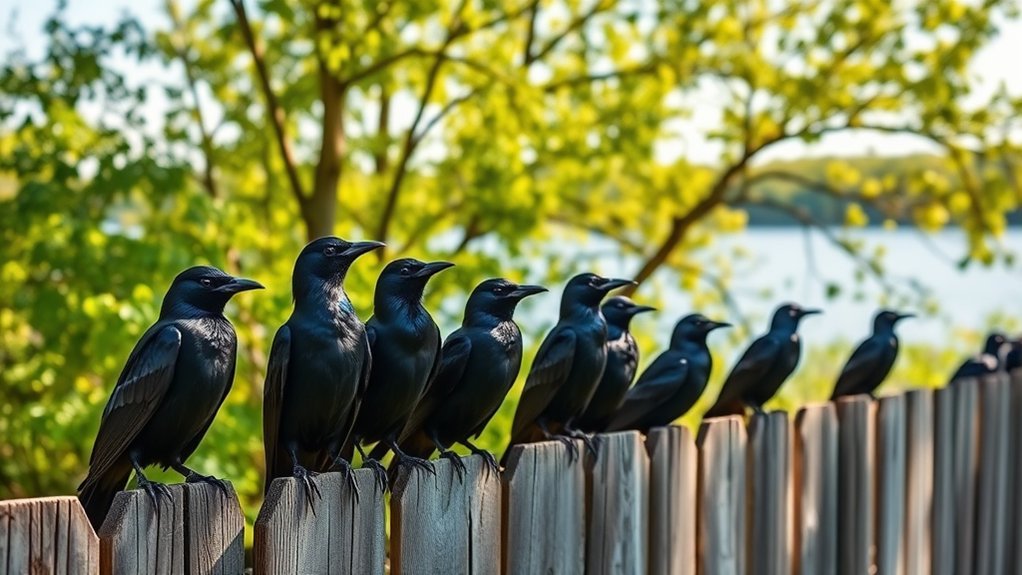
Black birds are a prominent feature of Michigan's avian landscape, encompassing a variety of species that contribute to the region's ecological diversity.
You'll notice these birds exhibit distinct habitat preferences that influence their presence. Often, they thrive in wetlands, fields, and forest edges, providing the necessary resources for foraging and nesting.
Understanding their seasonal migration patterns is crucial; many species travel vast distances, returning to Michigan in spring to breed. This return marks an essential time for residents, as their songs signal the season's change.
Observing these birds can foster a deeper connection to Michigan's natural beauty, enhancing your sense of belonging to a community that values and protects its wildlife heritage.
Embrace this chance to appreciate the complex relationship between these species and their environment.
Red-winged Blackbird
With its striking black plumage and vibrant red shoulder patches, the Red-winged Blackbird stands out among Michigan's avian residents.
Typically found in wetland habitats, these birds prefer marshes, cattail beds, and fields, where they can easily access food and nesting sites.
Their breeding behavior is particularly fascinating; males establish and defend territories by singing loudly, showcasing their vigor.
Females build their nests low among tall grasses or reeds, often laying three to five eggs per clutch.
During the breeding season, you'll notice their social structures, with males displaying aggressive behaviors toward intruders while forming loose colonies.
Understanding their habitat preferences and breeding dynamics enriches your appreciation for these remarkable blackbirds as integral members of Michigan's ecosystems.
Common Grackle

The Common Grackle is a distinctive bird that can easily be identified by its iridescent plumage, which shifts from deep purple to bronze in sunlight.
Often found in open areas like fields, parks, and near water bodies, its habitat is diverse and adaptable.
You'll notice their behavior includes foraging in groups, a trait that enhances their social structure. They feed on insects, seeds, and fruits, showcasing their opportunistic nature.
Recognizing their sharp "grackle" call can help you identify them when they gather, often during breeding season.
Pay attention to their interaction patterns and dominance displays, as they establish pecking order.
Observing these birds enriches your experience in Michigan's rich avian landscape.
American Crow
Renowned for its intelligence and adaptability, the American Crow is a common sight across Michigan's diverse landscapes. You're likely to encounter these birds in urban areas, open fields, and wooded regions. Their glossy black plumage distinguishes them from other blackbirds.
Observing crow behavior reveals their impressive social structures; they often gather in large flocks, showcasing complex interactions. When it comes to communication, their crow calls vary greatly, signaling everything from alarm to social bonding.
You'll notice that American Crows can mimic other sounds, enhancing their vocal repertoire. Engaging with them can deepen your appreciation for their remarkable adaptability, reflecting a fascinating relationship with the environments they inhabit.
Understanding these aspects fosters a deeper connection among bird enthusiasts in Michigan.
Boat-tailed Grackle

Though often overshadowed by their more familiar relatives, Boat-tailed Grackles present a striking presence in Michigan's wetlands and coastal areas.
You'll notice their distinctive long, wedge-shaped tails and iridescent plumage, which enhances their visual appeal. These birds exhibit unique boat-tailed behavior, often foraging in pairs or small groups, displaying a communal nature that creates a sense of togetherness.
They prefer habitats with ample vegetation, such as marshes and shorelines, where they can find food sources like insects and seeds. Their vocalizations are equally intriguing, comprising a variety of harsh calls that resonate through their environment.
European Starling
Observing the wetlands and urban landscapes of Michigan, you might encounter the European Starling, a bird that has adapted remarkably well to diverse environments. Known for its iridescent plumage and sociable behavior, this species exhibits fascinating European behavior that intrigues many bird enthusiasts.
You'll likely notice:
- Distinctive glossy feathers that shimmer in the sunlight.
- A variety of Starling calls, including whistles and squawks that create an engaging soundscape.
- Social feeding habits, often seen in large flocks.
These starlings are omnivorous, displaying resourcefulness in foraging. Their adaptability contributes to their success, making them a common sight in your local parks and fields.
Observing their behaviors can deepen your appreciation for these remarkable birds in your surroundings.
Black-capped Chickadee
The Black-capped Chickadee is a small, charismatic bird that thrives in Michigan's varied habitats, from dense forests to suburban backyards.
You'll often notice its inquisitive behavior as it flits from branch to branch, emitting its signature "chick-a-dee-dee-dee" call. This vocalization serves multiple functions, including warning of predators and attracting mates.
In its natural habitat, this bird shows adaptability, readily foraging for insects, seeds, and berries. You can enhance your backyard environment by providing feeders stocked with sunflower seeds, drawing these delightful visitors closer.
Observing their sociable nature as they engage in flocking behaviors creates a sense of community for birdwatchers. The Black-capped Chickadee's presence not only enriches our world but also fosters a connection to nature that many cherish.
Identification Tips for Black Birds
When identifying black birds in Michigan, pay close attention to key characteristics that distinguish different species.
Each black bird has unique traits that can reflect its behavioral habits and indicate its seasonal migration patterns. Focus on the following:
- Size and Shape: Note the overall size and body shape, as these can vary considerably between species.
- Bill Structure: Examine the bill; it often provides clues to their feeding behaviors and dietary preferences.
- Vocalizations: Listen for distinct calls or songs, as these can help you distinguish one black bird from another.
Frequently Asked Questions
What Habitats Do Black Birds Prefer in Michigan?
Black birds thrive in wetland areas and agricultural fields in Michigan. These habitats provide plenty of food and shelter. Various species inhabit these regions throughout the year. Watching their behaviors can enhance your understanding of their habitat preferences.
When Is the Best Time to Observe Them?
To observe black birds, visit during their breeding season, which is usually late spring and early summer. Knowing their migratory patterns can help you plan your outings. This will increase your chances of seeing these interesting birds in good conditions. Enjoy your birdwatching!
Do Black Birds Migrate Seasonally in Michigan?
Yes, black birds migrate in Michigan. Some species go south for the winter and return in spring. Watching their migration helps you learn about local ecosystems and bird behavior.
What Do Black Birds Eat in Michigan?
Black birds in Michigan eat a variety of foods. They eat seeds, fruits, insects, and small invertebrates. Their diet changes with the seasons. This helps them get the nutrients they need throughout the year. By adapting their feeding habits, black birds improve their chances of survival and reproduction.
How Can I Attract Black Birds to My Yard?
To attract black birds, place feeders that contain sunflower seeds in your yard. Add native plants, such as coneflowers, to your garden. These plants and feeders will create a friendly space for birds, helping you enjoy nature and its wildlife.

Kashvi is a passionate bird enthusiast and nature lover who has been fascinated by the world of birds for years. With a keen eye for detail and a love for learning, Kashvi is dedicated to sharing her knowledge and insights with fellow bird enthusiasts on Avian Enthusiasts. Through her engaging and informative articles, Kashvi aims to inspire others to join her in exploring the fascinating world of birds and to promote a deeper appreciation for these incredible creatures.


