

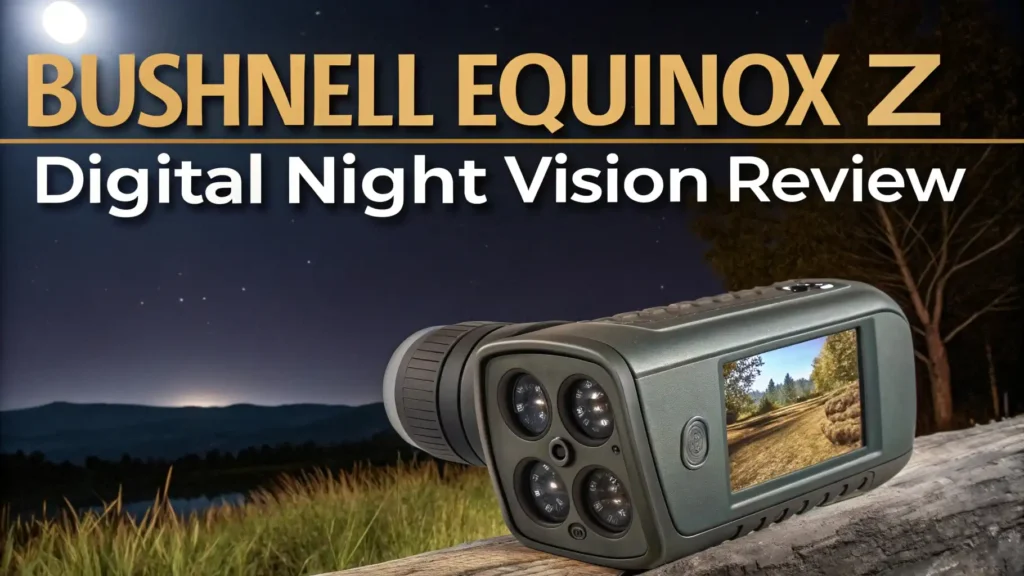
Bushnell Equinox Z Digital Night Vision Review
Night falls. The world goes dark. But what if you could see through the darkness as clearly as day? The Bushnell Equinox Z Digital Night Vision monocular promises exactly that experience. This affordable digital night vision device has become a popular choice for hunters, wildlife observers, security professionals, and outdoor enthusiasts who need reliable vision after sunset.
But does it really deliver on its promises? Can a mid-range digital night vision monocular compete with more expensive options? And more importantly, is it the right choice for your specific needs?
In this detailed review, we will explore every aspect of the Bushnell Equinox Z. You will learn about its features, performance, strengths, and limitations. We will examine real world experiences from actual users. By the end, you will know whether this device deserves a place in your gear collection.
The night vision market offers many choices. Some devices cost thousands of dollars. Others barely work in low light conditions. The Bushnell Equinox Z sits in the middle ground. It brings professional grade features to budget conscious consumers. Let us discover if it succeeds in that mission.
Key Takeaways:
Before we go deeper, here are the most important points about the Bushnell Equinox Z:
Affordable Digital Technology: The Equinox Z uses digital night vision instead of traditional tube based systems. This makes it significantly cheaper than Gen 2 or Gen 3 night vision devices. You get daytime color viewing and nighttime infrared capability in one unit.
Multiple Size Options: Bushnell offers three models in the Equinox Z line. The 6×50 provides maximum range and magnification. The 4.5×40 balances size and performance. The 3×30 offers the most compact and lightweight option. Each model targets different user needs and budgets.
Built-in Recording Capabilities: The larger models let you capture photos and record video. This feature proves valuable for documenting wildlife, security situations, or memorable outdoor moments. You can save files directly to a microSD card.
Battery Consumption Concerns: Users consistently report that battery life remains the biggest weakness. The device runs through AA batteries quickly during extended use. However, you can power it through the USB port with an external battery pack for longer sessions.
Effective IR Illuminator: The infrared illuminator reaches impressive distances. The 6×50 model illuminates targets up to 1000 feet away. You can adjust the IR brightness to match your viewing distance and preserve battery life when maximum power is not needed.
Understanding the Bushnell Equinox Z Product Line

- 6x magnification and 50 millimeter objective lens
- See targets more than 1,000 feet away day or night with a power built-in IR illuminator
- Stream live video to your mobile device

Last update on 2026-10-12 / Affiliate links / Images from Amazon Product Advertising API
The Bushnell Equinox Z family includes three distinct models. Each model serves different purposes and user preferences. Understanding these differences helps you choose the right one.
The model names tell you the specifications. The first number indicates magnification power. The second number shows the objective lens diameter in millimeters. Larger objective lenses gather more light. This improves image quality and viewing range.
The 6×50 model represents the flagship option. It offers the longest viewing range at 984 feet. This model weighs 27 ounces and measures 7.85 inches long. The larger size provides better light gathering capability. Serious hunters and surveillance professionals often prefer this model.
The 4.5×40 model provides the middle ground. It reaches 738 feet with good clarity. Weighing 22 ounces, it feels lighter during extended use. The field of view expands to 28 feet at 100 yards. This balance makes it popular among recreational users.
The 3×30 model delivers maximum portability. At just 15 ounces, you barely notice it in your pack. The viewing range drops to 656 feet. The field of view opens to 30 feet at 100 yards. Budget shoppers and casual observers appreciate this compact option.
All three models share core features. They work during day and night. Digital technology processes the image through a CMOS sensor. You see the result on an internal LCD screen. This differs from traditional night vision that uses image intensifier tubes.
How Digital Night Vision Technology Works
Digital night vision represents a different approach than traditional systems. Understanding this technology helps you use the device effectively. It also explains both the advantages and limitations you will experience.
Traditional night vision uses image intensifier tubes. These tubes amplify available light thousands of times. They create the classic green tinted image. These systems cost significantly more. They also require careful handling and maintenance.
The Bushnell Equinox Z takes a different path. It uses a digital CMOS sensor similar to what you find in cameras. Light enters through the glass objective lens. The sensor converts this light into electronic signals. A small computer processes these signals. Finally, you see the processed image on a micro LCD display.
This digital approach offers several benefits. The device costs less to manufacture. It can record photos and video easily. You get full color viewing during daytime. The system handles bright lights better without damage.
However, digital systems have limitations too. Image quality typically falls below high end traditional night vision. Resolution appears grainier in very dark conditions. The device requires more power, draining batteries faster. Digital processing can introduce slight delays.
The infrared illuminator solves the darkness problem. This built-in LED produces infrared light invisible to the human eye. The digital sensor sees this light clearly. The IR beam illuminates your target like a flashlight. This allows viewing in complete darkness where traditional starlight systems would fail.
Technical Specifications That Matter
Specifications tell you what the device can do. But numbers only matter when you understand their real world impact. Let us examine the specs that actually affect your experience.
Magnification and Zoom: The optical magnification ranges from 3x to 6x depending on model. This represents true optical magnification through the lens system. Additionally, you get up to 3x digital zoom. Digital zoom enlarges the sensor image electronically. This reduces clarity but can help identify distant objects.
Field of View: The viewing area ranges from 20 to 30 feet at 100 yards. This seems narrow compared to binoculars. Remember that binoculars measure field of view at 1000 yards. The Equinox Z gives you a focused view perfect for tracking specific targets.
Viewing Range: The IR illuminator reaches 650 to 1000 feet depending on model. Environmental conditions affect actual performance. Clear nights with some ambient light push the maximum range. Heavy fog or rain reduces effectiveness significantly.
Weight Considerations: Models range from 15 to 27 ounces. The lightest model feels comfortable during all day hikes. The heaviest model becomes noticeable during extended handheld use. Consider how you will use the device when choosing.
Power Requirements: All models need four AA batteries. Alkaline batteries provide basic power. Lithium batteries last longer and perform better in cold weather. The USB port accepts external power sources. This feature extends operation dramatically.
Build Quality: The housing features water resistant construction. It handles light rain and moisture. The rubber armor coating provides grip and impact protection. The tripod socket accepts standard mounting hardware. A Picatinny rail allows accessory attachment.
Top 3 Alternatives for Bushnell Equinox Z
While the Bushnell Equinox Z offers excellent value, several competitive options deserve consideration. These alternatives provide different feature sets and price points.

- Day or Night Viewing - Capture video in both daytime and nighttime modes. Store files directly to a microSD card for...
- Built-In IR Illuminator - The built in infrared illuminator provides powerful visibility in total darkness, with a...
- Enhanced Zoom Capability - Get closer detail with 3x optical magnification and up to 5x digital zoom.
Last update on 2026-10-12 / Affiliate links / Images from Amazon Product Advertising API

- ultra hd sensor - ultra hd 4k sensor with our obsidian 4 dual core processor brings you cutting edge technology with...
- ballistic calculator - hunt responsibly by making sure your shot hits the target each and every time. range, wind, angle...
- dual stream video recording - you asked and we listened x-sight 4k pro not only streams video to your mobile device at...
Last update on 2026-10-12 / Affiliate links / Images from Amazon Product Advertising API

- High-resolution 3840x2160 CMOS sensor for clear imaging in low light conditions.
- 4-32x digital magnification for versatile viewing range up to 300 yards.
- Integrated video and audio recorder to capture your experiences.
Last update on 2026-06-09 / Affiliate links / Images from Amazon Product Advertising API
Each alternative brings unique strengths. The X650 offers similar capabilities at a lower price point. The ATN X-Sight provides advanced smart features and better resolution. The Sightmark Wraith delivers professional grade performance with extensive customization. Your specific needs and budget determine the best choice.
Daytime Performance and Color Viewing
The Equinox Z functions as a monocular during daylight hours. This dual purpose capability adds value. You carry one device instead of separate day and night equipment.
Daytime mode displays full color images. The digital sensor captures the visible light spectrum. Image quality resembles a basic digital camera viewfinder. You will not mistake it for premium optics. However, it works well enough for spotting and identification.
The magnification helps you observe distant subjects. Wildlife watchers appreciate seeing animal behavior from a safe distance. Security personnel can monitor areas without being obvious. Hunters can scout locations before setting up.
Color accuracy appears decent under good lighting. The sensor handles bright sunlight without damage. Unlike traditional night vision, you can point it at bright objects safely. This makes scanning easier during dawn and dusk periods.
The digital zoom function works in both modes. Daytime viewing benefits more from this feature. The additional magnification helps when optical power alone is not enough. Image quality degrades at maximum zoom but remains useable.
Some users report using it as their primary observation tool. The compact size beats carrying heavy binoculars. The recording capability lets you document what you see. For casual use, the daytime performance satisfies basic needs.
Night Vision Capabilities and IR Performance
Night operation represents the primary purpose of this device. Performance in darkness determines its real value. The Equinox Z delivers solid results with some important caveats.
The infrared illuminator provides the key to night viewing. You can adjust the IR brightness through multiple levels. Low settings work for close range observation. They also preserve battery life. Maximum brightness reaches the advertised distances.
Image quality in night mode appears in black and white. The contrast level is decent for target identification. You can distinguish shapes and movement clearly. Fine details become harder to see at distance. This matches expectations for digital night vision at this price point.
Ambient light conditions significantly affect performance. Moonlight or street lighting improves image quality. The sensor gathers available light just like your eyes. The IR illuminator adds extra light as needed. Complete darkness requires maximum IR output.
The effective range meets most practical needs. Hunters can identify game animals within ethical shooting distances. Wildlife observers see nocturnal behavior patterns. Security users monitor property boundaries effectively. The range falls short of military grade night vision but exceeds basic night vision devices.
One limitation involves the IR beam visibility. Other night vision devices can see your infrared illuminator. This matters for tactical applications. Recreational users rarely encounter this issue. Animals cannot see infrared light, so it does not spook them.
Image and Video Recording Features
The recording capability sets the Equinox Z apart from basic night vision. This feature adds documentation and sharing possibilities. Understanding how it works helps you capture better results.
The larger models (6×50 and 4.5×40) include photo and video functions. The 3×30 model lacks this capability. You need a microSD card to store recordings. The device supports cards up to 32GB in size.
Photo resolution reaches 640×480 pixels. This modest resolution suits identification purposes. The files occupy 200 to 300 kilobytes each. You can store thousands of images on a single card. Print quality remains limited due to low resolution.
Video recording captures at similar resolution levels. The frame rate is adequate for viewing movement. Audio recording accompanies video footage. Battery drain increases significantly during recording. Plan accordingly for extended documentation sessions.
Controls for recording remain straightforward. A dedicated button starts and stops recording. You can switch between photo and video modes easily. The interface responds quickly enough for capturing unexpected moments.
One significant limitation exists. You cannot review recordings on the device itself. No playback function exists in the menu system. You must remove the SD card and view files on another device. This inconvenience affects field use.
Video output ports allow real time viewing on external displays. You can connect to monitors or recording devices. NTSC and PAL format options accommodate different equipment. This feature benefits surveillance applications significantly.
Battery Life Reality Check
Battery performance represents the most common complaint about the Equinox Z. Understanding power consumption helps you prepare properly. Several strategies can extend operational time.
Official specifications claim several hours of runtime. Real world experience tells a different story. Users report two to three hours with alkaline batteries. Night mode with IR active drains power fastest. Recording functions accelerate battery depletion further.
The four AA battery configuration has pros and cons. Batteries are universally available. You can find replacements anywhere. Standard sizes cost less than specialty batteries. However, you will consume many batteries during regular use.
Lithium AA batteries perform significantly better. They last longer than alkaline cells. Cold weather affects them less. The higher cost pays off through extended runtime. Serious users stock lithium batteries exclusively.
The automatic shutoff feature helps conserve power. The device turns off after ten minutes of inactivity. This prevents accidentally draining batteries. However, it can interrupt observation sessions. You must remember to reactivate the device periodically.
An undocumented feature solves the battery problem completely. The mini USB port accepts external power. You can connect any USB battery pack. Users report running the device for many hours this way. A 10,000mAh power bank provides all night operation.
This external power option changes the equation dramatically. The initial battery cost becomes minimal. You gain reliable extended runtime. Wildlife photographers and security professionals rely on this method. The USB cable remains accessible even when tripod mounted.
Build Quality and Durability Assessment
Construction quality affects long term satisfaction and reliability. The Equinox Z employs solid materials and sensible design choices. Some areas show room for improvement.
The housing uses durable polymer materials. Rubber armor coating covers the exterior. This provides impact resistance and secure grip. The texture prevents slipping during cold or wet conditions. Overall construction feels substantial without excessive weight.
Water resistance protects against weather exposure. The device handles light rain and morning dew. It survives accidental splashes. However, it does not qualify for submersion. Avoid dropping it in water or using during heavy storms.
The objective lens uses actual glass rather than plastic. This improves optical quality and scratch resistance. A tethered cap protects the lens when not in use. The eyepiece lacks a similar protective cover. This represents a design oversight.
The tripod mounting socket accepts standard quarter inch screws. The threads feel solid and reliable. The socket location works well for balanced mounting. Extended stationary observation becomes comfortable with tripod support.
The Picatinny rail mounting system adds versatility. You can attach accessories like additional lights. Rifle mounting is possible within the specified recoil limits. The device handles 350 gs of recoil force. Verify your firearm stays within this specification.
Some users report issues with the battery compartment. The spring loaded cover can feel awkward. The plastic becomes brittle with age in some cases. Handle it carefully during battery changes. This component represents the most likely failure point.
Button placement generates mixed opinions. Some users find the power button too close to other controls. Accidental activation can occur. Learning the button positions reduces this problem. The two second power off delay prevents immediate shutdown mistakes.
User Interface and Ease of Operation
Simple operation matters when you need quick results. The Equinox Z keeps controls straightforward. Most functions require minimal learning time.
Power activation takes a simple button press. The device boots quickly. You can start observing within seconds of turning it on. This responsiveness helps when opportunities appear suddenly.
Focus adjustment uses a rotating eyepiece. The mechanism moves smoothly through the range. Achieving sharp focus takes just moments. The focus ring stays in position once set. You rarely need readjustment during a session.
IR brightness control uses dedicated buttons. You can increase or decrease output in steps. Visual feedback shows the current level. Finding the optimal brightness for conditions becomes intuitive. This adjustment significantly affects both visibility and battery life.
The digital zoom function activates through button presses. You can zoom in and out as needed. The zoom range covers useful magnification increases. Image quality degrades at maximum zoom but remains functional. Most users find the mid zoom levels most practical.
Menu navigation remains minimal. Few settings require adjustment during typical use. The device remembers your preferences between uses. This simplicity benefits users who want to focus on observation rather than configuration.
The automatic shutoff can annoy during extended sessions. Ten minutes passes quickly when watching wildlife. You must press a button periodically to maintain operation. Some users wish for a longer timeout option or ability to disable this feature completely.
Practical Applications and Use Cases
Different users find value in the Equinox Z for various purposes. Understanding common applications helps you evaluate its suitability for your needs.
Hunting Applications: The device excels for predator hunting at night. Coyotes, hogs, and other nocturnal game become visible. The IR illuminator does not alert animals to your presence. The recording function documents successful hunts. The recoil rating allows rifle mounting for some firearms.
Wildlife Observation: Nature enthusiasts capture nocturnal animal behavior. The silent operation prevents disturbing wildlife. Video recording preserves memorable encounters. The compact models work well for hiking and camping trips. You can observe without expensive camera equipment.
Security and Surveillance: Property owners monitor their land after dark. The device detects trespassers and investigates suspicious activity. Video evidence documents security incidents. The tripod mount enables stationary surveillance positions. External power supports all night monitoring sessions.
Search and Rescue: Emergency responders locate lost persons in darkness. The IR illuminator penetrates areas beyond flashlight beams. The lightweight models allow rapid deployment. The viewing range covers typical search distances effectively.
Camping and Hiking: Outdoor enthusiasts explore terrain safely at night. The daytime color mode aids general observation. The night mode reveals nocturnal animals near campsites. The compact 3×30 model packs easily for backpacking trips.
Astronomy Observation: The device offers a different viewing experience than telescopes. You can observe the moon and bright planets. Wide field viewing captures meteor showers. This represents a casual use rather than serious astronomy.
Comparing Digital vs Traditional Night Vision
Understanding the technology differences helps set realistic expectations. Digital and traditional night vision serve similar purposes through different methods. Each approach has distinct advantages.
Traditional night vision uses image intensifier tubes. These tubes amplify available light up to 50,000 times. Generation 2 and 3 systems produce excellent image quality. They work in very low light conditions. The characteristic green image provides high contrast. However, these systems cost significantly more money.
Digital night vision like the Equinox Z uses sensors and displays. The technology resembles a digital camera more than traditional night vision. Processing happens electronically rather than optically. This approach costs less to manufacture. It enables features like video recording and daytime use.
Image quality favors traditional systems in very dark conditions. Generation 3 night vision produces clearer images with better resolution. The difference becomes less noticeable in moderate darkness or when using IR illuminators. Digital systems have improved dramatically in recent years.
Durability considerations differ between technologies. Traditional tubes require careful handling. Bright light exposure can damage them permanently. Digital systems handle bright lights safely. This makes them more forgiving for inexperienced users.
Price represents the biggest differentiator. Generation 2 systems start around $1,500. Generation 3 devices cost $3,000 and up. The Equinox Z sells for under $400 in most configurations. This affordability opens night vision to budget conscious users.
For serious tactical or professional use, traditional night vision wins. For recreational use, wildlife watching, or casual security needs, digital systems like the Equinox Z provide excellent value. Your budget and requirements determine the best choice.
Real World Performance in Different Conditions
Performance varies based on environmental factors. Understanding these variables helps you achieve better results. Different conditions require different approaches.
Clear Nights with Moonlight: The device performs at its best. The sensor gathers natural light effectively. The IR illuminator operates at lower power levels. Battery life extends significantly. You can see impressive distances with good clarity. This represents ideal operating conditions.
Overcast or New Moon Nights: Darker conditions require maximum IR output. The viewing range decreases somewhat. Battery drain increases significantly. Image contrast drops slightly. The device still functions effectively but you notice the limitations more.
Fog and Rain: Moisture in the air scatters infrared light. The IR beam reflects back, creating glare. Viewing distance drops dramatically. Light rain affects performance less than fog. Heavy weather makes the device nearly useless. Plan activities accordingly.
Cold Weather: Battery performance suffers in freezing temperatures. Lithium batteries handle cold better than alkaline. External USB power sources work well. The device itself operates normally. Keep spare batteries warm in your pockets.
Urban Environments: Ambient light from buildings and streets helps significantly. The sensor leverages this available light. IR use becomes minimal at times. Battery life improves. The device excels in these conditions.
Dense Forest: Trees and vegetation block ambient light. Heavy canopy creates very dark conditions. Maximum IR power is necessary. The viewing range reduces due to obstacles. Multiple short sessions preserve battery life.
Maintenance and Long Term Care
Proper maintenance extends device lifespan and maintains performance. The Equinox Z requires minimal care but benefits from attention to several areas.
Lens Cleaning: Keep the objective lens clean for best image quality. Use a soft microfiber cloth for wiping. Avoid paper products that can scratch glass. Lens cleaning solution removes stubborn spots. Clean gently to prevent coating damage. Check the lens before each use.
Storage Practices: Remove batteries during extended storage periods. Battery leakage can damage the device permanently. Store in the included carrying case. Keep in a cool, dry location away from temperature extremes. Avoid leaving in direct sunlight or hot vehicles.
Battery Maintenance: Check battery contacts regularly for corrosion. Clean with alcohol if residue appears. Replace all four batteries simultaneously. Mixing old and new batteries reduces performance. Mark battery installation dates for tracking.
Housing Care: Wipe the exterior housing after outdoor use. Remove dirt, debris, and moisture. The rubber coating cleans easily with damp cloth. Inspect for cracks or damage regularly. Address small issues before they become major problems.
Electrical Connections: Keep the USB port clean and dry. Dust and moisture can cause connection problems. Use port covers when available. Test USB power occasionally to verify function. Clean gently with compressed air if needed.
Eyepiece Attention: The eyepiece accumulates oils from your face. Clean regularly with soft cloth. Adjust carefully to avoid forcing threads. The eyepiece requires gentle handling to maintain focus mechanism.
Professional Service: Contact Bushnell for serious issues or repairs. Attempting internal repairs voids warranties. The company provides customer support for troubleshooting. Some problems require factory service.
Value Proposition and Price Considerations
Price determines whether features justify the investment. The Equinox Z positions itself in the affordable night vision category. Understanding the value equation helps inform your decision.
The device typically sells between $200 and $400. Price varies by model size. The 3×30 costs least. The 6×50 commands the highest price. Sales and promotions offer occasional discounts. This pricing makes digital night vision accessible to average consumers.
Comparing to alternatives provides context. Traditional Generation 2 night vision starts around $1,500. Generation 3 devices exceed $3,000 regularly. High end digital night vision from competitors costs $600 to $1,000. The Equinox Z delivers entry level capability at entry level pricing.
The feature set justifies the cost for many users. You get day and night capability. The IR illuminator performs effectively. Recording functions add documentation value. Build quality feels solid. The included accessories complete a ready to use package.
Battery costs represent an ongoing expense. Heavy users consume many batteries. Investing in lithium batteries and USB power banks reduces long term costs. External power effectively eliminates battery expenses for stationary use.
The device targets specific market segments effectively. Recreational hunters find it adequate for their purposes. Wildlife watchers appreciate the recording capability. Budget conscious buyers accept the limitations for the savings. Casual users enjoy night vision without serious investment.
Professional users may find it limiting. Serious tactical applications require better systems. Advanced hunters might want more capability. In these cases, spending more money makes sense. The Equinox Z knows its market and serves it well.
Common Issues and Troubleshooting Tips
Users encounter several recurring problems. Understanding these issues and solutions helps you maintain optimal performance.
Rapid Battery Drain: This represents the most common complaint. The device consumes power quickly under certain conditions. Solutions include using lithium batteries instead of alkaline. Lower the IR brightness when possible. Use external USB power for extended sessions. Turn off when not actively viewing.
Blurry Images: Focus problems often have simple fixes. First, adjust the eyepiece focus ring carefully. Clean the objective lens thoroughly. Check that the lens cap is fully removed. Verify that moisture has not fogged internal components. Most blur issues resolve with proper focus adjustment.
IR Illuminator Not Working: Sometimes the infrared light seems ineffective. Remember that you cannot see IR with your eyes. Check the brightness setting to ensure it is not at minimum. Test in complete darkness where IR is most visible through the device. Dead batteries often cause IR failure. Replace all batteries and test again.
Recording Failures: Video or photo capture sometimes fails. Verify that a microSD card is properly inserted. Check that the card has available storage space. Format the card in the device if problems persist. Ensure the card meets speed requirements. Some very cheap cards cause compatibility problems.
Device Will Not Power On: Battery related issues cause most power failures. Check battery orientation matches the diagram. Clean battery contacts if corrosion appears. Try fresh batteries from a known good source. Old batteries may show voltage but lack sufficient power.
Automatic Shutoff Annoyance: The ten minute timeout frustrates some users. No official setting disables this feature. Work around it by pressing any button periodically. Setting a timer reminder helps during long observation sessions. This design choice prioritizes battery conservation.
Button Confusion: The power button sits close to other controls. Learn button positions through practice. Use the device during daytime to build muscle memory. Mark important buttons with small tactile indicators if needed. The two second shutoff delay prevents accidental power loss.
Comparing Equinox Z Models: Which to Choose
Three models create a choice dilemma. Each version offers different balances of size, power, and features. Your specific needs guide the best selection.
The 6×50 model suits users who prioritize range and image quality. The larger objective lens gathers more light. The viewing distance reaches maximum range. The weight and size become manageable with tripod use. Hunters working large properties benefit from this power. Security professionals monitoring significant areas choose this model. The price premium buys measurable performance gains.
The 4.5×40 model provides the best overall balance. Most users find the specifications adequate for their purposes. The weight remains comfortable for handheld use. The price hits the sweet spot for value. This middle option satisfies the broadest range of applications. It represents the most popular choice among buyers.
The 3×30 model appeals to users prioritizing portability. The compact size fits easily in packs or pockets. The light weight disappears during hikes. The viewing range handles most recreational needs. However, the lack of recording functions eliminates some versatility. Budget shoppers appreciate the lower cost. Casual observers find it sufficient.
Consider your typical use scenarios. Stationary observation from hunting blinds or security positions favors the 6×50. Active movement through terrain suggests the 4.5×40 or 3×30. Documentation needs require the recording capable models. Pure observation works with any model.
Think about your budget constraints honestly. The price differences are significant. Features you never use provide no value. Buying more capability than needed wastes money. Buying insufficient capability creates frustration. Match your purchase to realistic requirements.
Frequently Asked Questions
How far can you see with the Bushnell Equinox Z at night?
The viewing range depends on your specific model and environmental conditions. The 6×50 model reaches approximately 1000 feet with its IR illuminator active. The 4.5×40 model achieves about 750 feet. The 3×30 model works up to 650 feet. These distances assume clear weather and optimal conditions. Fog, rain, or heavy vegetation reduce the effective range significantly. Moonlight or other ambient light extends the viewing distance. Complete darkness requires maximum IR power and limits range somewhat.
Can you use the Bushnell Equinox Z during the daytime?
Yes, the device works perfectly well during daylight hours. It functions as a standard digital monocular in day mode. You see full color images through the viewfinder. The magnification helps with distance viewing. The build quality handles bright sunlight without damage. This differs from traditional night vision that requires protection from bright light. Many users appreciate this dual purpose capability. You carry one device instead of separate day and night optics.
What is the difference between Equinox Z and Equinox Z2?
The Equinox Z2 represents an updated version of the original Equinox Z line. The Z2 models add smartphone connectivity through WiFi. You can stream live video to your mobile device. The app allows remote control of zoom, recording, and IR brightness. The Z2 improves some internal components for better performance. The basic specifications remain similar between versions. The Z2 costs more due to the added features. Choose Z2 if smartphone integration matters to you. The original Z works fine without these extras.
How long do batteries last in the Bushnell Equinox Z?
Battery life represents the main weakness of this device. Expect about two to three hours with standard alkaline batteries. Lithium batteries extend runtime by 50 percent or more. Night mode with active IR drains power fastest. Recording video accelerates battery consumption significantly. The automatic shutoff after ten minutes helps preserve power. Many users connect external USB battery packs for extended operation. A 10,000mAh power bank provides all night use. Plan on carrying spare batteries for extended field trips.
Is the Bushnell Equinox Z waterproof?
The device offers water resistance but not full waterproof protection. It handles light rain and moisture exposure without problems. Morning dew and splashes do not cause damage. However, you should not submerge it in water. Heavy rainstorms can overwhelm the weather sealing. Snow and light precipitation work fine. The device performs best in dry conditions. Keep it protected during extreme weather. The water resistance suits normal outdoor use adequately.
Can you mount the Equinox Z on a rifle?
Yes, the device includes Picatinny rail mounting capability. Bushnell rates it for recoil up to 350 gs. This accommodates many rifle calibers safely. You must verify your specific firearm stays within this limit. Heavy recoiling magnums may exceed the specification. Improper mounting can damage the internal electronics. Many users successfully employ it as a rifle mounted night vision scope. The recording capability documents hunting activities. Consider the added weight on your firearm.
Does the Equinox Z require special batteries?
No, it uses standard AA batteries available everywhere. You need four AA cells for operation. Both alkaline and lithium types work. Alkaline batteries cost less but drain faster. Lithium batteries perform better and last longer. Cold weather strongly favors lithium chemistry. Rechargeable NiMH batteries work but provide shorter runtime. Keep spare batteries in your gear bag. The universal battery type simplifies field use significantly.
What resolution are the photos and videos?
The recording resolution reaches 640×480 pixels. This modest resolution suits documentation and identification purposes. Print quality remains limited due to low pixel count. The files work fine for viewing on screens. Each photo occupies 200 to 300 kilobytes of space. Video uses similar resolution with adequate frame rates. You can store thousands of images on a 32GB card. Professional photography requires better equipment. The recording function serves practical purposes well enough.
Can you see the infrared illuminator beam?
Your naked eyes cannot see the infrared light. The wavelength falls outside human vision range. However, other night vision devices will detect your IR beam. Security cameras with night vision see it clearly. Animals cannot perceive infrared light. This prevents spooking wildlife during observation. The IR invisibility to animals makes it perfect for hunting and wildlife watching. Tactical users should understand that their position becomes visible to others with night vision equipment.
How do you clean the Bushnell Equinox Z?
Lens cleaning requires gentle care. Use a soft microfiber cloth for wiping. Apply lens cleaning solution for stubborn spots. Never use paper products that scratch glass. Clean the objective lens before each use for best clarity. Wipe the rubber housing with a damp cloth after outdoor trips. Remove dirt and debris carefully. Clean battery contacts with alcohol if corrosion appears. Keep the USB port free from dust and moisture. Store in the carrying case when not in use. Regular gentle maintenance extends device lifespan significantly.

Kashvi is a passionate bird enthusiast and nature lover who has been fascinated by the world of birds for years. With a keen eye for detail and a love for learning, Kashvi is dedicated to sharing her knowledge and insights with fellow bird enthusiasts on Avian Enthusiasts. Through her engaging and informative articles, Kashvi aims to inspire others to join her in exploring the fascinating world of birds and to promote a deeper appreciation for these incredible creatures.
