
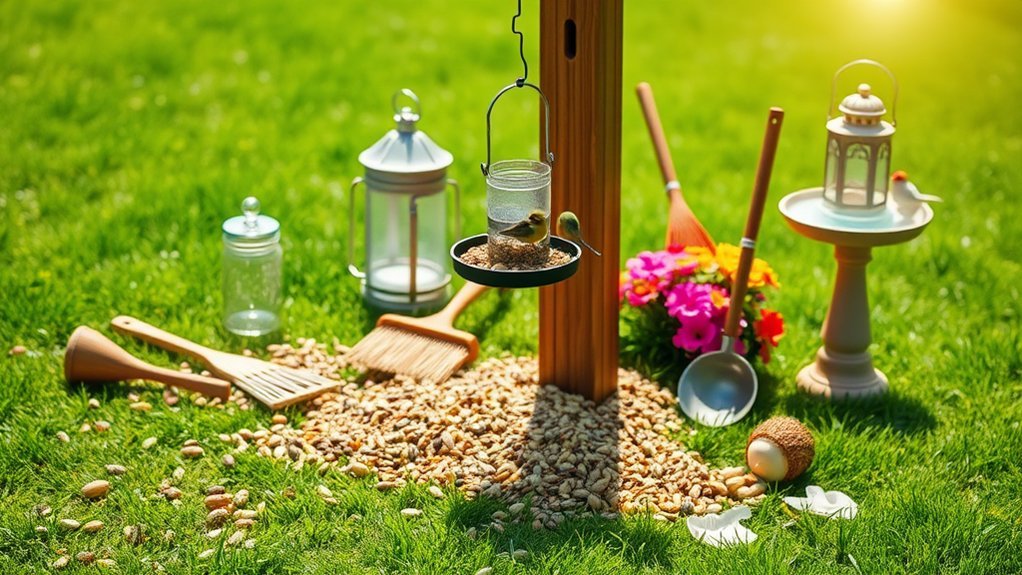
Clean Up Bird Feeder Mess: 10 Proven Solutions That Work
Cleaning up after your bird feeder can be easy. You may have seen the mess that accumulates under it. This mess can attract pests and create an unpleasant view. Thankfully, there are simple steps you can take to manage this issue. By following these steps, you can enjoy a clean feeding area and appreciate the beauty of birds. What are these steps? How can they improve your birdwatching experience?
- Use a Tray: Place a feeding tray under your bird feeder. It catches seeds and droppings, making cleanup easier.
- Regularly Sweep: Sweep the area under the feeder weekly. This keeps the mess minimal and prevents pests.
- Select the Right Feeder: Choose a feeder that minimizes spillage. Some designs reduce waste and keep seed contained.
- Clean Up Seeds Daily: Take a few minutes each day to remove spilled seeds. This prevents mold and attracts unwanted animals.
- Wash the Area: Occasionally wash the ground beneath the feeder with a hose. This removes dirt and bacteria effectively.
- Use a Ground Feeder: Consider using a ground feeder for scattered seeds. This can help contain the mess in one spot.
- Choose Nyjer and Safflower Seeds: These seeds create less waste than others. Birds consume them more, so less is spilled on the ground.
- Limit Feeding Amounts: Fill your feeder with only as much seed as birds will eat in a few days. This reduces leftovers that can foul quickly.
- Place Feeder Strategically: Hang your feeder away from your porch or patio. This keeps the mess away from living spaces.
- Monitor for Pests: Check the area frequently for pests like mice or rats. Taking action early can prevent bigger issues.
By following these steps, you can keep your bird feeder area tidy and make your birdwatching experience more enjoyable.
Key Takeaways
- Place seed catchers or trays under feeders to gather dropped seeds and reduce mess.
- Regularly clean the ground to stop mold growth and keep pests away.
- Create a clean feeding area using mulch or grass to keep it tidy.
- Check feeders weekly to clear out any leftover seeds and debris.
- Clean feeders thoroughly each month with a mild soap solution for good hygiene.
Choose the Right Feeder Design
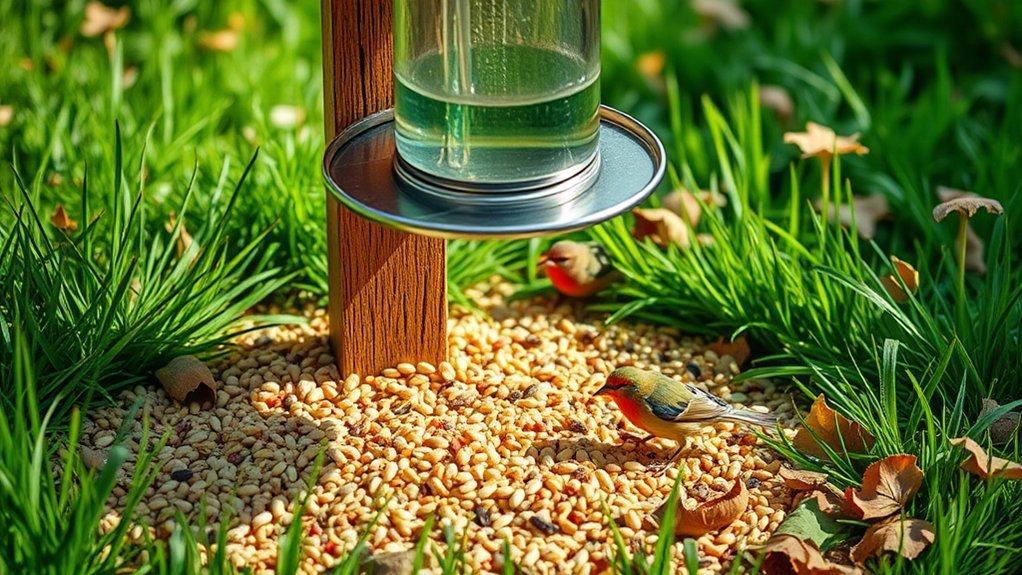
When choosing a bird feeder, look for designs that reduce mess and attract birds.
There are different types of feeders, including tube, platform, and hopper feeders, each with its own advantages. Tube feeders help keep seeds contained and cut down on spills. Platform feeders allow a variety of birds to visit.
Select feeders made of strong materials like weather-resistant plastic or metal to ensure they last. Consider your yard's layout and the bird species you want to attract.
Use a Tray or Seed Catcher
A simple solution for managing mess from your bird feeder is to use a tray or seed catcher.
These additions catch seeds as they fall, helping to keep your yard clean. They also prevent pests that are attracted to spilled seeds. A seed catcher provides a flat surface for birds to perch, improving your birdwatching experience in your backyard.
Installing one is easy, making it a practical choice for anyone who loves birds.
Select High-Quality Bird Seed

Choosing high-quality bird seed is important for attracting various birds to your feeder and reducing waste in your yard. Premium seed types draw in different bird species and ensure they've satisfying meals.
Birds have specific food preferences; some enjoy sunflower seeds, while others like millet or safflower. Research the bird species common in your area to choose seeds that meet their needs.
This approach not only makes feeding more enjoyable for birds but also enhances your experience as a bird lover. By investing in high-quality seeds, you create less waste and attract more happy visitors, deepening your connection to nature in your backyard.
Regularly Clean Your Feeders
Cleaning your bird feeders regularly is key to keeping your feeding area safe for birds. Aim to clean them every two weeks. This helps reduce mold, bacteria, and pests that can harm the birds.
Use brushes or scrapers to reach small spaces and ensure every part of the feeder is clean. After cleaning, rinse with water and let the feeders dry completely before adding new seed.
This simple routine promotes bird health and can attract more birds to your yard. By cleaning your feeders regularly, you show that you care for local wildlife and create a pleasant space for both you and the birds.
Implement a Feeding Schedule

To improve your bird feeding experience, create a simple feeding schedule.
Research which bird species visit your area and their preferred feeding times. Some birds like to eat in the morning, while others come in the afternoon. Feed birds consistently at the same time each day. This helps them know when to find food.
Keep a log of which birds visit and when. This will deepen your connection to nature and increase your enjoyment of birdwatching.
With a regular routine, you can attract a wider variety of birds and become a welcoming host.
Keep the Ground Clean
Keeping the area under your bird feeder clean is important for the health of the birds and your enjoyment. A designated feeding area makes it easier to manage any mess. You can use mulch or grass as ground cover to catch seeds and debris. This makes the spot look nicer and helps keep it tidy.
Regularly remove fallen seeds and droppings to stop mold and pests from appearing. Adding native plants around the feeder can attract more birds and create a natural look. A clean ground helps keep birds healthy and provides a better viewing experience for you and your family. Enjoy this space together!
Install a Bird Bath
Adding a bird bath to your outdoor space can improve the look and function of your bird feeding area.
Bird baths offer birds a necessary water source, making your yard more inviting. Place the bird bath near your feeders, but avoid dense bushes where predators hide. This placement helps birds feel safe while they visit both the bath and feeder.
Keep the bird bath clean and filled with fresh water regularly. This care creates a welcoming spot for birds.
Bringing a bird bath into your yard makes it a more attractive space and helps you connect with nature and local birdlife. Enjoy watching a variety of species visit your yard!
Utilize Squirrel Proof Feeders
Feeding birds can bring joy, but it often attracts squirrels that steal seeds and create a mess.
To stop these furry pests, use squirrel proof feeders. Here are some straightforward tips:
- Choose Squirrel-Proof Feeders: Select feeders with weight-sensitive perches or cages that only allow birds to reach the seeds.
- Adjust Feeder Height: Hang feeders at least six feet in the air and away from trees or structures that squirrels can jump from.
- Use Baffles: Install baffles, such as domes or tubes, below your feeders to stop squirrels from getting to the seeds.
Monitor for Pests and Wildlife
Even with squirrel-proof feeders, keep an eye on other pests and wildlife that may disturb your bird feeding. Regularly identifying pests helps you notice unwanted animals before they cause problems.
You might see rats, raccoons, or stray cats near your feeders. By monitoring these animals, you can take steps to keep them away, ensuring your birds feel secure. Use humane methods to manage these creatures, as wildlife conservation is important.
Try placing feeders in hard-to-reach locations or use physical barriers. By creating a balanced environment, you can enjoy birdwatching while respecting local wildlife. Maintain this connection and help your backyard thrive.
Create a Maintenance Routine
To keep your bird feeder clean and safe, follow a simple maintenance routine. This will create a welcoming space for birds.
Here's a clear plan to help you:
- Weekly Check: Look for leftover seeds and debris. Remove any waste to prevent mold growth.
- Monthly Deep Clean: Clean the feeder with a mild soap solution. Soak it and scrub to ensure it's fresh for the birds.
- Seasonal Repairs: Check for any damage. Fix any issues to ensure the feeder works well.
Frequently Asked Questions
What Types of Birds Are Attracted to Different Feeders?
Different bird feeders attract different types of birds. If you want to attract songbirds, use tube feeders or platform feeders. These birds enjoy sunflower seeds and suet. This will create a cheerful atmosphere in your garden, bringing life and joy to your outdoor space.
How Often Should I Replace Old Bird Feeders?
Replace old bird feeders every few years. Check for signs of wear, such as cracks or rust. The lifespan of a feeder depends on its materials. Regularly inspect your feeders to keep birds happy and safe.
Can I Use Homemade Bird Seed Mixes?
Yes, you can use homemade bird seed mixes! Look for easy recipes that appeal to local birds. Store the seeds properly to keep them fresh. This way, you can create a friendly spot for your feathered visitors. Enjoy watching them thrive!
What Are the Environmental Impacts of Bird Feeding?
Feeding birds can help wildlife conservation, but poor practices can harm ecosystems. To protect nature, use native seeds when feeding birds. This approach benefits both birds and the environment. Simple actions, like maintaining clean feeders and avoiding harmful foods, make a difference. Enjoy watching the birds while supporting a healthy habitat for them and other wildlife.
How Do I Safely Dispose of Moldy Bird Seed?
To dispose of moldy bird seed safely, first, wear gloves and a mask to protect yourself. Next, place the moldy seed in a sealed bag to prevent contamination. After disposal, clean the feeder thoroughly with a vinegar solution. This will help ensure a safe cleanup and reduce the chance of future mold growth.

Kashvi is a passionate bird enthusiast and nature lover who has been fascinated by the world of birds for years. With a keen eye for detail and a love for learning, Kashvi is dedicated to sharing her knowledge and insights with fellow bird enthusiasts on Avian Enthusiasts. Through her engaging and informative articles, Kashvi aims to inspire others to join her in exploring the fascinating world of birds and to promote a deeper appreciation for these incredible creatures.


