8 Common Blue Birds in New York State Guide
New York State is home to many beautiful blue birds. These birds bring color to the landscape and play important roles in nature. For example, the Eastern Bluebird sings sweetly, while the Blue Jay is known for its intelligence. Watching these birds helps us learn about their behavior and habitats. There is also much to discover about how they migrate and interact with other animals. Seeing these blue birds can be a rewarding experience for anyone interested in nature.
Key Takeaways
- The Eastern Bluebird has bright blue feathers and a warm orange chest. It usually lives in open fields.
- Blue Jays have vibrant blue, black, and white colors. They are smart and can mimic sounds. They are often found in wooded areas.
- Tree Swallows have shiny blue-green backs and white bellies. They prefer open spaces and like to nest near water.
- Barn Swallows catch insects in flight and build mud nests under eaves. They are known for their cheerful sounds during breeding season.
- Male Indigo Buntings display striking bright blue feathers. They are often seen during migration in open woodlands and fields, singing to mark their territory.
Eastern Bluebird
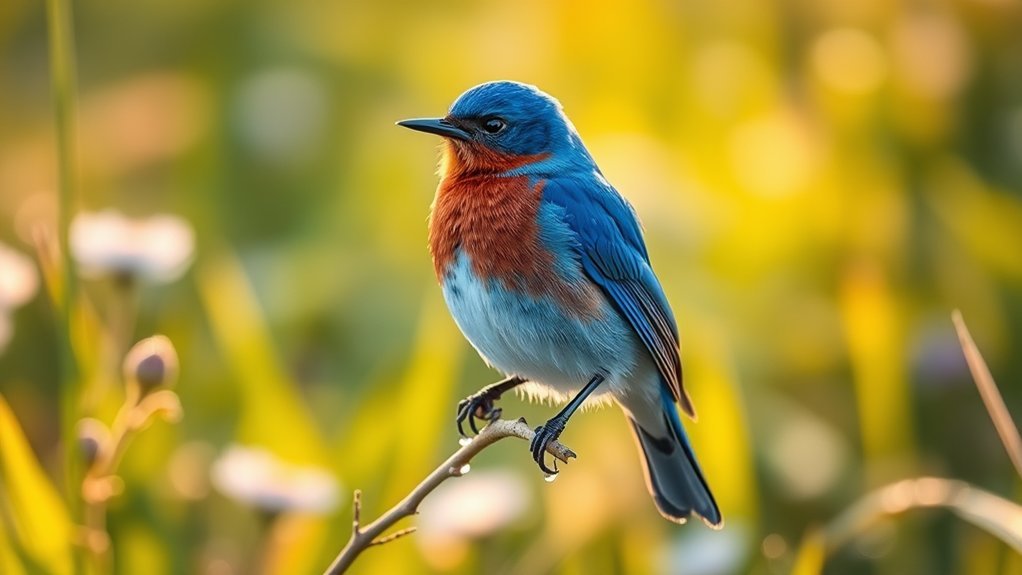
The Eastern Bluebird has bright blue feathers and a warm orange chest. It's often seen in open fields and orchards in New York State.
This bird enjoys social interactions and can commonly be spotted resting on low branches, keeping watch for movement below.
Eastern Bluebirds like open areas, such as grasslands and farms, where they can find plenty of insects. They hunt by quickly swooping down to catch their food from the ground.
Male bluebirds sing soft and melodic calls in their territory, connecting with other bluebirds nearby.
As you observe these beautiful birds in their natural settings, you'll feel a deeper connection to nature and appreciate the environments that support them.
Blue Jay
The Blue Jay shines in bright blue, black, and white colors. This bird is easy to see in New York State. It lives in wooded areas, parks, and backyards.
Blue Jays are smart and can mimic sounds made by other birds. They use various calls to communicate.
Here are some interesting facts about Blue Jays:
- They create strong family bonds and often move in small groups.
- Their sturdy bodies help them move quickly through trees.
- Blue Jays are bold and often search for food aggressively.
- They help the environment by spreading acorns, which aids forest growth.
Watch for Blue Jays, and you may feel more in tune with nature.
Tree Swallow
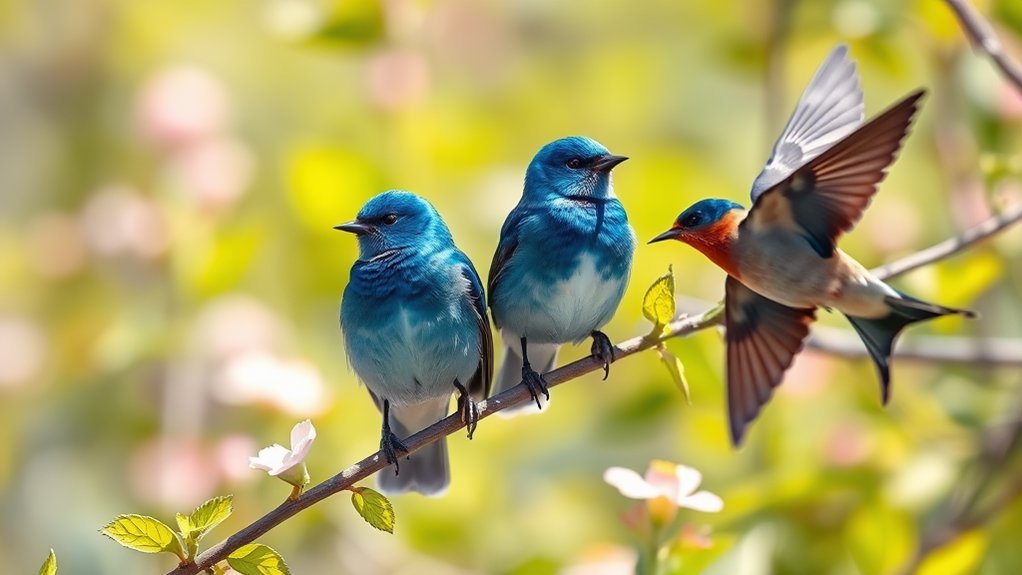
While watching the sky over open fields, you may see the Tree Swallow. This bird has a shiny blue-green back and white belly.
Tree Swallows like open spaces and often nest near water where they can find many flying insects to eat. They're interesting to watch as they catch insects mid-air with quick swoops.
These birds enjoy being in groups and often travel together during migration. Tree Swallows are fast and agile hunters.
They prefer to nest in tree holes or man-made structures, showing they can adapt to different environments. Observing these birds helps you connect with nature and enhances your outdoor experience.
Barn Swallow
Spotting a Barn Swallow is a joy for birdwatchers. These agile birds quickly dart around to catch insects. You can often see them near open fields or bodies of water. They build mud nests under eaves, ledges, or bridges and frequently return to the same location each year.
- Barn Swallows are skilled at flying, performing impressive maneuvers.
- They can lay up to 6 eggs in their nests.
- These birds migrate thousands of miles to avoid winter conditions.
- Their cheerful sounds are common during the breeding season.
Indigo Bunting
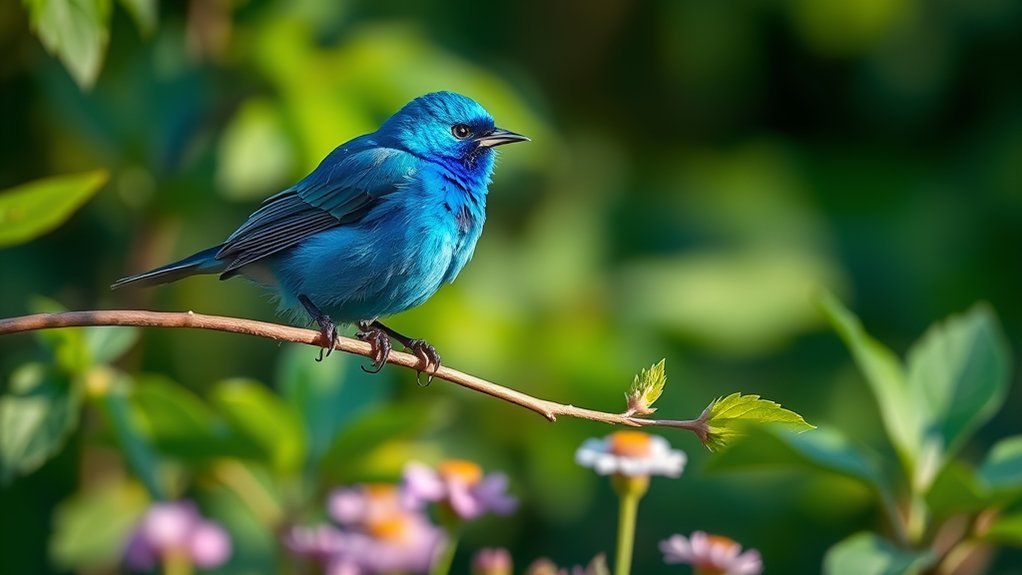
The Indigo Bunting is a small blue songbird found in North America. Its bright feathers make it easily noticeable. These birds are commonly seen during migration and prefer habitats like open woodlands, fields, and areas with shrubs.
Male Indigo Buntings sing beautiful songs to mark their territory and attract females. You can often find them sitting on low branches or singing while flying through the bushes.
Female Indigo Buntings have more muted colors, helping them blend in and nest safely.
When you watch for them, you may see their quick flights that create a stunning view of blue against green plants. The Indigo Bunting showcases the beauty of nature, inviting appreciation for its vibrant presence and the ecosystem it inhabits.
Blue Grosbeak
The Blue Grosbeak has striking blue feathers, making it easy to identify in habitats similar to the Indigo Bunting.
It primarily lives in shrubby areas and open fields. Its vibrant colors stand out in these environments. The Blue Grosbeak is larger and has a thicker bill, which are key features.
Here are some traits to notice:
- Male Blue Grosbeaks are bright blue, while females have a more muted brown color.
- They sing a tune that resembles a plucked guitar string.
- Blue Grosbeaks often search for food on the ground, eating seeds and insects.
- In summer, they're seen more often in New York during migration.
Learning about these unique traits can deepen your appreciation for the Blue Grosbeak!
Cerulean Warbler
The Cerulean Warbler is a vivid blue bird that can be seen flitting through the treetops of New York's forests. This bird prefers deciduous woodlands, especially those with large trees.
It thrives in areas with both open spaces and dense leaves, as these provide shelter and food.
Every spring, the Cerulean Warbler migrates from Central America to breed in northern forests. During this time, you can hear their sweet songs echoing through the trees.
Violet-green Swallow
Spotting a Violet-green Swallow in New York State is an enjoyable experience, especially in summer when these swift birds are most active.
They prefer open areas near water, including forests, fields, and wetlands. Their iridescent green and white feathers make them easy to spot against the sky.
Here are some behaviors to look for:
- They fly quickly and perform aerial acrobatics to catch insects.
- Violet-green Swallows often nest in tree holes or human-made structures.
- They tend to be sociable and are frequently seen in groups.
- You can hear their cheerful chirps, which add a pleasant sound to summer days.
Watching these birds enhances your connection to New York's wildlife.
Frequently Asked Questions
What Time of Year Are Blue Birds Most Common in New York?
Bluebirds are most common in New York during spring and early summer. This is the time when you can see them more frequently. They use bluebird habitats for nesting, foraging, and singing. Observing their activities can enhance your outdoor experience.
Do Blue Birds Migrate or Are They Year-Round Residents?
Bluebirds show migration patterns by moving away from colder areas in winter. Some bluebirds, however, stay in warmer locations throughout the year. Observing these seasonal changes can deepen our understanding of the adaptability and resilience of bluebirds, making it a rewarding experience for nature enthusiasts.
How Can I Attract Blue Birds to My Backyard?
To attract bluebirds to your backyard, place bluebird feeders filled with the right seeds. Set up nesting boxes in open spaces. Watch their behavior to ensure your yard has shelter and safety for them. Enjoy the lively presence of these beautiful birds as they visit your space.
Are Blue Birds Endangered or at Risk in New York?
Bluebirds are not currently endangered, but their numbers can change. You can help bluebird conservation by preserving their habitats. Creating natural spaces in your yard can attract these beautiful birds and strengthen community ties. Enjoy watching them thrive in your area!
What Is the Difference Between Male and Female Blue Birds?
Male blue birds are bright blue, while female blue birds have more subdued colors, usually brown or gray. This color difference helps in attracting mates and influences their breeding behaviors.

Kashvi is a passionate bird enthusiast and nature lover who has been fascinated by the world of birds for years. With a keen eye for detail and a love for learning, Kashvi is dedicated to sharing her knowledge and insights with fellow bird enthusiasts on Avian Enthusiasts. Through her engaging and informative articles, Kashvi aims to inspire others to join her in exploring the fascinating world of birds and to promote a deeper appreciation for these incredible creatures.