Eastern Bluebird Nesting Habits: Complete Guide
Eastern Bluebirds have specific nesting habits that you can easily observe and appreciate. They prefer open areas for their nesting sites. Male bluebirds attract female mates with noticeable courtship displays.
For nest construction, they use materials that are readily available in their surroundings. Their nesting strategies and how they raise their young provide insight into their role in the ecosystem. Exploring these behaviors can deepen your understanding of Eastern Bluebirds and their importance in nature.
Key Takeaways
Eastern Bluebirds nest in open areas such as fields, orchards, and gardens. They avoid dense shrubbery for nesting. These birds use tree cavities or man-made structures for their nests. This choice offers shelter and a clear view of their surroundings.
For nest materials, Eastern Bluebirds gather grasses, pine needles, fur, and feathers. This variety reflects their ability to find resources that provide comfort. Nesting typically begins in late March to early April. After choosing a site, females lay three to six eggs.
The incubation period lasts 12 to 14 days. During this time, males help by bringing food to the females. This support is crucial for the female's well-being as she prepares for the eggs to hatch.
Overview of Eastern Bluebirds

Eastern bluebirds are beautiful birds with bright blue backs and warm orange throats.
These striking colors make them easy to identify in North America. They thrive in open woodlands, fields, and farmlands, where they can find plenty of insects to eat.
They prefer areas with few trees and some low shrubs or vegetation, which provide safety and nesting spots.
Knowing where to look can help you spot these charming birds and connect with nature.
They play an important role in our ecosystems.
Enjoy watching them in their natural habitat!
Ideal Nesting Locations
Eastern bluebirds prefer open spaces for nesting. They like habitats such as fields, orchards, and suburban gardens. These areas allow them to spot predators easily while foraging.
They typically nest in tree cavities or man-made structures like birdhouses. These nesting sites offer shelter and a good view of their surroundings.
To attract bluebirds, you can create a friendly environment by providing suitable nesting options. Avoid dense landscaping to make your yard more appealing.
Nest Construction Materials
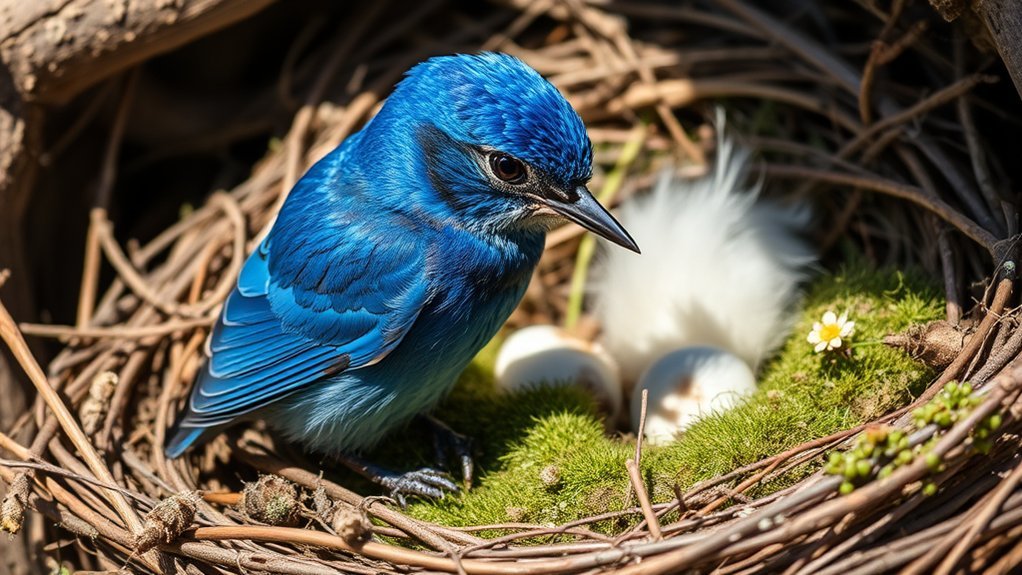
Bluebirds gather various materials to build their nests. They use grasses, pine needles, animal fur, and feathers. These materials help keep the nest warm and create a comfortable space for their eggs.
Bluebirds prefer soft materials for their nests, ensuring comfort for themselves and their chicks. They often reuse found items, showing their ability to adapt.
When choosing a nesting site, bluebirds look at different options before making a decision.
Understanding bluebird nesting habits helps us appreciate how these beautiful birds meet their needs while making their homes inviting.
Courtship and Mating Behavior
Courtship rituals among bluebirds are interesting and show how they mate. Male bluebirds perform displays to attract females. These displays include puffing up feathers, singing, and flying in a fluttering manner. These actions show the male's health and energy, which are important for attracting a mate.
When a female responds with interest, they often engage in preening each other. This behavior helps to strengthen their bond.
These interactions are important for successful breeding. Learning about these behaviors enhances your understanding of bluebird relationships and their process of building a family.
Nesting Timeline
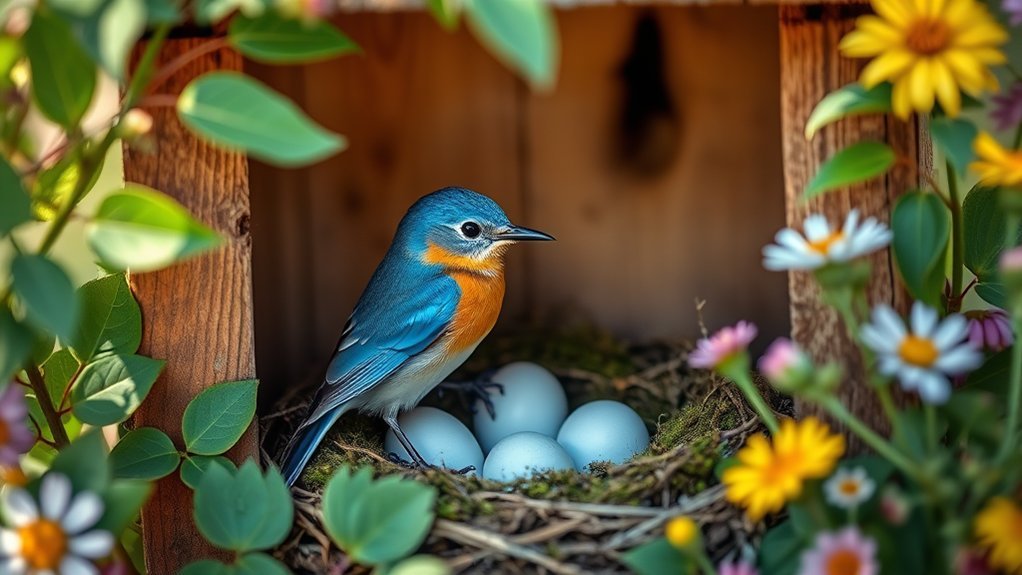
Understanding the nesting timeline of Eastern bluebirds is essential for anyone interested in their breeding habits. These colorful birds typically start nesting from late March to early April. During this time, they search for suitable cavities and compete for good nesting spots.
Once a pair selects their nesting site, they lay three to six eggs within a week. After laying the eggs, both parents work together to build the nest, using grasses and feathers. This teamwork is important for raising their young and highlights the connection they share during this vital stage of their reproductive cycle.
Incubation Period
After Eastern bluebirds lay their eggs, the incubation period starts, lasting about 12 to 14 days.
During this time, the female bluebird keeps the eggs warm. The ideal temperature for good development is between 98 and 100 degrees Fahrenheit. This temperature is crucial for proper growth of the embryos.
If the temperature drops too low, hatching can be delayed. Sometimes, the male bluebird helps by bringing food to the female, so she can continue incubating.
Knowing about this phase helps us appreciate bluebirds' reproductive habits and nesting behaviors.
Care for the Eggs
While the female Eastern bluebird incubates her eggs, she takes important steps to ensure their development. She keeps the eggs at the right temperature, which is vital for the growth of the embryos. During the day, she covers the eggs, but she occasionally leaves to find food. This balance helps her stay nourished while keeping the eggs warm.
She also rotates the eggs regularly to maintain even heat and avoid cold or hot spots. Predators pose a significant risk to the eggs. Therefore, she stays alert and often selects nesting sites that provide natural protection.
This careful strategy helps create a safe environment for her future hatchlings, highlighting her dedication to their well-being. Her attentive care plays a key role in her overall reproductive success, ensuring her young have the best chance to thrive.
Hatching Process
As the incubation period comes to an end, the hatching process begins for the Eastern bluebird. This change is crucial for the chicks' survival and marks the completion of egg development.
Here are the key factors that influence hatching success:
- Temperature must remain stable.
- Humidity levels need to be optimal.
- Parental incubation habits are important.
- The position of the eggs in the nest matters.
- Hatching time can differ for each egg.
These factors significantly impact the chicks' survival and the overall hatching process.
Understanding them highlights the bluebird's adaptability and the challenges it encounters in raising its young.
Fledging and Parental Care
Fledging happens 16 to 22 days after hatching for Eastern bluebirds. This is an important time when young birds start to leave their nest and learn to fly.
During this process, both parents play a key role. They feed their young and provide the nutrition needed for growth. Parents encourage their fledglings to explore their surroundings while continuing to bring them food.
This support helps fledglings adjust to their new environment and responsibilities. Their nurturing behavior builds a sense of belonging that's vital during this stage of independence.
Common Nesting Challenges
Nest-building can be challenging for Eastern bluebirds. These birds face threats from predators and environmental issues. Understanding these challenges highlights their resilience.
Common problems include:
- Nesting predators like squirrels and raccoons that may steal eggs or young birds.
- Severe weather such as storms or cold temperatures that can damage nests and limit food supply.
- Human interference like habitat destruction or poorly placed birdhouses.
- Competition with invasive species that can take nesting sites away from bluebirds.
- Climate impacts such as unpredictable weather that disrupts breeding.
Each of these challenges affects the bluebirds' ability to thrive in their environments. By recognizing these obstacles, we can better appreciate their strength and adaptability.
Tips for Attracting Bluebirds to Your Garden
Attracting Eastern bluebirds to your garden can make your space lively and enjoyable. To attract them, install bluebird feeders with mealworms or high-quality birdseed. Place these feeders in open areas for easy access.
Include native plants such as elderberry, dogwood, and violet in your garden. These plants offer shelter and nesting locations for bluebirds. Avoid using dense shrubs, as they may attract predators.
Finally, add nesting boxes made for bluebirds. This encourages them to stay and increases your chances of seeing these beautiful birds in your garden.
Enjoy watching them as they support your local ecosystem!
Frequently Asked Questions
How Can I Recognize Eastern Bluebird Nests?
To recognize Eastern Bluebird nests, look for small, cup-like shapes. These nests are made from grass, feathers, and pine needles. You can often find them in tree cavities or man-made boxes. The distinct shape and materials help signal the presence of Eastern Bluebirds, making it easier for bird watchers to spot them. Enjoy observing these beautiful birds and their nests in your area!
Do Eastern Bluebirds Reuse Old Nests?
Eastern bluebirds usually do not reuse old nests. They prefer to build new nests each breeding season. These birds look for safe and warm cavities to protect their eggs and chicks. This behavior increases their chances of successfully raising their young and helps them feel secure in their environment.
What Predators Threaten Eastern Bluebird Nests?
Eastern bluebird nests face threats from a variety of predators. Common egg predators include snakes, raccoons, and squirrels. These animals can quickly raid nests, putting the survival of hatchlings at risk and impacting the reproductive success of eastern bluebirds. Protecting these nests is crucial for the continuation of this beautiful bird species.
What Human Activities Disrupt Bluebird Nesting?
Human activities, such as building cities and farming land, lead to habitat loss for bluebirds. This loss disturbs their nesting habits. As their natural behaviors change, it can reduce their population. This decline affects the ecosystems where bluebirds live, creating a ripple effect on other species and the environment.
Can I Intervene if I Find Abandoned Eggs?
If you find abandoned eggs, do not intervene. Observe from a distance. Many bird species can raise their young without help. Your assistance may not be needed.

Kashvi is a passionate bird enthusiast and nature lover who has been fascinated by the world of birds for years. With a keen eye for detail and a love for learning, Kashvi is dedicated to sharing her knowledge and insights with fellow bird enthusiasts on Avian Enthusiasts. Through her engaging and informative articles, Kashvi aims to inspire others to join her in exploring the fascinating world of birds and to promote a deeper appreciation for these incredible creatures.