Egrets in Florida: Habitat and Conservation Insights
Egrets play a vital role in indicating the health of Florida's environment. They rely on wetlands and coastal areas for their habitats. These areas host many different species and face serious threats. Knowing what egrets need and the issues they face helps us create better conservation plans. By looking closely at the connection between egrets and their homes, we can learn how to protect them effectively. What actions can we take to make a real difference?
Key Takeaways
Egrets live in Florida's wetlands, coastal marshes, and mangroves. These areas provide critical breeding grounds and food sources for them. Great Egrets, Snowy Egrets, and Reddish Egrets are common species in these habitats and each has special traits.
Wetlands are crucial for the environment. They filter water, control floods, and support various prey species for the egrets.
Unfortunately, egret populations face threats. Habitat destruction, pollution, and fewer prey species due to urban development and farming practices harm them.
To protect egrets, conservation efforts focus on restoring habitats, supporting breeding programs, and involving the community in preservation activities.
Overview of Egrets: Species and Characteristics
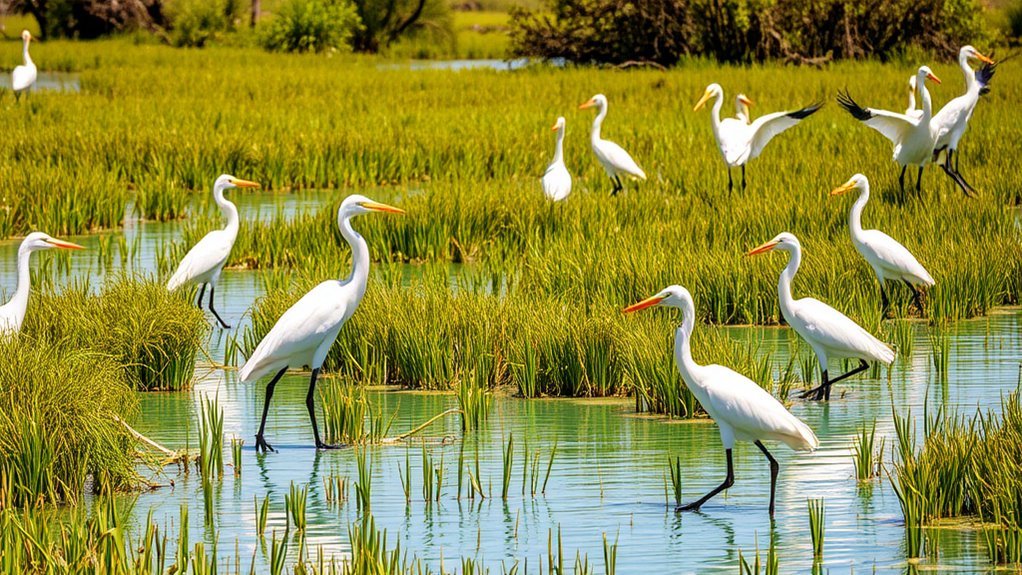
Although they may seem similar at first glance, egrets comprise several distinct species, each showcasing unique characteristics that reflect their adaptability to Florida's diverse ecosystems.
The Great Egret, for instance, features striking white plumage, a long neck, and a sharp yellow bill, while the Snowy Egret distinguishes itself with black legs and vibrant yellow feet.
Additionally, the Reddish Egret exhibits a more erratic hunting style, characterized by its slender build and two-phase coloration, which varies with age.
These physical characteristics not only help you identify various egret species but also underline the evolutionary importance of adaptation.
Key Habitats for Egrets in Florida
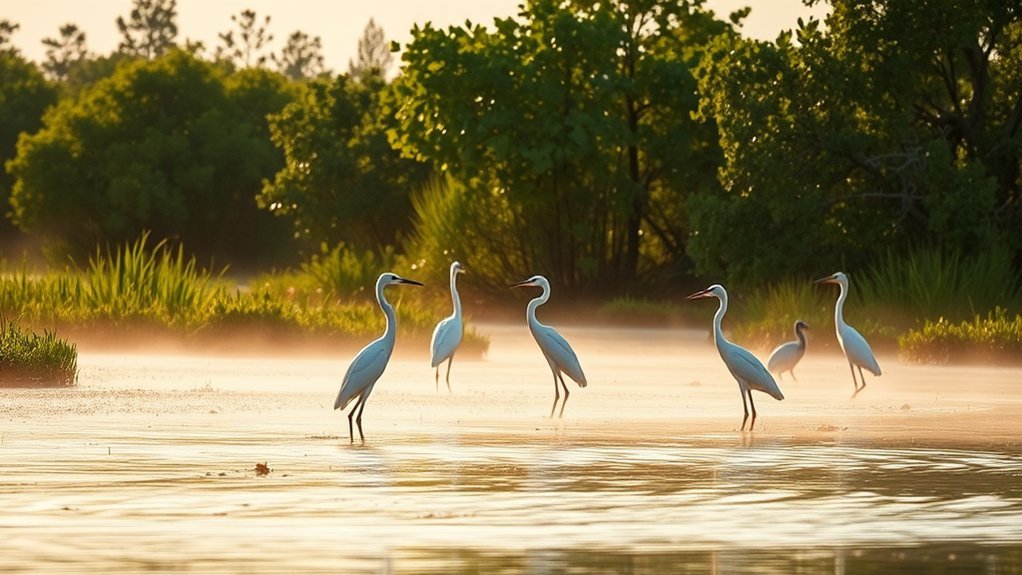
Egrets thrive in a variety of habitats across Florida, where their hunting and nesting behaviors are intricately linked to the environment.
These elegant birds favor wetlands, coastal marshes, and mangroves, as these areas provide essential breeding grounds and feeding areas. Here, they find abundant fish, amphibians, and invertebrates, critical for their diets.
In addition, they rely on dense vegetation for nesting, where they can protect their young from predators.
It's important to recognize how these habitats support egrets and their ecological roles. By preserving natural areas, we guarantee that these magnificent birds continue to flourish in Florida's diverse ecosystems.
Understanding their habitat needs fosters a deeper appreciation for these species and highlights the shared responsibility for conservation efforts.
Importance of Wetlands and Marshes
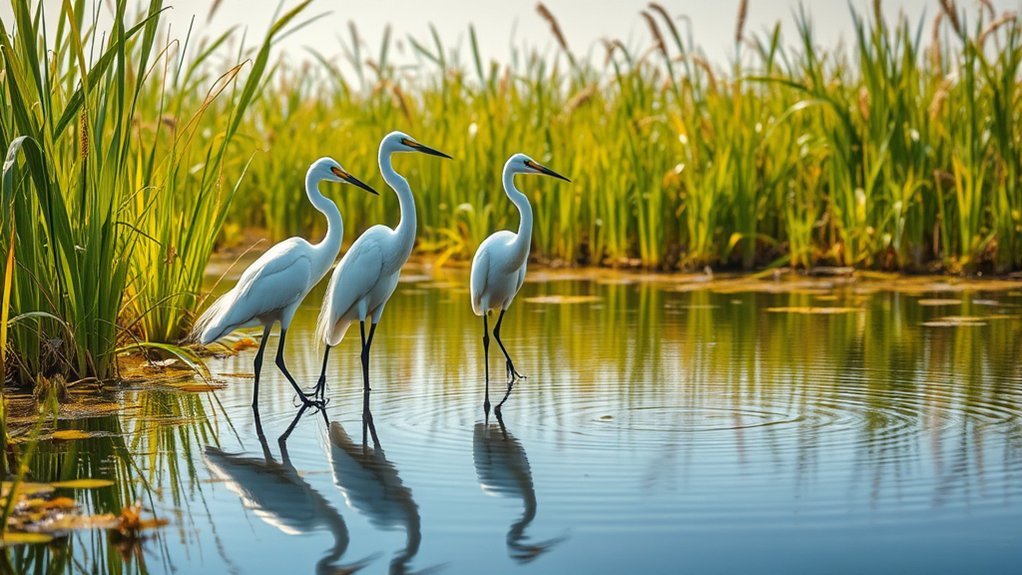
Wetlands and marshes play an essential role in maintaining ecological balance, serving as important habitats for a diverse array of species, including egrets.
These wetland ecosystems are crucial for water filtration, flood control, and nutrient cycling, supporting the health of surrounding environments.
You'll find that marsh biodiversity thrives in these areas, providing breeding grounds and food sources for egrets and other wildlife.
The intricate interplay between flora and fauna enriches these landscapes, fostering resilience against ecological disturbances.
By protecting wetlands, you're not just safeguarding habitat for egrets; you're also helping to maintain the overall integrity of ecosystems that many species depend on for survival.
In understanding this significance, you're contributing to a collective effort in conservation and stewardship.
Threats to Egret Populations
Despite their adaptability, egret populations face numerous threats that jeopardize their survival. One major concern is habitat destruction, which results from urban development and agricultural expansion. These activities reduce wetland areas, depriving egrets of vital nesting and feeding grounds.
Additionally, you need to recognize the pollution impact on these habitats, as chemicals and waste can contaminate water sources, leading to food shortages and health issues for the birds. The decline of their prey species exacerbates the situation, pushing egrets to compete for dwindling resources.
Conservation of existing wetlands and strict regulations against pollutants are essential to mitigate these threats. By understanding these challenges, you can better appreciate the urgency of protecting egret populations in Florida.
Conservation Efforts and Initiatives

Conservation efforts in Florida are vital for ensuring the survival of egret populations amid increasing environmental pressures. Various conservation programs focus on habitat restoration, protecting nesting sites, and regulating hunting.
These initiatives address specific challenges that egrets face, such as habitat loss and pollution. Breeding initiatives have also gained traction, promoting healthy populations by creating safe environments for these birds to thrive.
Engaging local communities plays an important role in these efforts, fostering awareness and stewardship. By maintaining wetlands and supporting the preservation of natural ecosystems, participants contribute to the overall health of egret habitats.
Together, these initiatives create a thorough approach to safeguarding egrets and enhancing their chances for future generations.
How You Can Help Protect Egrets
Every individual can play a significant role in the protection of egrets in Florida. Engaging in community involvement initiatives, like local clean-up events or habitat restoration projects, directly contributes to conserving these beautiful birds.
Additionally, practicing responsible tourism maximizes your impact; choose eco-friendly tours that prioritize wildlife welfare, rather than those exploiting their habitats. Avoid disturbing nesting areas and always maintain a respectful distance while observing egrets in the wild.
Sharing information about egrets and their habitats with friends and family fosters a communal sense of responsibility towards these magnificent birds.
Joining or donating to conservation organizations can amplify your efforts, creating a network of like-minded individuals committed to protecting egrets and promoting environmental stewardship in Florida.
Frequently Asked Questions
What Time of Year Are Egrets Most Commonly Seen in Florida?
Egrets are commonly seen in Florida during their breeding seasons, which peak in spring. They also migrate in the fall. These two times are great for observing these beautiful birds against Florida's vibrant scenery. Visitors can enjoy watching egrets as they showcase their elegant plumage and graceful movements during these periods.
How Can I Identify Different Egret Species in the Wild?
To identify different egret species in the wild, pay attention to their distinct features. Look for simple visual cues like plumage color, size, and bill shape. These factors can help you tell apart snowy, great, and cattle egrets easily. Snowy egrets have slender bodies and striking white feathers. Great egrets are larger with long necks and also feature white plumage. Cattle egrets, on the other hand, are generally smaller and can have a light buff color on their wings during breeding season. Observing these characteristics will help you recognize each species. Happy birdwatching!
Do Egrets Migrate or Stay in Florida Year-Round?
Egrets have different migration habits. Some species live in Florida all year long. Their movement patterns change based on food availability and breeding needs. This leads to clear shifts between northern and southern areas throughout the year. Egrets adapt to their environment, making them interesting to observe.
What Do Egrets Typically Eat in Their Natural Habitat?
Egrets eat fish, amphibians, and small invertebrates. They select their prey carefully based on their environment. This method helps them survive and play their role in the ecosystem. Egrets are skilled hunters and often use their sharp eyesight to spot food in the water. Their feeding habits are adapted to the availability of food sources, ensuring they remain healthy and thrive in their habitats. Egrets contribute to controlling fish populations and maintaining the balance in their ecosystems.
Are There Any Specific Egret Watching Tours Offered in Florida?
Florida offers many birdwatching tours focused on egret conservation. These guided excursions allow you to observe egrets up close while learning about their habitats and the conservation efforts in place to protect them. Enjoy the beauty of these majestic birds and gain knowledge about their importance in the ecosystem.

Kashvi is a passionate bird enthusiast and nature lover who has been fascinated by the world of birds for years. With a keen eye for detail and a love for learning, Kashvi is dedicated to sharing her knowledge and insights with fellow bird enthusiasts on Avian Enthusiasts. Through her engaging and informative articles, Kashvi aims to inspire others to join her in exploring the fascinating world of birds and to promote a deeper appreciation for these incredible creatures.