

Hawks in New Jersey: Identification and Behavior Insights
In New Jersey, identifying different hawk species helps you understand local ecosystems. Each hawk, from broad-winged hawks to Cooper's hawks, has specific traits and behaviors. Recognizing these differences benefits birdwatchers and conservation efforts. Observing how hawks interact with their environments reveals their strategies for survival. What methods do they use to thrive in nature?
Key Takeaways
New Jersey is home to several hawk species, including Red-tailed Hawks, Cooper's Hawks, Sharp-shinned Hawks, and Northern Harriers. Each species fits well into its habitat.
The Red-tailed Hawk has a large wingspan and a reddish-brown tail. It mainly hunts in open fields.
Cooper's Hawks have blue-gray feathers. They are agile hunters and primarily eat smaller birds. They thrive in wooded areas.
Sharp-shinned Hawks are small and slender. They show territorial behavior during breeding. Sometimes, they form groups while migrating.
Northern Harriers glide low and have sharp eyesight. They prefer to hunt in marshes and grasslands, where they build their nests on the ground.
Overview of Hawk Species in New Jersey
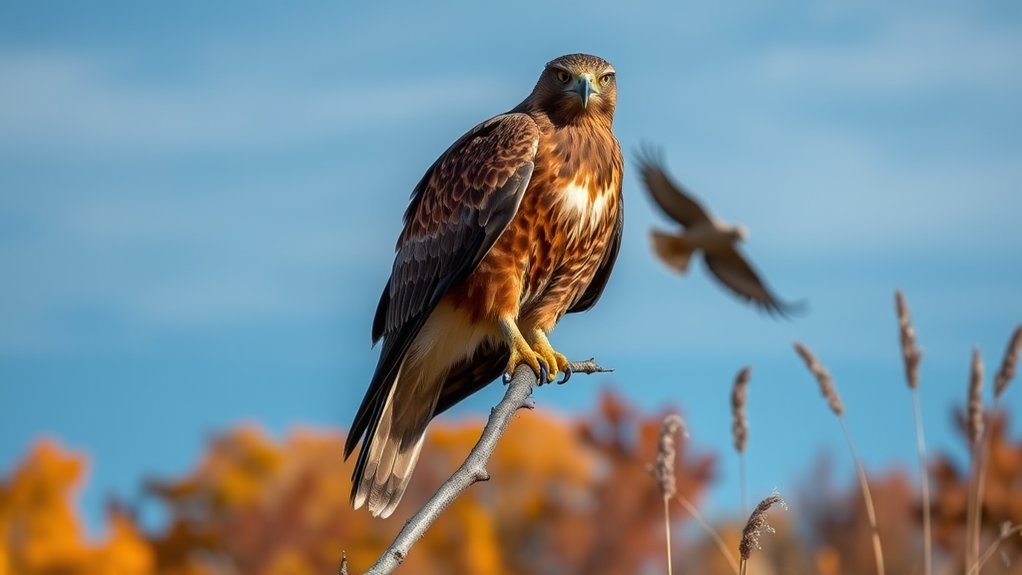
New Jersey has several hawk species that live in its diverse landscapes. These habitats include forests, wetlands, and open fields. This variety of environments creates a place where hawks thrive, attracting birdwatchers and nature lovers.
Common species found here include the Red-tailed Hawk and Cooper's Hawk, which nest in the state's ecosystems. Each habitat supports different populations, shaping their hunting and breeding behaviors.
By observing these birds, you can learn about their roles in the ecosystem. Understanding hawks in New Jersey deepens your connection to nature and highlights the need to protect these environments.
Enjoy watching these majestic birds as you explore the state's natural beauty.
Red-tailed Hawk: Characteristics and Behavior
The Red-tailed Hawk is a well-known bird of prey in North America. It has a wingspan that can reach 56 inches. You can often see these hawks flying high in the sky or resting in trees while looking for food. Their distinctive reddish-brown tails and loud calls catch the attention of birdwatchers.
Red-tailed Hawks make large nests high in trees. They use sticks and other materials to build these nests. They choose locations with open fields nearby, which gives them plenty of places to hunt.
During the breeding season, both parents take care of their young. This teamwork increases the chances of survival for their chicks. Many nature lovers appreciate this strong family bond in the hawks' behavior.
Cooper's Hawk: Identification and Hunting Techniques

Cooper's Hawks are medium-sized birds of prey known for their slender bodies and striking features. They've blue-gray feathers on their backs and vibrant orange bars on their chests. Their shape and agile flight make them easy to recognize in wooded areas.
Cooper's Hawks are skilled hunters with effective techniques:
- They fly rapidly through dense trees.
- They move quietly when getting close to their prey.
- They primarily hunt smaller birds, especially during migration.
- They can dive expertly to catch their targets.
- They change their hunting strategies based on their environment.
Learning about these traits enhances your understanding of Cooper's Hawks and connects you with others who share your passion for birds and wildlife.
Enjoy observing their beauty and skill in nature!
Sharp-shinned Hawk: Size and Social Behavior
Hawks in New Jersey include many species, each with specific traits.
The sharp-shinned hawk is small and slim, making it a skilled hunter. It primarily preys on small birds, which are its main source of food. This hawk usually hunts alone but can be seen in larger groups during migration.
They show territorial behavior during the breeding season, yet may work together when faced with danger. Learning about the size and social behavior of sharp-shinned hawks enriches your understanding of their place in New Jersey's bird population.
Broad-winged Hawk: Migration Patterns and Habitat
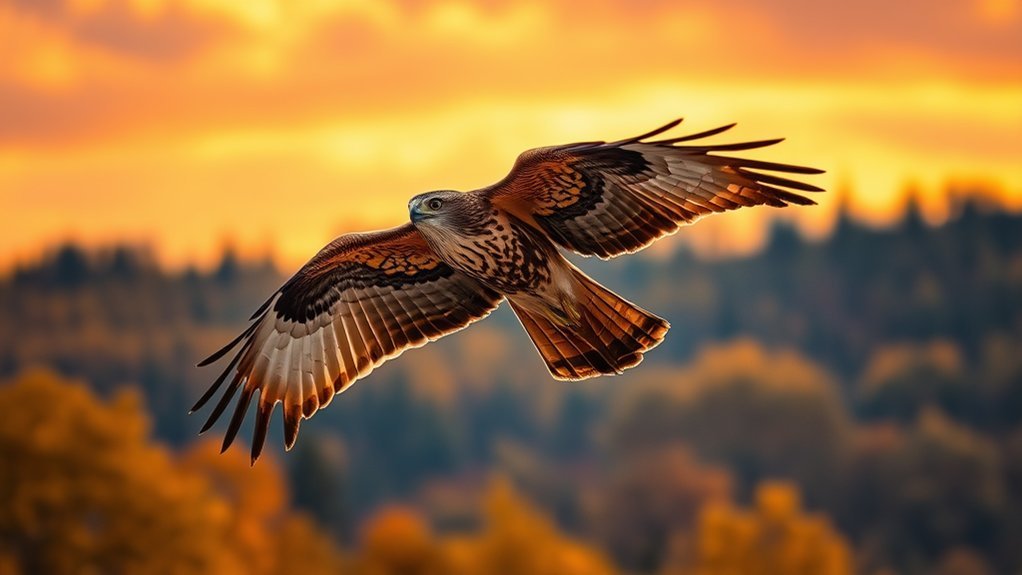
In autumn, you may see the broad-winged hawk migrate south. These hawks travel long distances and often fly in large groups. They move to warmer areas in Central America for the winter.
During breeding season, they prefer mature forests. In migration, they favor open areas.
Several factors affect their migration and habitat:
- The availability of prey
- Suitable nesting places in forests
- Weather that influences their flight
- Thermals for easier soaring
- Warmer regions for wintering
Learning about broad-winged hawks can help you appreciate their amazing journeys and life cycles. Enjoy watching them as they migrate!
Northern Harrier: Unique Features and Nesting Habits
The northern harrier is a unique bird of prey known for its low gliding flight and sharp eyesight. This bird hunts by flying over fields and wetlands, looking for food below. It prefers open habitats such as marshes, grasslands, and agricultural areas.
For nesting, the northern harrier builds its nest on the ground, often hidden in thick plants. This choice helps protect the nest from predators.
During the breeding season, you can find these nests in marshy areas. Both the male and female work together to care for their young, strengthening their bond as a pair.
Accipiter Family: Common Traits and Differences
As you learn about the Accipiter family, you'll find clear traits that distinguish these birds from other raptors. These hawks have special adaptations that aid in hunting. Their short, rounded wings and long tails give them agility and quick movement. This allows them to fly skillfully in dense forests while chasing prey.
Key traits of the Accipiter family include:
- Medium to large size
- Strong legs for catching prey
- Sharp eyesight for spotting targets from a distance
- Streaked and barred feathers for hiding
- Preference for wooded areas
Understanding these traits helps you appreciate the role of the Accipiter family in local ecosystems. Their unique characteristics make them fascinating birds to observe.
Tips for Birdwatching: Spotting Hawks in the Wild
To spot hawks in the wild, understand their behavior and preferred habitats.
Look in open fields, woodlands, and coastal areas, as these locations are best for seeing hawks. Visit during mornings and late afternoons when hawks are most active.
Search for them perched on trees, telephone poles, or soaring above in the sky. Bring binoculars for a better view and be patient, as hawks can be hard to find.
Joining local birdwatching groups can help you learn from experienced observers and share tips and sightings.
Frequently Asked Questions
What Time of Year Are Hawks Most Active in New Jersey?
Hawks are most active in spring and early summer during their breeding season. During this time, they show strong territorial behavior. You can see them hunting and caring for their young. They often perform aerial displays, making their activity noticeable.
Do Hawks Migrate Alone or in Groups?
Hawks often migrate in groups. They fly together to find warm air currents called thermals. This helps them conserve energy and makes it easier to travel long distances. Migrating in groups also fosters social bonds among the hawks. This group behavior provides safety and support during their journey, making migration a shared experience for them.
What Do Hawks Eat During Winter Months?
During winter months, hawks change their diets. They hunt small mammals like mice and rabbits. Their sharp eyesight and quick movements help them find food. You may see them hunting in fields or forests. Hawks play an important role in controlling small animal populations, helping to maintain balance in their habitats. Watching these birds hunt can be an exciting experience.
Are Hawks a Threat to Pets in Suburban Areas?
Hawks can be a threat to small pets in suburban areas because they hunt for food. To keep your pets safe, watch them closely when they are outside, especially during times when hawks are active. This will help prevent any unfortunate encounters.
How Can I Attract Hawks to My Yard?
To attract hawks to your yard, set up feeders with suitable food and provide bird baths for water. These elements create a welcoming environment, encouraging hawks to visit and possibly stay. Make sure to choose an open space for the feeders, as hawks prefer to hunt from high perches. Keeping your yard clear of dense shrubs can also help, as hawks like open areas for spotting prey. By creating this inviting habitat, you increase your chances of seeing these majestic birds in your yard.

Kashvi is a passionate bird enthusiast and nature lover who has been fascinated by the world of birds for years. With a keen eye for detail and a love for learning, Kashvi is dedicated to sharing her knowledge and insights with fellow bird enthusiasts on Avian Enthusiasts. Through her engaging and informative articles, Kashvi aims to inspire others to join her in exploring the fascinating world of birds and to promote a deeper appreciation for these incredible creatures.


