Hummingbirds in Florida: A Complete Species Guide
In Florida, you can see many hummingbird species, especially the Ruby-throated Hummingbird. These birds live in various habitats. To observe them successfully, it is important to know their habits and preferences. Learn about their migration routes and feeding habits. This knowledge will help you attract them to your space. What special features do Florida's hummingbirds have? How can you create a welcoming area for them?
Key Takeaways
- The Ruby-throated Hummingbird is the most common hummingbird in Florida. It has a green back and a ruby-red throat.
- Black-chinned Hummingbirds live in northern Florida, contributing to the variety of hummingbirds in the state.
- Hummingbirds flourish in areas with many flowering plants, such as gardens, forests, and wetlands.
- You can attract them by using feeders filled with a sugar-water mixture and by planting bright, native flowers like trumpet vines.
- Keeping feeders clean and avoiding pesticides will help you see more hummingbirds in Florida. Enjoy watching these beautiful birds!
Overview of Hummingbirds in Florida
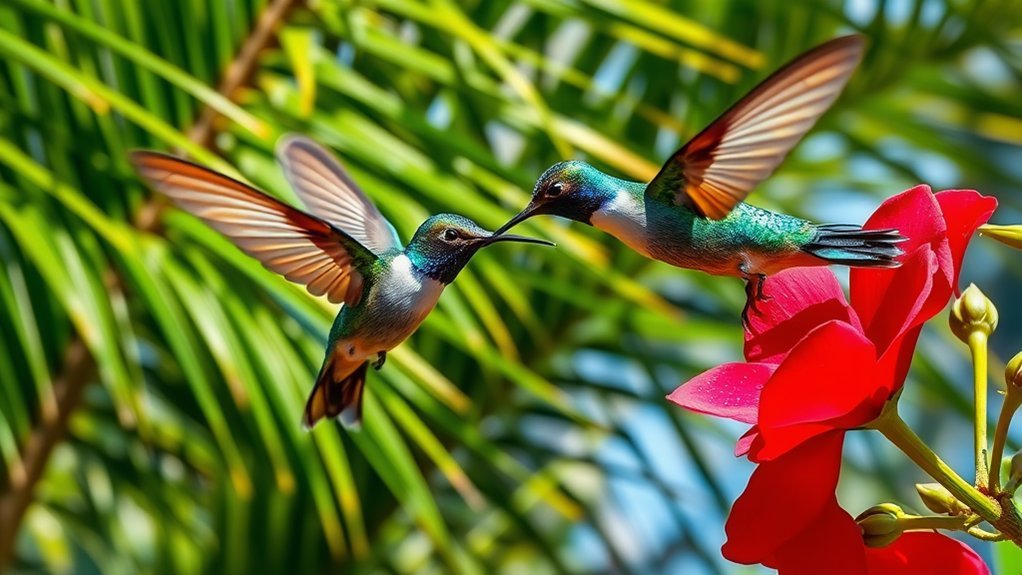
Hummingbirds thrive in Florida's diverse ecosystems. Several species visit from late winter to early fall.
You can observe them at backyard feeders, where they hover and extract nectar. This feeding supports their energy needs and helps with pollination.
During migration, they travel long distances to find suitable habitats. Learning about their behaviors enhances your appreciation for these birds.
You can create a welcoming space for hummingbirds in Florida by maintaining the right environment.
Common Species of Hummingbirds
Florida hosts several species of hummingbirds, with the Ruby-throated Hummingbird being the most prevalent.
These colorful birds are often seen in gardens, where they're attracted to bright flowers. Males are easily identified by their shiny green backs and bright ruby-red throats.
In addition to the Ruby-throated, the Black-chinned Hummingbird can also be found in the northern areas of Florida.
This bird has a glossy black throat, which can sometimes look purple depending on the light.
Both species thrive in places with plenty of nectar.
To attract them, consider creating a hummingbird-friendly garden.
Observing these birds can deepen your appreciation for Florida's diverse wildlife.
Unique Characteristics of Florida Hummingbirds

Hummingbirds in Florida have unique traits that distinguish them from those in other areas. Their feathers shimmer with bright colors in sunlight, helping attract mates and deter competitors.
These birds flap their wings quickly, often reaching 50 beats per second, enabling them to hover and change direction easily.
Florida's varied plants offer rich feeding opportunities, enhancing their skills in finding food.
Preferred Habitats and Migration Patterns
Hummingbirds in Florida prefer habitats with plenty of flowering plants. They thrive in gardens, forests, and wetlands, where they can easily find nectar.
When nesting, female hummingbirds choose small branches or dense shrubs to stay safe from predators.
Many hummingbird species, such as the Ruby-throated Hummingbird, migrate south for the winter. They typically leave in late summer and return in early spring.
They use the Earth's magnetic field and visual landmarks to guide their journey. Learning about the habitats and migration patterns of hummingbirds helps you appreciate these amazing birds and the natural surroundings better.
Tips for Attracting Hummingbirds to Your Garden

To attract hummingbirds to your garden, create a welcoming environment filled with nectar sources.
Start by placing hummingbird feeders with a sugar-water mixture (one part sugar to four parts water). Position the feeders near bright, native plants like trumpet vines and bee balm, which provide natural nectar.
Clean the feeders regularly to avoid mold. Using a mix of native plants will help attract hummingbirds and support local wildlife.
Add perches, such as small branches or decorative twigs, for hummingbirds to rest. Avoid pesticides that may harm them.
Conservation Efforts for Hummingbirds in Florida
Creating a lively garden can improve its appearance and help save hummingbirds in Florida.
Conservation relies on preserving habitats and monitoring bird populations. You can help protect these tiny birds.
- Plant native flowers to provide food.
- Limit pesticide use to keep birds and their food safe.
- Add birdbaths for hydration and bathing.
- Join citizen science projects to share population information.
- Support local groups that work to protect habitats.
Your efforts can make a difference for hummingbirds in Florida.
Frequently Asked Questions
What Is the Average Lifespan of a Hummingbird in Florida?
The average lifespan of a hummingbird in Florida is three to five years. Factors such as habitat and food availability can affect their lifespan. In the wild, they face risks from predators, including birds and insects, which can impact their survival.
Do Hummingbirds Feed on Insects or Only Nectar?
Hummingbirds mainly eat nectar for energy. They also eat insects for protein and vital nutrients. Knowing their eating habits helps us understand their role in nature and how they adapt to different environments. Hummingbirds are fascinating creatures that not only bring color to gardens but also contribute to the balance of ecosystems through their feeding habits.
How Do Hummingbirds Find Their Way During Migration?
Hummingbirds migrate using specific techniques. They rely on the sun's position during the day and the stars at night for direction. They can also sense the Earth's magnetic field. These skills help them fly thousands of miles to find their breeding and feeding spots accurately. Their migration is impressive and finely tuned, showcasing their incredible abilities.
Can Hummingbirds Recognize Individual Feeders?
Hummingbirds can recognize individual feeders. They do this by preferring certain colors and remembering where the feeders are located. To attract these beautiful birds consistently, use vibrant colors for your feeders. This will help create a welcoming environment for them to visit repeatedly.
What Time of Year Are Hummingbirds Most Active in Florida?
Hummingbirds are most active in Florida during spring and summer. This period aligns with their migration and breeding behaviors. You will see them feeding frequently and displaying territorial behavior as they set up nests and attract mates. Enjoy watching these vibrant birds during this lively time of year!

Kashvi is a passionate bird enthusiast and nature lover who has been fascinated by the world of birds for years. With a keen eye for detail and a love for learning, Kashvi is dedicated to sharing her knowledge and insights with fellow bird enthusiasts on Avian Enthusiasts. Through her engaging and informative articles, Kashvi aims to inspire others to join her in exploring the fascinating world of birds and to promote a deeper appreciation for these incredible creatures.