Is Bird Poop Good Luck? Omens and Superstitions Explained
You might have heard that bird poop brings good luck. Many cultures around the world believe this is true. They include it in their rituals and traditions. Others see bird poop as just a nuisance.
This superstition has interesting origins and interpretations. It shapes how many view fortune and misfortune in daily life. What benefits can we find in this unusual belief?
Key Takeaways
Bird poop is often seen as a sign of good luck in many cultures. This belief promotes a sense of community and shared hope.
Different cultures interpret bird droppings in various ways. For instance, in Russia, bird poop is associated with wealth. In contrast, many people in the U.S. view it as a nuisance.
Superstitions about bird poop show how people find comfort in unexpected events related to luck. Many believe that bird droppings carry messages from nature, suggesting a connection between luck and perception.
Art can also change how people view bird poop. Some artists highlight its beauty, encouraging a fresh look at luck and life's unpredictable nature.
Overall, whether seen as an omen of good fortune or a simple mess, bird droppings influence beliefs and cultural views on luck.
The Origins of the Bird Poop Superstition

While you might brush off an unfortunate incident of bird poop landing on your head, many cultures throughout history have viewed it as a sign of good luck.
This peculiar belief has deep cultural origins, rooted in superstitious tales passed down through generations. In ancient societies, birds were often seen as messengers of the divine, and their droppings symbolized fertility and prosperity, signaling an unexpected financial windfall.
Across various cultures, this notion evolved, creating a shared sense of optimism amidst life's mishaps. It's fascinating how a seemingly unpleasant event can foster feelings of connection and belonging, reinforcing the idea that good fortune can arise from the messiest of circumstances.
Cultural Variations in Interpretation
As you explore the cultural variations in interpreting bird poop, you'll find that beliefs surrounding this phenomenon differ markedly across regions.
In some cultures, like in Russia, bird droppings are considered an auspicious sign, symbolizing wealth and good fortune. Conversely, in parts of the United States, the superstition variations often lean toward viewing it as a nuisance rather than a blessing.
For others, particularly in parts of Africa, encountering bird poop might invoke specific cultural beliefs tied to fertility and abundance. These differing perspectives reveal how deeply intertwined these interpretations are with local customs and histories, creating a rich tapestry of meanings that connect people to their cultural roots.
Ultimately, it's fascinating to see how a simple occurrence can hold such varied significance.
Historical References to Bird Droppings

Historically, bird droppings have captured human attention not only for their impact on our environment but also for the symbolic meanings attached to them. Many ancient cultures established historical beliefs linking bird feces to good fortune.
For instance, in some societies, finding bird poop was seen as a sign of wealth or prosperity on the horizon. This idea often bled into ancient rituals where people would offer thanks to birds for their seemingly benevolent droppings.
You might find it interesting how these practices fostered a sense of connection, embedding nature's creatures into human life. By understanding these historical references, you can appreciate the rich tapestry of beliefs that people shared, giving rise to a collective identity woven with fascination and wonder around something as simple as bird droppings.
The Science of Random Events and Luck
Though you may think of luck as purely a whimsical notion, the science behind random events reveals a more complex picture. Randomness theory shows that what we perceive as lucky often stems from patterns we create in our minds.
When something positive happens following an unexpected event, like bird poop landing on your vehicle, our luck perception kicks in. You might feel a rush of hope that it signals good fortune, but statistically, it's all coincidence.
Principles of probability remind us that life is full of unpredictable outcomes. Acknowledging these elements helps you better understand how you interpret luck. Embracing randomness can foster a sense of acceptance, inviting you to appreciate life's surprises without feeling the weight of superstitions.
The Role of Animals in Superstitions

While some might dismiss superstitions as mere folklore, they often reflect deep-seated beliefs about the natural world, particularly concerning animals.
You've likely encountered how various creatures carry profound animal symbolism, shaping our understanding of luck, fortune, and omens. Think about the black cat crossing your path; its presence stirs fears or curiosity, depending on your cultural background.
These superstitious beliefs arise from centuries of observation, linking certain animals to specific events or feelings. A dove might symbolize peace, while a crow often signals misfortune.
Therefore, when you spot a particular animal, it's not just an encounter; it's a moment rich with meaning, connecting you to a shared human experience rooted in tradition and belief.
How Bird Species Influence the Belief
Birds, with their diverse behaviors and striking appearances, often amplify human perceptions of luck and fate. The bird species involved can evoke different luck beliefs.
For instance, many view the sighting of a majestic eagle as a positive omen, symbolizing strength and success. In contrast, sparrows might embody a more playful notion—thought to bring joy and protection to your endeavors.
Cultural contexts also shape these interpretations; in some societies, the presence of particular birds signifies impending fortune or misfortune, binding communities together in shared stories.
Ultimately, the species' characteristics, like vibrant feathers or unique calls, enrich the belief in luck, influencing not just individual sentiment but the connections we form regarding our hopes and dreams.
Common Reactions to Getting Pooped On
The unexpectedness of being pooped on by a bird often sparks a mix of surprise, frustration, and even amusement. Most people instinctively recoil, glancing up to see the culprit, followed by a light-hearted groan or hearty laugh.
It's a moment that creates a shared experience; many have their own personal anecdotes, describing how they were decked out for an important event or merely enjoying a day out. You might find yourself reassured by friends who quickly point out the superstition around it being good luck.
These common reactions reflect how, despite the initial disgust, you find connection through these quirky moments that life throws your way. Often, it reminds you that you're not alone in these humorous predicaments.
Bird Poop in Folklore and Mythology
Many cultures throughout history have woven stories about bird poop into their folklore, elevating it from mere annoyance to a symbol of fortune and transformation.
You might be surprised by the rich tapestry of beliefs surrounding this phenomenon:
- Mythical creatures are said to bring luck by leaving droppings, a sign of their presence.
- Folklore tales often depict bird poop as a dynamic force for change.
- Ancient beliefs associate bird droppings with prosperity and wealth.
- Cultural legends link it to messages from nature and the supernatural.
- Omen significance varies, but many interpret it as a sign of good luck.
These stories reflect our desire for connection with nature's messages, showcasing how a simple occurrence can carry profound symbolism interpretation.
Psychological Reasons Behind Superstitions
While you might dismiss superstitions as mere folly, they often reveal deeper psychological truths about human behavior and cognition.
You're likely familiar with cognitive biases that shape your perceptions, making you more inclined to link events like bird poop landing on you to good fortune. This tendency fosters a sense of control over life's uncertainties, providing emotional comfort during stressful times.
By clinging to these beliefs, you strengthen your social bonds, as sharing superstitions creates common ground among friends and family. Additionally, participating in rituals around these beliefs can cultivate community feelings, enhancing your sense of belonging.
Fundamentally, superstitions fulfill emotional needs, acting as a psychological cushion against the unpredictable nature of life.
Symbolism of Birds in Different Cultures
As you explore various cultures, you'll notice that birds often embody diverse symbolic meanings that reflect human experiences, beliefs, and values.
Bird symbolism varies widely, revealing fascinating cultural significance that can bring people together.
- In ancient Egypt, the falcon represented divine protection and royalty.
- In Native American cultures, the eagle is a symbol of spiritual growth and freedom.
- In Japan, the crane signifies long life and happiness, often celebrated in art.
- In Celtic traditions, the owl represents wisdom and deeper insight.
- In many Western cultures, doves symbolize peace and love.
The Positive Spin: Finding Blessings in Mess
When you find yourself in a situation where bird droppings unexpectedly land on your car or picnic blanket, it might initially feel like an unwelcome nuisance.
However, adopting a positive perspective can shift your experience from frustration to humor. Embracing chaos in everyday life teaches resilience. Instead of getting angry, consider it a quirky reminder of nature's unpredictability. This could even spark laughter among friends, turning a mess into a shared memory.
Some folks believe these encounters attract good fortune, bringing blessings in their own messy way. After all, finding joy in such moments helps foster a sense of community as you bond over hilarious tales of unexpected surprises.
Embrace the mess; it could just lead to delightful outcomes.
Modern Perspectives on Bird Poop Superstitions
Though you might chuckle at the idea, modern perceptions of bird poop superstitions reveal a fascinating blend of tradition and skepticism. While some hold onto these age-old beliefs, others view them through a more rational lens.
- Many see bird droppings as a nuisance rather than a sign of good fortune.
- Social media amplifies quirky takes, sometimes leading to a resurgence of these beliefs.
- Young adults often dismiss superstitions, prioritizing evidence over folklore.
- Bird poop is sometimes joked about, serving as a conversation starter among friends.
- Yet, there's still a comforting nostalgia tied to these traditions that many cherish.
Ultimately, our societal attitudes toward these beliefs reflect changing modern beliefs, where nostalgia balances skepticism in a unique cultural perspective.
Bird Droppings in Art and Literature
Bird droppings have inspired artists and writers throughout history, finding their place in various forms of expression. You may notice that in literature and visual art, bird droppings symbolize unexpected fortune, renewal, or even chaos.
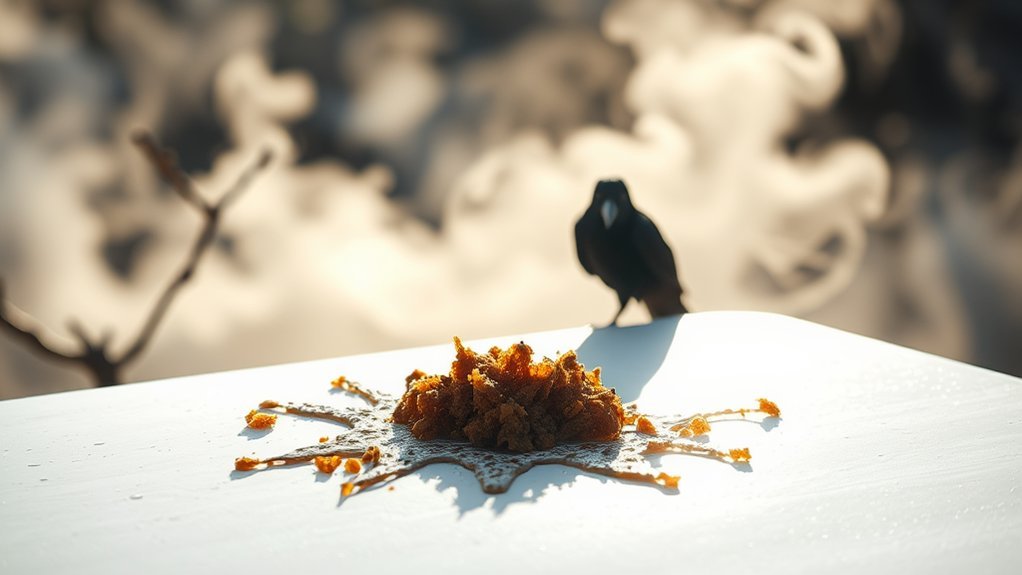
For instance, some poets incorporate these elements to evoke grassroots realism, connecting visceral images with deeper reflections on life's unpredictability. Artists often highlight their vibrant contrasts against polished surfaces, challenging traditional notions of beauty.
Through these artistic interpretations, you can appreciate how this seemingly mundane subject invites you to reassess your perceptions of luck and misfortune. Whether as a literal or metaphorical element, bird droppings remind you that life's surprises often blend the profound and the trivial in enchanting ways.
Celebrating Luck: Rituals and Practices
While many people might dismiss bird droppings as mere mess, various cultures have transformed these encounters into rituals celebrating luck. You might find joy in creating personal rituals around this quirky omen, turning an unexpected event into a symbol of fortune.
From carrying lucky charms that represent your experiences to sharing your stories with friends, it's a way to foster a sense of belonging within your community.
- Practice a "lucky soap" wash to cleanse yourself of past misfortunes.
- Write down your wishes and place them under a droppings-inspired charm.
- Share your bird poop stories on social media for laughs.
- Host a "lucky drop" gathering with friends to recount your experiences.
- Create your own artistic interpretation of the event!
Sifting Through the Mess: What It Means Today
The lighthearted approach to bird droppings as symbols of luck is just one perspective in a broader conversation about how we interpret these unexpected encounters today.
In a world filled with urban legends and bird poop myths, many people find solace in believing that these surprises carry hidden meanings. You might notice friends laughing off bird poop as a sign of good fortune, bonding over shared experiences.
Such moments allow us to feel connected, even when life's messiness surprises us. In a fast-paced culture, attributing luck to these droppings can lighten the mood and foster community.
Ultimately, understanding these whims helps us navigate our unique interpretations of daily life, reinforcing our shared beliefs in luck and fate.
Frequently Asked Questions
Can Bird Poop Really Predict Health or Wealth?
Many people wonder if bird poop can predict health or wealth. Some individuals believe there is a link between bird droppings and these outcomes. However, scientific studies do not support these beliefs. The idea largely relies on personal interpretations and beliefs rather than proven facts. It's important to view such signs with a critical mind.
How Might Bird Poop Affect Relationships or Love Life?
Bird poop can serve as a funny topic in your relationship. Its unexpected nature may lead to laughter and light-hearted moments. Sharing this experience can help you feel closer to your partner, creating a bond through humor.
Are There Specific Birds Associated With Better Luck?
When thinking about lucky birds, sparrows and robins come to mind. These birds hold cultural significance in many traditions. Watching these lively birds may enhance your sense of connection to good fortune.
What Should I Do Immediately After Getting Pooped On?
If you get pooped on, stay calm. First, grab some wipes. Clean the poop off your skin or clothes right away. Some people believe getting pooped on brings good luck, so you might as well find humor in it while you clean up.
Do Different Colors of Bird Poop Have Different Meanings?
Different colors of bird poop can show different meanings. Each color can provide clues about what birds eat and their health. For example, bright white poop may indicate a high protein diet, while brown poop can result from a diet rich in seeds.

Kashvi is a passionate bird enthusiast and nature lover who has been fascinated by the world of birds for years. With a keen eye for detail and a love for learning, Kashvi is dedicated to sharing her knowledge and insights with fellow bird enthusiasts on Avian Enthusiasts. Through her engaging and informative articles, Kashvi aims to inspire others to join her in exploring the fascinating world of birds and to promote a deeper appreciation for these incredible creatures.