
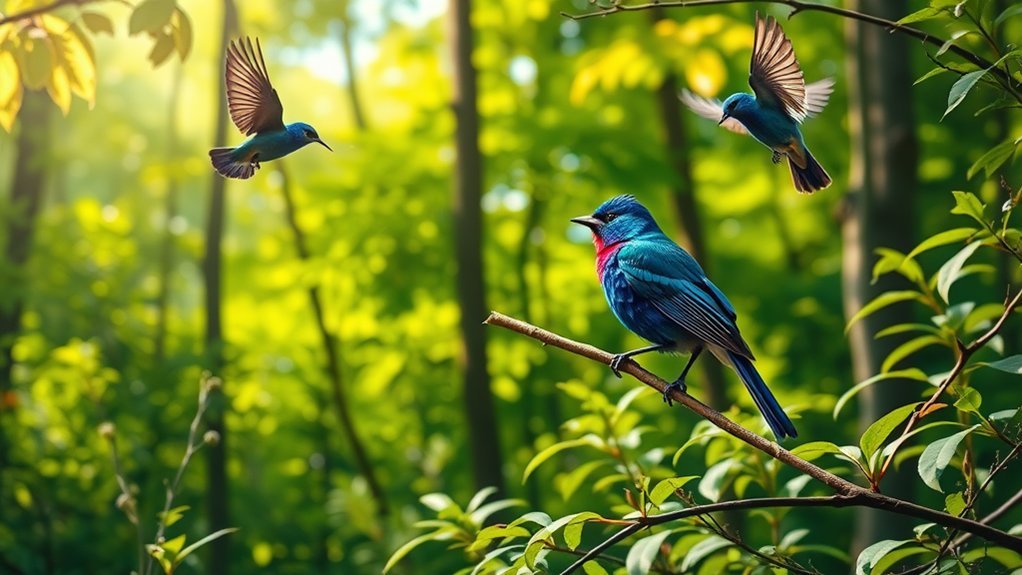
15 Most Beautiful Blue Birds in North America
North America is home to many beautiful blue birds. Each species has its own traits and behaviors. The Eastern Bluebird prefers open areas. The Indigo Bunting sings a lovely song during mating season. The Blue Jay exhibits strong social behavior. The Western Bluebird often nests in caverns.
These blue birds play vital roles in their ecosystems. They contribute to seed dispersal, insect control, and pollination. Observing them can deepen our appreciation for nature.
Whether you are a birdwatcher or simply enjoy nature, learning about these blue birds can be both interesting and rewarding. Their colors and songs add joy to our surroundings, highlighting the beauty of the natural world.
Key Takeaways
- Eastern Bluebirds have bright blue feathers and a flexible diet, making them a delightful sight in North America.
- Blue Jays have bold blue plumage and social structures, often foraging in oak-dense areas.
- Indigo Buntings attract attention with their vivid blue color and sweet songs during mating.
- Western Bluebirds feature striking blue feathers and orange chests, living in open grasslands and savannas.
- Scissor-tailed Flycatchers are recognized for their long tails and flying displays, typically found in open fields like farmland.
Eastern Bluebird

The Eastern Bluebird is a vibrant bird found across North America. It has bright plumage that makes it easy to spot. You can find these birds in open fields, farmlands, and near wooded areas. Their preferred habitats allow them to be visible and interact with people.
Eastern Bluebirds eat mainly insects and fruits. They show flexibility in their diet, hunting for beetles and enjoying berries, especially in colder months. This adaptability helps them survive and supports their ecosystem by controlling insect populations and spreading seeds.
Seeing Eastern Bluebirds can enhance your appreciation of birds in your area. Their beauty and behavior provide a delightful connection to nature.
Blue Jay
The Blue Jay is a bird with striking blue feathers and a distinct call. It's common in North America and can be found in mixed forests, parks, and suburban areas.
Blue Jays thrive in environments with plenty of oak trees since acorns are an important part of their diet. These birds are intelligent and have complex social structures.
They can mimic the calls of other birds, showcasing their smart behavior. The Blue Jay's iridescent feathers and bold personality make it a captivating sight.
You can often see them caching food for later, which highlights their problem-solving skills. Observing Blue Jays in your backyard can deepen your appreciation for their unique characteristics and behaviors.
Indigo Bunting
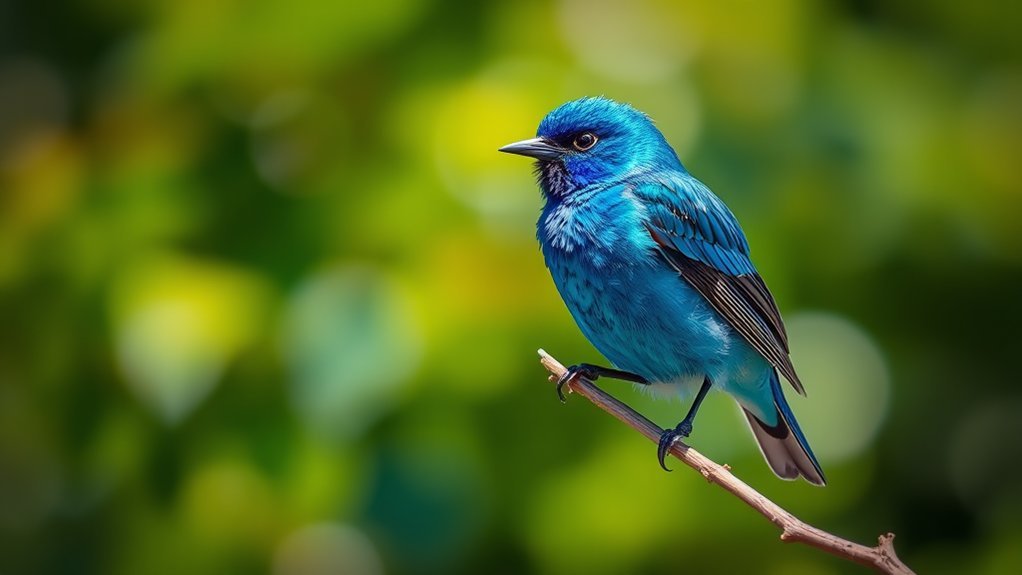
Indigo Buntings are small songbirds recognized for their bright blue feathers. They live in open woodlands and shrubby areas that provide cover and food.
These birds exhibit interesting behavior, especially during courtship, as they sing a variety of songs to strengthen social bonds. Male Indigo Buntings often sing from high spots to mark their territory during the breeding season.
Their diet includes seeds and insects, showing their ability to adapt. During migration, they use the stars for navigation, demonstrating their connection to nature.
Spotting an Indigo Bunting in your yard can help you appreciate the diversity of birds in North America.
Tree Swallow
When you see a Tree Swallow flying smoothly over fields and water, you'll notice their shiny blue-green feathers and white bellies.
These birds like to breed in open spaces near water where they can find food and safe places to build their nests.
They often nest in natural holes or human-made sites, using grasses and feathers to make their homes comfortable.
Their fast flying allows them to catch insects while in the air, showing how agile they are.
During breeding season, both parents take care of their young together, which shows their strong family bonds.
This caring behavior creates a lively community that invites you into their interesting lives.
Barn Swallow

Barn Swallows are stunning birds known for their forked tails and colorful feathers. They fly gracefully while searching for insects. They build mud nests in sheltered places, often near human homes. Each year, they return to the same nesting sites, showing strong loyalty to their locations.
Their migrations are impressive. They travel long distances from North America to Central and South America for the winter.
Observing Barn Swallows allows you to appreciate their beauty and understand their important roles in nature. They help control pests and indicate the health of ecosystems.
Lazuli Bunting
The Lazuli Bunting attracts birdwatchers with its bright blue feathers and orange breast. This beautiful bird lives in open areas like brushy edges, shrubby spots, and near streams across western North America.
You can watch it as it moves around, looking for seeds and insects in the lower shrubs. During breeding season, the male's vivid colors stand out against the female's softer tones, showing clear differences between genders.
Males sing sweet songs to mark their territory and attract mates, adding charm to your outdoor experience. Their migration patterns depend on available habitats and weather, showing their ability to adapt to different environments.
Watching Lazuli Buntings connects you with nature's beauty.
Mountain Bluebird
The Mountain Bluebird has five key features that attract bird watchers. First, its bright blue feathers stand out in mountainous areas. This color helps attract mates during breeding season.
Second, these birds display interesting behaviors, such as aerial dances and quick movements that show off their speed.
Third, the Mountain Bluebird mainly eats insects and berries, which shows they adapt to changes in food availability.
Fourth, they often nest in tree cavities or abandoned structures, making their homes in various environments.
Lastly, their sweet calls resonate through the mountains, helping bird lovers identify them by sound.
Observing these traits allows for a greater appreciation of this stunning bird and its role in the ecosystem.
Black-throated Blue Warbler
The Black-throated Blue Warbler is a small bird that prefers dense deciduous and mixed forests. Its striking plumage and unique behaviors attract birdwatchers.
This warbler thrives in habitats with layered vegetation, which provides cover and food.
During breeding season, male Black-throated Blue Warblers sing melodic notes. These songs help them establish territories and attract females.
They build nests in low shrubs, providing safety for their young.
Observing these lively birds can enhance your appreciation for North America's bird diversity and foster connections with other bird enthusiasts.
Cerulean Warbler
Cerulean Warblers have striking sky-blue feathers and unique black stripes. They inhabit North America's forests, enhancing the natural beauty of these areas.
These birds migrate from their breeding grounds in the eastern United States to Central America for the winter. They follow specific routes during migration, showing strong flying abilities and a sense of direction.
Cerulean Warblers prefer mature forests that have tall trees and open canopies. You can often find them in deciduous woodlands, especially near river valleys, where they search for insects to eat.
Recognizing their habitat needs is crucial for preserving these birds and ensuring they thrive for future generations.
Blue Grosbeak
The Blue Grosbeak is a striking bird found in North America. Its vibrant blue feathers and unique chestnut wing bars make it stand out. This bird prefers shrubby areas and open forests, mainly in the southwestern U.S. and Mexico.
The Blue Grosbeak's diet consists of seeds, insects, and berries. This variety shows how well they adapt to their environment.
During breeding season, male Blue Grosbeaks become even more colorful, which helps them attract mates.
Watching the Blue Grosbeak allows you to appreciate nature and learn about species interactions. Engage with this beautiful bird and enjoy the experience!
Purple Martin
The Purple Martin is an interesting bird with beautiful, deep purple feathers that shine in the sunlight. It likes open spaces like orchards, fields, and cities, where it often builds nests in man-made houses. These social birds create large colonies that are delightful to watch.
During migration, Purple Martins travel from North America to Brazil for the winter, covering thousands of miles. While observing these amazing birds, you can see their strength and ability to adapt, highlighting their strong community spirit.
Blue-winged Warbler
The Blue-winged Warbler is a small, colorful bird known for its cheerful songs. It sings a fast-paced "bee-buz" sound from low spots in shrubby areas. This song helps the bird communicate and attract mates during breeding season.
These warblers build their nests on the ground, usually hidden in thick plants to protect their young. They typically live in deciduous forests and shrubby regions, where they hunt for insects and caterpillars.
Learning about the Blue-winged Warbler can help you appreciate this beautiful bird and its importance in nature.
Western Bluebird
When you see a Western Bluebird on a fencepost or flying over an open field, you're looking at one of North America's most beautiful songbirds. This colorful bird likes open areas such as grasslands, savannas, and dry landscapes. It has bright blue feathers and a warm orange chest that stand out against its surroundings.
Western Bluebirds are social animals. They often gather in small groups, especially when feeding.
They mainly eat insects and berries, showing their ability to live in different environments. During courtship, males sing and bring food to attract females, which highlights their unique mating behaviors.
Learning about their habitat and actions helps you appreciate these wonderful birds and connect with North America's bird community.
Scissor-tailed Flycatcher
The Scissor-tailed Flycatcher is a striking bird found in North America. It thrives in open habitats like grasslands and farmlands. You can spot this bird perched on fences or low branches, where its long tail is on display.
During mating season, males perform impressive aerial dives and swoops to attract females. They primarily eat insects, showcasing their effective hunting skills.
Violet-green Swallow
The Violet-green Swallow is a bird known for its shiny blue and green feathers and quick flying. It lives in various parts of North America, especially in open woodlands and near water.
This bird shows interesting behaviors related to where it lives and its migration.
- It likes to build nests in tree holes and human-made structures.
- It performs impressive aerial tricks to catch insects.
- It migrates long distances between its breeding and winter homes.
- It helps control pest populations in its environment.
The colorful plumage of the Violet-green Swallow makes it delightful to watch.
Learning about its habitat and migration can deepen your appreciation for nature and connect you with other bird lovers and conservationists.
Frequently Asked Questions
What Is the Habitat of These Blue Bird Species?
These blue bird species live in various habitats. They prefer to nest in tree cavities or shrubs. Their breeding habits help them adapt to their surroundings. This adaptation supports their survival and reproduction in different ecosystems.
Are Any of These Blue Birds Migratory?
Yes, some blue birds migrate. They change their locations with the seasons to find food and suitable breeding spots. Watching their migrations can help you appreciate nature and understand how different species adapt to their environments.
What Do These Blue Birds Typically Eat?
Blue birds have varied diets. They primarily eat insects, fruits, and seeds. Their feeding habits change with the seasons. This helps them adapt and thrive in different environments.
How Can I Attract Blue Birds to My Backyard?
To attract bluebirds, follow these steps:
- Set up bird feeders with mealworms and seeds. Bluebirds enjoy these foods.
- Install nesting boxes in open areas. Ensure the boxes have good drainage to keep them dry.
- Monitor the habitat. Keep an eye on grass height and make any necessary adjustments.
- Provide water sources. Birdbaths or shallow dishes with fresh water will make your backyard more inviting.
Are These Blue Birds Threatened or Endangered?
Some blue birds are threatened by habitat loss and climate change. Conservation efforts work to monitor their populations and protect their habitats. These actions help ensure you can enjoy their beauty in your backyard for years to come.

Kashvi is a passionate bird enthusiast and nature lover who has been fascinated by the world of birds for years. With a keen eye for detail and a love for learning, Kashvi is dedicated to sharing her knowledge and insights with fellow bird enthusiasts on Avian Enthusiasts. Through her engaging and informative articles, Kashvi aims to inspire others to join her in exploring the fascinating world of birds and to promote a deeper appreciation for these incredible creatures.


