
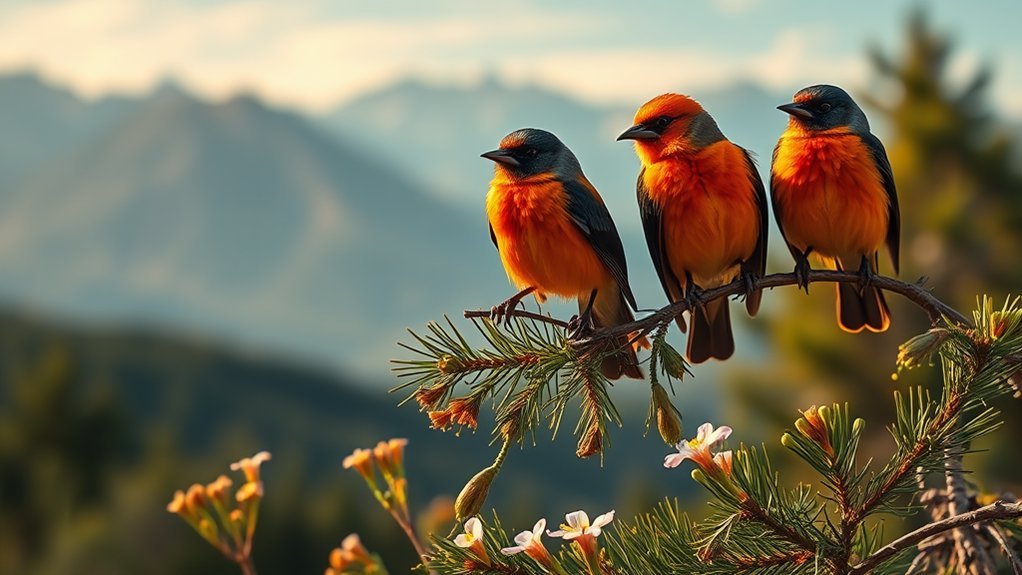
Orange and Black Birds in Colorado: Complete Guide
In Colorado, orange and black birds like the Bullock's Oriole and Black-headed Grosbeak add beauty to the environment. These birds have specific nesting habits and feeding styles that are vital for their survival. To attract them to your yard, you need to understand their preferred habitats. Planting native plants can create a welcoming space for these birds. Explore their interesting behaviors and learn about their conservation needs to appreciate their role in the ecosystem.
Key Takeaways
Colorado has many vibrant orange and black birds, such as the Baltimore Oriole and Bullock's Oriole, making it a great spot for birdwatching. These birds are known for their bright plumage, unique foraging habits, and beautiful songs, which help birdwatchers easily spot them in various areas.
Bullock's Orioles prefer to nest in open woodlands and residential trees. They build their nests high above the ground, providing safety for their young. Birdwatching is especially rewarding in prime locations like Rocky Mountain National Park and Chatfield State Park, particularly during the spring and fall migrations.
Efforts to conserve these birds focus on restoring habitats and monitoring their populations. This is important for maintaining the diversity of birds in Colorado and protecting them from environmental changes. Enjoy observing these beautiful birds in their natural habitats!
Overview of Orange and Black Birds in Colorado
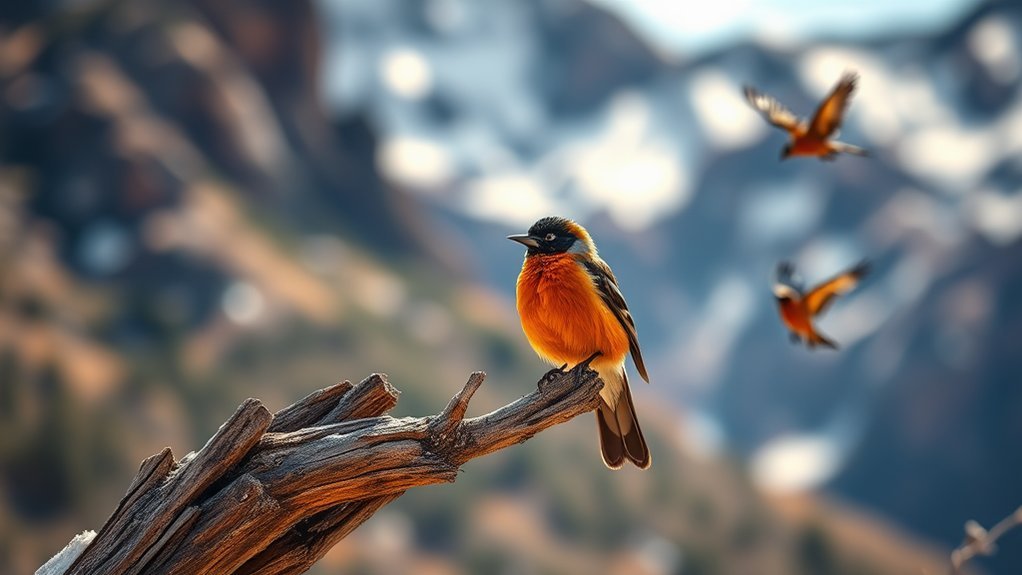
When exploring the diverse avian life of Colorado, you'll likely encounter several striking orange and black birds that stand out against the state's varied landscapes.
To enhance your orange bird identification skills, pay attention to specific characteristics such as vibrant plumage, size, and habitat preferences. Common species include the Baltimore Oriole and the Bullock's Oriole, both distinguished by their vivid colors.
Understanding black bird behavior is equally important, as many of these species exhibit unique social structures and feeding habits. For instance, blackbirds often form large flocks and engage in complex vocalizations.
Bullock's Oriole: A Vibrant Visitor
Among the striking orange and black birds of Colorado, the Bullock's Oriole stands out as a vibrant visitor that captivates birdwatchers and nature enthusiasts alike. This species thrives in open woodlands, riparian areas, and residential neighborhoods, showcasing its preference for habitats rich in trees that provide nesting sites.
You'll often spot them foraging in the canopy, where their feeding behaviors shine. They primarily consume fruits, nectar, and insects, using their sharp bills to extract food from flowers and tree bark. Observing their acrobatic movements while they navigate branches adds to the thrill of birdwatching.
To attract Bullock's Orioles, consider planting native flowering plants and hanging feeders stocked with fruit—creating a welcoming environment for these dazzling birds.
Black-headed Grosbeak: The Striking Songbird
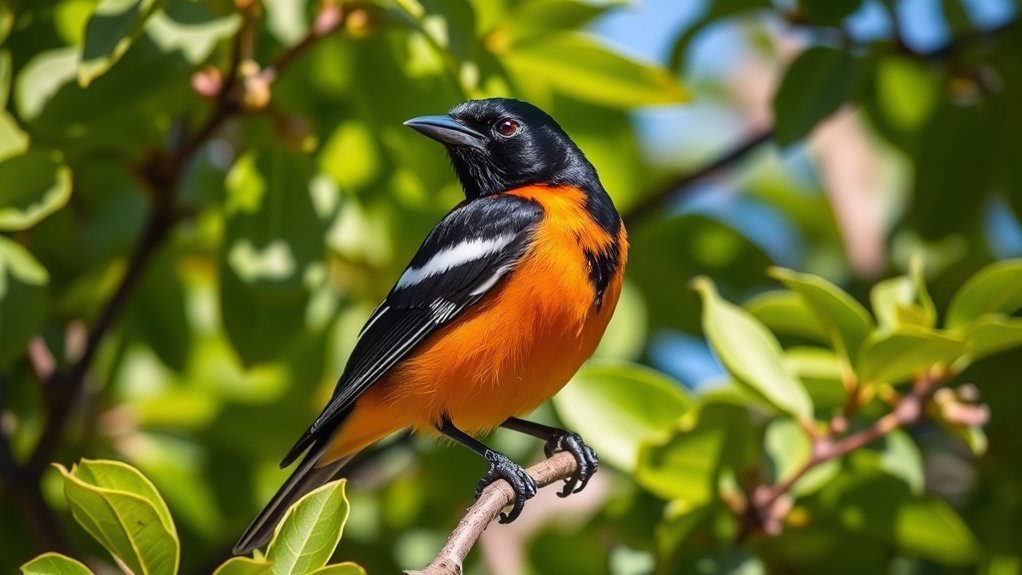
The Black-headed Grosbeak is a striking songbird that enchants those lucky enough to spot it in Colorado's varied landscapes. You can easily identify them by their vibrant orange and black plumage and melodious songs.
Here are some key features of their behavior and nesting habits:
- Territorial: Males are known for their aggressive defense of nesting sites.
- Diet: They feast on seeds, fruits, and insects, showcasing their adaptability.
- Nesting: The black-headed grosbeak nests low in trees or shrubs, often using grasses and twigs.
- Song: Their varied calls can often be heard in early mornings and during mating season.
These striking songbirds truly embody the natural beauty of Colorado, enhancing your birdwatching experience.
Orchard Oriole: The Subtle Beauty
Five species of orioles grace Colorado, but the Orchard Oriole stands out with its understated charm and rich coloration.
These birds typically nest in deciduous trees, often favoring orchards and riparian woodlands. You'll notice their unique preference for nectar, frequenting flowering plants like honeysuckle and trumpet vine. They also consume insects and fruits, showcasing their adaptability in diet.
During breeding season, males display striking black and orange plumage while females resemble a more muted green-yellow; this subtlety adds to their allure.
As you observe these orioles, you'll appreciate their gentle songs and intricate nesting habits, as they weave their nests using grasses and plant fibers, perfectly positioned to raise their young amidst the greenery of Colorado's landscape.
Western Tanager: A Splash of Color
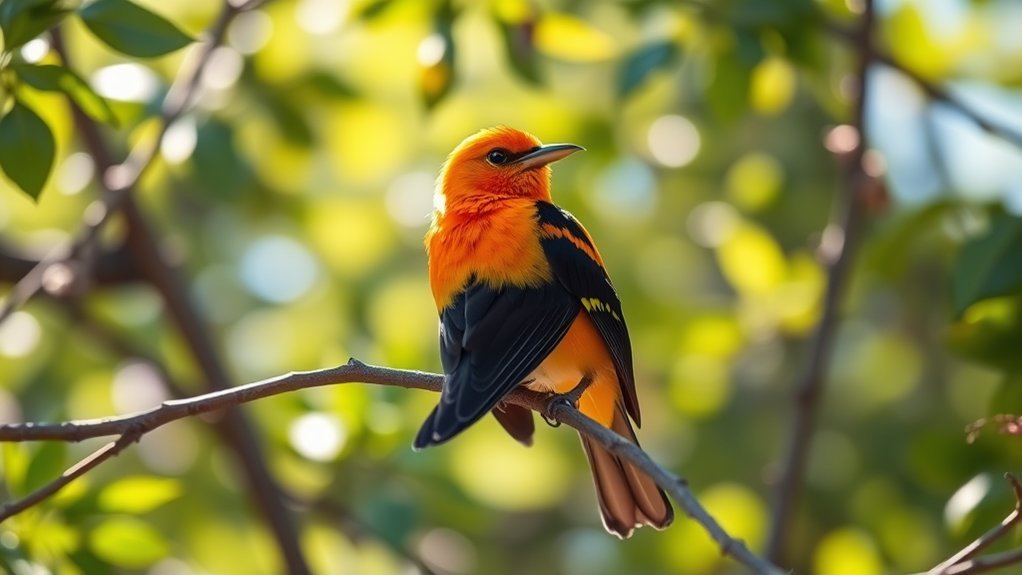
While exploring Colorado's diverse avifauna, you're likely to encounter the Western Tanager, a bird known for its vibrant plumage that adds a striking splash of color to the landscape.
You'll find these birds favoring specific western tanager habitats, typically in coniferous forests or along wooded creek beds.
When it comes to western tanager feeding, they're opportunistic eaters that enjoy a varied diet.
Here are some key traits:
- Males display brilliant yellow and black feathers.
- Females are more subdued, showcasing olive and yellow tones.
- They primarily feed on insects, fruits, and berries.
- Their melodic song fills the forest with rich sounds.
Keep your eyes peeled for this stunning bird during your adventures in Colorado!
Northern Flicker: The Unique Woodpecker
Among the fascinating avian residents of Colorado, the Northern Flicker stands out as a uniquely delightful woodpecker. These birds thrive in diverse habitats, including open woodlands, parks, and urban areas, making them relatively easy to spot.
One of their most distinctive northern flicker behaviors is their ground foraging; unlike other woodpeckers, they often hunt for ants and beetles on the ground. You'll notice their striking plumage—black and orange markings—making them a visual treat.
During breeding season, they create drum-like sounds, establishing territory. By observing these captivating woodpeckers in their natural habitat, you'll gain a deeper appreciation for Colorado's expansive biodiversity and the unique roles these birds play in our ecosystem.
Keep an eye out; you won't want to miss them!
Varied Thrush: A Mysterious Migrant
As you explore the diverse avifauna of Colorado, keep an eye out for the Varied Thrush, a striking and elusive migrant that can be spotted in the state's forests and shrubby areas.
This bird's migration patterns typically bring it to Colorado during the fall and winter months, offering a unique opportunity for birdwatchers.
To identify the Varied Thrush and appreciate its habitat preferences, look for:
- Distinctive orange and black plumage.
- Preference for dense coniferous forests.
- Foraging behavior on the ground for insects and berries.
- A haunting, melodic call that resonates in the twilight.
Bobolink: The Prairie Songster
The Bobolink, a small but vibrant songbird, graces Colorado's grasslands and meadows with its melodious tunes and striking plumage. Known for its unique bobolink behavior, this bird engages in a series of joyful, bubbling calls during the breeding season, drawing both mates and attention.
As a migratory species, the Bobolink boldly travels long distances, departing Colorado for wintering grounds in South America. You can observe their arrival in late spring, marking a seasonal change that birdwatchers enthusiastically anticipate.
Their nesting habits offer fascinating insights; they prefer undisturbed fields for their homes, which contributes to their declining numbers. By understanding Bobolink migration and behavior, you deepen your connection with these enchanting birds, enhancing your appreciation of Colorado's natural landscape.
Common Blackbird: The Versatile Forager
Fluttering through Colorado's varied landscapes, the Common Blackbird is a remarkable forager that adapts to diverse habitats, from wetlands to urban gardens.
Its behavioral adaptations and feeding strategies showcase its versatility. You'll often see these birds employing various foraging techniques, such as:
- Ground foraging: Scratching the soil for insects and seeds.
- Hovering: Utilizing aerial agility to catch insects mid-flight.
- Gleaning: Picking food from vegetation or tree bark.
- Scavenging: Taking advantage of urban scraps left by humans.
These strategies allow the Common Blackbird to thrive in different environments, demonstrating its resourcefulness and resilience.
Whether in a park or a field, you've likely encountered this fascinating forager, a true symbol of adaptability in Colorado's avian community.
Red-winged Blackbird: The Marsh Icon
Although you may often hear their distinctive calls echoing across wetlands, spotting the Red-winged Blackbird can be just as thrilling as recognizing its voice. These birds are iconic inhabitants of marsh habitats, beautifully adapting to their environment.
Males, with their striking red and yellow shoulder patches, often perch atop reeds, defending their territory with confidence. Their nesting behavior is intriguing; they typically build nests in dense vegetation, using materials like grasses and reeds to create a secure spot above the water.
You'll notice how females select nesting sites to provide cover from predators, showcasing their resourcefulness. Observing these meticulous activities not only deepens your appreciation for the species but enhances your understanding of wetlands as essential ecosystems.
Brewer's Blackbird: The Social Bird
Brewer's Blackbird, known for its sociable nature, often gathers in large flocks that create a lively spectacle in open habitats.
Their social behaviors enhance flock dynamics, allowing them to thrive in communal living. When you observe these birds, you'll notice:
- Vocalizations: They communicate with a variety of calls, enriching their social interactions.
- Foraging Together: They often feed in groups, increasing foraging efficiency.
- Mobility: Flocking provides safety in numbers, helping them evade predators.
- Territorial Displays: Males often showcase their prowess through competitive behaviors within the flock.
These dynamics foster a sense of belonging among Brewer's Blackbirds, highlighting their unique social structure and the importance of community in their daily lives.
American Robin: The Familiar Face
In the vibrant landscapes of Colorado, the American Robin stands out as one of the most recognizable birds. Known for its bright orange belly and cheerful song, this bird showcases interesting robin behavior that captivates many.
During the spring, robins return from their seasonal migration, often seen foraging for worms in well-kept lawns and parks. Their presence signals the arrival of warmer weather, fostering a sense of community among birdwatchers and nature enthusiasts.
Observing their interactions—such as territorial displays and mating rituals—enhances your appreciation for these familiar faces. As they gather in flocks, robins embody the spirit of belonging in natural spaces, serving as a reminder of Colorado's rich avian diversity and encouraging you to connect with nature.
Spotting Orange and Black Birds in Colorado
Have you ever wondered where to find orange and black birds in Colorado? These stunning creatures can often be spotted at various birdwatching locations.
Keep an eye out during their seasonal migrations, particularly in spring and fall. Here are four prime spots to enhance your birdwatching experience:
- Rocky Mountain National Park – A diverse habitat supporting various species.
- Chatfield State Park – Great for observing birds near the water.
- Mount Falcon Park – Offers scenic views along with excellent birdwatching opportunities.
- Boulder Open Space – A rich ecosystem that attracts a variety of orange and black birds.
Birdwatching Tips for Enthusiasts
While knowing where to spot orange and black birds in Colorado helps, mastering effective birdwatching techniques can greatly enhance your experience.
Start by investing in quality birdwatching gear, including a pair of binoculars and a field guide specific to Colorado's species. Learn to identify habitat importance; understanding the preferred environments of your target birds will considerably increase your chances of sightings.
Early mornings and late afternoons are prime times for activity. Practice patience and silence—birds can be easily startled.
Also, consider joining local birdwatching groups; they not only provide camaraderie but also share valuable insights and locations.
Finally, keep a journal to track your sightings, fostering a sense of belonging within the birdwatching community.
Conservation Efforts for Colorado's Birds
As habitat loss and climate change threaten avian populations, Colorado has made significant strides in implementing conservation efforts aimed at protecting its diverse bird species.
You can play an essential role by participating in these initiatives, which focus on:
- Habitat Restoration: Engaging in programs that restore wetlands and forests necessary for nesting.
- Monitoring Populations: Joining surveys to track bird numbers and health.
- Community Involvement: Collaborating with local organizations to raise awareness and promote bird-friendly practices.
- Advocacy: Supporting policies that protect habitats and regulate hunting and development.
Frequently Asked Questions
What Is the Best Time of Year to See Orange and Black Birds?
The best time to see orange and black birds is during migration in spring and fall. These birds move to their breeding grounds in spring and head south in fall. Look for them when they are most active during these seasons.
Are There Any Specific Locations in Colorado Known for These Birds?
To see orange and black birds in Colorado, visit wetlands, riverbanks, and forests. These locations offer great conditions for bird watching. You can enjoy the beauty of nature and interact with other birding enthusiasts. Notable spots include the South Platte River, Rocky Mountain National Park, and Barr Lake State Park. Each site provides unique opportunities to observe these vibrant birds in their natural habitat.
How Can I Attract Orange and Black Birds to My Backyard?
To attract orange and black birds to your backyard, place bird feeders filled with seeds they enjoy. Seeds like sunflower seeds and thistle can work well. Also, plant native flowers such as milkweed and sunflowers in your garden. These plants provide food and shelter, making your yard a friendly place for these birds to visit. With these simple steps, you can enjoy watching beautiful orange and black birds in your own space.
What Are the Main Threats to Orange and Black Bird Populations in Colorado?
The main threats to orange and black bird populations in Colorado are habitat destruction, climate change, and changes in food sources or migratory patterns. Urban development and agriculture reduce their living space. Climate change impacts their ecosystems, making it harder for them to find food and migrate. These factors make survival difficult for these birds. It is important to protect their habitats and address climate change to support their population.
Can I Report My Sightings of These Birds for Conservation Purposes?
Yes, you can report your bird sightings for conservation! When you watch birds, you help track orange and black bird populations. Share your findings with local conservation groups or online platforms. Your data can make a difference in protecting these species.

Kashvi is a passionate bird enthusiast and nature lover who has been fascinated by the world of birds for years. With a keen eye for detail and a love for learning, Kashvi is dedicated to sharing her knowledge and insights with fellow bird enthusiasts on Avian Enthusiasts. Through her engaging and informative articles, Kashvi aims to inspire others to join her in exploring the fascinating world of birds and to promote a deeper appreciation for these incredible creatures.


