Pennsylvania Black Birds: Seasonal Sightings
In Pennsylvania, blackbirds show seasonal behaviors that change with the environment. In spring, male blackbirds arrive first to establish territories. Females follow to find nesting sites. During summer, they raise their young. As fall approaches, blackbirds gather in large flocks, preparing to migrate. These patterns reveal important information about their roles in the ecosystem. Understanding these trends can help improve conservation efforts and habitat management strategies. What can we learn from these seasonal changes to better support blackbird populations?
Key Takeaways
Blackbirds return to Pennsylvania in spring as temperatures rise. This marks the start of their breeding season. Male blackbirds sing loudly to mark their territories and attract females. In summer, both parents care for their chicks by finding food and protecting their area. In fall, blackbirds gather in groups as they prepare to migrate, looking for food and safe places to rest. Some blackbird species, like the Red-winged Blackbird and Common Grackle, can be spotted year-round in suitable habitats. Their presence adds vibrancy to the landscapes of Pennsylvania and offers birdwatchers a chance to enjoy their beauty throughout the seasons.
Overview of Pennsylvania's Blackbirds
Pennsylvania is home to several types of blackbirds, including the Red-winged Blackbird, Common Grackle, and Brown-headed Cowbird. Each species has its own behavior and habitat preference.
Red-winged Blackbirds thrive in wetlands and grasslands. They show territorial behavior during breeding season.
Common Grackles are found in open fields and urban areas. They're social birds and gather in large groups, especially at dusk.
Brown-headed Cowbirds usually live near forest edges and fields and are known for laying their eggs in other birds' nests.
Understanding where these blackbirds prefer to live helps us appreciate their roles in the ecosystem. Observing their interactions and habitats can deepen your connection to Pennsylvania's blackbird community.
Migratory Patterns of Blackbirds in Pennsylvania
Many blackbird species live year-round in Pennsylvania, but their migration patterns change with the seasons.
In the fall, blackbirds move south. They search for warmer weather and food, relying on agricultural fields and wetlands for seeds and insects.
In spring, as temperatures rise, blackbirds return. They gather in larger flocks, which helps them find good breeding areas and food. During this time, blackbirds establish territories and display their breeding habits.
Learning about these migration behaviors enhances your appreciation for these birds and highlights their role in Pennsylvania's ecosystem. This connection can enrich your experience as a bird enthusiast.
Spring: Arrival and Breeding Season
As spring brings warmer temperatures, blackbirds return to Pennsylvania. This signals the start of their breeding season. You can observe their unique behaviors as males display brightly and sing to attract mates. During this time, blackbirds prefer habitats like wetlands, marshes, and open fields with dense vegetation.
Here are some important points about their arrival and breeding:
- Males use calls and songs to establish territories.
- Courtship rituals help build strong bonds between pairs.
- They typically nest in shrubs or reeds for protection.
- Blackbirds often return to the same breeding sites each year.
These behaviors show how blackbirds are connected to Pennsylvania's spring landscape. Enjoy watching these fascinating birds as they thrive during this lively season.
Summer: Nesting and Parental Care
Once blackbirds begin breeding, they enter an essential period of nesting and raising their young during the summer.
Female blackbirds gather materials like grasses and mud to build sturdy nests. Males establish a territory and watch for dangers that may threaten their family.
After the eggs are laid, both parents take turns incubating and feeding the chicks.
They communicate effectively to keep their young safe and well-nourished. This teamwork between male and female is crucial, as it improves the survival chances of the chicks and supports the flourishing blackbird population in Pennsylvania.
Fall: Flocking and Preparations for Migration
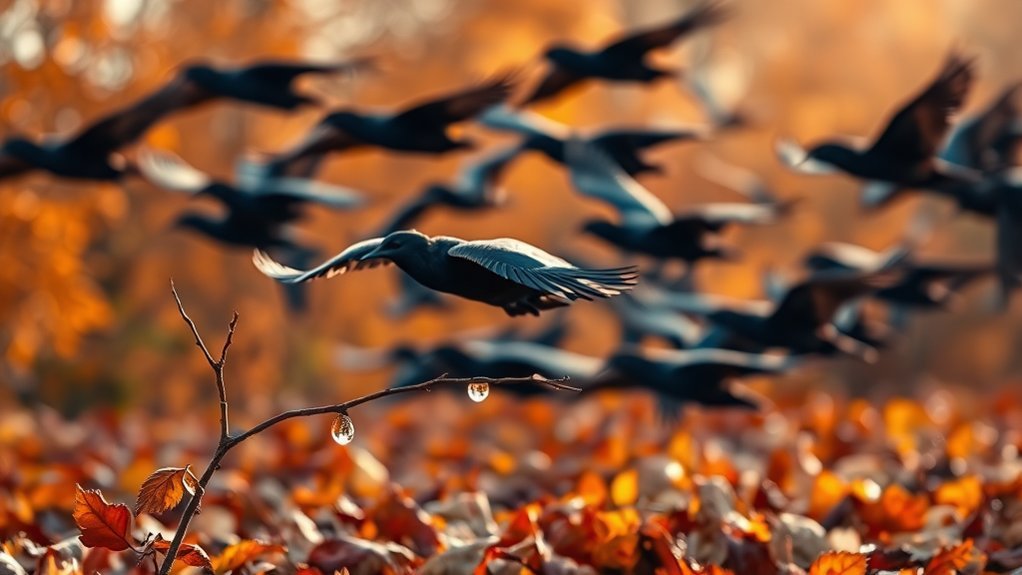
As fall arrives, blackbirds change their behavior to prepare for migration. This season marks a shift towards communal living and flocking. You can observe these changes as they form larger groups, responding to triggers like falling temperatures and shorter days.
Here are some key behaviors to notice:
- Groups of blackbirds grow larger as food becomes less available.
- Their calls increase, helping flocks stay connected.
- They change their foraging methods to gather more energy.
- Roosting spots often shift, offering more safety in numbers.
These behaviors help blackbirds survive and create a sense of community, similar to how we connect with others during times of change.
Winter: Survival Strategies of Blackbirds
In winter, blackbirds face tough conditions, but they've effective survival strategies. They forage for food by efficiently scavenging seeds and berries, which are key food sources during this season.
They adapt their searching methods based on what's available and often form mixed flocks to improve their chances of finding food.
To keep warm, blackbirds fluff their feathers. This traps air and helps insulate them against the cold.
When temperatures drop significantly, they roost together. This communal roosting helps them share warmth.
These strategies show how resilient and adaptable blackbirds are during winter. Their ability to survive until spring demonstrates their skill at overcoming challenges.
Best Locations for Blackbird Watching in Pennsylvania
Pennsylvania has several excellent spots for blackbird watching. These locations are perfect for bird lovers, whether you're a seasoned birder or a beginner.
Here are some of the best places to observe blackbirds:
- Saylor Park – The wetlands here provide a great spot to see different blackbird species.
- Presque Isle State Park – This park has diverse ecosystems that attract many wildlife, including large flocks of blackbirds.
- Swatara State Park – The open fields and marshes in this area are ideal for spotting these fascinating birds.
- Valley Forge National Historical Park – The fields in this park offer an inviting habitat for various blackbird species.
These locations give you a chance to connect with nature and enjoy watching these captivating birds in their natural settings.
Tips for Identifying Different Species of Blackbirds
Identifying different species of blackbirds is easier when you focus on their appearance and sounds. Start by observing color differences.
For example, the Common Grackle has shiny black feathers, while the Female Red-winged Blackbird is brownish. Look for unique features like the yellow shoulder patches on male Red-winged Blackbirds.
Listen carefully to their calls. The Common Grackle produces a loud, raspy sound, while the Red-winged Blackbird sings distinct melodic notes. Noticing these details will help you tell the species apart.
Engage with local birdwatching communities to share your findings. Connecting with others can enhance your knowledge and appreciation of blackbirds in Pennsylvania.
Frequently Asked Questions
What Are the Different Species of Blackbirds Found in Pennsylvania?
In Pennsylvania, you can see two main types of blackbirds: the red-winged blackbird and the common grackle. The red-winged blackbird has shiny black feathers with bright red and yellow shoulder patches. It often frequents wetlands and open fields. The common grackle has an iridescent body and a long tail. It is commonly found in urban areas and agricultural fields. Observing these birds can make your birdwatching experience enjoyable as you watch their unique behaviors and interactions in various environments. Happy birdwatching!
How Can I Attract Blackbirds to My Backyard?
To attract blackbirds to your backyard, use these simple steps. Offer foods like sunflower seeds and corn. Create a friendly environment by adding natural cover, water sources, and native plants. These actions will invite blackbirds to visit often. Enjoy watching these beautiful birds in your yard.
Do Blackbirds Have Distinct Calls or Songs?
Blackbirds have unique calls and songs. Each species has its own distinct melodies. Listening to these sounds can enhance your appreciation of nature. You can enjoy a richer experience in your backyard by paying attention to their different vocalizations.
What Predators Threaten Blackbirds in Pennsylvania?
In Pennsylvania, blackbirds face risks from hawks and nest robbers like raccoons and snakes. These predators threaten blackbird populations. Habitat choices play a role in their survival against these dangers. Understanding these threats can help us protect blackbirds and their habitats.
How Do Blackbirds Impact Local Ecosystems?
Blackbirds benefit local ecosystems in two key ways: seed dispersal and pest control. By spreading seeds, they help plants grow in new areas, promoting biodiversity. They also eat insects, reducing pest populations. Understanding how blackbirds contribute to the environment can deepen our connection to nature and highlight the importance of these birds in maintaining healthy ecosystems.

Kashvi is a passionate bird enthusiast and nature lover who has been fascinated by the world of birds for years. With a keen eye for detail and a love for learning, Kashvi is dedicated to sharing her knowledge and insights with fellow bird enthusiasts on Avian Enthusiasts. Through her engaging and informative articles, Kashvi aims to inspire others to join her in exploring the fascinating world of birds and to promote a deeper appreciation for these incredible creatures.