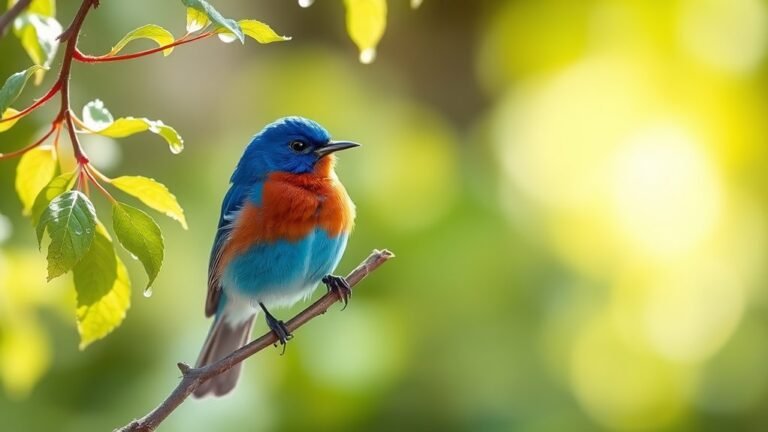
Rare Red Birds and Their Unique Charm
When you see a rare red bird, such as the Scarlet Tanager or Vermilion Flycatcher, you can't help but feel amazed. Their bright colors and unique actions attract your attention and highlight nature's beauty. These eye-catching birds rely on specific environments to survive, prompting important questions about their future. What actions can we take to protect them and ensure they continue to soar in our skies? Let's explore simple ways to support their habitats and appreciate their vibrant presence.
Key Takeaways
- Rare red birds, like the Scarlet Tanager, attract attention with their bright colors. They stand out against their forest homes.
- The Vermilion Flycatcher catches insects in midair with skill. This makes it a thrilling sight for birdwatchers.
- Northern Cardinals sing joyful songs. They often gather in pairs or small groups, which adds to their appeal.
- Red Crossbills have unique beaks that cross over each other. This helps them feed and influences forest life.
- Protecting these rare birds and their habitats is important. Conservation efforts help maintain nature's balance and ensure these birds continue to enchant us.
The Scarlet Tanager: A Feathered Jewel of the Forest
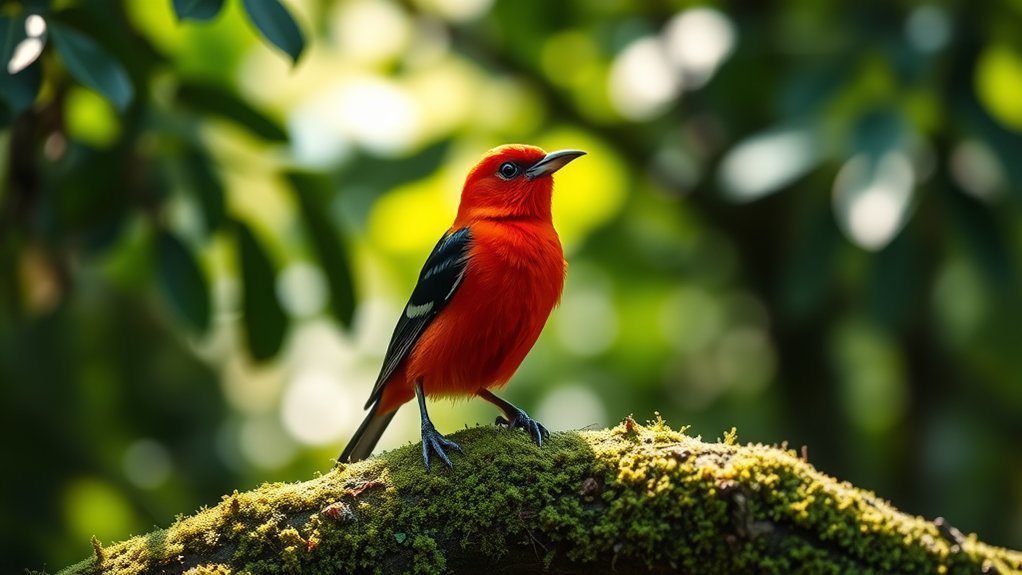
When you see a Scarlet Tanager in the trees, it looks like a bright ruby among green leaves.
These beautiful birds live in deciduous and mixed forests, creating lovely spaces for nature lovers. The males sit high in the branches and sing a bold, sweet song to attract mates.
They can be shy, blending into the leaves, making sightings feel special and secretive. As they search for insects and berries, their bright movements bring color to the underbrush.
Enjoying the Scarlet Tanager deepens your connection with nature and helps you feel part of the vibrant life around you.
Vermilion Flycatcher: A Dazzling Acrobat in the Sky
Spotting a Vermilion Flycatcher feels exciting, like seeing a bright ember zooming through the sky. These birds dazzle with their vivid red feathers and impressive flying skills.
They often sit on low branches or wires, watching the ground closely for insects. When they catch their food midair, it's impressive to see their agility.
During migration, some Vermilion Flycatchers travel long distances to find warmer areas.
Whether you see them in nature or in your yard, these beautiful birds draw you in and show you the wonders of nature.
Northern Cardinal: The Iconic Red Bird of North America
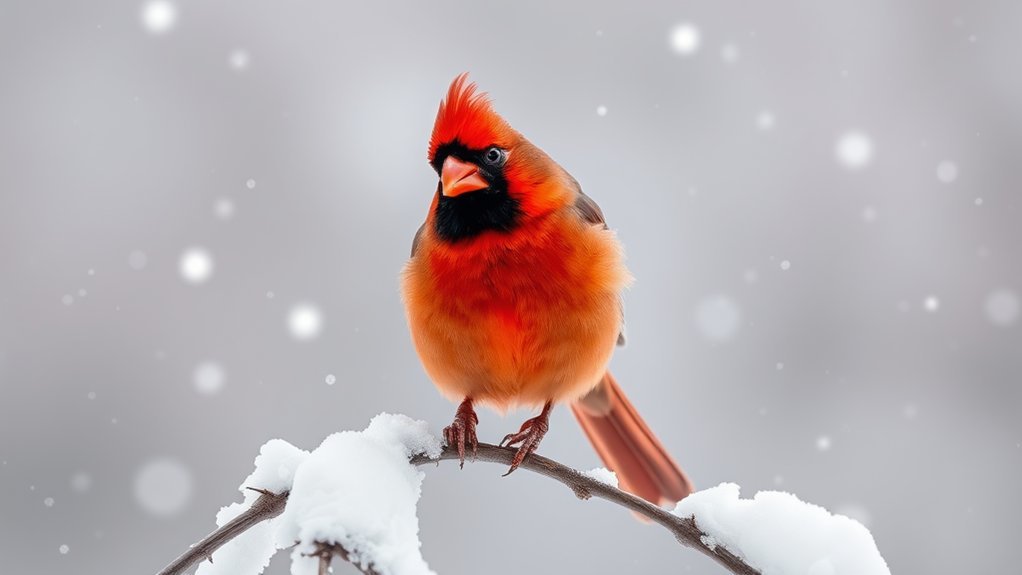
Northern Cardinals are easy to spot due to their bright red feathers and distinct crests. You may hear their cheerful songs before you see them. These birds live in many places such as gardens, parks, and forests. They like areas with thick shrubs for shelter.
Cardinals often gather in pairs or small groups. Their social behavior is noticeable and inviting.
Male cardinals are known for their strong territorial displays. In contrast, females show caring behavior when caring for their young.
Seeing cardinals in your yard brings joy and connects you to nature. Enjoy their presence, and you'll feel a sense of belonging among these charming red birds.
Red Crossbill: Nature's Unique Seed Specialist
The Red Crossbill stands out in coniferous forests due to its unique feeding habits. These birds have crossed mandibles that help them crack open pine cones, allowing them to access seeds that few other birds can.
This specialization lets them thrive in areas filled with pines and spruces.
Red Crossbills often roam large areas in search of food. Their cheerful chirps and friendly behavior create a lively atmosphere in the forest.
Encountering them adds a touch of magic to your outdoor experiences.
Summer Tanager: The Bright Star of Southern Woodlands
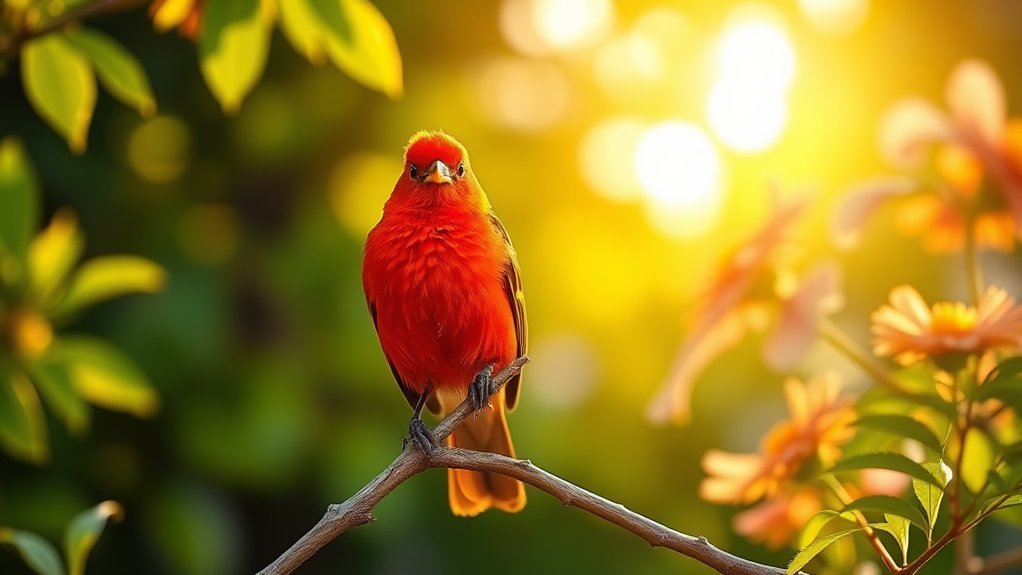
The Summer Tanager is a bright red bird found in southern woodlands. It contrasts beautifully with the green trees. This bird is known for its cheerful songs and active behavior.
Summer Tanjers prefer open woodlands and areas near streams, especially those with oak and sycamore trees. They eat insects and fruits, playing an essential role in the ecosystem.
Spotting a Summer Tanager can bring joy during outdoor activities. Its vibrant colors and songs make it a delightful part of nature.
Take a moment to appreciate this lovely bird and the beautiful environment it inhabits. Enjoy your adventures in the woods!
Rose-breasted Grosbeak: A Beautifully Painted Performer
As you explore woodlands and gardens, look for the Rose-breasted Grosbeak. This bird features a bright pink breast, black back, and white wings, making it a stunning sight.
Here are some interesting facts about them:
- Breeding: They build cup-shaped nests in shrubs and trees.
- Diet: They eat seeds, fruits, and insects.
- Song: Their sweet song fills the air around you.
- Habitat: They live in woodlands and areas near gardens.
- Migration: They travel south during the colder months.
With some patience, you may spot this colorful performer and enjoy a richer experience in nature.
Crimson-collared Tanager: A Gem of Central America
The Crimson-collared Tanager is a striking bird found in Central America. Its vibrant red and black feathers make it easily recognizable. This bird prefers open woodlands and scrub areas, especially where there are fruiting trees. Its bright colors contrast beautifully with the surrounding greenery.
The Crimson-collared Tanager eats fruits, seeds, and insects. You can often see it searching for food in pairs or small groups.
Watching this bird is a joyful experience, as it showcases its beauty and lively behavior. Birdwatchers admire the Crimson-collared Tanager for its charm and the joy it brings to the landscape.
Red-headed Woodpecker: A Striking Marvel of the Forest
The Red-headed Woodpecker lives in North American forests. This bird has a bright red head and a black-and-white body.
You can find it in open woodlands with both trees and clearings. It's known for its unique feeding habits; it hunts insects and berries. It can catch its food in mid-air thanks to its quick movements.
Here are some interesting facts about the Red-headed Woodpecker:
- It makes nesting holes in dead trees.
- You can hear its distinct drumming in the woods.
- It stores food in the crevices of trees.
- It often hides acorns for the winter.
- Its numbers are decreasing because of habitat loss.
Enjoy learning about the Red-headed Woodpecker and its role in nature.
Conservation Efforts: Protecting Our Feathered Treasures
Many people appreciate the beauty of rare red birds. However, their habitats are crucial for their survival.
You can help protect these habitats by supporting local conservation groups. These organizations work hard to preserve important ecosystems, providing safe nesting sites and food sources for these birds.
You can get involved by participating in fundraising or volunteering. This involvement strengthens their efforts.
Imagine being part of a community that cares for red birds' habitats—it's a fulfilling experience! Every action you take, no matter how small, contributes to maintaining nature's balance.
Let's work together to protect these amazing birds.
Frequently Asked Questions
What Do Red Birds Symbolize in Different Cultures?
Red birds have significant meaning in many cultures. They often represent love, passion, and renewal. In different traditions, these birds symbolize hope and guidance. Their vibrant colors invite appreciation, highlighting the deeper connections they embody in life. Red birds remind us of beauty and the important emotions they evoke.
How Can I Attract Rare Red Birds to My Backyard?
To attract rare red birds to your backyard, use bird feeders with seeds they enjoy. You should also plant native plants that provide shelter and food. These steps will help create a friendly environment for them. Enjoy watching these beautiful birds visit your space!
Are There Any Red Birds That Are Endangered?
Yes, some red birds, such as the California Condor, are endangered. You can help protect these birds by creating a friendly environment in your yard and supporting conservation efforts. This can help their populations grow and survive.
What Is the Best Time to Spot Red Birds?
To spot red birds, visit during spring and early summer. This is when they are most active. Early mornings are the best time to see them. Enjoy their bright colors and vibrant activity.
Do Red Birds Migrate, and Where Do They Go?
Yes, red birds migrate! Many species of red birds have clear migration patterns. They travel south in the winter and return north in the spring. Look for their bright colors during these times.

Kashvi is a passionate bird enthusiast and nature lover who has been fascinated by the world of birds for years. With a keen eye for detail and a love for learning, Kashvi is dedicated to sharing her knowledge and insights with fellow bird enthusiasts on Avian Enthusiasts. Through her engaging and informative articles, Kashvi aims to inspire others to join her in exploring the fascinating world of birds and to promote a deeper appreciation for these incredible creatures.