
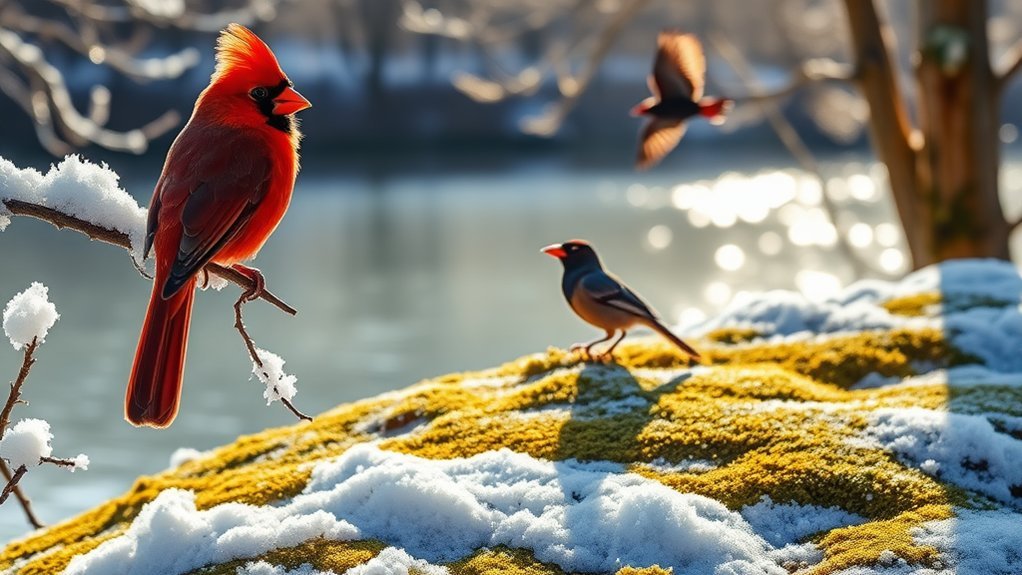
Red Birds in Michigan: Species and Spotting Tips
In Michigan, red birds like the Northern Cardinal and Scarlet Tanager are found in specific habitats. To spot them, focus on areas such as wooded regions, gardens, and parks. These locations provide the right environment for these birds to thrive. Use simple birdwatching tools, like binoculars, to enhance your experience. Pay attention to their distinct colors and sounds, which can help you identify them easily. By choosing the right spots and being observant, you can enjoy the beauty of these vibrant birds.
Key Takeaways
In Michigan, you can find notable red bird species like Northern Cardinals, Scarlet Tanagers, and Red-winged Blackbirds.
For the best chance to see these birds, go birdwatching in the early morning or late afternoon. Two excellent spots for viewing these species are Kensington Metropark and Point Pelee National Park.
To attract red birds to your area, use binoculars for a closer look and set up sunflower seed feeders.
Joining local birding groups can enhance your birdwatching experience. You will meet fellow birdwatchers who can provide helpful tips and share their sightings. Enjoy the beauty of red birds in Michigan!
Overview of Red Birds in Michigan
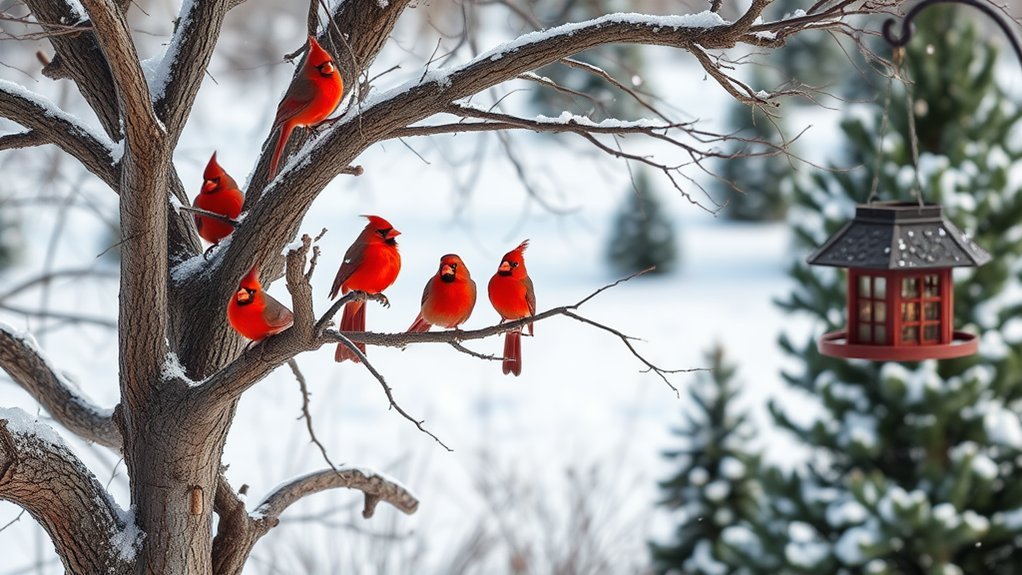
In Michigan, a diverse array of red birds can be observed throughout various habitats, each exhibiting unique behaviors and characteristics.
Bird migration plays a pivotal role in their life cycles, as many of these species travel considerable distances to breed or find food. For instance, the patterns of migratory red birds often align with seasonal changes, revealing their adaptability.
You'll find that nesting behaviors vary, too; some species prefer dense shrubs while others opt for open areas. Observing these habits not only enhances your birdwatching experience but also connects you to a broader ecological community.
The Northern Cardinal
The Northern Cardinal stands out as one of Michigan's most recognizable and beloved red birds, thanks to its vibrant plumage and distinct melodic calls.
Commonly found in woodlands, gardens, and shrubby areas, cardinals thrive in both rural and urban habitats.
You'll notice their behavior is intriguing; males often sing to establish territory and attract females, creating a lively atmosphere in your backyard.
Females, although less vivid, exhibit nurturing behavior, caring for their young diligently.
Observing these birds offers insights into their social dynamics and adaptability to different environments.
To attract cardinals, consider planting native shrubs or providing bird feeders filled with sunflower seeds.
This chance to connect with nature brings a feeling of belonging to your outdoor space.
The Scarlet Tanager
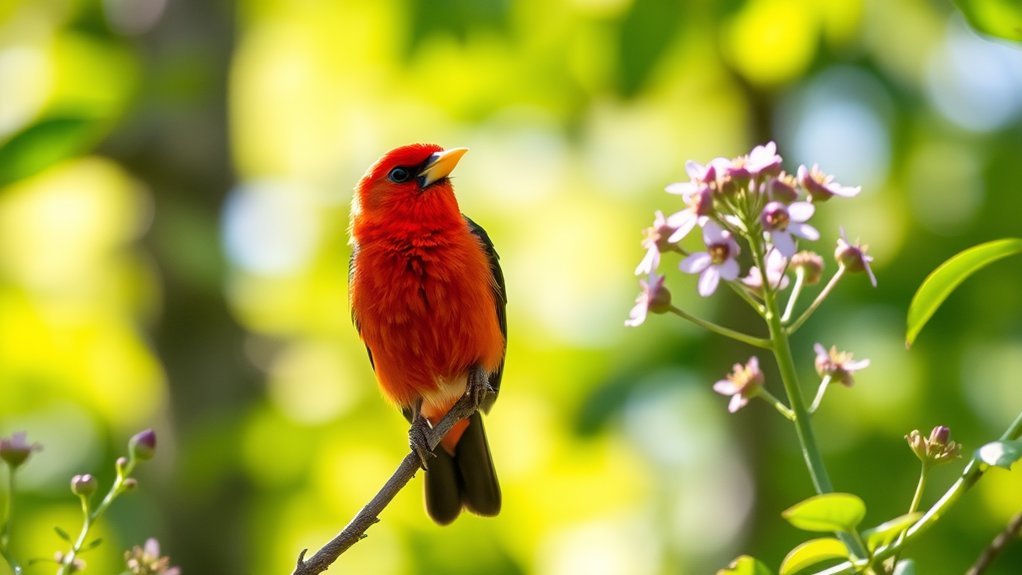
Scarlet Tanagers captivate bird watchers with their striking crimson plumage and black wings, making them a stunning sight in Michigan's forests during the warmer months.
You'll typically find them in deciduous woodlands, particularly near the edges where they can easily forage for insects. Since scarlet tanager habitats include mature trees, try exploring these areas during the breeding season, from late May to mid-August.
As for scarlet tanager migration, they travel from their wintering grounds in Central America to return to Michigan, making their arrival a thrilling experience.
Keep an ear out for their melodic songs that echo through the woods, providing a great clue to their presence. These wonders truly enhance your birdwatching adventure in the Great Lakes State.
The Summer Tanager
While often mistaken for the Scarlet Tanager due to their vibrant coloration, Summer Tanagers boast a more understated charm with their warm yellow to orangish plumage.
You might encounter these birds in open woodlands, parks, and gardens, where their habitat blends deciduous trees with open spaces.
To better understand their behavior, consider these characteristics:
- Diet: Summer Tanagers primarily eat insects, especially wasps, and bees, showcasing their adaptability in hunting.
- Song: Listen for their unique, melodious song, which often sounds like a series of clear notes that can draw you in.
- Nesting: They typically nest in tree cavities, showing a preference for mixed-age forests.
The House Finch
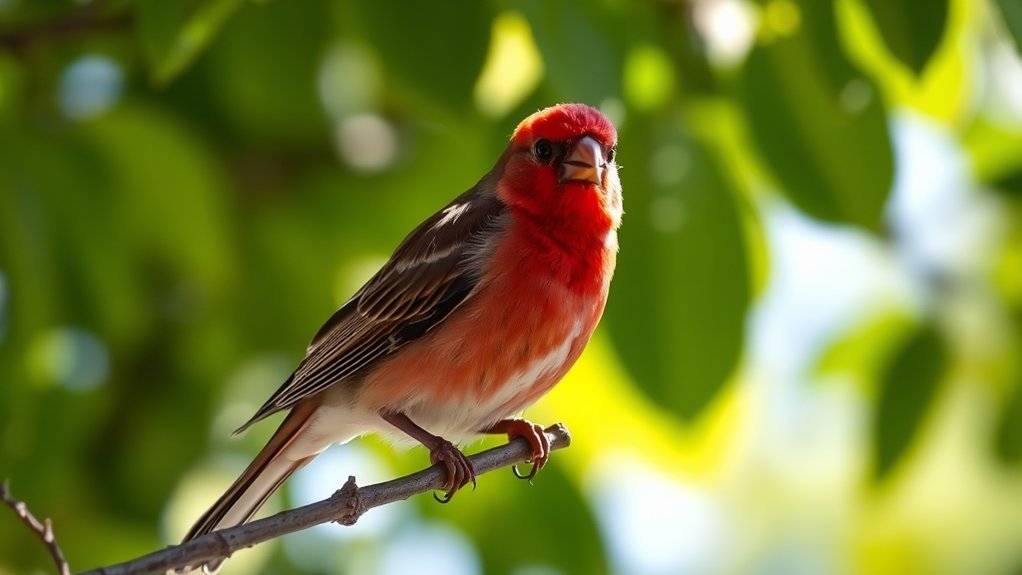
Although often overlooked, House Finches have adapted remarkably well to urban environments, making them a prevalent presence in Michigan. Their habitats range from city parks to residential areas, where you can enjoy spotting them among the conifers and rooftops.
When it comes to house finch feeding, they're primarily seed eaters but also enjoy berries and small fruits, making your backyard feeders a popular spot. You'll likely attract them by offering sunflower seeds or millet, fueling their vibrant energy.
Pay attention to their cheerful melodies, often heard in the early mornings. Observing these charming birds can foster a sense of community, as they connect urban dwellers with the natural world around them.
Their adaptability truly embodies the resilience of wildlife in our lives.
The Red-winged Blackbird
The vibrant Red-winged Blackbird is a common sight in Michigan's wetlands, marshes, and open fields.
Known for their striking red and yellow shoulder patches, these birds exhibit fascinating mating behaviors that are essential for their reproduction.
Understanding their habitat preferences can enhance your chances of spotting them.
Consider these key aspects when observing:
- Nest Site: They prefer dense vegetation near water, where they can effectively hide their nests from predators.
- Territorial Displays: Male blackbirds engage in vocal and visual displays to assert dominance and attract females during the breeding season.
- Feeding Areas: Look for them in areas with abundant insects and seeds, especially during the warmer months.
The American Robin
Michigan is home to many iconic bird species, and the American Robin stands out with its cheerful presence and melodious song. Known for its distinctive red breast, this bird exhibits fascinating behavior throughout the seasons.
During spring and summer, you'll often find robins foraging on lawns, searching for insects and berries. Their migration patterns reveal a strong instinct, as they typically travel south for the winter months, returning to Michigan around March as the weather warms.
Pay attention to their rich, layered songs; they use these melodic calls for communication, especially during mating season. Observing the American Robin not only enriches your connection with nature but also deepens your appreciation for Michigan's vibrant avian community.
The Pine Grosbeak
A striking presence in the northern forests, the Pine Grosbeak captures birdwatchers' attention with its vibrant plumage and distinct personality. This species thrives in specialized pine grosbeak habitat, often found in coniferous forests where they forage for seeds and fruits.
To better understand Pine Grosbeak behavior, consider these key points:
- Diet: Mostly herbivorous, they feast on seeds, berries, and buds, showcasing their adaptability.
- Social Structure: Often found in small flocks, they engage in vocalizations that strengthen social bonds.
- Seasonal Movement: They exhibit irruptive migration patterns, influencing their visibility in Michigan during specific seasons.
Observing these traits can deepen your appreciation for these enthralling birds, fostering a sense of belonging in the birdwatching community.
Birdwatching Techniques for Spotting Red Birds
How can you enhance your chances of spotting red birds on your next birdwatching outing? Start by mastering binocular techniques; keep your binoculars stable and focus sharply on areas where red birds are likely to rest or feed.
Pay attention to their preferred habitats, such as dense brush or open fields. Incorporate bird feeding in your strategy—set up feeders with seeds favored by red birds, like sunflower seeds and thistle. This not only attracts these stunning birds but also gives you a prime viewing opportunity.
Early mornings and late afternoons are often their active times, enhancing your likelihood of an encounter.
Best Locations for Observing Red Birds in Michigan
To spot red birds effectively, knowing where to look in Michigan is essential. Several locations offer excellent opportunities for observing these vibrant species.
Consider these top spots:
- Kensington Metropark: Known for its diverse habitats, this park attracts various red birds, especially during migration seasons.
- Holly Recreation Area: Explore its forests and wetlands, where you'll find cardinals and red-winged blackbirds thriving.
- Point Pelee National Park: While technically in Canada, it's a prime destination for birders from Michigan, especially in spring when many red bird species arrive.
Joining local birding groups can enhance your experience by connecting you with avid birdwatchers who can share insights and recent sightings in these best birdwatching parks.
Frequently Asked Questions
What Is the Best Time of Year to See Red Birds in Michigan?
To see red birds in Michigan, visit during spring and summer. Many red bird species show bright colors during these seasons, making them easier to spot. Their behavior also becomes more active, increasing your chances of seeing them. Exploring different habitats will improve your experience and help you find these vibrant birds. Enjoy the sights and sounds of nature while searching for red birds.
Are Red Birds Migratory Species in Michigan?
Yes, some red birds in Michigan migrate. They move to warmer areas during winter. In spring, they return to Michigan to breed in its varied habitats as temperatures rise.
What Do Red Birds Eat in Michigan?
Red birds in Michigan eat a variety of foods. They enjoy seeds, fruits, and insects. Their diet changes with the seasons, allowing them to find what they need to survive. This adaptability helps them thrive in different conditions. If you want to attract red birds to your yard, consider offering seeds like sunflower or offering fruit options like berries.
How Can I Attract Red Birds to My Yard?
To attract red birds to your yard, set up bird feeders filled with seeds. Use native plants in your garden to provide food and shelter. This mix creates a friendly space for these beautiful birds to visit. Enjoy watching them bring color and life to your yard!
Are Red Birds Affected by Climate Change in Michigan?
Yes, red birds in Michigan are affected by climate change. Changes in temperature and habitat loss disrupt their breeding and feeding patterns. Understanding these changes can help you support their presence in your area effectively. By taking action to protect their habitats, you can make a positive impact on local red bird populations.

Kashvi is a passionate bird enthusiast and nature lover who has been fascinated by the world of birds for years. With a keen eye for detail and a love for learning, Kashvi is dedicated to sharing her knowledge and insights with fellow bird enthusiasts on Avian Enthusiasts. Through her engaging and informative articles, Kashvi aims to inspire others to join her in exploring the fascinating world of birds and to promote a deeper appreciation for these incredible creatures.

