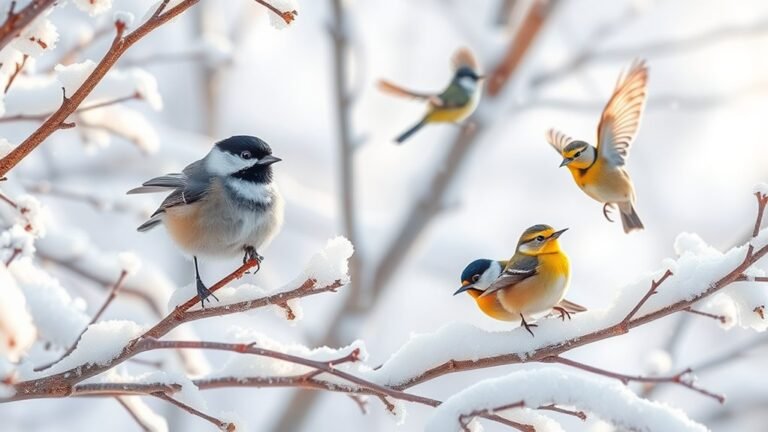
Small Black-and-White Birds: Key Features for Identification
When you observe small black-and-white birds, focus on their key identification features. Look for their unique plumage patterns, different sizes, and distinct vocalizations. Each species has special traits. These include their feeding behaviors and migration habits. Learning these aspects improves your observation skills. It also helps you understand their behaviors and environments. Discover more about these fascinating birds.
Key Takeaways
Small black-and-white birds are identifiable by several key features.
- Plumage Patterns: These birds show clear black-and-white markings and unique facial designs, which help with identification.
- Size and Shape: There are variations in size and shape. For example, warblers have slender builds, while kingbirds have sturdier forms.
- Vocalizations: The sounds these birds make, including call frequencies and song patterns, are important for identifying different species.
- Feeding Habits: The size and shape of their bills give clues about their feeding habits and dietary preferences.
- Habitats: These birds can be found in various environments, including woodlands and urban areas, which help in understanding where each species might be located.
Recognizing these features can make birdwatching more enjoyable and rewarding.
Overview of Small Black-and-White Birds
Small black-and-white birds are fascinating for birdwatchers and researchers.
These birds have clear black and white colors that make them easy to spot. Common examples are the chickadee and various warblers. Each species has unique traits and behaviors. They often search for insects in leaves and use calls to mark their territory.
These birds also show social behaviors. They may gather in flocks during migration or while foraging for food.
Observing their movements and interactions can enhance your birdwatching experience. By watching these birds, you can appreciate the details of their lives and habitats.
Size and Shape Variations
When identifying small black-and-white birds, you'll notice vital variations in size and shape that can aid your observations. For instance, compare body lengths to distinguish between species, while wing and tail shapes may reveal adaptations to different habitats.
Additionally, examining bill size differences helps clarify dietary preferences, which is essential for accurate identification.
Body Length Comparison
Identifying small black-and-white birds is easier when you recognize their body length and shape differences. Body size varies significantly among species, and these differences relate to their behaviors.
For example, smaller birds like the Black-and-white Warbler have a slender build, which helps them move quickly through plants. In contrast, slightly larger birds, like the Eastern Kingbird, have a sturdier form, affecting how they feed and build nests.
Understanding these size differences provides important information about their roles in the ecosystem and enhances your ability to identify them accurately. By observing body length variations, you'll improve your skills in recognizing individual species.
Wing and Tail Shapes
Wing and tail shapes are vital for identifying small black-and-white birds and affect their flying and foraging styles.
Different species show distinct wing shapes; some have broad, rounded wings for agile movement in thick areas, while others feature long, pointed wings for gliding efficiently.
Tail shapes also differ; forked tails help birds change direction quickly, while square tails provide steadiness during flight.
Recognizing these differences assists in identifying species and understanding their behaviors in nature.
Bill Size Differences
The size and shape of a bird's bill offer key indicators for identifying small black-and-white species. Different bill shapes align with specific feeding habits, which affect their diets and foraging methods.
For example, a slender, pointed bill indicates that the bird likely eats insects. This shape helps the bird probe into small spaces or catch flying insects. Conversely, broader, curved bills are typical of seed-eating birds, allowing them to access harder food.
Observing these bill size differences will help you tell apart species like the Black-capped Chickadee and White-crowned Sparrow. Notice these slight variations; they provide important insights about the birds' habitats and behaviors.
This knowledge can significantly improve your bird identification skills.
Distinctive Plumage Patterns
Plumage patterns are important for identifying small black-and-white birds in nature. You can improve your recognition skills by focusing on key traits:
- Contrasting Markings: Some birds have clear differences between their black and white feathers, making them easier to spot.
- Wing Patterns: Look for unique designs on the wings, like bars or spots, which can help you tell species apart.
- Tail Features: Note the tail patterns, which may include stripes or solid colors that can guide you in identification.
- Facial Design: Distinct patterns on the face, such as eye patches or caps, can further aid in recognizing these birds.
By understanding these plumage features, you can improve your ability to find and identify these interesting birds in the wild.
Enjoy your birdwatching!
Vocalizations and Calls
When observing small black-and-white birds, you'll notice that their vocalizations offer a rich layer of identification.
Common calls typically serve specific social functions, while unique vocal patterns can distinguish species and individual birds.
Additionally, be aware that seasonal variation can considerably influence these sounds, reflecting changes in behavior and territory.
Common Calls Overview
Small black-and-white birds produce a variety of calls. These calls help them communicate and establish territory.
Learning these calls can assist you in identifying species and their behaviors. Here are some key features:
- Call Frequencies: Birds of different species use different frequencies for their calls.
- Duration: Calls can be short and sharp or long and drawn-out.
- Pitch Variation: Birds might've unique pitch ranges, helping you tell them apart.
- Call Comparisons: Comparing calls from similar species can reveal important differences for accurate identification.
Understanding these traits can enhance your birdwatching experience and foster a greater appreciation for these interesting creatures.
Unique Vocal Patterns
Small black-and-white birds have unique vocal patterns that help them communicate and identify their species. These birds use specific songs for attracting mates and establishing territory.
For example, the Black-capped Chickadee has a hooting call, while the Black-and-white Warbler produces sharp, rapid notes.
These vocalizations can indicate the health of the birds; more complex songs often show that the bird is fitter. Additionally, song variations can occur between different populations, which helps in identifying regions.
Seasonal Variation Differences
As seasons change, small black-and-white birds adjust their vocalizations to enhance survival.
These vocal changes can signal shifts in breeding and social behaviors linked to plumage changes. Observing these patterns can improve your birdwatching experience.
Here are the main vocalization differences you may notice:
- Breeding Calls: In spring, males call more often to attract females.
- Territorial Songs: In summer, expect louder calls to establish territory.
- Migration Signals: In fall, the calls may shift to indicate flocking behavior.
- Winter Whispers: In winter, calls may soften, indicating a need for caution.
Listening to these vocalizations helps with bird identification and provides insight into their adaptations.
Enjoy the diversity of sounds as you watch these birds throughout the year!
Common Habitats and Ranges
You can find small black-and-white birds in various habitats around the world.
These birds prefer specific environments, such as woodlands, shrublands, and urban areas. Their range includes North America, Europe, and parts of Asia. For example, the Black-capped Chickadee lives in mixed and deciduous forests. The Pied Wagtail is often found near wetland edges and in urban parks.
For birdwatchers, knowing these habitat preferences helps with identification.
Recognizing where these birds usually live can help you find areas that attract them. During migration seasons, keep an eye on local ecosystems, as these birds may change their locations in search of food.
Feeding Behaviors
The feeding behaviors of small black-and-white birds show how well they adapt to different habitats, which helps them survive and reproduce. Knowing their feeding habits and foraging methods is important for identification.
- Insect Eating: Many species eat insects. They catch prey using quick flights or by picking insects from surfaces.
- Seed Eating: Some birds focus on seeds. They use strong beaks to crack them open easily.
- Nectar Feeding: A few species have long bills. This helps them drink nectar from flowers.
- Foraging in Groups: These birds often forage in small groups. Working together helps them find food more efficiently.
Migration Patterns
Migration patterns of small black-and-white birds show how they adapt and survive in changing environments. These birds follow specific migration routes based on food and breeding needs.
In spring and fall, they move between breeding grounds and wintering sites. For example, black-and-white warblers prefer riparian zones during migration, which helps them find food near water.
They also adjust their migration timing because of climate changes. Understanding these patterns helps us see their ecological roles and conservation needs.
Changes in their habitats can affect their migration success and overall population health.
Tips for Successful Identification
Small black-and-white birds may look alike, but you can tell them apart by focusing on key features and behaviors.
Here are simple tips to improve your identification skills:
- Field Marks: Check for different wing and tail patterns specific to each species.
- Size and Shape: Notice the size and shape of the body; some birds may be rounder or longer than others.
- Vocalizations: Listen for their songs or calls, as each species often has its own unique sound.
- Behavioral Cues: Observe how they feed and move; these habits can help identify specific birds.
Frequently Asked Questions
What Are the Best Binoculars for Birdwatching Small Black-And-White Birds?
For birdwatching, choose lightweight binoculars, such as compact or full-sized models. Look for magnification options between 8x to 10x. This range provides clarity and detail, which is important for spotting small black-and-white birds in various settings. Enjoy the experience of watching these beautiful birds up close.
How Can I Attract Small Black-And-White Birds to My Yard?
To attract small black-and-white birds to your yard, set up bird feeders filled with their favorite seeds. Choose seeds like black oil sunflower or nyjer seeds. Plant native shrubs and flowers to provide natural shelter and food. This creates a friendly space for these birds. You will also help local wildlife by boosting biodiversity. Enjoy watching these beautiful birds visit your yard!
Are Small Black-And-White Birds Aggressive Towards Other Species?
Small black-and-white birds often show aggressive behavior, especially during their breeding season. They defend their food sources and nesting areas from other birds. This competition can affect how different bird species interact in your yard.
What Time of Year Is Best for Observing These Birds?
To observe these birds, go out during migration periods in spring and fall. During these times, their behaviors change, making them more active and easier to spot. The birds react to weather changes, so you will have better chances of seeing them during these key seasons. Enjoy the experience and take the opportunity to connect with nature while watching these fascinating creatures.
Can Small Black-And-White Birds Be Kept as Pets?
You can keep small black-and-white birds as pets if you know how to care for them properly. They need special attention to their environment to stay healthy and happy. Provide them with a habitat that resembles their natural surroundings. This helps promote good behavior and well-being in your pet birds. Make sure you understand their needs and create a suitable space for them. With the right care, small black-and-white birds can thrive in your home.

Kashvi is a passionate bird enthusiast and nature lover who has been fascinated by the world of birds for years. With a keen eye for detail and a love for learning, Kashvi is dedicated to sharing her knowledge and insights with fellow bird enthusiasts on Avian Enthusiasts. Through her engaging and informative articles, Kashvi aims to inspire others to join her in exploring the fascinating world of birds and to promote a deeper appreciation for these incredible creatures.