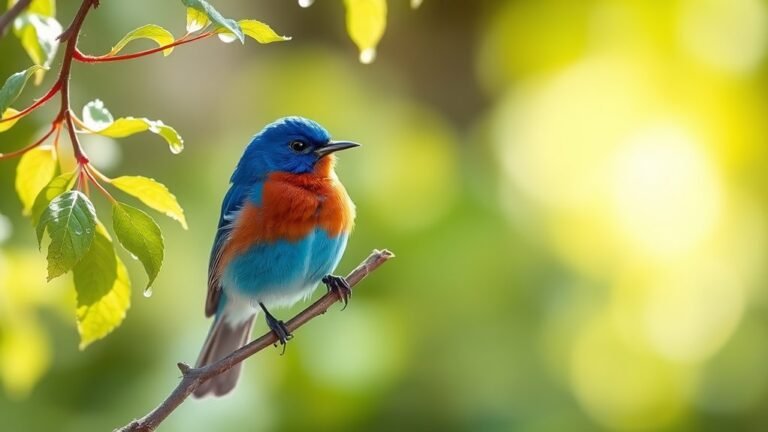
When winter comes, Eastern Bluebirds face many challenges that require smart adaptations for survival. They depend on certain food sources, places for shelter, and social behaviors to help them survive the cold. Knowing how these birds adapt to winter is important. It highlights the need to protect their habitats. You will learn how they cope with their environment and how you can help them during this crucial time.
Eastern Bluebirds primarily eat insects, berries, and fruits. In winter, they search for food in open areas and fields. They often find berries on trees and bushes. Providing native plants that produce berries can support these birds through the cold months.
For shelter, Eastern Bluebirds prefer natural cavities in trees or man-made birdhouses. Installing bluebird houses in your yard can offer them a safe place to stay. These houses can protect them from harsh weather and predators.
Socially, Eastern Bluebirds often flock together in winter. This behavior helps them find food and stay safe from threats. Observing these birds can be enjoyable and rewarding. You can create a welcoming environment by offering food and shelter, making your yard a supportive space for Eastern Bluebirds during winter.