

Why Do Hummingbirds Chase? Territory Secrets Explained
Hummingbirds often chase each other in the air. This behavior is mainly due to territoriality. Territoriality influences their access to food and mating chances. Male hummingbirds perform aerial displays to show their dominance over good feeding areas. By understanding these territorial behaviors, we learn about their survival and social interactions.
When their territories overlap, conflicts can arise. Hummingbirds may fiercely defend their space from others. This competition ensures that they have enough resources to thrive. Overall, these chase scenes highlight their struggle for survival in a bird's world.
Key Takeaways
Hummingbirds chase each other to defend their territories. This ensures they have access to food and safe nesting areas.
Male hummingbirds display aerial moves while chasing to show their strength and attract mates. These pursuits help establish clear boundaries, reducing competition for food and increasing survival chances.
Chasing requires energy, so hummingbirds must balance effort to avoid exhaustion that could hurt their ability to breed.
The chases create dominance hierarchies, affecting access to food and mating opportunities for hummingbirds. This behavior is essential for their survival and reproduction.
The Importance of Territory for Hummingbirds

Territory is crucial for hummingbirds because it affects their access to food and nesting sites. These birds set clear boundaries to protect their resources. This helps ensure they've a steady food supply, vital for their energy needs.
Hummingbirds choose habitats filled with flowering plants, which support their survival and minimize competition for limited resources. This behavior is driven by their instinct to survive.
Recognizing their need for defined spaces can enhance your appreciation for these fascinating birds and the balance they maintain in nature. Being aware of this connection enriches your experience in the natural world.
Mating Rituals and Competition
In the world of hummingbirds, males establish territories during the breeding season. These territories contain flowers that attract females.
As a viewer, you can see the males perform impressive aerial displays. They show off their colorful feathers and flying skills. This behavior not only attracts females but also demonstrates their dominance to other males.
The energy of these displays often reflects the male's health and strength. Successful courtship can lead to lasting bonds, highlighting the connection between territory, competition, and species survival in their environment.
The Role of Energy in Territorial Defense

Territorial defense is vital for male hummingbirds during breeding season.
These colorful birds actively patrol their territory to secure feeding spots and attract mates. This behavior requires a lot of energy, which can impact their health. Each chase demands stamina as they perform long aerial displays to drive away intruders.
If a hummingbird uses too much energy to defend its territory, it risks becoming exhausted. This exhaustion makes them more vulnerable to predators and less able to attract mates.
Balancing energy use and territorial defense is crucial for the survival and reproduction of these fascinating creatures.
How Hummingbirds Establish Their Territory
Male hummingbirds establish their territory through aerial displays and vocalizations. These actions signal their presence to rivals and potential mates. The displays attract females and demonstrate dominance over breeding areas.
Males select locations rich in flowers, providing food and nesting resources. This choice is crucial as it affects their mating success and care for offspring. By defending their territories, they foster a sense of belonging within their species.
These activities show the balance hummingbirds maintain between competition and attraction. This balance shapes their reproductive strategies and aids their lineage's survival.
Aggressive Behavior: Who Chases Whom?
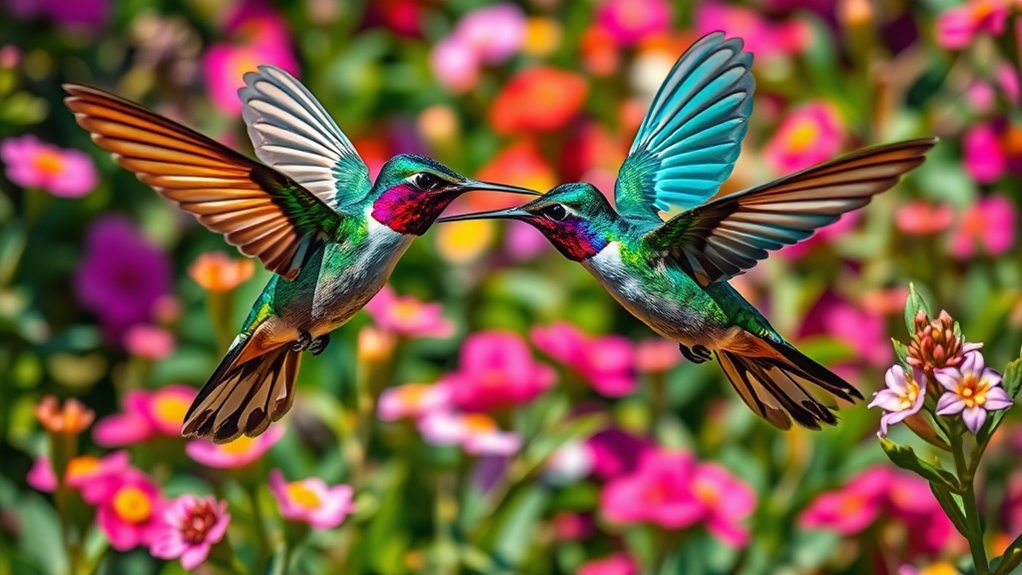
Hummingbirds decide who to chase based on territory defense. When a hummingbird sees another bird coming close, it evaluates the threat level. This assessment often considers the size, color, and proximity to food.
Males usually show more aggression in these scenarios, as they want to protect their feeding and breeding areas.
Interestingly, smaller or less colorful hummingbirds sometimes try to enter these established territories quietly. During these encounters, you can observe changes in who chases whom, indicating a hierarchy among the birds.
Understanding this chase dynamic helps you appreciate the social behavior of these fascinating creatures.
Vocalizations and Visual Displays
Hummingbirds display aggressive behaviors and rely on vocalizations and visual signals for territory defense. They produce specific sounds to communicate dominance and indicate their presence to rivals. These calls differ in pitch and loudness, serving as warnings or challenges.
Visual displays are also important. Male hummingbirds perform aerial maneuvers that highlight their bright feathers to attract attention from competitors. These actions showcase their strength and fitness, helping avoid direct fights while protecting their territory.
Understanding these vocal and visual interactions reveals the social structure and dynamics of hummingbird behavior.
The Impact of Feeding Resources on Chasing
Feeding resources greatly affect hummingbird behavior and their territorial disputes. When you watch these colorful birds, notice how their interactions show their need for food.
Key factors influenced by food availability include:
- Defending feeding spots aggressively
- Improving strategies to outsmart rivals
- Chasing more frequently during peak flower seasons
- Establishing stable territories when food is abundant
Changes in resource levels start intense competition among hummingbirds. Understanding how feeding conditions affect their behavior helps you appreciate these beautiful birds and their social interactions.
It highlights the importance of food in nature's balance.
Seasonal Changes and Territorial Instincts
As food availability changes with the seasons, hummingbirds become more territorial. These birds respond to signals like changes in daylight and temperature, which guide their migration patterns. Climate can significantly affect their habitats, impacting how long and when they display their territorial behaviors.
During spring and summer, male hummingbirds protect their territories to attract mates and find enough food. When fall arrives and food sources become scarce, competition increases, leading them to modify their strategies.
Observing these behaviors can enhance your appreciation for hummingbirds. Watching their interactions helps you connect with the natural patterns in their lives.
Understanding Dominance Hierarchies
Hummingbirds establish and maintain their dominance hierarchies through specific behaviors that help define their social order. These behaviors are crucial for resource management, which affects their survival.
Key elements of dominance hierarchies include:
- Territorial displays: Hummingbirds use visual signals to show strength during confrontations.
- Chasing patterns: Aggressive chases help establish boundaries among individuals.
- Feeding rights: Dominant hummingbirds usually get first access to flowers and food sources.
- Social rank: Interactions between birds help clarify their positions within the group.
Understanding these behaviors enhances our appreciation of hummingbird communities. Each bird plays a role, contributing to the balance and structure of their social environment.
This knowledge not only informs us about their behavior but also fosters a connection to these fascinating creatures.
Implications of Loss: What Happens When Territories Overlap?
Overlapping territories can disrupt hummingbird communities. When two hummingbirds claim similar areas, territorial disputes often occur.
Both birds compete for the same limited resources, like nectar-rich flowers. This leads to increased aggression as each bird tries to dominate the area. Conflicts can limit access to essential food sources, threatening their survival.
Resource competition can also cause stress and exhaustion, affecting their health and breeding success. Understanding these dynamics helps us see the challenges hummingbirds face in maintaining harmony in their communities.
Frequently Asked Questions
Do Hummingbirds Remember Their Established Territories Year After Year?
Yes, hummingbirds have strong memories for their territories. They remember and protect their established areas each year. This helps them find food easily and lower competition. Their memory is vital for their survival. Hummingbirds consistently return to the same places where they know they can thrive.
How Do Female Hummingbirds React During Territorial Disputes?
During territorial disputes, female hummingbirds show increased aggression, especially while defending their nesting areas. They may display behaviors that demonstrate dominance. These displays can help attract potential mates and also deter rivals from invading their territory. Overall, their interactions are a combination of defense and mating behavior, making them interesting birds to observe.
What Other Birds Compete With Hummingbirds for Territory?
Hummingbirds often compete with warblers for nectar and territory. Both species seek the same food sources, leading to disputes over feeding spots. Additionally, finches may interfere as they also search for similar resources, creating further tension in their habitats.
Can Environmental Changes Impact Hummingbirds' Territorial Behaviors?
Yes, environmental changes such as habitat loss and climate shifts can significantly affect hummingbirds' territorial behaviors. These changes reduce their food and nesting resources. As a result, hummingbirds may change their behaviors or leave their usual territories to find what they need for survival. This adaptation is essential for their continued existence.
Do Hummingbirds Display Territorial Behavior Outside of Breeding Season?
Hummingbirds show territorial behavior even outside of the breeding season. They mark their territory and protect feeding areas. This behavior helps them secure resources essential for survival and migration. By asserting dominance, they ensure they have enough food to thrive before moving to different locations. Territorial behavior is crucial for their overall well-being and successful migration patterns.

Kashvi is a passionate bird enthusiast and nature lover who has been fascinated by the world of birds for years. With a keen eye for detail and a love for learning, Kashvi is dedicated to sharing her knowledge and insights with fellow bird enthusiasts on Avian Enthusiasts. Through her engaging and informative articles, Kashvi aims to inspire others to join her in exploring the fascinating world of birds and to promote a deeper appreciation for these incredible creatures.


