Yellow and Black Birds in California: What Species to Look For
In California, you can find various yellow and black birds, each with unique traits. These birds inhabit different environments. For example, the Bullock's Oriole favors gardens, attracted by nectar sources. The Scott's Oriole lives in dry areas, demonstrating its ability to adapt. Knowing these details can improve your birdwatching outings, helping you choose which species to observe in various settings. Interested in learning more about their behaviors?
Key Takeaways
- Bullock's Oriole has bright orange and black feathers. You can find it in gardens and open deciduous trees throughout California.
- Scott's Oriole sports yellow and black feathers. It thrives in desert areas and often gathers near saguaro cacti.
- Lawrence's Goldfinch displays bright yellow feathers, with a black cap and wings. It adapts well to dry shrub-filled regions in California.
- American Goldfinch is known for its bright yellow body and black cap. Look for it in weedy fields and open woodlands.
- Western Tanager has a vibrant yellow body, red head, and black wings. This bird attracts birdwatchers during summer migrations in California.
These colorful birds brighten up California's landscapes. Keep an eye out for them in gardens, deserts, and parks. Happy birdwatching!
The Western Tanager: A Colorful Visitor
The Western Tanager is a beautiful bird known for its bright colors. Male Western Tanagers have yellow bodies, red heads, and black wings. In contrast, female tanagers have olive-yellow feathers. These colors help them attract mates and claim territory during breeding season.
These birds migrate every summer to California from Mexico and the southwestern U.S. Birdwatchers enjoy tracking their movements to learn about migration patterns.
Western Tanagers prefer habitats like coniferous forests and open woodlands. Seeing these colorful birds is a highlight for many enthusiasts during the summer months in California.
The Bullock's Oriole: An Icon of California's Gardens
The Bullock's Oriole is a colorful bird that's popular in California's gardens. Its bright orange and black feathers catch the eye, especially when it feeds on nectar and fruits.
To attract this bird to your garden, you can use orange and grapefruit halves and sugar-water feeders. These foods match their natural diet and provide needed nutrition.
Bullock's Orioles like to nest in open, deciduous trees, so planting native trees will help create their ideal home.
The Yellow Warbler: A Melodic Gem
The Yellow Warbler stands out with its vibrant golden hue and distinct chestnut streaks, making it a prime subject for ornithological observation.
You'll notice its preference for riparian habitats, where it builds elaborate nests hidden among dense foliage.
Understanding its unique coloration and nesting behaviors offers insights into its ecological role and adaptability.
Distinctive Coloration and Markings
Color is important for identifying the Yellow Warbler, a small songbird found in California wetlands. This bird has bright yellow feathers, which are key for visual identification.
During the breeding season, males sport distinctive olive streaks on their sides and lightly marked chests. These features help attract mates and impress observers.
Females, while similar in color, have softer hues, making them less vibrant but still recognizable.
Knowing these color traits enhances your understanding of the Yellow Warbler's role in its environment and improves your birdwatching experience in California's diverse ecosystems.
Habitat and Nesting Preferences
The Yellow Warbler has a distinctive color that helps identify it and understand its habitat and nesting preferences.
These birds favor riparian areas, commonly located near streams and marshes, where dense shrubs and willows grow. They prefer to nest low to the ground, often within a few feet, to avoid predators.
Locations with abundant insects are ideal since these insects provide food for their young.
During the breeding season, Yellow Warblers build nests that are intricately woven and often hang from branches for increased security. Observing their nesting behavior shows their strong link to different ecosystems.
The Lawrence's Goldfinch: A Rare Beauty
The Lawrence's Goldfinch has three distinct features that attract birdwatchers and nature lovers. This small bird lives in dry areas, preferring a habitat filled with shrubs and trees. Observing its actions can provide interesting insights into its adaptability.
- It has bright yellow feathers that sparkle in the sunlight.
- A black cap and wings create a striking contrast against its yellow body.
- It displays playful and agile flight patterns.
- The bird feeds socially, often in flocks.
These traits enhance its charm and show its social behavior. Watch closely, and you may see this rare beauty in its natural habitat!
The American Goldfinch: Common Yet Captivating
You'll recognize the American Goldfinch by its distinctive bright yellow plumage and black cap, which contrast sharply against its white wing bars.
This species thrives in weedy fields and open woodlands, primarily feeding on seeds from composite flowers like dandelions and sunflowers.
Observing its foraging behavior reveals a highly selective feeding strategy, demonstrating an adaptability that enhances its survival in varied habitats.
Identification Features and Traits
The American Goldfinch brightens California's landscape with its striking colors. This bird is easy to identify, especially the males during breeding season. They've vivid yellow feathers, a black cap, and black wings.
Female goldfinches are more muted in color, appearing olive-yellow but still charming.
Here are clear traits for identification:
- Males display bright yellow plumage in summer.
- Black wings feature white wingbars.
- They've a conical, short bill ideal for eating seeds.
- Their flight pattern is bouncy and energetic.
Watching American Goldfinches can enhance your appreciation of nature in California. Look for them as they flit merrily in gardens and fields!
Habitat and Feeding Behavior
American Goldfinches live in various habitats, including open fields, meadows, suburban gardens, and parks. They prefer areas with abundant composite plants like thistles and sunflowers, which are rich in seeds.
To find food, they mainly use a technique called "clinging." This allows them to hang upside down and extract seeds effectively from plant heads.
American Goldfinches often form small social flocks. This behavior improves their chances of finding food as they share information about locations with plentiful seeds.
Learning about their habitat and feeding habits can improve your birdwatching experiences. Enjoy spotting these vibrant birds in your local area!
The Eastern Black-headed Grosbeak: A Seasonal Delight
The Eastern Black-headed Grosbeak is a beautiful bird found during spring and summer.
It has distinctive black heads and bright orange bodies. These birds migrate from Mexico to California, where they enjoy lush environments.
Look for:
- Males with striking black heads and bright orange bodies
- Melodious calls that fill the woodlands
- A diet that includes seeds, fruits, and insects
- Nesting habits in shrubs or trees
Observing the Eastern Grosbeak's feeding habits and social behavior can deepen your appreciation for these seasonal visitors.
Take the time to enjoy their vibrant presence in nature!
The Hooded Oriole: A Bright Addition to Backyards
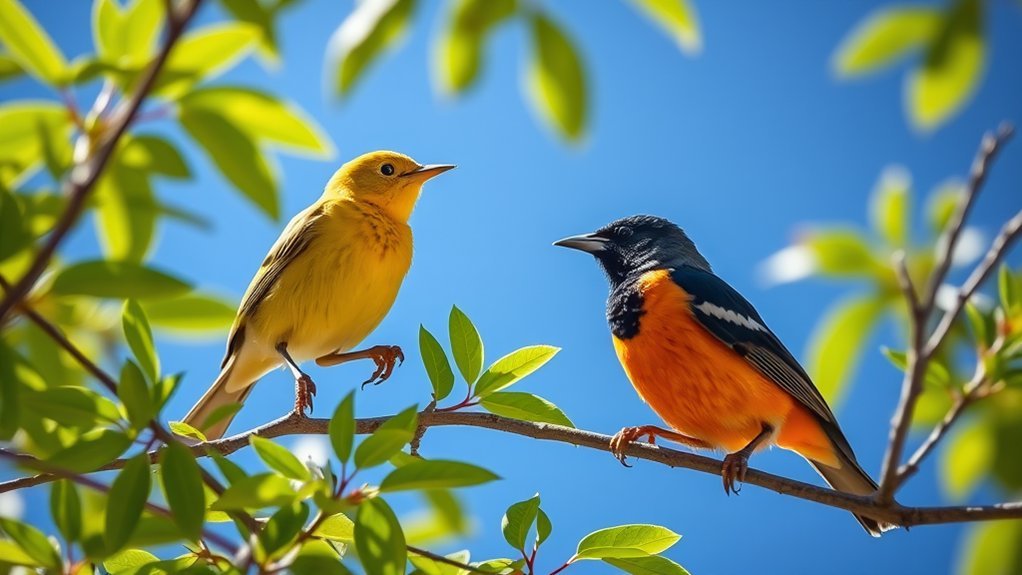
The Hooded Oriole's striking yellow and black plumage makes it a visual highlight in any backyard.
Understanding its nesting and feeding habits can enhance your chances of attracting these vibrant birds to your garden.
Unique Coloration and Markings
Have you seen the colorful Hooded Oriole in your garden? This bird stands out with its striking colors and patterns. The male has a bright orange-yellow body, deep black wings, and a distinct black hood. The female has softer colors, but she's still beautiful.
Here are some key features of the Hooded Oriole:
- Bright yellow-orange feathers that shine in the sunlight
- Black wings that create a strong contrast
- Bold facial markings that highlight the black hood
- Graceful tail feathers that enhance its flight
These features help attract mates and make the Hooded Oriole a joy to watch.
Nesting and Feeding Habits
Nesting occurs from March to August. During this time, Hooded Orioles choose trees like sycamores and palm trees to build their nests.
The females create nests using plant fibers, grass, and spider silk. They build these nests to protect their eggs from predators. These nests hang high in the trees, offering safety for the young birds.
For feeding, Hooded Orioles eat nectar from flowers, especially yucca, as well as insects and fruit.
They use a unique method to find food by hanging upside-down, which helps them reach food that other birds cannot. If you pay attention, your backyard may become a great spot to observe these interesting birds and their behaviors.
Attracting Orioles to Gardens
Attracting Hooded Orioles to your garden adds beauty and delight with their bright colors and lovely songs.
Follow these steps to create an inviting space for these birds:
- Use nectar feeders with a sugar-water blend (1 part sugar to 4 parts water).
- Plant bright flowers like trumpet vines or hibiscus to catch their eye.
- Offer fruit such as oranges and berries to diversify their meals.
- Ensure safe spots for nesting and resting, using trees or tall shrubs.
The Common Yellowthroat: A Master of Camouflage
The Common Yellowthroat is a bird that blends well into its marshy surroundings. Its olive-yellow feathers help it hide among reeds and grasses, keeping it safe from predators.
This warbler prefers to live in wetlands, near rivers, and in thick underbrush, showing a strong attachment to these habitats.
When it finds food, the Common Yellowthroat moves swiftly through the plants, searching for insects and spiders. Its rapid movements help it remain hidden from sight.
The bird also produces interesting calls and songs, adding to its presence in the environment. Understanding the Common Yellowthroat's features highlights its important role in California's ecosystems.
The Canada Warbler: A Springtime Treasure
The Canada Warbler is a colorful songbird that returns to Canada and the northern United States every spring. This small bird mainly lives in dense, moist forests.
Here are some important facts about the Canada Warbler:
- They breed in areas with thick undergrowth.
- Migration happens from March to May.
- They sing a unique and melodic song.
- They search for food on or near the ground.
During migration, the Canada Warbler travels long distances.
Watching these birds can add joy to your spring outdoor activities. Their habits highlight the needs of their habitat and their migratory journeys.
Enjoy observing these beautiful songbirds as they bring life to the season.
The Scott's Oriole: A Desert Dweller
Scott's Oriole is a beautiful bird found in the deserts of the southwestern United States and Mexico. Its yellow and black feathers make it easy to spot. This bird enjoys living near saguaro cacti and desert shrubs.
During the breeding season, you can hear Scott's Oriole singing and see it moving quickly through its habitat. It forages for insects and nectar, showing how well it adapts to its environment.
Both male and female Orioles take care of their young, which highlights their teamwork.
Frequently Asked Questions
What Habitats Do These Yellow and Black Birds Prefer?
Yellow and black birds prefer diverse habitats that provide safe nesting spots and sufficient food. They often choose areas with dense shrubs and open woodlands. These environments protect their young and offer abundant resources for feeding. By selecting varied habitats, these birds ensure their survival and reproductive success.
When Is the Best Time to Spot These Birds in California?
To spot these birds in California, visit during spring migration. The best time is from late March to early May. Many bird species return during this period, displaying their bright colors and lively behaviors. Enjoy the sights and sounds of spring as you observe these beautiful birds.
Are Any of These Species Migratory?
Many species migrate based on seasonal changes. They move to find food, breeding grounds, or better climates. Observing their migration patterns can help us understand their needs and how they interact with their environments. This knowledge helps us appreciate the balance of nature and the importance of each habitat.
What Do Yellow and Black Birds Eat?
Yellow and black birds have diverse diets. They eat seeds, insects, and berries. Their food choices change with the seasons to meet their nutritional needs. During warmer months, they may focus more on insects. In cooler months, seeds and berries become more important. Providing these food sources can attract yellow and black birds to your yard.
How Can I Attract These Birds to My Backyard?
To attract yellow and black birds to your backyard, set up bird feeders with sunflower seeds. Adding native plants that resemble their natural environments will make your yard more appealing. This will help you see these beautiful birds more often.

Kashvi is a passionate bird enthusiast and nature lover who has been fascinated by the world of birds for years. With a keen eye for detail and a love for learning, Kashvi is dedicated to sharing her knowledge and insights with fellow bird enthusiasts on Avian Enthusiasts. Through her engaging and informative articles, Kashvi aims to inspire others to join her in exploring the fascinating world of birds and to promote a deeper appreciation for these incredible creatures.