Small Birds With Long Necks: Unique Adaptations and Species
Small birds with long necks have unique adaptations that help them survive. Their long necks allow them to reach food in wetland areas. Each species displays different traits that improve their feeding, nesting, and hunting skills. As you learn about these birds, you will see how their body shapes relate to their environments. What causes these adaptations, and how do they affect the behaviors of these interesting birds?
Key Takeaways
- Long necks in birds such as herons and storks improve their ability to find food in shallow waters. This helps them access prey more effectively.
- Small wading birds use stealth and camouflage to blend into their surroundings. This tactic helps them avoid being noticed while hunting.
- A longer neck allows these birds to reach food that other birds cannot, showcasing unique survival adaptations.
- Birds with long necks often use specific hunting methods, like ambushing or being stealthy, to catch their prey efficiently.
- Many of these species forage in flocks. This behavior increases safety and improves their chances of finding food through teamwork.
The Sandhill Crane: A Master of Balletic Movements
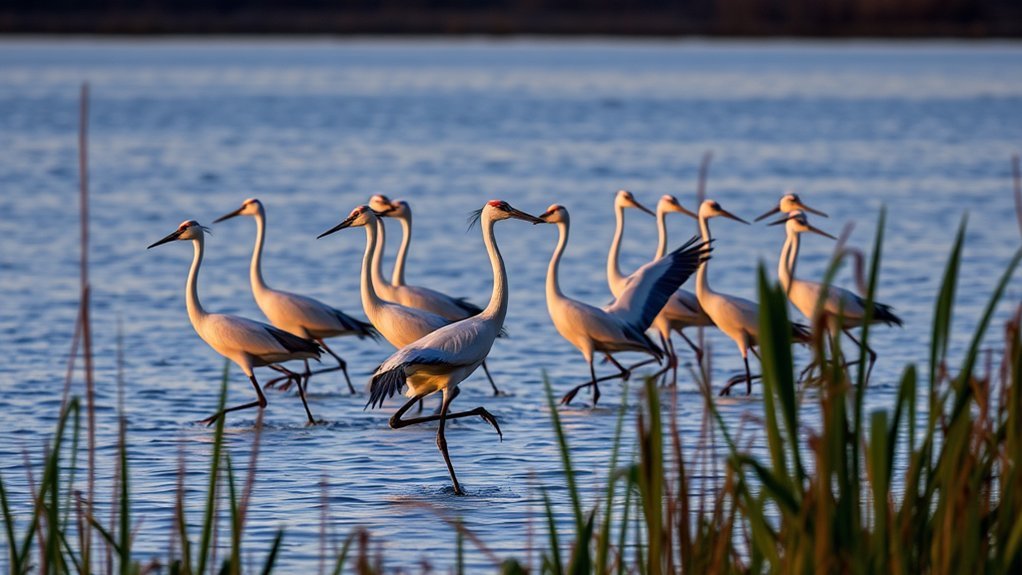
The Sandhill Crane glides smoothly across wetlands, showcasing a mix of grace and strength that captivates those who observe it.
Its behavior, particularly during mating rituals, is fascinating. These birds engage in detailed dances, displaying their agility and coordination. You can see them perform synchronized actions such as bowing, jumping, and flapping their wings. These behaviors serve as courtship displays and help strengthen the bonds between pairs.
Watching these rituals reveals the interactions between cranes and connects you to their ecosystem. This expressive dance promotes unity among pairs and enhances their communal experiences.
In this ballet of movement, you can appreciate the balance between beauty and survival that the Sandhill Crane represents.
The Great Egret: Elegance in Foraging
The Great Egret displays a blend of elegance and effectiveness while foraging. As you watch this bird, you'll witness its precise behavior and various techniques that enhance its success in hunting.
Here are its key methods:
- Stealthy Stalking: The egret walks slowly and quietly to avoid disturbing its surroundings.
- Keen Vision: It has sharp eyesight, allowing it to spot fish and other prey quickly.
- Quick Strikes: After identifying a target, the egret uses rapid movements of its bill to catch its meal.
- Strategic Positioning: Egrets choose optimal spots to improve their hunting results.
Observing these methods offers insight into the Great Egret's foraging skills and its natural elegance.
The Black-necked Stilt: A Prodigy of Adaptability

The Black-necked Stilt is a bird known for its ability to thrive in many environments, notably wetlands and coastal areas. This bird prefers shallow waters, mudflats, and estuaries, where it finds food. Its long legs help it wade through water effectively, searching for insects, crustaceans, and small fish.
With keen eyesight, the stilt can spot prey easily.
The Black-necked Stilt also shows social behavior by forming large flocks while foraging. This grouping helps them find food and spot predators.
Their nesting choices are flexible, ranging from natural settings to areas altered by humans. This adaptability highlights their ability to survive even when their environment changes.
The Little Blue Heron: Camouflage and Stealth
The Little Blue Heron uses camouflage and stealth to hunt effectively in wetlands. Its hunting strategies include:
- Blending with Surroundings: The heron has bluish-grey feathers that match the wetland environment.
- Slow Movements: It moves slowly to avoid detection by prey.
- Eye Positioning: The heron positions its eyes above the water to get a clear view of its surroundings.
- Stealthy Approach: It stalks quietly, making it difficult for fish to notice it.
These adaptations help the Little Blue Heron become a successful hunter.
Its methods showcase patience and skill, making it a fascinating bird to observe.
The American Bittern: Ambush Predation Techniques

The American Bittern uses a clever ambush strategy to catch its prey. Its brown and tan feathers help it blend in with the reeds and grasses in wetlands. This camouflage keeps it hidden from fish and amphibians.
The bittern remains still, waiting for the right moment to strike. This approach makes it an effective predator. Its quick strikes lead to successful captures.
Learning about these techniques reveals how well this bird adapts to its environment.
Frequently Asked Questions
What Specific Habitats Do These Long-Necked Birds Prefer?
Long-necked birds prefer wetland ecosystems and areas near forest edges. They often forage in shallow waters, where they can easily find and catch prey. Their long necks allow them to blend into these environments, making them effective hunters. You can spot them standing still or moving slowly as they scan the water for food. These habitats provide the essential resources they need to thrive.
How Do These Birds Communicate With Each Other?
These birds communicate using clear vocal sounds. Their calls share important details about their territory, mating opportunities, and dangers. This way of communicating helps them stay together and strengthens their social bonds in groups.
What Are the Primary Threats to Their Populations?
Habitat destruction and climate change are significant threats to bird populations. Loss of their homes reduces their ability to survive and reproduce. Changes in climate affect food availability and nesting conditions. These factors lead to declining numbers of birds and less biodiversity in their ecosystems. Protecting their habitats and addressing climate change are essential for their survival.
How Do Their Long Necks Assist in Reproduction?
Their long necks are important in mating rituals. These neck displays attract partners, showing fitness and genetic quality. This, in turn, helps increase reproductive success for the species. A strong neck signal can draw attention and encourage mate selection, making it a key factor in reproduction.
What Conservation Efforts Are in Place for These Species?
Conservation efforts focus on protecting habitats. This includes establishing reserves and enforcing regulations. These actions aim to preserve essential ecosystems. They help vulnerable species survive and promote community involvement and awareness.

Kashvi is a passionate bird enthusiast and nature lover who has been fascinated by the world of birds for years. With a keen eye for detail and a love for learning, Kashvi is dedicated to sharing her knowledge and insights with fellow bird enthusiasts on Avian Enthusiasts. Through her engaging and informative articles, Kashvi aims to inspire others to join her in exploring the fascinating world of birds and to promote a deeper appreciation for these incredible creatures.