What Do Bluebirds Really Eat? Complete Food Guide
Bluebirds have specific dietary habits that anyone looking to attract them should understand. Their main food sources include insects and arthropods, which are crucial for their health, especially during the breeding season. As temperatures drop, their food choices change significantly. You may be surprised to learn what they eat in the colder months. This information highlights their flexibility and the role they play in the ecosystem.
Key Takeaways
Bluebirds eat mainly insects and arthropods, such as beetles, grasshoppers, and caterpillars, especially during their breeding season. In winter, they switch their diet to berries and fruits like elderberries and serviceberries, which provide necessary carbohydrates. Mealworms are a popular food source. When offered in feeders, they attract bluebirds by providing protein and fat.
Different bluebird species have different food preferences. Eastern bluebirds prefer mealworms, whereas Western bluebirds favor grasshoppers. Planting native berry-producing shrubs can improve bluebird habitats and offer reliable food sources year-round.
By understanding what bluebirds eat, you can help create a supportive environment for them.
The Primary Diet of Bluebirds: Insects and Arthropods
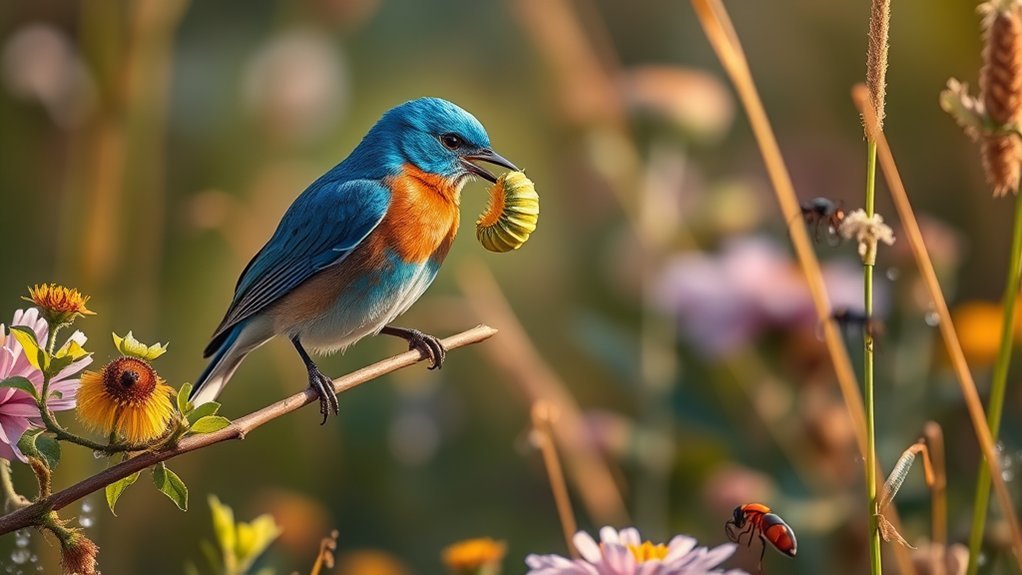
Bluebirds are colorful birds that thrive on a diet of insects and arthropods. Their survival depends on the variety of insects in their environment. Beetles, grasshoppers, and caterpillars provide them with the nutrition they need to stay healthy. Additionally, arthropods such as spiders and crickets are crucial for protein, especially during their breeding season.
This diet shows how adaptable bluebirds are to their surroundings.
You can help bluebirds by creating spaces that encourage insect and arthropod populations. When you understand their dietary needs, you can see how important biodiversity is for the health of the ecosystem. Supporting insect diversity not only benefits bluebirds but also strengthens your connection to nature.
These vibrant birds remind us that a rich environment is essential for their survival and ours.
Seasonal Food Preferences: What Bluebirds Eat Throughout the Year
Bluebirds change their diets throughout the year based on the seasons. In spring, they search for insects like caterpillars, beetles, and grasshoppers. These insects provide the protein they need for nesting.
As summer ends, bluebirds keep hunting insects but start to eat seeds and berries too.
In winter, their diet shifts again. With fewer insects available, they rely on fruits and dried seeds to survive the cold months.
Understanding how bluebirds adjust their eating habits helps us appreciate their survival strategies.
Watching their food choices can be a rewarding experience for bird lovers.
Fruits and Berries: A Sweet Treat for Bluebirds
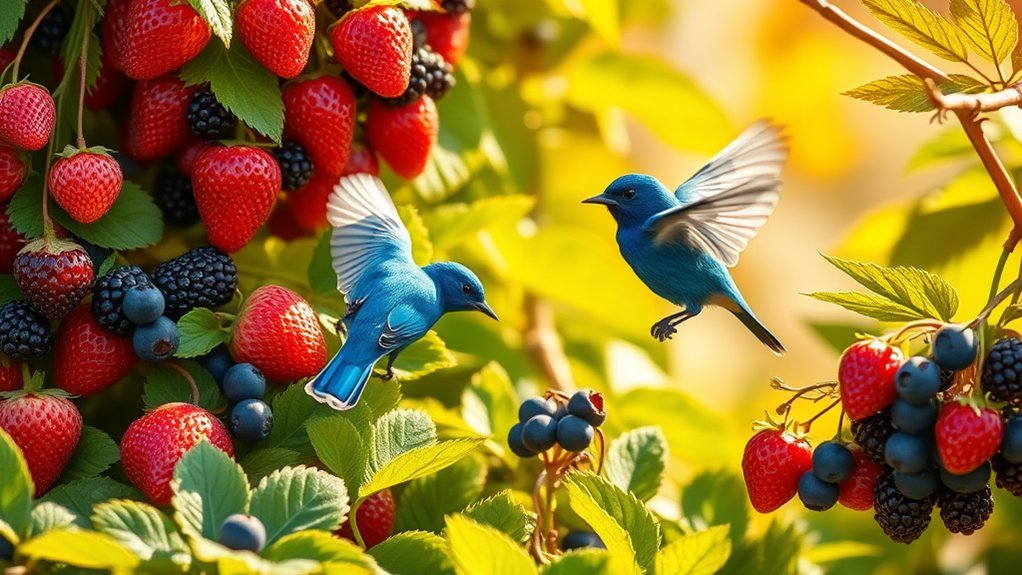
As winter approaches, bluebirds rely on fruits and berries for food. Insects become scarce, so these vibrant birds search for berries like elderberries and serviceberries.
These fruits provide necessary carbohydrates and important nutrients that help bluebirds survive the colder months.
The availability of fruits can influence bluebird survival. A steady food source helps them maintain energy.
If you watch bluebirds in your area, consider planting berry-producing shrubs. This creates a reliable food supply for them.
Supplementing the Diet: What to Offer Bluebirds in Your Backyard
To attract bluebirds to your backyard and support their diet, offer a variety of foods they like. Install mealworm feeders to easily draw them in. Bluebirds enjoy live and dried mealworms, which provide important protein and fat.
Create backyard habitats with native plants that produce berries. Choosing a mix of shrubs and fruit-bearing trees will help bluebirds and boost local wildlife.
Keep feeders and habitats clean and well-maintained. This regular care helps you observe these colorful birds and fosters a connection with nature in your outdoor space.
Enjoy watching bluebirds thrive in your yard!
Common Misconceptions About Bluebird Eating Habits
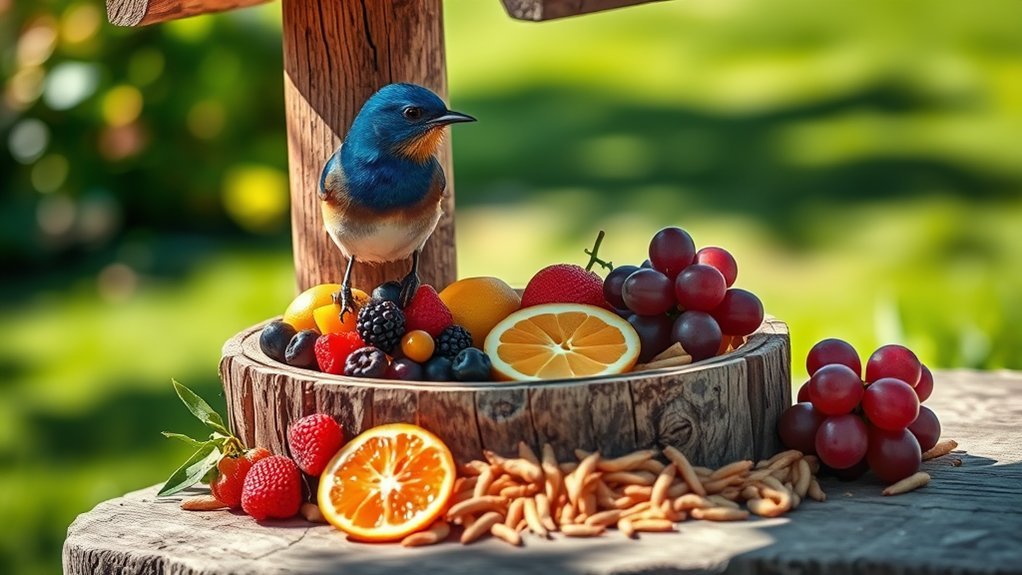
Many people think bluebirds only eat insects, but their diet is more varied. Bluebirds also enjoy fruits, berries, and seeds, especially in winter when insects are harder to find.
Different bluebird species have different preferences. Eastern bluebirds often choose mealworms and fruit, while Western bluebirds prefer grasshoppers and beetles.
Knowing these differences can help you create better habitats in your backyard. Providing a range of food options can attract and support local bluebird populations.
Understanding their eating habits helps us appreciate these beautiful birds and enhances our environment.
Frequently Asked Questions
Do Bluebirds Eat Seeds or Birdseed Mixes?
Bluebirds mainly eat insects. They prefer high-protein foods for their diet. In winter, they might eat seeds, but seeds are not their first choice. Birdseed mixes do not provide the nutrition they need.
Are Bluebirds Migratory, Affecting Their Food Sources?
Yes, bluebirds migrate. Their migration affects food availability. During migration, bluebirds search for insects and berries. These foods are essential for their diet. They adjust to seasonal changes in their environment to survive.
How Do Bluebirds Find Food in Winter?
In winter, bluebirds change how they find food. They look for insects and berries, using their sharp eyesight and memory to find food. This shows how well they adapt to seasonal changes. Bluebirds are resourceful and manage to thrive even in the cold months. Watching them search for food can be an enjoyable experience, as they display their unique foraging skills.
What Predators Threaten Bluebirds While Foraging?
While foraging, bluebirds must be aware of predators. They use smart strategies to stay safe. Bluebirds stay alert and pick safe feeding spots. This helps them avoid threats from hawks, cats, and other dangers that can harm them.
Can Bluebirds Eat Human Food Scraps?
Bluebirds can occasionally eat human food, but it should not be the main part of their diet. To keep bluebirds healthy, offer natural foods that match their diet. This will help them thrive in your backyard.

Kashvi is a passionate bird enthusiast and nature lover who has been fascinated by the world of birds for years. With a keen eye for detail and a love for learning, Kashvi is dedicated to sharing her knowledge and insights with fellow bird enthusiasts on Avian Enthusiasts. Through her engaging and informative articles, Kashvi aims to inspire others to join her in exploring the fascinating world of birds and to promote a deeper appreciation for these incredible creatures.