

Goldfinch Migration Patterns: Complete Guide
Understanding goldfinch migration patterns is important. These birds travel north in spring and south in late summer. Different factors influence their journey, such as the amount of daylight and the availability of food. Their migration routes are shaped by geography. This shows how these birds adapt to their environment. Examining these patterns highlights their strength and raises questions about the challenges they face as habitats change.
Key Takeaways
Goldfinches migrate north in spring as days get longer and south in autumn when days become shorter and temperatures drop.
Their routes are shaped by geography and food availability, focusing on areas with plenty of seeds like sunflowers and asters.
Seed availability is crucial for planning their migration schedule and path.
Weather conditions, including temperature and rain, also influence when goldfinches move.
Flocking behavior and communication help goldfinches find food and stay together during their journeys.
Overview of Goldfinch Species

Goldfinches are colorful birds commonly seen in gardens. This group includes various species, such as the American goldfinch and the Lesser goldfinch. Each species has distinct features for identification. The American goldfinch is bright yellow during breeding season. The Lesser goldfinch has a striking black back.
Their habitats differ as well. American goldfinches like open woodlands and weedy fields. Lesser goldfinches prefer less cultivated areas, such as shrubs and gardens.
Recognizing these differences helps you appreciate the beauty of these birds and feel connected to their environments. Understanding their unique traits and habitats enriches your experience as you observe them in nature.
Seasonal Migration Timing
As the seasons change, goldfinches migrate in response to the environment. In spring, longer daylight hours and warmer temperatures trigger their movement northward.
In late summer, shorter days and cooler weather signal the start of their autumn migration. Goldfinches use instincts and environmental cues to time their departures.
Observing these migration patterns helps you connect with nature and join the community of birdwatchers. Recognizing when goldfinches migrate enhances your appreciation for these beautiful birds and the cycles of life.
Migration Routes and Destinations
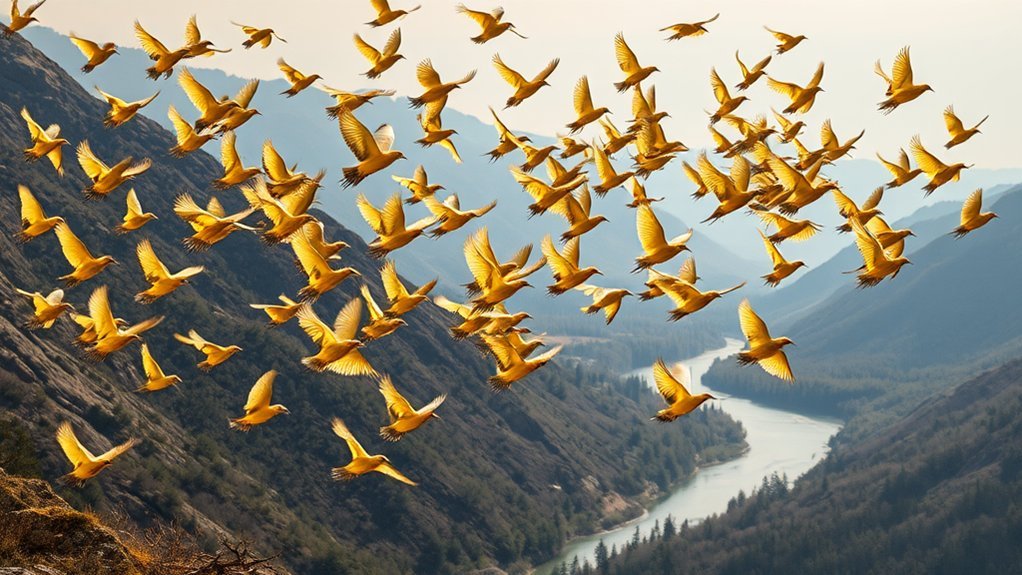
Goldfinches migrate along specific routes, influenced by geography and the availability of food. In the fall, they travel south to find areas with plenty of seeds for energy.
Observing how they feed during migration helps us understand their survival strategies. Goldfinches prefer seeds from sunflowers and asters, indicating a need for varied habitats.
Studying their migration patterns enriches our knowledge and helps us connect with the ecological community. By learning about goldfinches, we can appreciate and contribute to the protection of these vibrant species.
Factors Influencing Migration
Goldfinch migration depends on several important factors, including environmental conditions and biological needs. Here's a look at these key influences:
- Food Supply: Goldfinches eat seeds, so they migrate when sunflower and thistle seeds are ready in certain areas.
- Weather Patterns: Changes in temperature and rainfall can prompt them to move to better habitats.
- Breeding Success: The number of young birds successfully raised before migration affects when and how many goldfinches travel.
- Predation Threat: Goldfinches may leave areas with high risk of predators to find safer places during migration.
Understanding these factors helps us appreciate the migration journey of goldfinches and their survival strategies.
Behavior During Migration
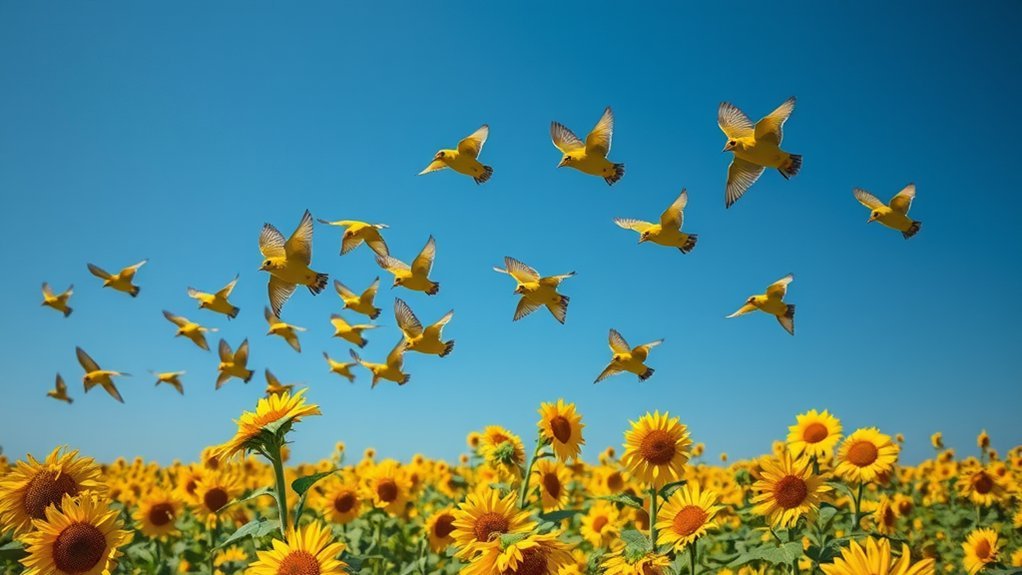
Goldfinches display strong adaptability and resilience during migration. They use effective foraging strategies to choose nutrient-rich seeds and berries that fuel their long journeys. This careful selection of food enables them to travel great distances successfully.
Social interaction is important for goldfinches during migration. They often fly in flocks for safety and better food discovery. Their chirps and calls help them communicate, coordinate movements, and find food.
Habitat Preferences During Migration
Goldfinches have clear habitat preferences during migration that affect their survival and travel efficiency. They look for environments that provide necessary resources, especially for feeding and nesting.
Knowing these preferences can enhance your understanding of their migration. Here are the main features they seek:
- Variety of plants that offer seeds and insects for food.
- Open fields and shrubs that serve as nesting sites.
- Water sources for drinking and hydration.
- Shelter to protect them from predators and bad weather.
Conservation Challenges
Goldfinches encounter serious conservation challenges due to habitat loss. Urban development and agriculture destroy their habitats, which limits the resources they need during migration.
Climate change also affects their migratory paths and timing, impacting their natural behaviors. These changes result in fewer suitable habitats and unpredictable environmental conditions. Additionally, shifts in seasons reduce food availability for goldfinches, making survival more difficult.
To help these beautiful birds, we should support sustainable practices that protect their habitats and address climate change.
Understanding their struggles encourages us to take action and contribute to their survival during migration. Together, we can make a positive impact on goldfinch conservation.
How to Observe Goldfinches During Migration
Observing goldfinches during migration is enjoyable and rewarding. To see them effectively, follow these practical tips:
- Visit during peak migration: Go out in late summer and early fall to see goldfinches moving south.
- Choose the right locations: Look for open fields, meadows, or areas with coneflowers, sunflowers, and other plants full of seeds.
- Use binoculars or spotting scopes: These tools help you see the birds from a distance and observe their details.
- Be patient and quiet: Stay still and keep noise to a minimum to avoid scaring these timid birds.
These strategies will improve your chances of seeing goldfinches during migration. Enjoy your birdwatching!
Frequently Asked Questions
What Food Sources Do Goldfinches Rely on During Migration?
During migration, goldfinches eat mainly seeds. They prefer thistle and dandelion seeds. These seeds provide the energy needed for their long journey. Goldfinches have efficient ways of feeding to gather enough nutrition for their travels.
How Do Goldfinch Populations Differ by Region?
Goldfinch populations differ by region due to their habitat preferences and seasonal behavior. In northern areas, you often find larger flocks of goldfinches. In contrast, southern regions usually have more solitary goldfinches. This variation is influenced by local climate and the availability of food resources. Understanding these regional differences can help bird watchers and nature enthusiasts appreciate the goldfinch's behavior in various environments.
What Are the Main Predators of Migrating Goldfinches?
Hawks are significant predators of migrating goldfinches. They can greatly affect the survival rates of these birds. Additionally, nesting threats from various predators pose risks to goldfinches during their breeding season. These threats can reduce reproductive success and impact their population numbers along migration routes. Understanding these challenges helps in conserving goldfinch populations during migration.
Can Goldfinches Change Migration Routes Each Year?
Goldfinches can change their migration routes each year. They adapt their paths based on environmental conditions and food availability. This flexibility helps them survive in different habitats. Their ability to adjust ensures they find the resources they need each season. This makes their migration process interesting to observe and study.
How Do Weather Conditions Affect Goldfinch Migration?
Weather conditions significantly impact goldfinch migration. Temperature changes and storm events can alter their migration routes and timing. These birds adjust to the weather to survive. By observing these patterns, you can better understand their resilience and appreciate the natural cycles they follow. Watching goldfinches adapt to changing weather can deepen your connection with nature.

Kashvi is a passionate bird enthusiast and nature lover who has been fascinated by the world of birds for years. With a keen eye for detail and a love for learning, Kashvi is dedicated to sharing her knowledge and insights with fellow bird enthusiasts on Avian Enthusiasts. Through her engaging and informative articles, Kashvi aims to inspire others to join her in exploring the fascinating world of birds and to promote a deeper appreciation for these incredible creatures.


