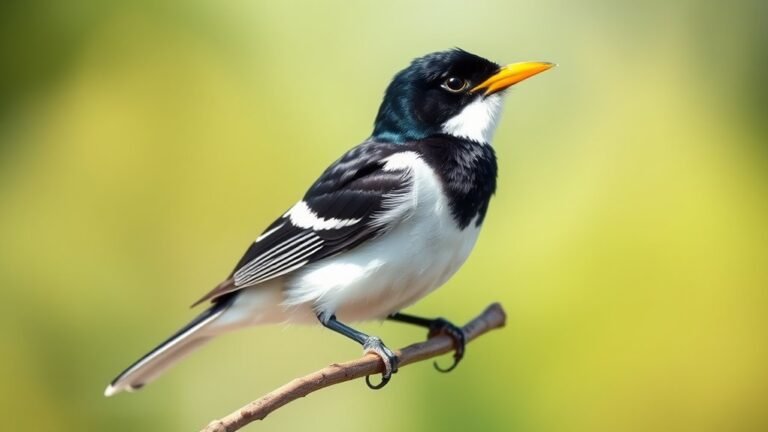
Names of Black and White Birds: A Comprehensive List
Black and white birds show a range of unique adaptations and behaviors. The American Crow has distinct calls, while the Snowy Egret is known for its elegant flight. Each bird plays an important role in its ecosystem. Learning about these birds can enhance your understanding of nature and highlight the need for conservation. Their habitats and cultural significance are also worth exploring.
Key Takeaways
- Common black birds are the American Crow, Common Raven, and Red-winged Blackbird. These birds show smart behavior and problem-solving skills.
- Notable white birds include the Snowy Egret, American White Pelican, and California Gull. These birds are known for their beauty and ability to adapt.
- Black and white birds represent duality. In many cultures, crows symbolize wisdom, while doves represent peace.
- These birds have important roles in the ecosystem. They help maintain biodiversity and have unique traits for surviving in their environments.
- Efforts to protect these bird species focus on restoring habitats and promoting community involvement through sustainable actions.
Black Birds: Majestic and Mysterious
Black birds symbolize mystery and elegance in nature. There are over 900 species of these birds, each showcasing unique plumage and behaviors. Their black feathers contain melanin, which helps with camouflage and protects against UV rays. The glossy look of their feathers enhances their mating displays.
These birds can produce complex songs. Their songs help them establish territory and attract mates. Species like the American Crow and Common Raven show high intelligence. They use vocalizations to share information with each other.
By learning about their songs and adaptations, you can deepen your appreciation for these beautiful creatures and understand their role in ecosystems better.
Black birds are more than just symbols; they're sophisticated and fascinating members of the natural world.
White Birds: Elegance in Plumage
When you observe white birds, such as swans and seagulls, you'll notice their striking elegance and unique adaptations.
Each species showcases distinct characteristics that contribute to their beauty and survival in various habitats.
Understanding these common species allows you to appreciate their role in the ecosystem and the environmental conditions they thrive in.
Common White Bird Species
White birds attract attention due to their beautiful feathers and grace. Many species live in different environments.
The Snowy Egret and the American White Pelican are notable for their size and feeding methods. These birds often feed in wetlands, catching fish and small sea creatures.
During migration, they move to warmer areas and display interesting behaviors as they travel long distances. The California Gull is a good example of adaptability in feeding methods and migration routes.
Learning about these common white bird species helps you appreciate their importance in nature and the beauty they bring to our surroundings.
Unique Characteristics and Habitats
White birds are easily recognizable due to their bright plumage and special features. These features help them survive in their environments. For instance, the snowy egret has long legs and sharp eyesight, which allow it to hunt well in shallow waters.
The albatross, on the other hand, lives over open oceans. It has large wings that help it glide on wind currents, saving energy.
In places like wetlands and snowy areas, white feathers help these birds blend in with their surroundings, protecting them from predators.
Each bird species is uniquely suited to its habitat, whether in water or on land. This specialization supports overall biodiversity and allows them to thrive in their specific environments.
The Significance of Black and White Birds in Culture
Black and white birds are rich in cultural significance, often embodying complex symbolism in mythology, where they can represent duality, transformation, or the balance between light and darkness.
Additionally, their striking color contrasts make them popular subjects in various art forms, frequently symbolizing themes of freedom, renewal, or mystery.
Understanding these cultural representations enhances your appreciation of how these birds influence human expression across societies.
Symbolism in Mythology
Birds with black and white feathers appear in many mythologies worldwide. Their colors often symbolize duality, balance, and change. In several Native American stories, the black crow represents wisdom, while the white dove stands for peace. This contrast highlights the relationship between dark and light.
In Ancient Greek myths, the raven is known as a messenger for the gods. Across different cultures, these birds express human emotions like hope and despair. This shows how they reflect societal values and beliefs.
Black and white birds not only capture interest but also enrich our understanding of cultural stories and shared experiences.
Cultural Representations in Art
Cultural representations of black and white birds appear in many art forms. Artists often use these birds to symbolize duality, eternity, and balance. The contrast of their colors allows for various artistic interpretations.
These interpretations reflect key themes in human experience, such as life and death or peace and conflict. In literature and painting, black and white birds symbolize freedom and confinement, prompting thought on social issues.
Different cultures view their symbolism in unique ways. Many cultures see these birds as signs of change or omens.
Exploring these representations deepens our understanding of how humanity interacts with nature and the messages conveyed in art and culture.
Notable Species of Black Birds
Black birds are fascinating and important in ecosystems.
The Common Raven is smart and solves problems well, which helps it survive.
The Red-winged Blackbird stands out with its red and yellow shoulder patches. It communicates using calls and songs to mark its territory and attract mates.
The American Crow is adaptable and thrives in cities, using its scavenging skills to find food.
Each of these species plays a role in local biodiversity and exhibits unique behaviors. Learning about these black birds helps us understand their value in nature and their relationships in their habitats.
Notable Species of White Birds
White birds, such as the Great Egret and Snowy Owl, are important to our ecosystems. The Great Egret lives in wetlands and helps control fish populations, supporting aquatic balance.
The Snowy Owl is found in the Arctic and plays a crucial role in managing prey species through its hunting.
When birdwatching, pay attention to their habitats. Using binoculars can improve your chances of spotting these birds. Remain quiet to avoid disturbing them.
Supporting habitat preservation ensures that these species can thrive. Participate in local conservation efforts to help maintain their vital roles in nature.
Habitats and Behaviors of Black and White Birds
Black and white birds inhabit many areas, including wetlands, forests, grasslands, and cities. Their feeding habits vary. Some birds hunt insects, while others eat seeds or fish.
Here are some behaviors of these birds:
- Mating rituals include displays or calls.
- Most species protect their territory during breeding.
- Many birds flock together.
- They build nests in trees or on the ground.
- They may hunt alone or work together.
Learning about these behaviors helps you appreciate their roles in nature.
Conservation Efforts for Black and White Bird Species
Conservation efforts for black and white bird species are growing as researchers and organizations recognize their importance. These initiatives focus on restoring habitats to create and preserve environments needed for nesting and foraging. Conservationists plant native vegetation and remove invasive species, which increases the chances of survival for these birds.
Monitoring species is also crucial. Tracking population trends through banding and community participation helps identify threats and evaluate conservation actions' effectiveness.
Collaborating with local stakeholders is essential for promoting sustainable practices that benefit both the birds and their habitats.
Empowering communities fosters a stronger connection to wildlife, which supports the long-term success of conservation strategies. Engaging local people in these initiatives not only raises awareness but also leads to effective stewardship of the environment.
Together, these efforts can help secure a brighter future for black and white bird species.
Frequently Asked Questions
What Are Common Habitats for Black and White Birds?
Black and white birds are commonly found in wetlands and forests. These environments support their migratory patterns and feeding habits. Observing these species in their habitats offers insights into their behaviors and roles in the ecosystem. Understanding where they live helps you appreciate their impact on the environment.
How Can I Identify Different Species of Black and White Birds?
To identify different species of black and white birds, focus on their physical traits. Look at wing patterns and beak shapes. Also, listen to their sounds, as each species has unique vocalizations. These details help you distinguish between the various species effectively. Enjoy observing them!
What Is the Lifespan of Typical Black and White Birds?
The lifespan of black and white birds varies by species, habitat, and diet. Some birds live for just a few years, while others can live several decades. Understanding these factors helps us appreciate their ecological needs.
How Do Black and White Birds Adapt to Urban Environments?
Black and white birds adapt to city life in simple ways. They build nests in man-made structures and find food in easy places. You can see them using parks, rooftops, and buildings for nesting. Additionally, they often scavenge food left by people, which helps them thrive in busy environments. This clever use of available resources allows them to survive and even flourish in urban settings.
Are There Any Myths or Superstitions About Black and White Birds?
Many cultures hold beliefs about black and white birds. These birds often appear in folklore and myths. People see them as signs or omens. Some think they bring good luck, while others view them as symbols of bad luck. These beliefs show how deeply rooted traditions can vary across different societies. The presence of these birds can spark curiosity and reflection on their meanings.

Kashvi is a passionate bird enthusiast and nature lover who has been fascinated by the world of birds for years. With a keen eye for detail and a love for learning, Kashvi is dedicated to sharing her knowledge and insights with fellow bird enthusiasts on Avian Enthusiasts. Through her engaging and informative articles, Kashvi aims to inspire others to join her in exploring the fascinating world of birds and to promote a deeper appreciation for these incredible creatures.