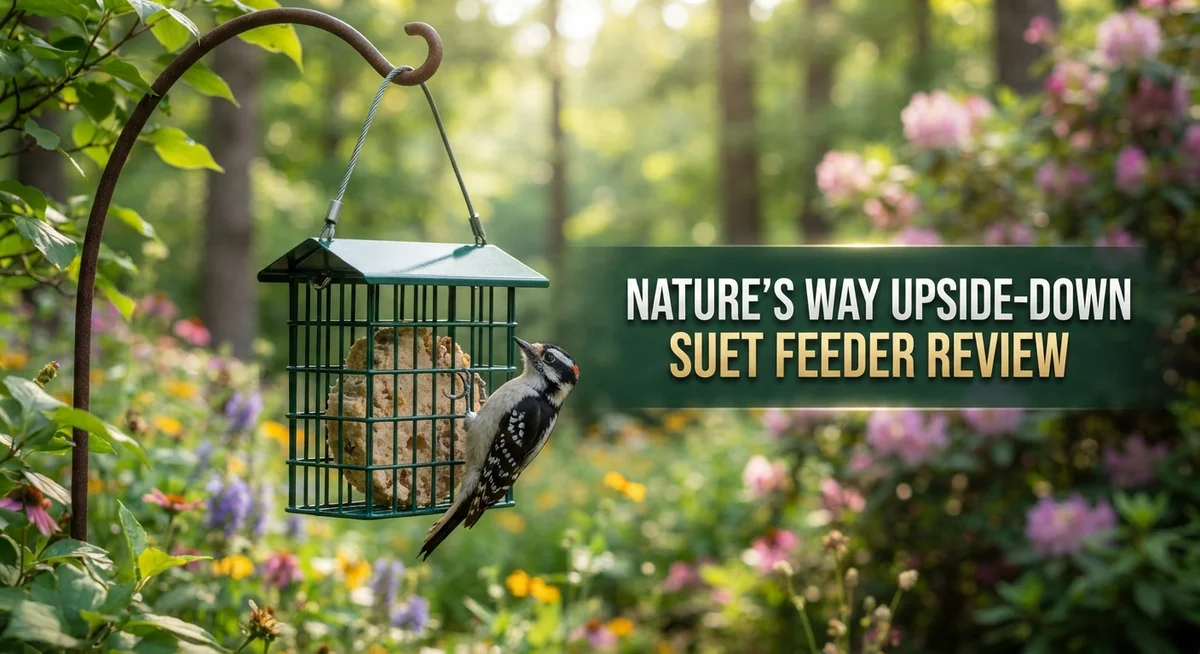
Nature’s Way Upside-Down Suet Feeder Review: Worth Buying?
Do squirrels keep raiding your suet feeder before the birds even get a chance? You are not alone. Many bird lovers face this same problem every day.
The Nature’s Way Upside Down Suet Feeder offers a smart fix. Its unique design flips the script on pesky critters. Birds must feed from below, which naturally blocks squirrels and larger nuisance birds.
This clever feeder invites woodpeckers, nuthatches, and chickadees to dine in peace. They cling and feed upside down with ease. Meanwhile, starlings and grackles struggle to get a bite.
Built from natural cedar wood and powder coated steel mesh, this feeder stands up to weather and time. The hinged lid makes filling simple. Cleaning takes just minutes too.
With over 141 ratings and a solid 4.1 star score, many backyard birders trust this feeder. It holds one suet cake and keeps it fresh for about a week.
Curious if this feeder fits your backyard needs? Let’s look closer at what makes it worth considering.
In a Nutshell
This feeder solves a real backyard problem. Here is a quick summary of what you need to know.
-
Upside down design keeps suet facing downward. This makes it hard for squirrels and larger birds to grab a bite.
-
The hinged lid lifts up for quick filling. You can clean this feeder without much hassle too.
-
Made from cedar wood and steel mesh, this feeder resists rust. It holds up well through rain and snow.
-
One suet cake lasts about a week inside this feeder. That means fewer refills for you during busy seasons.
-
Some owners noticed the lid warps slightly over time. It may not close as tightly after months of use.
-
A few nuisance birds still find ways inside. No feeder blocks every determined visitor completely.
-
Overall, this feeder earns a 4.1 star rating from over 141 buyers. Most reviewers say it works well for attracting woodpeckers and chickadees while keeping pests away.
If you want peaceful feeding sessions for your favorite birds, this model delivers solid results. It balances durability with smart function.
Build Quality and Materials
The cedar wood construction forms the foundation of this feeder’s durability. Cedar naturally resists rot and weathering, so it holds up well through rain, snow, and intense sun exposure. You won’t see the wood deteriorating quickly like you might with softer woods.
The powder coated steel mesh serves as the feeding surface where birds cling and peck. This coating prevents rust from forming, even when wet. The mesh stays strong season after season without flaking or corroding.
Stainless steel hardware secures all the moving parts together. Hinges, screws, and fasteners made from stainless steel resist corrosion. This means your feeder won’t develop rusty spots where metal meets wood or mesh. The hardware stays functional and attractive over time.
The vinyl coated hanging hardware protects the suspension system. This coating shields the metal from moisture and oxidation. Your feeder hangs securely without worrying about rust weakening the attachment points.
One material concern does emerge from owner feedback. The hinged lid can warp after repeated use and exposure to temperature changes. Some users report the lid doesn’t sit flush against the body after a season or two of opening and closing. This warping doesn’t prevent the feeder from working, but it’s worth knowing about.
The overall build feels sturdy in hand. The combination of cedar and steel creates a feeder that balances lightweight handling with genuine strength. You can fill and clean it without struggling with excessive weight.
The mesh gauge appears appropriately tight. It keeps larger nuisance birds from reaching the suet while allowing woodpeckers, nuthatches, and chickadees to feed comfortably. The upside down design works because the materials support this unconventional orientation without sagging or bending.
Most owners report their feeders lasting multiple seasons without significant structural failure. The materials chosen here prioritize longevity over flashy aesthetics. This practical approach means your feeder performs its job reliably year after year, even as weather and wildlife test its construction.

- -WOODPECKER FRIENDLY DESIGN: Attract clinging birds such as Woodpeckers, Titmice, Chickadees, and Nuthatches who like to...
- EASY TO FILL-LESS SPILL: Simply lift the black lid to drop in a suet or seed cake, 1 cake capacity.
- -DURABLE MATERIALS: Rust-free hardware, stainless steel screws, water-based protective stain, vinyl coated steel hanging...

Last update on 2026-07-11 / Affiliate links / Images from Amazon Product Advertising API
Squirrel and Nuisance Bird Deterrent Design
The upside down design creates a natural barrier that stops squirrels and large nuisance birds from accessing your suet. Squirrels struggle to grip and climb on a feeder that hangs with the food facing downward. Their body weight and jumping technique simply don’t work well against this orientation.
Starlings, grackles, and blackbirds find it difficult to land and feed when suet hangs beneath them. These aggressive species prefer perching on top of traditional feeders. The inverted setup forces them to hang upside down like woodpeckers do. Most give up and move to easier food sources nearby.
The mesh opening size plays a key role in this deterrent strategy. The powder coated steel mesh features holes large enough for small songbirds to access suet easily. Squirrels’ larger paws cannot grip the mesh effectively from below. They slip and fall away from the feeder within seconds of attempting access.
Woodpeckers, nuthatches, and chickadees thrive on this upside down design. These species evolved to feed while hanging upside down in nature. They grip the mesh with sharp claws and peck suet comfortably. The feeder plays to their natural feeding style perfectly.
Owner feedback confirms this design works well in practice. Most buyers report seeing fewer squirrel visits after switching to this model. Nuisance birds appear less frequently around their feeders. The desired songbirds visit more often and stay longer.
A few limitations exist with the deterrent approach. Some determined squirrels occasionally find ways to access the feeder despite the upside down design. Particularly clever or athletic squirrels might succeed where others fail. Placement matters too. Feeders hung too close to trees or structures give squirrels jumping advantages.
The cedar wood frame and steel mesh combination creates a sturdy platform that resists warping under the constant hanging strain. The hinged lid opens easily for refilling, yet closes securely to keep the suet protected between feedings.
This feeder represents a practical solution for backyard birders seeking to attract desirable species while minimizing unwanted visitors. The physics of the upside down design work consistently across different backyard environments.
Capacity, Dimensions, and Installation
This feeder holds one standard suet cake at a time. That single cake typically lasts about a week, depending on bird traffic in your yard. The compact size makes it ideal for small to medium backyards where space matters.
The dimensions measure 7.5 inches long, 7.25 inches wide, and 3 inches tall. These proportions keep the feeder streamlined and easy to position. The small footprint means you can hang it almost anywhere without creating visual clutter.
Installation takes just minutes. Most owners report hanging it within five to ten minutes of opening the box. You’ll need a sturdy hook or branch that can support the weight of the filled feeder plus visiting birds. The vinyl coated hanging hardware provides a secure suspension system that resists rust and weather damage.
The hinged lid lifts straight up for loading and cleaning. You don’t need tools or special techniques. Simply raise the lid, insert your suet cake, and close it back down. This straightforward design means less frustration during routine maintenance.
One practical consideration emerges from owner feedback. The lid can warp slightly after repeated use and weather exposure. Some owners notice it doesn’t sit perfectly flush after the first season. This doesn’t prevent the feeder from working, but it’s worth knowing before you buy.
The cedar wood construction combines with powder coated steel mesh to create a durable frame. Stainless steel hardware holds everything together securely. These materials work together to resist rust and rot through multiple seasons.
Placement matters for best results. Position your feeder in an open area where birds can approach safely. Avoid dense bushes that give predators hiding spots. Mount it at least five to six feet high for optimal security.
The feeder’s compact design also makes it easy to move if you want to experiment with different locations. You can test various spots around your yard to find where desirable birds visit most frequently.
Top 3 Alternatives
Woodlink Upside Down Suet

- Audubon Going Green suet bottom feeder
- Keeps undesirable birds from eating suet
- 1" square fencing on the underside of the feeder
Last update on 2026-07-24 / Affiliate links / Images from Amazon Product Advertising API
The Woodlink Upside Down Suet works similarly to Nature’s Way. Birds enter from below and peck at suet cakes while hanging upside down. This design stops larger birds from monopolizing the feeder.
The cage holds standard suet cakes securely. The metal construction resists rust and weather damage. Many users appreciate how easy it is to refill and clean. The upside-down style really does discourage starlings and grackles from taking over your yard.
Perky-Pet Suet Feeder

- KEEP SQUIRRELS OUT: These metal bird feeders feature a weight-activated squirrel proof Seed Shield that closes feeding...
- MORE BIRDWATCHING TIME: Allow the birds to feed more comfortably outside the port thanks to our patented Flexports...
- 4 LB SEED CAPACITY: Hold up to 4 lbs of mixed seed, sunflower seeds, or safflower seed, as this large bird feeder...
Last update on 2026-07-24 / Affiliate links / Images from Amazon Product Advertising API
Perky-Pet offers a different approach to suet feeding. This feeder features a more traditional cage design with side openings. Birds access the suet from multiple angles, not just underneath.
The feeder accommodates one standard suet cake. Durable plastic and metal components keep it lightweight yet sturdy. Installation takes just minutes on any hook or branch. This option works well if you want a simpler setup without the upside-down mechanics.
Droll Yankees Suet Cage

- Size: 5x 5.2 x 1.6 inch overall size, have 1 suet cake Capacity
- Not Just For Suet: One standard suet cake capacity. Suit for small seed cakes, nesting materials in spring, and oranges...
- Easy to Use: Open the top of the birds suet cage and put the suet or birdseed cakes in, then close double locking...
Last update on 2026-08-29 / Affiliate links / Images from Amazon Product Advertising API
Droll Yankees produces a straightforward suet cage that focuses on reliability. The design uses a basic wire cage that holds suet cakes firmly in place. Birds peck from the sides and bottom openings.
This feeder appeals to people who prefer minimalist designs. The metal construction withstands harsh weather conditions. Cleaning happens quickly since the cage has no complex parts. Many backyard bird watchers choose this option for its straightforward functionality and long-lasting performance. It attracts woodpeckers, nuthatches, and chickadees effectively.
Ease of Filling and Maintenance
Filling this feeder takes seconds thanks to its hinged lid design. You simply lift the lid straight up, slide in your suet cake, and close it back down. No tools are needed. The opening is wide enough that you won’t struggle to position the cake properly.
The lid mechanism feels smooth during normal use. Most owners report that opening and closing happens without resistance on the first few uses. However, some users have noticed the lid can warp slightly after extended outdoor exposure. When warping occurs, the lid may not sit completely flush against the frame anymore. This doesn’t prevent feeding, but it does affect the feeder’s appearance.
Cedar wood naturally resists moisture, which helps the lid stay functional longer than feeders made from other materials. That said, wood can still absorb water over time, especially if your feeder sits in direct rain. Positioning it under a slight overhang or tree cover extends the lid’s lifespan.
Cleaning is straightforward and quick. You remove old suet cake crumbles and debris by simply opening the lid and wiping the interior with a dry cloth or soft brush. The powder coated steel mesh doesn’t trap food particles the way solid feeders do. Rinsing with a garden hose works well for deeper cleaning, though you should let the wood dry completely afterward.
The stainless steel hardware resists rust, so hinges and fasteners stay functional season after season. You won’t need to oil or lubricate moving parts regularly. A quick visual inspection before each refill keeps everything in good working order.
Regular maintenance is minimal. Most owners simply refill the feeder weekly and wipe it down occasionally. The durable construction means you’re not constantly replacing worn parts. This feeder demands far less upkeep than plastic alternatives that crack or degrade in sunlight.
Storage during off season is easy too. The compact size fits in most sheds or garages without taking up much space. Cedar naturally repels insects, so pest concerns during storage are rare.
Bird Species Attraction and Suet Longevity
This feeder excels at attracting specific bird species while keeping unwanted visitors away. Woodpeckers, nuthatches, and chickadees love the upside down design because they naturally feed while hanging. These birds grip the mesh easily and access suet from below without strain.
Starlings, grackles, and blackbirds struggle with this setup. Their body size and feeding style make it hard for them to land on the mesh and eat comfortably. Squirrels also find it nearly impossible to reach the suet from underneath. The mesh opening size is small enough to block their access while letting smaller songbirds feed freely.
Owner feedback confirms that this deterrent approach works in real world conditions. Most people report seeing fewer nuisance birds within the first week of use. However, some determined birds may still find ways to access the feeder occasionally. Persistence from certain species is normal, so don’t expect a 100% perfect solution.
Suet longevity is impressive with this design. A standard suet cake typically lasts about one week under normal conditions. The covered mesh protects the cake from rain and snow, which extends its life significantly. Cedar wood naturally sheds water, so moisture doesn’t break down the suet as quickly as it would in an open feeder.
Temperature also plays a role in suet durability. During cooler months, cakes stay firm and last longer. In hot weather, suet softens faster and birds consume it more quickly. The feeder’s design helps minimize waste even when temperatures rise.
Placement affects both bird attraction and suet longevity. Position your feeder in an open area where desirable birds feel safe approaching. Avoid placing it directly under tree branches, as this gives squirrels easy jumping access. A clear space around the feeder lets you watch your birds while they eat.
The combination of deterrent design and protective materials means you’ll spend less time refilling and more time enjoying bird watching. Your suet investment stretches further because the cake lasts longer and less food goes to unwanted visitors.
Pros and Cons
The Strengths You’ll Notice
This feeder shines when it comes to keeping unwanted birds away. Squirrels, starlings, grackles, and blackbirds find the upside-down design frustrating. They simply cannot feed the way they normally would. Meanwhile, woodpeckers, nuthatches, and chickadees thrive with this setup because they naturally feed upside-down.
The construction quality stands out. Cedar wood paired with powder-coated steel mesh creates a frame that resists rust and weather damage. Stainless steel hardware means hinges and fasteners won’t corrode over time. You won’t deal with squeaky, stuck parts after a few seasons of use.
Filling and cleaning happen fast. The hinged lid lifts straight up without any fuss. You can load a fresh suet cake and get the feeder back outside in seconds. Maintenance stays minimal because the materials naturally resist moisture and decay.
Suet cakes last roughly one week with this design. The protective mesh and positioning keep the cake intact longer than open feeders. You’ll refill less often and waste less suet overall.
Where This Feeder Falls Short
The lid can warp over time. Some owners report that after regular use, the lid doesn’t sit completely flush against the frame. This gap allows moisture to enter and may let some birds access the feeder from unexpected angles. Cedar wood can shift slightly with temperature changes and humidity, which contributes to this issue.
A few nuisance birds still find ways inside. While the upside-down design deters most unwanted visitors, determined birds occasionally figure out how to feed. Your results may vary depending on local bird populations and how many feeders you have nearby.
The single suet cake capacity means frequent refilling if you want continuous feeding throughout the day. This works fine for casual bird watchers but may feel limiting if you’re feeding large flocks.
Weather exposure takes a toll. Even with quality materials, harsh winters or intense sun can gradually age the wood and hardware. Regular inspection helps catch issues before they become problems.
Who Should Buy It
This feeder works best for homeowners who want to attract specific bird species while keeping nuisance visitors away. If woodpeckers, nuthatches, and chickadees visit your yard regularly, this is your solution.
You should buy this feeder if squirrels frustrate you. The upside-down design makes it nearly impossible for them to feed. Starlings and grackles also struggle with the setup. Your feeding experience becomes more enjoyable when these unwanted birds can’t access your suet.
This feeder suits people with limited time for maintenance. The hinged lid opens and closes smoothly. Filling takes seconds. Cleaning is just as quick. You won’t spend hours on upkeep during the feeding season.
Homeowners who value durability should consider this option. Cedar wood resists moisture naturally. Stainless steel hardware prevents rust. The powder-coated steel mesh holds up through multiple seasons. If you’ve had feeders fall apart after one winter, this construction quality makes a real difference.
This feeder fits your needs if you prefer a single suet cake setup. One cake lasts about a week under normal conditions. You’ll refill weekly rather than daily. This schedule works well for people who don’t want constant yard maintenance.
You’re a good match if you accept minor limitations. The lid can warp slightly over time. A few determined birds might still find their way inside. These issues don’t prevent the feeder from working. They just mean it’s not perfect for every situation.
Casual bird watchers benefit from this purchase. You don’t need special knowledge to use it. The design handles most of the work for you. Simply fill it, hang it in an open area, and watch the right birds arrive.
This feeder also appeals to people upgrading from basic models. If you’ve used flat suet feeders before, the upside-down approach feels like a real improvement. The species control alone makes many owners happy with their choice.
Skip this feeder only if you want to feed all birds equally or prefer larger capacity options. Otherwise, this is a solid choice for selective, low-maintenance bird feeding.
Final Verdict
This feeder does what it promises. It keeps nuisance birds away and welcomes the species you actually want to see.
Woodpeckers, nuthatches, and chickadees will visit often once they find this feeder. That alone makes it worth adding to your yard.
The cedar wood and steel mesh combo gives you a feeder that lasts. You won’t deal with rust or rot like you would with cheaper models.
Is it perfect? No. The lid warping issue is real, and some owners notice it after a few months of use. This doesn’t ruin the feeder, but it’s worth knowing before you buy.
A small number of persistent birds still figure out how to get to the suet. This happens with almost any upside down design, so it’s not unique to this product.
If you compare it to competitors like the Songbird Essentials or Birds Choice models, this feeder holds its own. It matches or beats them in build quality and bird attraction.
The Nature’s Way Bamboo version offers a similar experience with a different material choice. Both are solid picks depending on your style preference.
Overall, this feeder earns its 4.1 star rating. It solves the biggest headache for backyard bird watchers: unwanted guests eating all the suet.
You get a feeder that’s simple to fill, easy to clean, and tough enough to handle outdoor conditions. The minor lid issue doesn’t outweigh these benefits for most buyers.
This feeder makes sense if you want fewer nuisance birds and more of the species you enjoy watching. It also suits anyone who wants a low maintenance option that doesn’t demand constant attention.
Think about your yard, your local bird population, and how often you want to refill suet. If this feeder matches those needs, it’s a smart addition to your setup.
In the end, this product delivers on its core promise. It attracts the right birds, blocks the wrong ones, and holds up well over time.
Frequently Asked Questions
How does the upside-down design actually stop squirrels?
The upside-down cage forces birds to hang upside down while eating. Squirrels struggle with this position because they prefer to eat right-side up. Most squirrels give up and move on to easier food sources. The design works best when you pair it with a pole mount away from jumping spots. Some determined squirrels still try, but they rarely succeed for long.
Will woodpeckers and nuthatches use this feeder?
Yes, absolutely. Woodpeckers and nuthatches are natural acrobats. They love hanging upside down to feed. Chickadees also visit frequently once they discover the feeder. These species are exactly what this design attracts. You’ll see them return regularly once they find your setup.
Does the lid really warp, and is it a deal-breaker?
Some users report the lid warps slightly after extended sun exposure. It may not sit perfectly flush after a few months of use. This doesn’t stop the feeder from working, but it’s worth knowing. The hinged mechanism still opens and closes smoothly. If you live in a very hot climate, monitor it more closely.
How long does one suet cake actually last?
One suet cake typically lasts about one week with regular bird activity. The upside-down design slows consumption compared to traditional feeders. Heavy traffic from multiple birds shortens this timeline. Light activity extends it longer. You’ll refill roughly every seven to ten days depending on your local bird population.
Can any nuisance birds still get inside?
A small number of persistent birds occasionally find their way in. Starlings and grackles rarely succeed, but they may try. The design stops most unwanted visitors, not all. Think of it as a strong deterrent rather than a complete barrier. This feeder solves the majority of squirrel and nuisance bird problems.

Kashvi is a passionate bird enthusiast and nature lover who has been fascinated by the world of birds for years. With a keen eye for detail and a love for learning, Kashvi is dedicated to sharing her knowledge and insights with fellow bird enthusiasts on Avian Enthusiasts. Through her engaging and informative articles, Kashvi aims to inspire others to join her in exploring the fascinating world of birds and to promote a deeper appreciation for these incredible creatures.