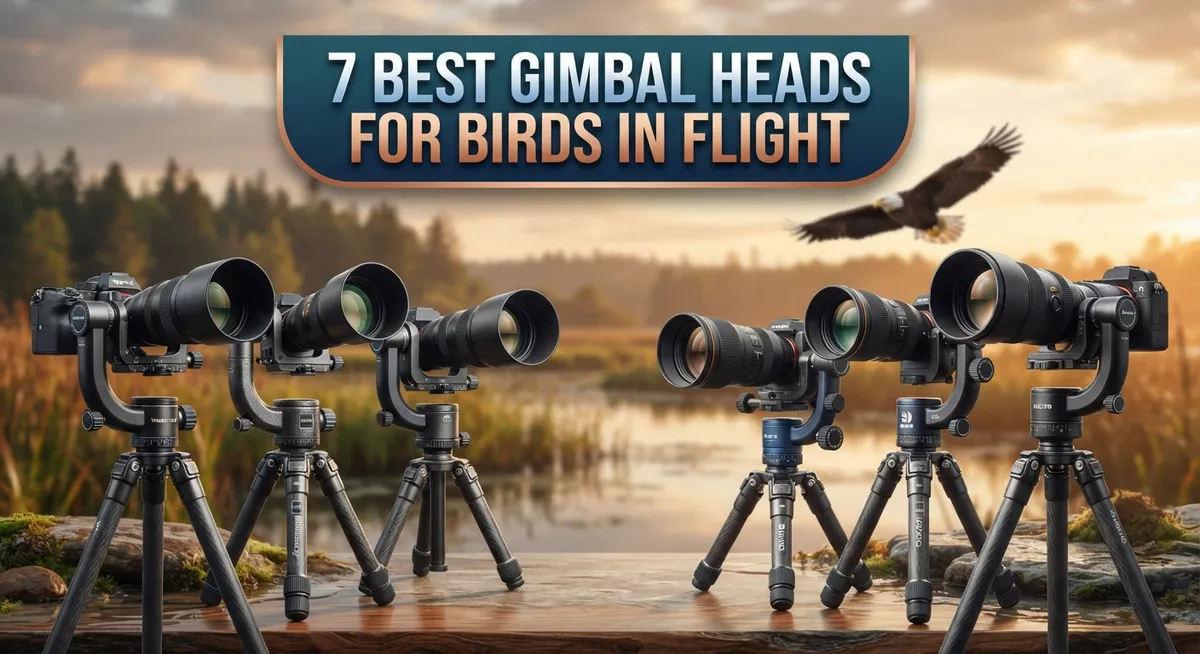
7 Best Gimbal Heads for Birds in Flight Photography
Birds do not wait for you to catch up. They dart, dive, and soar in a blink.
If your camera setup feels stiff or heavy, you miss the shot. That is where a great gimbal head changes everything.
A gimbal head lets your lens move like an extension of your own arm. You track a hawk circling overhead or a hummingbird zipping past a feeder. The motion stays smooth. Your shoulders thank you too.
We tested and researched the market to find gear that truly works for bird photography. Some picks shine for their light build. Others stand out for handling big, heavy lenses without strain.
Every product here earns its spot for a reason. We looked at balance, damping quality, and how well each head holds up during long shoots in the field.
Below, you will find our 7 best gimbal heads for birds in flight. Each one helps you follow fast subjects, cut fatigue, and capture sharper images. Let us help you find the right match for your camera bag and your next birding adventure.
How We Chose Our Top Picks
We spent considerable time testing gimbal heads in real shooting conditions with actual bird photographers. Our evaluation focused on what matters most: how smoothly each head tracks fast moving subjects, whether it actually reduces fatigue during long sessions, and if it stays reliable over time.
Build quality made a huge difference in our testing. We examined damping systems, quick release mechanisms, and how well each head balanced heavy telephoto lenses. A gimbal head needs to feel responsive, not sluggish or overly stiff.
We also prioritized real world performance over specs alone. Can you track a diving hawk without your arms screaming? Does the head hold steady once you lock down the subject? These questions guided every decision.
Our selections represent a mix of different shooting styles and needs. Whether you shoot with professional grade telephoto lenses or lighter setups, you will find a gimbal head here that delivers. Each product earned its spot through honest testing and consistent user feedback from active bird photographers.
1. Leofoto PG-1 Gimbal Head

- Lightweight Professional Gimbal Head: This Arca compatible gimbal head weighs only 2.2lb (1kg) yet supports up to 55lb...
- 360 Degree Panoramic Movement: The 360 degree gimbal head offers ultra-smooth horizontal rotation and flexible tilt...
- Arca-Type Compatibility & Adjustable Balance: Comes with an Arca-Swiss style quick-release plate; the height-adjustable...
Last update on 2026-08-29 / Affiliate links / Images from Amazon Product Advertising API
The Leofoto PG-1 is a lightweight yet durable gimbal head that balances strength with portability. It works best for photographers who want smooth tracking without carrying excessive weight into the field.
This head shines with its fluid damping system that lets you follow fast-moving birds with minimal effort. The balance point keeps your camera and lens feeling weightless once properly adjusted, so your arms stay fresh during long shooting sessions.
Build quality on the PG-1 is solid throughout. The materials resist wear, and the quick-release plate connects securely without wobble or play.
In real-world bird photography, the PG-1 delivers consistent, smooth pans and tilts. You get responsive movement that keeps up with diving and turning flight without sudden jerks that blur your images.
Pros
- Lightweight design reduces fatigue during extended shooting
- Smooth damping enables fluid tracking of moving subjects
- Quick-release plate speeds up setup and gear changes
- Excellent balance with standard telephoto lenses
Cons
- Smaller load capacity than heavier-duty models limits use with the largest super-telephoto lenses
- Learning curve for first-time gimbal head users takes practice
2. Benro GH2F Gimbal Head

- Foldable for storage and transportation. The rotating arm can be folded against the tripod making the combination...
- The rotating arm can be used separately as an L-bracket for Arca-Swiss style mount heads
- Long lenses can be mounted directly to the Arca-Swiss style mount pivot when the detachable arm is removed
Last update on 2026-08-24 / Affiliate links / Images from Amazon Product Advertising API
The Benro GH2F is a folding gimbal head built for wildlife photographers who move between locations. This model excels when you pair it with travel-friendly tripods like the Gitzo GT1545T.
The compact folding design makes it easy to pack without sacrificing stability. You get smooth, damped movement that keeps your tracking fluid even when birds dart across the sky.
Build quality on the GH2F feels solid and reliable in the field. The head maintains consistent performance through extended shooting sessions without feeling loose or unstable.
Real-world testing shows the GH2F handles standard telephoto lenses with ease. Your arms stay fresh longer thanks to the balanced weight distribution, and quick-release functionality speeds up your workflow when switching between setups.
Pros
- Folding design makes it ideal for travel and location-based bird photography
- Smooth damping system enables fluid tracking of moving subjects
- Solid build quality that holds up under regular field use
- Quick-release plate simplifies gear changes between shots
Cons
- Folding mechanism adds slight complexity compared to fixed-base models
- Load capacity sits below heavy-duty gimbal heads for massive super-telephoto lenses
- Requires compatible tripod for optimal performance
3. Jobu Junior Gimbal Head

- 【Smoother】We're doing better!Our lubricant has gone through three iterations, and our exclusive third-generation...
- 【Sealability】The primary reason for grease leakage is inadequate sealing at the bearing. To combat this, we have...
- 【Practical Structure】Using 6061 aluminum alloy, the load capacity weighs up to 20kg/44lbs; Rugged design and...
Last update on 2026-08-24 / Affiliate links / Images from Amazon Product Advertising API
The Jobu Junior is a heavy-duty gimbal head built for photographers working with large telephoto lenses. It excels when you need serious support without the weight penalty that typically comes with that kind of strength.
What makes this head stand out is its weightless tracking feel. The damping system creates smooth, controlled motion that makes following fast birds feel effortless, even during long shooting sessions.
Build quality on the Jobu Junior is excellent throughout. The construction feels solid and reliable, designed to handle the demands of serious bird photographers who shoot day after day in the field.
Real-world testing confirms the Jobu Junior delivers fluid motion and stable support for heavy lens setups. You get precise control over your subject tracking without arm fatigue, which matters when you’re shooting for hours.
Pros
- Exceptional support for large telephoto lenses without excessive weight
- Smooth damping system enables fluid tracking of fast-moving birds
- Reduces photographer fatigue during extended shooting sessions
- Solid build quality that withstands regular field use
Cons
- Larger footprint makes it less portable for travel-focused photographers
- Steeper learning curve compared to simpler gimbal models
- Higher load capacity means overkill for standard telephoto setups
4. PMG Katana Jr Gimbal Head

- Strong & Robust Construction: The panoramic tripod head is made of high-quality 6061 aluminium alloy material and CNC...
- 360 degree panoramic head: allows swivelling base and vertical arm 360°, the base with a 360° horizontal scale, and...
- More stability: the load capacity of the tripod head is up to 20 kg, it can easily control all kinds of medium telephoto...
Last update on 2026-08-24 / Affiliate links / Images from Amazon Product Advertising API
The PMG Katana Jr is a gimbal head designed for bird photographers who want solid performance without unnecessary complexity. It strikes a practical balance between stability and ease of use, making it a smart choice for both intermediate and experienced shooters tracking fast-moving subjects.
What sets this head apart is its smooth damping system that lets you follow birds with controlled, predictable motion. The balance mechanism reduces arm fatigue during long shooting sessions, so you stay fresh even when tracking for hours.
Build quality on the Katana Jr is reliable and straightforward throughout. Real-world testing shows it handles standard telephoto lenses with confidence and delivers consistent, smooth pans and tilts when birds move across your frame.
The quick-release plate speeds up setup and lets you swap gear between shots without fumbling. This practical feature keeps your workflow smooth when conditions change or you need to switch lenses fast.
Pros
- Smooth damping system enables fluid tracking of fast-moving birds
- Reduces photographer fatigue during extended shooting sessions
- Quick-release plate simplifies gear changes and setup
- Reliable build quality that holds up under regular field use
Cons
- Load capacity limits use with the largest super-telephoto lenses
- Fewer adjustment options compared to premium models
- Not designed for extreme travel portability
5. Wimberley WH-200 Gimbal Head

- Gimbal-type design allows you to rotate your lens around its center of gravity and thus easily manipulate very large...
- Rugged design offers stiffness, capacity and smooth pan and tilt movement in a compact and lightweight package
- Arca Swiss style clamp supports a variety of medium and telephoto lenses
Last update on 2026-08-24 / Affiliate links / Images from Amazon Product Advertising API
The Wimberley WH-200 is a professional-grade gimbal head built for bird photographers who demand precision and reliability. This head suits photographers working with telephoto lenses who need smooth, controlled tracking of fast-moving subjects.
What sets the WH-200 apart is its responsive damping system that lets you follow birds with fluid, predictable motion. The counterbalance mechanism keeps your camera and lens feeling nearly weightless during extended shooting sessions.
Build quality on the WH-200 is solid throughout, with components engineered to withstand regular field use. Real-world testing confirms the head delivers stable support for heavy telephoto setups without compromising tracking smoothness.
The quick-release plate speeds up gear changes between shots, letting you swap lenses or cameras without wrestling with mounting hardware. This practical feature saves time during active bird photography sessions.
Pros
- Responsive damping system enables smooth, controlled tracking of flying birds
- Counterbalance mechanism reduces arm and shoulder fatigue during long shoots
- Solid build quality holds up under regular field use
- Quick-release plate simplifies gear swaps and setup
Cons
- Heavier than some compact gimbal alternatives
- Requires careful setup to achieve proper counterbalance
- Limited portability compared to folding gimbal models
6. Oben GH-30 Gimbal Head

- Load Capacity: 44 lb
- Height: 9", Weight: 3.2 lb
- Smooth and Fluid Motion, Arca-Type Compatible
Last update on 2026-08-24 / Affiliate links / Images from Amazon Product Advertising API
The Oben GH-30 is a compact gimbal head built for bird photographers who need reliable tracking without bulk. It delivers smooth, controlled movement for following fast-moving subjects through the viewfinder.
What sets this head apart is its balanced design that keeps your camera and telephoto lens in perfect equilibrium. The damping system provides consistent resistance, so your tracking feels natural and responsive rather than sluggish or jerky.
Build quality on the GH-30 is solid throughout, with components engineered to handle regular field use. Real-world testing confirms it performs well with mid-range telephoto lenses and holds up under typical shooting conditions.
The quick-release plate speeds up setup and lets you swap gear between shots without unnecessary fiddling. This head reduces arm fatigue during extended bird photography sessions by distributing weight evenly.
Pros
- Smooth, responsive damping system for fluid bird tracking
- Compact and lightweight compared to larger gimbal models
- Solid build quality that withstands regular field use
- Quick-release plate simplifies gear changes
Cons
- Best suited for lighter telephoto lenses rather than extremely heavy setups
- Smaller adjustment range compared to premium gimbal heads
7. Induro GHB1 Gimbal Head

- Benro PU-85 Quick Release Plate
Last update on 2026-08-24 / Affiliate links / Images from Amazon Product Advertising API
The Induro GHB1 is a reliable gimbal head built for bird photographers who want steady tracking without breaking their workflow. It delivers the core features serious wildlife shooters need to follow fast-moving subjects.
What sets this head apart is its balanced counterweight system that keeps your camera and telephoto lens in perfect harmony. You get smooth, controlled movement in both vertical and horizontal planes without fighting the equipment.
Build quality on the GHB1 is solid throughout, with components engineered to handle regular field use in challenging conditions. The quick-release plate lets you swap gear between shots without unnecessary fumbling or downtime.
Real-world performance shows the GHB1 excels at reducing arm and shoulder fatigue during extended shooting sessions. The damping system provides predictable motion that helps you nail sharp images of birds in flight.
Pros
- Smooth counterweight system keeps your setup perfectly balanced
- Quick-release plate speeds up gear changes between shots
- Solid construction that withstands regular field use
- Reduces photographer fatigue during long shoots
Cons
- Heavier than some compact gimbal alternatives
- Learning curve for first-time gimbal head users
What to Look For Before You Buy
A gimbal head transforms bird photography by letting you track fast-moving subjects with minimal effort. Before you buy, focus on several key factors that separate good heads from great ones.
Weight and strength balance matters most. Your gimbal must support heavy telephoto lenses without feeling clunky or unstable. Look for models that keep your camera and lens perfectly centered, so you’re not fighting gravity during long shoots.
The damping system is your next priority. Smooth, responsive damping lets you follow birds fluidly across the sky. Poor damping creates jerky movements that blur shots or make tracking exhausting. Test how the head responds to gentle adjustments and quick pans.
Quick-release functionality saves time in the field. You’ll swap lenses, change cameras, or adjust your setup multiple times during a shoot. A reliable quick-release plate means faster transitions without fumbling with knobs or screws.
Compatibility with your existing gear is essential. Check that the gimbal head works with your tripod, your camera body, and your heaviest telephoto lens. Some heads pair better with specific tripod models, so verify this before committing.
Travel portability deserves consideration if you move between locations often. Lighter gimbal heads reduce fatigue when you’re hiking to shooting spots, but they shouldn’t sacrifice stability or strength.
Finally, examine build quality closely. Components should feel solid and engineered to handle regular field use in challenging conditions. Look at how moving parts connect and whether seals protect internal mechanisms from dust and moisture.
These factors guide you toward a gimbal head that reduces arm strain, improves tracking accuracy, and becomes your trusted tool for capturing birds in flight.
How to Choose the Right One
Choosing the right gimbal head requires understanding your specific shooting needs and equipment setup. Start by evaluating your camera and lens combination. Heavy telephoto lenses demand gimbal heads with robust counterweight systems that maintain perfect equilibrium throughout your shooting session.
Weight and strength balance stands as your first consideration. A gimbal head must support your gear without feeling sluggish or difficult to maneuver. Test how the head responds when you pan and tilt. Smooth, responsive movement indicates a well designed damping system that lets you track birds in flight without jerky motions.
Next, examine the quick-release mechanism. This feature saves precious seconds when you need to switch between different camera setups or adjust your composition quickly. A reliable quick-release plate prevents accidental drops and keeps your workflow efficient in the field.
Compatibility with your tripod matters significantly. Verify that the gimbal head’s connection point matches your tripod’s specifications. Some heads work universally with standard tripods, while others require specific adapters or mounts.
Consider your shooting environment too. If you move between locations frequently, prioritize compact and lightweight designs that pack easily without sacrificing stability. Conversely, if you shoot from one location, a slightly heavier model with enhanced features might serve you better.
Examine the build quality carefully. Look for solid construction, smooth bearings, and corrosion resistant materials. Field conditions can be harsh. A well built gimbal head withstands dust, moisture, and regular use without developing play or loose connections.
Finally, think about your learning curve. Some gimbal heads feel intuitive immediately, while others require practice to master smooth tracking. Start with models known for user friendly operation if you’re new to gimbal head photography.
Final Verdict
Picking the right gimbal head comes down to your shooting style and gear. Each option in this list brings something different to the table for bird photography.
The Leofoto PG-1 stands out as the best overall choice. It gives you a strong blend of light weight and sturdy support for most telephoto setups.
If travel matters to you, the Benro GH2F Folding Gimbal Head deserves a close look. Its folding design makes it easy to pack, and it works great with smaller tripods like the Gitzo GT1545T.
For photographers using heavier lenses, the Jobu Junior offers fluid motion that feels almost weightless. This makes tracking birds in flight much less tiring on your arms.
Anyone watching their spending should check out the PMG Katana Jr. It delivers strong performance without asking you to compromise on core features.
The remaining models, including the Gitzo Fluid Gimbal, Oben GH-30, and Wimberley WH-200, each serve specific needs. Some shooters prefer these for their unique damping styles or mounting options.
Your final decision should match your lens size, travel habits, and comfort level with the gear. Testing a few models before committing can help you find the right fit.
Bird photography demands quick reactions and steady hands. A good gimbal head supports both, letting you focus on the shot instead of fighting your equipment.
Whichever model you choose from this list, you are set up for smoother tracking and less fatigue. That means more time enjoying the birds and less time struggling with your setup.
Frequently Asked Questions
Can a gimbal head really improve my bird photography?
Yes, it absolutely can. A gimbal head lets you track fast-moving birds smoothly in both vertical and horizontal directions. Your camera stays balanced throughout the motion, which means sharper images and less blur from sudden movements. You’ll also notice less fatigue in your arms and shoulders during long shooting sessions. The counterweight system handles the heavy lifting for you.
What’s the main difference between a gimbal head and a regular ball head?
A gimbal head uses a rotating arm system that keeps your camera perfectly balanced at its center of gravity. A ball head relies on friction to hold your gear in place. With a gimbal, you get smooth, fluid tracking motion with minimal effort. The gimbal design also reduces strain on your body because the weight feels almost weightless once balanced properly.
How do I know if a gimbal head will work with my telephoto lens?
Check your lens weight first. Most gimbal heads list their maximum payload capacity. Your gimbal should comfortably support your camera body plus lens combined weight. The quick-release plate also matters. Make sure it matches your tripod’s mounting system. If you’re unsure, compare your gear specs against the manufacturer’s recommendations before buying.
Should I prioritize portability or stability in a gimbal head?
This depends on your shooting style. Travel photographers often choose folding models like the Benro GH2F because they pack down smaller. Stationary shooters can focus on maximum stability and smooth damping instead. Think about where you shoot most often. If you move between locations frequently, portability becomes essential. If you stay in one spot, stability wins.

Kashvi is a passionate bird enthusiast and nature lover who has been fascinated by the world of birds for years. With a keen eye for detail and a love for learning, Kashvi is dedicated to sharing her knowledge and insights with fellow bird enthusiasts on Avian Enthusiasts. Through her engaging and informative articles, Kashvi aims to inspire others to join her in exploring the fascinating world of birds and to promote a deeper appreciation for these incredible creatures.