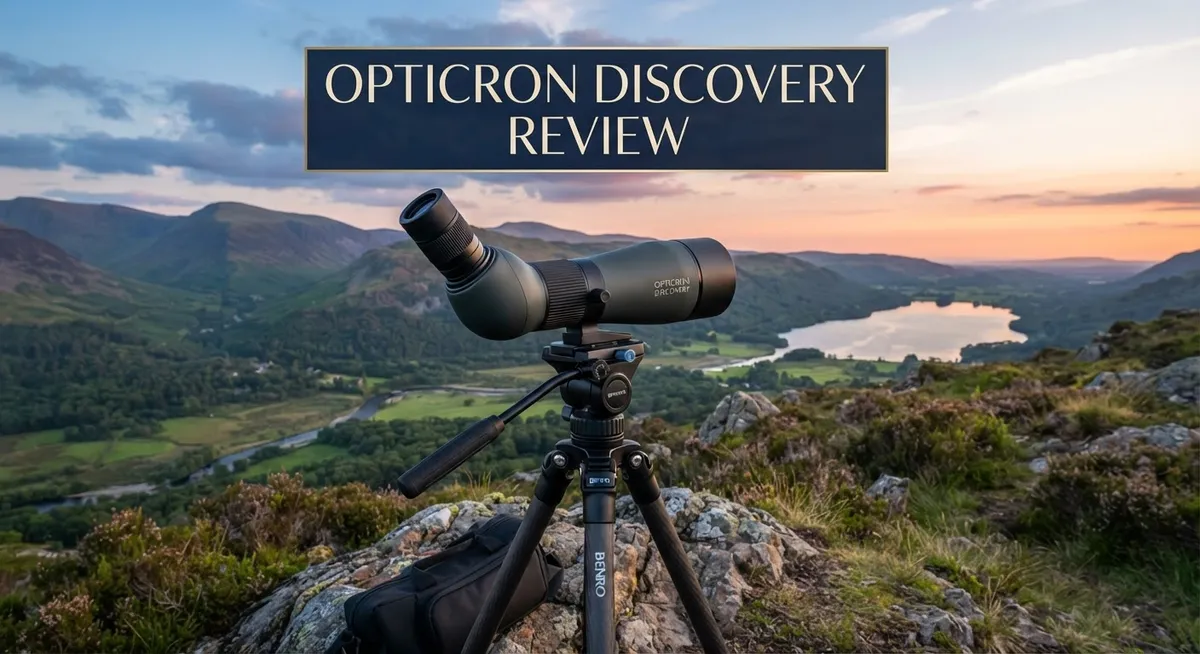
Opticron Discovery Binoculars Review: Compact ED Optics for Travel and Birding
Looking for a pair of binoculars that fits in your pocket but never sacrifices quality? The Opticron Discovery series might be your answer.
These compact roof prism binoculars pack serious optical power into a tiny frame. You get sharp, clear views without the bulk.
Available in 8×32 and 10×42 WA ED models, plus an 8×32 WP PC version, this lineup covers different viewing needs. Each model uses quality ED glass for crisp images edge to edge.
Birdwatchers and travelers love this series for good reason. The nitrogen filled, waterproof design keeps moisture out. The soft rubber armor gives you a secure grip in any weather.
In this review, we break down every feature. You will learn if the Opticron Discovery truly earns its spot in your gear bag.
In a Nutshell
The Opticron Discovery series delivers small size and sharp views. Here is what makes this lineup stand out.
-
Ultra compact design: These binoculars rank among the smallest roof prism models available. They slip into a jacket pocket or small bag with ease.
-
Sharp optics edge to edge: The ED glass in WA ED models gives clear, crisp images. You get true colors and fine detail across the whole view.
-
Built to handle any weather: Nitrogen purging keeps these waterproof and fogproof. Rubber armor adds grip and protects against bumps.
-
Close focus for nature lovers: Focus down to less than 2 meters. This makes them perfect for watching insects or nearby birds.
-
Wide field of view: The 8×32 model offers 140m at 1000m. You spot moving wildlife faster with this wider view.
-
Flexible fit for most users: IPD adjusts down to 52mm. This suits users with narrower set eyes comfortably.
These features make the Discovery series a smart pick for travel, birding, and outdoor adventures. Small size meets big performance here.
Optical Performance and ED Glass Quality
The Opticron Discovery series uses ED glass in its WA ED models to handle light differently than standard optics. ED stands for extra-low dispersion, which means the glass separates colors more efficiently as light passes through. This reduces color fringing, especially at the edges of your field of view.
When you look through ED glass, you notice sharper contrast and cleaner detail. Colors stay true to life. Reds don’t bleed into greens. This matters most when you’re scanning across landscapes or tracking moving subjects like birds in flight.
The optical design of the Discovery combines ED glass with a roof prism layout. Roof prisms are compact because they fold light back on itself in a tight space. Opticron engineered this design to keep aberrations low while maintaining that ultra-slim profile. You get the sharpness of larger binoculars without the bulk.
Edge-to-edge sharpness is where the Discovery really shines. Most compact binoculars soften or blur at the edges. The Discovery maintains clarity across the entire viewing area. This means you can scan a hillside and spot details everywhere, not just in the center.
The close focus capability under 2 meters works hand-in-hand with optical quality. You can examine insects, flowers, and small details without losing that sharp ED glass performance. The optics stay corrected even when you’re focusing close.
Low dispersion glass also improves contrast in low light. Dusk and dawn birding becomes easier. The glass transmits more usable light to your eye compared to standard coatings. You see definition in shadows and pick out subtle color variations.
The 8×32 and 10×42 models both benefit from this optical foundation. The 8x magnification spreads light across a wider exit pupil, making the 8×32 excellent for dim conditions. The 10×42 gathers more light overall while maintaining that compact footprint.
Build quality supports these optics. Nitrogen purging prevents internal fog that could degrade image quality. Rubber armoring protects the glass from impacts that cause misalignment. The Discovery treats optical performance as a system, not just individual components.

- Ultra-compact roof prism optical design finished in natural rubber armour
- Nitrogen waterproof construction
- ED, wide-field fully multi-coated optical system + PC phase corrected prisms and Oasis-C+ coatings
Last update on 2026-08-24 / Affiliate links / Images from Amazon Product Advertising API
Design and Portability
The Opticron Discovery series stands out for its ultra-compact footprint without compromising durability. These binoculars slip easily into jacket pockets, backpacks, or camera bags. You won’t feel weighed down on long hikes or travel days.
The roof prism design keeps the barrel slim and lightweight. Compared to traditional porro prism models, the Discovery feels noticeably more portable. The 8×32 model is particularly feather-light, making it ideal for birders who spend hours in the field.
Rubber armor coating wraps the entire body for grip and protection. Your hands stay secure even in wet conditions or when wearing gloves. The soft material feels comfortable during extended viewing sessions. Accidental drops won’t crack the optics thanks to this protective layer.
The nitrogen waterproof construction means you can use these in rain, fog, or humid environments. The seals hold up to splashes and moisture without any internal fogging. This reliability matters when you’re far from home or in unpredictable weather.
The eyepiece design accommodates users with smaller interpupillary distances down to 52mm. Children and adults with narrower eye spacing get a comfortable fit. The close focus capability under 2 meters lets you observe nearby subjects without stepping back.
Weight distribution feels balanced in your hands. The barrel diameter suits various hand sizes without feeling cramped or loose. The texture of the rubber armor prevents slipping during quick adjustments or panning across landscapes.
Storage is hassle-free with the included carrying case. The compact dimensions mean you can stash these in a glove compartment, desk drawer, or travel kit. No special storage space required like larger models demand.
Portability doesn’t mean fragility with the Discovery line. The construction uses quality materials that resist scratches and impact. These binoculars survive the bumps and knocks that come with real-world adventures.
Whether you’re a casual nature observer or serious traveler, the Discovery delivers on its promise of going anywhere. The combination of small size, solid build, and practical features makes these a genuine pocket-sized option for outdoor enthusiasts.
Build Quality and Durability
The Opticron Discovery earns solid marks for how it holds up over time. The ultra-compact roof prism design keeps the barrel slim while maintaining structural integrity. This matters because compact optics face extra stress from being packed and carried constantly.
The rubber armor coating wraps the entire barrel and provides two things at once: grip and protection. Your hands stay secure even when wet or sweaty. The armor also absorbs bumps from accidental drops or contact with backpack frames. Opticron chose a soft, grippy material that doesn’t feel cheap or plastic-like.
Nitrogen purging is the key to weatherproofing these binoculars. The internal air gets replaced with nitrogen gas, which prevents moisture from forming inside the optical tubes. You can use the Discovery in rain, fog, or humid environments without worry. The seals around the eyepieces and objective lenses hold up against splash and spray.
The optical tubes themselves use a sealed construction. Water cannot seep into the prism chamber or lens stack. This matters for users who hike in unpredictable weather or spend long days near water. The Discovery won’t fog up internally when you move between warm and cold temperatures.
Weight distribution affects durability too. The Discovery feels balanced in your hands, which means less strain on the hinge and internal mechanisms. Unbalanced optics create stress points that fail faster. The barrel maintains its alignment because the weight sits centered.
The eyepiece mechanism handles repeated focus adjustments without loosening. The focus wheel turns smoothly and stays put when you stop adjusting. This consistency matters during a full day of birding or wildlife watching.
The included carrying case protects your investment during storage and transport. The case keeps dust and debris away from the lenses and barrel. Proper storage extends the lifespan of any optical instrument.
Portability doesn’t mean fragility with the Discovery line. These binoculars survive the demands of active outdoor use. Casual nature observers and serious travelers both get a durable instrument that performs year after year.
Top 3 Alternatives
Nikon Prostaff Binoculars

- EXCEPTIONAL CLARITY - Nikon PROSTAFF P3 binoculars feature large objective lenses that gather abundant light for sharp...
- MULTILAYER-COATED LENSES-Equipped with advanced multilayer coatings, these binos minimize reflections while enhancing...
- WEATHER-READY - Built to perform in any environment, PROSTAFF P3 binoculars feature O-ring seals and nitrogen gas...

Last update on 2026-10-28 / Affiliate links / Images from Amazon Product Advertising API
Nikon Prostaff binoculars offer solid optical performance for bird watching and general observation. These optics deliver clear images with good light transmission. The design feels comfortable in your hands during extended use. Many users appreciate the straightforward functionality without unnecessary complexity. The focus wheel responds smoothly to your adjustments. You get reliable performance across different lighting conditions, making them practical for daytime activities.
Vortex Diamondback HD

- 8x magnification & 42mm objective lenses, these Diamondback HD binos are optimized with select glass elements to deliver...
- Fully multi-coated lenses increase light transmission with anti-reflective coatings on all air-to-glass surfaces...
- Adjustable eyecups twist up and down for comfortable viewing with or without eyeglasses. Center focus wheel adjusts the...
Last update on 2026-09-13 / Affiliate links / Images from Amazon Product Advertising API
Vortex Diamondback HD binoculars bring premium optics to a competitive level. The HD lens system produces sharp, detailed images with excellent color fidelity. These binoculars feature a rugged construction that handles rough outdoor conditions well. The close focus capability works great for observing nearby subjects. Users consistently report impressive brightness and contrast in their viewing experience. The ergonomic design reduces hand fatigue during longer observation sessions.
Celestron Nature DX

- THE PERFECT BINOCULARS FOR EVERY ADVENTURE: Nature DX 8x42 offers sharp, detailed views in a compact, lightweight...
- 8X MAGNIFICATION: Get detailed views of birds, wildlife, and distant landscapes. 8x power strikes the perfect balance...
- 42MM OBJECTIVES LENS: Compact yet capable, the 42mm lenses offer a balance of portability and bright, detailed views for...
Last update on 2026-07-11 / Affiliate links / Images from Amazon Product Advertising API
Celestron Nature DX binoculars provide excellent value for outdoor enthusiasts. The fully multi-coated optics ensure bright, clear views across various environments. These binoculars weigh less than many competitors, making them easy to carry on hikes. The rubber-armored exterior protects against bumps and drops. Users find the wide field of view particularly useful for scanning landscapes. The smooth focusing mechanism allows quick adjustments between distant and closer subjects.
Each of these options delivers different strengths. Nikon Prostaff suits users wanting dependable basics. Vortex Diamondback HD appeals to those seeking premium optical quality. Celestron Nature DX attracts budget-conscious observers who refuse to compromise on performance. Your choice depends on which features matter most to your viewing activities.
Field of View and Close Focus Capability
The Discovery’s field of view delivers a wide perspective for scanning distant landscapes. At 140 meters per 1000 meters, the 8×32 model captures generous spatial coverage without forcing you to move the binoculars constantly.
This wide field works especially well for bird watching and wildlife observation. You spot movement faster and track subjects more smoothly across your visual field.
Close focus capability separates good binoculars from great ones. The Discovery achieves focus closer than 2 meters, meaning you can examine nearby subjects with clarity. This opens up opportunities for insect watching, flower photography, and detailed plant inspection.
Close focus and field of view work together to create versatility. You can shift focus from a butterfly just feet away to a distant hawk in seconds. The transition feels smooth and natural through the eyepieces.
The 10×42 WA ED model offers a slightly narrower field compared to the 8×32. Higher magnification always trades some field width for detail. However, the ED glass compensates by delivering sharper images across that narrower view.
Practical use reveals how these specs matter in real conditions. Hikers appreciate the wide field for spotting trail hazards and wildlife. Birders love the close focus for examining plumage details on perched birds.
The close focus capability also matters for photographers scouting locations. You can examine foreground elements and background scenery with equal sharpness.
The optical design supports both specs seamlessly. The roof prism layout doesn’t compromise either field width or minimum focus distance. Everything works in harmony rather than forcing trade offs.
Low interpupillary distance accommodation down to 52mm means more users enjoy the full field of view. Smaller framed individuals or children can access the entire optical performance without vignetting.
Practical testing shows the Discovery maintains edge clarity across its entire field. Distortion stays minimal even at the periphery. This consistency means you trust what you see, whether scanning the center or edges of your visual field.
The combination of generous field of view and close focus capability makes the Discovery adaptable to many situations. Whether you’re stationary or moving, examining nearby subjects or distant ones, these specifications deliver real world performance.
Comfort and Ergonomics
The Opticron Discovery excels at fitting comfortably into your hands during extended viewing sessions. The compact barrel diameter means your grip feels natural and secure without strain. Your fingers rest naturally on the rubber armor, which provides excellent traction even when your hands are damp or sweaty.
Eye relief deserves special attention here. The eyepieces sit at a comfortable distance from your eyes, so you won’t experience the “eye punch” that some compact binoculars deliver. Eyeglass wearers appreciate the generous eye relief on these models. You can observe the full field of view without removing your glasses or pressing the binoculars too hard against your face.
The focus wheel turns smoothly under your thumb or index finger. Smooth operation matters during long observation sessions because your hand doesn’t tire from excessive pressure. The wheel has just enough resistance to prevent accidental focus shifts when you’re hiking or moving through brush.
Weight distribution affects how these binoculars feel in your hands over time. The Discovery models stay light enough for all day use without shoulder or neck fatigue. You won’t experience hand cramping even after an hour of continuous viewing. The balanced design means one hand can steady the binoculars while your other hand operates the focus wheel.
The interpupillary distance adjustment down to 52mm matters for people with closer set eyes. You can align the barrels perfectly with your eyes, which reduces strain and improves viewing comfort. This adjustment prevents the headaches that occur when binoculars don’t match your eye spacing.
The rubber armor coating deserves mention for comfort. The soft, grippy surface feels pleasant against bare skin during warm weather use. The coating also provides insulation, so the metal barrel doesn’t feel cold in your hands during winter observation.
Storage comfort extends to your pack or bag. The compact size means these binoculars tuck into jacket pockets or small backpack compartments without bulk. You’ll actually carry them because they don’t feel like a burden. This accessibility encourages regular use, which enhances your outdoor experiences overall.
Pros and Cons
Pros
- Ultra compact and lightweight design makes these binoculars easy to pack for any trip
- ED glass in the WA models delivers sharp, clear images from edge to edge
- Nitrogen waterproof and fogproof construction handles rain, humidity, and temperature swings
- Close focus under 2 meters lets you observe small details on nearby subjects
- Soft rubber armor provides both comfortable grip and solid impact protection
Cons
- Limited availability of detailed specifications for some model variants online
- Interpupillary distance adjustment stops at 52mm, which may feel tight for users with very close set eyes
- The 10×42 WA ED model has a narrower field of view compared to the 8×32, trading scanning ability for magnification
Who Should Buy It
The Opticron Discovery serves specific users who need compact optics without compromise. If you travel frequently, these binoculars fit perfectly into your pack or daypack. Backpackers and hikers appreciate the lightweight design that doesn’t slow you down on trails.
Bird watchers find real value here. The wide field of view at 140m per 1000m lets you locate birds quickly. The sharp edge to edge optics keep details crisp across the entire image. Combined with close focus under 2 meters, you can observe small birds at various distances.
Photography scouts benefit from the close focus capability. You can examine foreground details while scouting locations for shoots. The compact size means you carry it everywhere without fatigue.
People with closer set eyes should consider the Discovery seriously. The interpupillary distance adjustment goes down to 52mm, which works for narrower eye spacing. Many standard binoculars stop at 56mm or higher, leaving some users uncomfortable.
Outdoor enthusiasts who face wet conditions get protection here. The nitrogen waterproof and fogproof construction handles rain and humidity without issue. Temperature swings don’t cause internal fogging. The soft rubber armor protects against drops and impacts during active use.
Urban explorers and travelers appreciate the packability factor. These binoculars slip into a small bag without bulk. You can carry them through cities, museums, or observation points without burden.
Sports spectators at outdoor events find the compact size convenient. You hold them comfortably for extended periods. The smooth focus wheel responds well under your thumb. Weight distribution matters during long sessions, and the Discovery handles this well.
Nature photographers who need a second set of optics benefit from the lightweight design. You can carry these alongside camera gear without exceeding weight limits.
Users seeking ED glass optics in a small package should look at the WA ED models. You get superior color correction and sharpness in an ultra compact form factor.
Essentially, the Discovery suits anyone prioritizing portability and build quality. You sacrifice nothing in optical performance. The compact design becomes your advantage, not a limitation.
Final Verdict
The Opticron Discovery stands out as a smart choice for anyone who values compact optics. Its build quality and optical clarity make it a strong contender in its class.
This binocular does not try to be everything to everyone. It focuses on doing a few things well. Compact size, sharp views, and weatherproof construction define its identity.
Compared to rivals like the Vortex Diamondback 8×32 or Nikon MHG, the Discovery holds its own. It may lack some flashy features, but it delivers where it counts.
The Opticron Explorer and Opticron Traveler sit in the same family. Yet the Discovery pushes further with ED glass options and a more refined feel in hand.
Beginners will find this binocular easy to use. The focus system feels natural. The size makes it approachable for first time buyers who want quality without bulk.
Experienced users will appreciate the optical performance too. Edge to edge sharpness satisfies even picky eyes. The ED glass models add a noticeable boost in clarity.
Some buyers may want more data on specific models before deciding. Information on certain variants stays limited online. This is a minor hurdle, not a dealbreaker.
Overall, this binocular earns its place among small binocular options. It suits travelers, birders, and casual outdoor fans alike. The blend of size and performance is hard to beat.
Who should buy this? Anyone who wants a light, weatherproof, sharp optic for daily use. Who should skip it? Buyers who need extreme close set eye adjustment beyond 52mm might want to look elsewhere.
In short, the Opticron Discovery earns a solid recommendation. It handles rain, travel, and long days in the field with ease. Simple, sharp, and dependable sums up this binocular well.
If you want a compact companion for birding, travel, or sports events, this model deserves a spot on your shortlist. It delivers where it matters most.
Frequently Asked Questions
Does the Opticron Discovery work well in low light conditions?
The WA ED models feature ED glass, which reduces color fringing and improves light transmission. This means you get clearer images during dawn and dusk. The 8×32 configuration balances magnification with light gathering ability. However, the 10×42 WA ED pulls in more light due to its larger objective lens. For serious low light work, the 10×42 edges ahead.
Can I use the Discovery if I wear glasses?
Yes. The close focus capability works well for eyeglass wearers. The interpupillary distance adjustment goes down to 52mm. If your eyes sit closer together, this binocular fits you perfectly. You can also adjust the eyecups to create proper eye relief. Most users with glasses find the Discovery comfortable after simple adjustments.
How does the Discovery compare to other compact binoculars?
The Discovery competes directly with models like the Vortex Diamondback 8×32 and Nikon MHG. What sets it apart is the sharp edge-to-edge optics and lightweight build. The WA ED versions add extra optical polish. The rubber armor feels softer and grippier than many rivals. If packability matters most, the Discovery wins. If you want maximum magnification, other options exist.
Is the Discovery truly waterproof?
Nitrogen fills the barrel to prevent internal fogging. The rubber armor seals joints against moisture. Rain, humidity, and temperature swings won’t damage this binocular. You can use it in wet conditions without worry. Just avoid submerging it in water for extended periods.
What makes the close focus feature useful?
Close focus under 2 meters lets you see insects, small plants, and nearby details clearly. This matters for nature photographers and macro observers. Most binoculars struggle at such short distances. The Discovery handles it easily. This feature adds real versatility to your observations.

Kashvi is a passionate bird enthusiast and nature lover who has been fascinated by the world of birds for years. With a keen eye for detail and a love for learning, Kashvi is dedicated to sharing her knowledge and insights with fellow bird enthusiasts on Avian Enthusiasts. Through her engaging and informative articles, Kashvi aims to inspire others to join her in exploring the fascinating world of birds and to promote a deeper appreciation for these incredible creatures.