Birds With Mohawks: Unique Crested Species Explained
Birds with unique crests, such as crested ducks and cockatoos, have striking appearances that attract attention. These crests serve important functions in communication and social interactions. By observing their behaviors and living environments, we can understand how their physical traits help them survive. What do these adaptations tell us about their survival methods?
Key Takeaways
- Crested Ducks have playful behaviors and unique head crests that look like mohawks.
- Umbrella Cockatoos raise their crests to show excitement, highlighting their smart ways of communicating.
- Male Peafowl display large, colorful tail feathers to show health and attract mates.
- Manakins use bright colors and special crests during their lively courtship dances.
- Great Crested Grebes perform synchronized movements and graceful displays on calm waters to strengthen their pair bonds.
The Fascinating World of Cockatoos

Cockatoos, with their vibrant plumage and striking crests, captivate bird enthusiasts and researchers alike.
You'll find that there are several distinct cockatoo species, each exhibiting unique crested behavior that highlights their intelligence and social nature. For instance, the Umbrella Cockatoo raises its crest dramatically when excited, making it a mesmerizing sight. Observing these behaviors can deepen your appreciation for their communicative abilities.
Cockatoos thrive in flock environments, showcasing their social bonds through vocalizations and playful interactions. Their playful antics and expressive nature foster a sense of belonging, drawing you closer to their world.
Great Crested Grebe: A Display of Elegance
Among the diverse avian species, the Great Crested Grebe stands out for its elegance and unique courtship displays.
You'll notice their intricate courtship rituals, which involve elaborate dances and synchronized movements on water. These performances not only showcase their stunning plumage but also solidify pair bonds.
When observing them, pay attention to how they select habitats; they prefer calm, shallow waters rich in vegetation, providing both shelter and nesting sites. This habitat choice enhances their display, as the surrounding flora adds a picturesque backdrop.
The Great Crested Grebe's enthralling elegance reflects a profound connection to their environment, making them a symbol of avian grace and beauty.
Observing their rituals fosters appreciation for these unique waterbirds in our shared natural world.
The Colorful Crests of Manakins

Manakins, with their vibrant colors and distinctive crests, present a striking sight in the tropical forests they inhabit. Their colorful plumage is more than just for show; it plays an essential role in manakin mating.
Each male flaunts bold hues and unique crest shapes to attract females, showcasing a dazzling display of evolution. You'll notice how these birds rapidly move and perform elaborate courtship dances, creating an enthralling spectacle.
The bright crests catch the light, emphasizing their spectacular colors. Observing this behavior in real time enriches your understanding of avian attraction and reproductive strategies.
In their intricate world, these manakins remind us of nature's artistry and the importance of vibrant identity within a community.
The Quirky Hairstyles of Peafowl
Have you ever wondered how peafowl manage to turn their feathers into a stunning display of artistry?
Their hairstyles, particularly the extravagant tail feathers, play a pivotal role in peafowl behavior during mating. As a male fans out his iridescent plumage, he showcases intricate patterns and eye-catching colors designed to attract potential partners.
This fascinating display isn't just for show; it signals health, vigor, and genetic superiority. You can observe these birds strutting and vibrating their feathers, creating an impressive spectacle that mesmerizes onlookers and rivals alike.
The competition among males to impress females can be observed through their elaborate displays, reflecting an age-old dance of attraction that unites these beautiful creatures in the natural world.
Discovering Crested Ducks
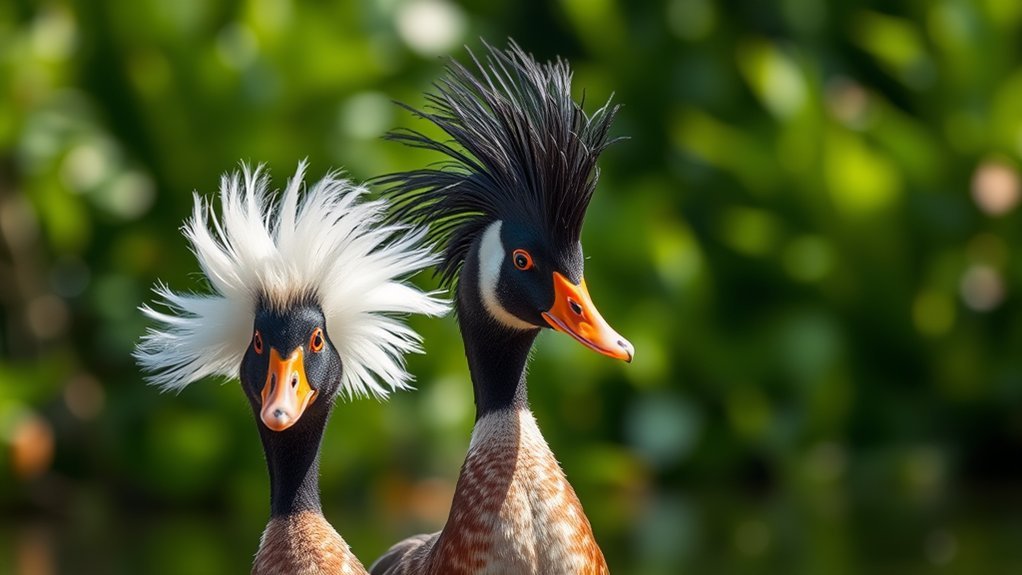
While observing waterfowl, crested ducks stand out not just for their distinct feathered adornments but also for their intriguing social behavior.
These unique crested duck species thrive in various habitats, enriching wetlands and ponds with their vibrant presence.
You might notice:
- Their eye-catching, fluffy head crests that resemble mohawks.
- Social interactions that include playful splashing and synchronized swimming.
- Adaptations to both freshwater lakes and coastal marshes.
- A varied diet, including aquatic plants and small invertebrates.
- Their role in local ecosystems, contributing to biodiversity.
Spotting these fascinating creatures helps deepen your appreciation for nature.
You belong to a community that values such wonders, where every observation can spark joy and curiosity.
The Unique Adaptations of the Black-crowned Night Heron
A surprising array of unique adaptations equips the Black-crowned Night Heron to thrive in its nocturnal hunting lifestyle.
Its exceptional sensory capabilities—particularly keen night vision—allow you to spot unsuspecting prey in low light. The heron's unique feathers provide both camouflage among marshland vegetation and insulation during cool nights. These adaptations are crucial for staying hidden while stalking fish and amphibians.
Additionally, the bird's specialized legs enhance its stealth, enabling it to wade silently through shallow waters. You'll also notice its short, stocky body enables quick movements, an advantage when hunting.
Together, these traits illustrate the Black-crowned Night Heron's remarkable ability to adapt and succeed in a nocturnal environment, making it a fascinating species to observe.
The Role of Crests in Avian Communication
Crests play a vital role in avian communication, serving as both visual signals and multifunctional tools for interaction among birds. These prominent features enhance their social dynamics and facilitate various communication rituals.
- Mating Displays: Vibrant crest signals attract potential mates.
- Territorial Defense: Elevated crests assert dominance during confrontations.
- Social Interactions: Crests indicate submission or aggression based on position.
- Alarm Calls: A sudden crest raise can signal danger to flock members.
- Bonding Behavior: Crest movements during preening strengthen social bonds among groups.
Understanding these signals deepens your appreciation of bird behavior, helping you connect with these fascinating creatures.
Through observing their crest dynamics, you gain insights into their intricate communication networks. Every flutter and rise is part of their vibrant social tapestry.
Frequently Asked Questions
What Purpose Do Bird Crests Serve Besides Attraction?
Bird crests serve important purposes beyond attracting mates. They help with social interactions between species and assist in regulating body temperature. These features play a vital role in improving survival and enabling connections with others in their environment.
Are There Endangered Species Among Crested Birds?
Many crested bird species are endangered due to habitat loss and environmental changes. Conservation efforts focus on protecting these critical habitats. These actions help ensure that crested birds can thrive in their natural environments for future generations. It is crucial to support these efforts to maintain the diversity of these unique bird species.
How Do Crested Birds Maintain Their Hairstyles?
Crested birds keep their unique hairstyles by grooming their feathers. They use their beaks to arrange and clean their feathers regularly. This care makes their crests look striking and keeps them healthy.
Do All Birds With Crests Have Similar Behaviors?
Crested birds often share some similar behaviors, but they also have unique traits influenced by their surroundings. Foraging habits, social interactions, and mating rituals can vary significantly. These differences show how each species adapts to its specific environment.
Can Crests Indicate a Bird's Health or Vitality?
Crests can indicate a bird's health and vitality. Bright crest colors and good feather condition often show that a bird is fit. In contrast, dull or damaged crests may point to stress, illness, or poor nutrition.
A bird with a vibrant crest is likely feeling good and thriving, while one with a lackluster appearance might need attention. Observing a bird's crest can be a simple way to assess its overall well-being.

Kashvi is a passionate bird enthusiast and nature lover who has been fascinated by the world of birds for years. With a keen eye for detail and a love for learning, Kashvi is dedicated to sharing her knowledge and insights with fellow bird enthusiasts on Avian Enthusiasts. Through her engaging and informative articles, Kashvi aims to inspire others to join her in exploring the fascinating world of birds and to promote a deeper appreciation for these incredible creatures.