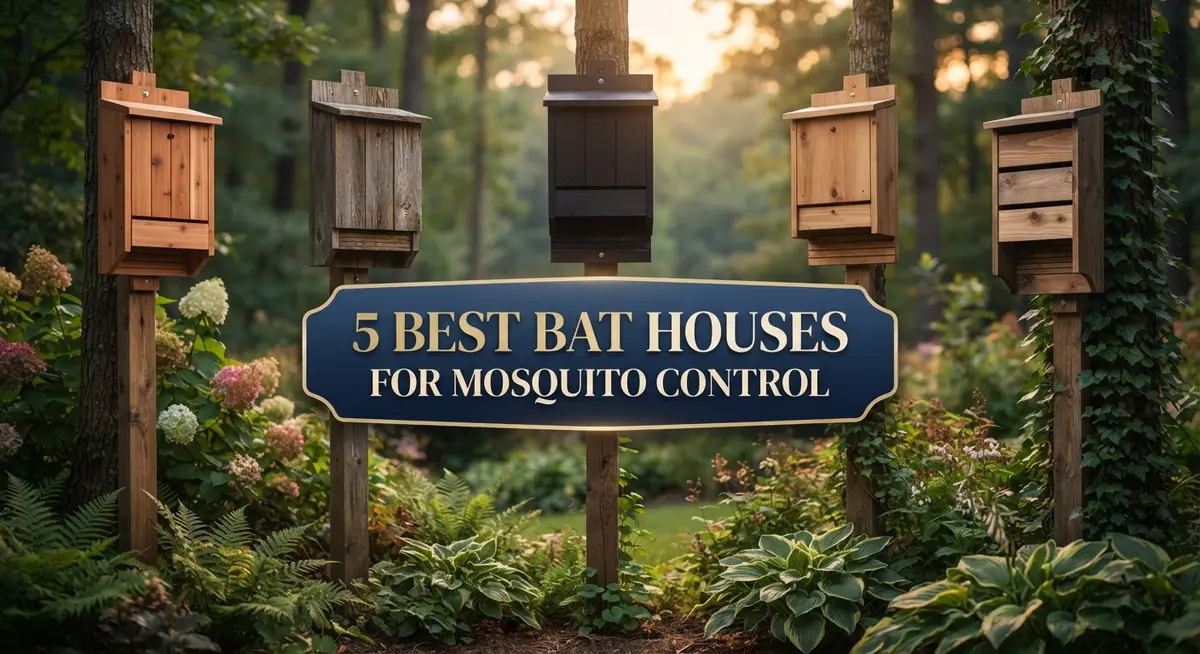
5 Best Bat Houses for Mosquito Control: Guide & Reviews
Bats get a bad reputation, but these little creatures are amazing helpers in your backyard. Many homeowners buy bat houses hoping to solve their mosquito problems overnight. That sounds like a dream come true, right?
Here’s the truth though. Bat houses alone won’t wipe out your mosquito population. The popular claim that one bat eats 1,000 mosquitoes an hour is often overstated marketing.
Real bat houses hold small colonies. That means they simply can’t eat enough bugs to control mosquitoes across your whole yard. Even the U.S. Fish and Wildlife Service backs this up.
So why bother with a bat house at all? Because bats still eat plenty of insects and need safe places to roost. Supporting local bat populations helps your ecosystem thrive naturally.
We tested and researched the market to find you the 5 best bat houses available today. Each one offers solid construction, smart design, and comfortable roosting space for bats.
Think of these houses as one piece of a bigger pest control puzzle. Pair them with proven mosquito solutions for the best results. Let’s explore your top options below.
How We Chose Our Top Picks
We evaluated each bat house based on real world performance and practical features. Our research focused on build quality, durability, and how well these houses actually function in backyards. We looked at materials that withstand weather, insulation that keeps bats comfortable, and chamber designs that attract colonies.
We also examined roosting space dimensions and entry hole sizes. A good bat house needs proper ventilation and drainage. We checked customer feedback to see which models actually attract bats and last through seasons.
Here’s what matters most: we prioritized houses that serve their actual purpose. Bat houses work best as part of a complete approach to outdoor pest management. These picks give you reliable options that support bat conservation while contributing to your broader insect control strategy.
1. BCI Bat House

- Your backyard's new favorite wildlife home: Our 2-chamber bat house is designed to be a cozy Bat Box for up to more than...
- Bats Keep Bugs Away: It’s not just about looks; bats play a huge role in maintaining your garden's ecosystem balance...
- Sturdy Cedar Design: Handcrafted from high-quality cedar, this durable 2-chamber outdoor bat house withstands any...
Last update on 2026-08-24 / Affiliate links / Images from Amazon Product Advertising API
BCI Bat House
The BCI Bat House comes from Bat Conservation International, an organization with deep expertise in bat biology and roosting needs. This house focuses on creating safe spaces for bats rather than overpromising mosquito elimination.
The design features multiple internal chambers that mimic natural cave conditions where bats naturally roost. The structure uses quality wood construction with proper ventilation to keep temperatures stable year-round.
BCI prioritizes correct roosting dimensions based on actual bat behavior research, which means bats are more likely to occupy and stay in the house. The entrance design allows easy access while keeping predators out, a critical feature for long-term bat residence.
In real-world settings, the BCI Bat House performs best when installed in the right location with adequate bat populations nearby. Remember that bat houses support conservation first—insect control comes second as a bonus benefit.
Pros
- Designed by bat conservation experts with scientific backing
- Multiple chambers increase roosting comfort and colony capacity
- Proper ventilation maintains healthy internal temperatures
- Entry design protects bats from predators
Cons
- Requires nearby bat populations to be effective
- Won’t deliver significant mosquito reduction on its own
- Installation location matters greatly for occupancy success
2. Bat Chalet Bat House

- Spacious Bat Shelter Deluxe cedar bat house accommodates up to 20 bats, providing a safe, natural roosting area that...
- Protective Pitched Roof Angled roof design shields the interior from rain and harsh weather, keeping roosting bats dry...
- Bat-Friendly Grip Features Grooved back panel and landing pad give bats a secure surface for clinging and climbing...
Last update on 2026-08-24 / Affiliate links / Images from Amazon Product Advertising API
The Bat Chalet Bat House offers a spacious multi-chamber design that accommodates larger bat colonies. This model works well for homeowners who want to support bat conservation while providing a functional roosting space.
The house features premium wood construction with proper ventilation and insulation to maintain stable internal temperatures. Its thoughtful layout includes multiple compartments that mimic natural cave environments where bats feel secure.
Real-world performance depends heavily on your local bat population and installation location. The Bat Chalet performs best when mounted in areas with existing bat activity, where colonies can naturally discover and occupy it.
This product suits anyone serious about creating a welcoming habitat for bats. It’s an investment in backyard biodiversity rather than a standalone mosquito solution.
Pros
- Multi-chamber design supports larger colonies
- Quality construction with proper ventilation
- Mimics natural roosting conditions effectively
- Durable materials withstand outdoor weather
Cons
- Requires correct installation location for bat occupancy
- Effectiveness depends on existing local bat populations
- Not a primary mosquito control method
3. WildlifeAll Bat House

- ENJOY EVENINGS OUTSIDE — Invite nature’s insect hunters to your yard with a bat house for outdoors that gives bats a...
- ROOM TO ROOST — The spacious 1-chamber design can accommodate up to 30 bats, giving small colonies room to settle...
- BUILT FOR WEATHER — Crafted from durable cedar wood with thickened 12–15 mm boards and rust-resistant hardware, this...
Last update on 2026-08-24 / Affiliate links / Images from Amazon Product Advertising API
WildlifeAll Bat House is a single-chamber design built for small to medium bat colonies. It works well for homeowners who want to support local bat populations without complex installation requirements.
The house features solid wood construction with weatherproof materials that resist rain and UV damage. Internal roosting surfaces are textured to help bats grip securely while they rest during the day.
Real-world performance depends on your local bat population and installation height. Once bats move in, they’ll consume insects around your property—though mosquito control remains limited compared to dedicated pest management methods.
This product suits anyone looking for a straightforward, no-fuss bat conservation option. It balances durability with practical functionality for typical backyard setups.
Pros
- Solid wood construction withstands harsh outdoor weather
- Simple single-chamber design is easy to install and maintain
- Textured interior surfaces provide secure roosting grip for bats
- Supports bat conservation while bats consume local insects
Cons
- Single chamber limits colony size compared to multi-chamber models
- Requires correct placement and adequate local bat population to attract residents
- Mosquito control effectiveness remains minimal—use alongside other pest methods
4. Beavercraft Bat House

- Great Bat Shelter - Makes Bats Feel At Home: The 16.5x10.2x4” large bat houses with the efficient two chamber design...
- True Ecosystem Idols: Bats are vital as pollinators & seed dispensers which makes them crucial for our ecosystems and...
- Eco-Friendly: Introducing a bat habitat provides many benefits - one of them, having a approach against mosquitoes...
Last update on 2026-08-29 / Affiliate links / Images from Amazon Product Advertising API
The Beavercraft Bat House is a compact, single-chamber design built for small bat colonies seeking shelter. It works well for homeowners who want to support bat conservation without taking up excessive yard space.
This house features solid wood construction with weatherproof treatment that resists rain and UV damage. The interior includes textured surfaces that give bats secure grip points while roosting.
Real-world occupancy depends on your local bat population and how high you install the house. Installation location matters more than the house itself when it comes to attracting bats.
The Beavercraft suits anyone looking for a straightforward bat habitat option that’s easy to maintain year-round. It supports local bat populations while bats naturally consume flying insects in your area.
Pros
- Solid wood construction withstands harsh outdoor weather
- Simple single-chamber design is easy to install and maintain
- Textured interior surfaces provide secure roosting grip for bats
- Supports bat conservation efforts in your local area
Cons
- Real-world bat occupancy depends heavily on your local bat population
- Single-chamber design limits colony size compared to multi-chamber alternatives
- Won’t meaningfully reduce mosquito populations on its own
5. Bat Conservation Bunkhouse
- Great Bat Shelter - Makes Bats Feel At Home: The 16.5x10.2x4” large bat houses with the efficient two chamber design...
- True Ecosystem Idols: Bats are vital as pollinators & seed dispensers which makes them crucial for our ecosystems and...
- Eco-Friendly: Introducing a bat habitat provides many benefits - one of them, having a approach against mosquitoes...
Last update on 2026-08-29 / Affiliate links / Images from Amazon Product Advertising API
The Bat Conservation Bunkhouse is a multi-chamber bat house designed for people serious about supporting larger bat colonies. This model stands out because it mimics natural roosting conditions more closely than single-chamber alternatives.
The house features premium wood construction with excellent ventilation and insulation to keep internal temperatures stable year-round. Its durable materials withstand rain, UV damage, and harsh outdoor weather without deteriorating.
The multi-chamber design allows bigger colonies to roost together comfortably, creating a more natural living space. Each chamber provides separate roosting areas, so bats can spread out and regulate their body heat effectively.
Real-world occupancy depends heavily on your local bat population and proper installation location. This product suits anyone committed to bat conservation who has the right environment to attract and support larger groups.
Pros
- Multi-chamber design supports larger bat colonies
- Premium wood construction with excellent durability
- Superior ventilation and insulation maintain stable temperatures
- Mimics natural roosting conditions for bat comfort
Cons
- Requires correct installation height and location for bat occupancy
- Limited mosquito control effectiveness despite housing more bats
What to Look For Before You Buy
Before you buy a bat house, understand what you’re actually getting. Bat houses have limited mosquito control effectiveness. Research from the U.S. Fish & Wildlife Service shows that bat houses typically contain too few bats to meaningfully reduce local mosquito populations. The commonly cited claim that bats consume 1,000 mosquitoes per hour is often overstated marketing.
This doesn’t mean bat houses are useless. They support bat conservation and bats do eat insects. Just don’t rely on them as your primary mosquito solution. Better alternatives exist, like dunk buckets and other proven methods.
When selecting a bat house, focus on practical features. Look for quality materials that resist weather damage. Wood construction should be solid and weatherproofed against rain and UV exposure. Check the insulation and ventilation design to keep internal temperatures stable.
Consider the size and number of chambers. Single chamber designs work for small colonies. Multi chamber options support larger groups and create more natural living spaces. Make sure the roosting surfaces have texture so bats can grip securely.
Installation height matters too. Real world occupancy depends heavily on your local bat population and where you place the house. Position it correctly to maximize potential occupancy.
Think about your actual goal. Are you serious about bat conservation? Then a quality bat house makes sense. Are you hoping to eliminate mosquitoes? Combine a bat house with other proven pest control methods instead. Know the difference between supporting wildlife and solving pest problems. This clarity helps you choose the right product for your needs.
How to Choose the Right One
Choosing the right bat house starts with honest expectations. Bat houses support bat conservation, but they won’t eliminate your mosquito problem. Research from the U.S. Fish and Wildlife Service shows that bat populations in most residential areas stay too small to meaningfully reduce local mosquitoes. That said, bats do eat insects, so adding a house helps the ecosystem.
Focus on these practical features when comparing options:
Material quality matters most. Look for solid wood construction that resists rain and UV damage. Untreated or low-quality wood deteriorates quickly in outdoor conditions.
Chamber design affects occupancy. Single-chamber houses work for small bat colonies. Multi-chamber designs accommodate larger groups and create more natural living spaces. Choose based on your local bat population size, not mosquito control hopes.
Interior texture is essential. Bats need rough, textured surfaces to grip with their claws. Smooth interiors won’t attract occupants.
Ventilation and insulation keep bats comfortable. Proper airflow prevents moisture buildup. Good insulation maintains stable temperatures inside, which bats prefer.
Installation height and location determine success. Place houses 12 to 20 feet high, away from shade and predators. Orientation matters too. Your local bat species dictate the best placement.
Understand your real goal. If mosquito control is your main concern, dunk buckets and other proven methods work better. Use bat houses to support wildlife while accepting their limited pest control benefit. This honest approach helps you pick the right house for your actual needs, not marketing promises.
Final Verdict
Picking the right bat house comes down to one honest truth. These houses help bats, not your mosquito problem.
Bat houses give bats a safe place to live. They do not offer real mosquito control. The idea that one bat eats 1,000 mosquitoes an hour sounds exciting. But this number gets used too often in marketing. The U.S. Fish & Wildlife Service does not support this claim as a reliable pest control fact.
Real bat populations in a single house stay small. Even a well built house cannot house enough bats to clear out mosquitoes from your yard. So if pest control is your main goal, a bat house alone will not solve it.
That said, bat houses still serve an important purpose. They support local bat colonies and help protect a species facing habitat loss. Bats also eat many types of insects, including some mosquitoes. This makes bat houses a nice addition to a yard, even without big pest control results.
If mosquitoes are your top concern, pair a bat house with proven tools. Mosquito dunk buckets and other targeted treatments work much faster and more reliably.
Think of a bat house as a conservation project first. Choose one with solid construction and a design that fits your space. Install it properly and give it time. Bats may take a season or two to move in.
In the end, a bat house rewards patience and supports nature. It should never replace a real mosquito control plan.
Frequently Asked Questions
Do bat houses actually control mosquitoes?
Bat houses have limited mosquito control power. While bats do eat insects, a single bat house typically holds too few bats to make a real difference in your local mosquito population. The common claim that bats consume 1,000 mosquitoes per hour is overstated marketing.
Think of a bat house as a conservation tool first, not a pest control solution. If mosquitoes are your main problem, combine a bat house with proven methods like mosquito dunk buckets or targeted sprays.
How many bats will actually live in my bat house?
Real occupancy depends on your local bat population and where you install the house. Most bat houses attract small colonies, not massive swarms.
Placement matters enormously. Install your house 12 to 20 feet high, in direct sunlight, away from trees and predators. Even with perfect placement, you may see slow adoption.
What features should I look for in a bat house?
Focus on these practical elements. Solid wood construction resists rain and UV damage better than alternatives. Interior texture matters too because bats grip rough surfaces with their claws.
Chamber design affects occupancy rates. Single chamber houses work for small colonies. Multi chamber designs support larger groups comfortably.
Ventilation and insulation keep temperatures stable inside. Proper airflow prevents moisture buildup that harms roosting bats.
Why should I buy a bat house if mosquito control is limited?
Bat houses support local bat populations and ecosystem health. Bats face habitat loss worldwide. A bat house gives them a safe roosting spot.
You also get the satisfaction of supporting nature. Even if mosquito reduction is minimal, you’re helping wildlife survive in urban and suburban areas.

Kashvi is a passionate bird enthusiast and nature lover who has been fascinated by the world of birds for years. With a keen eye for detail and a love for learning, Kashvi is dedicated to sharing her knowledge and insights with fellow bird enthusiasts on Avian Enthusiasts. Through her engaging and informative articles, Kashvi aims to inspire others to join her in exploring the fascinating world of birds and to promote a deeper appreciation for these incredible creatures.