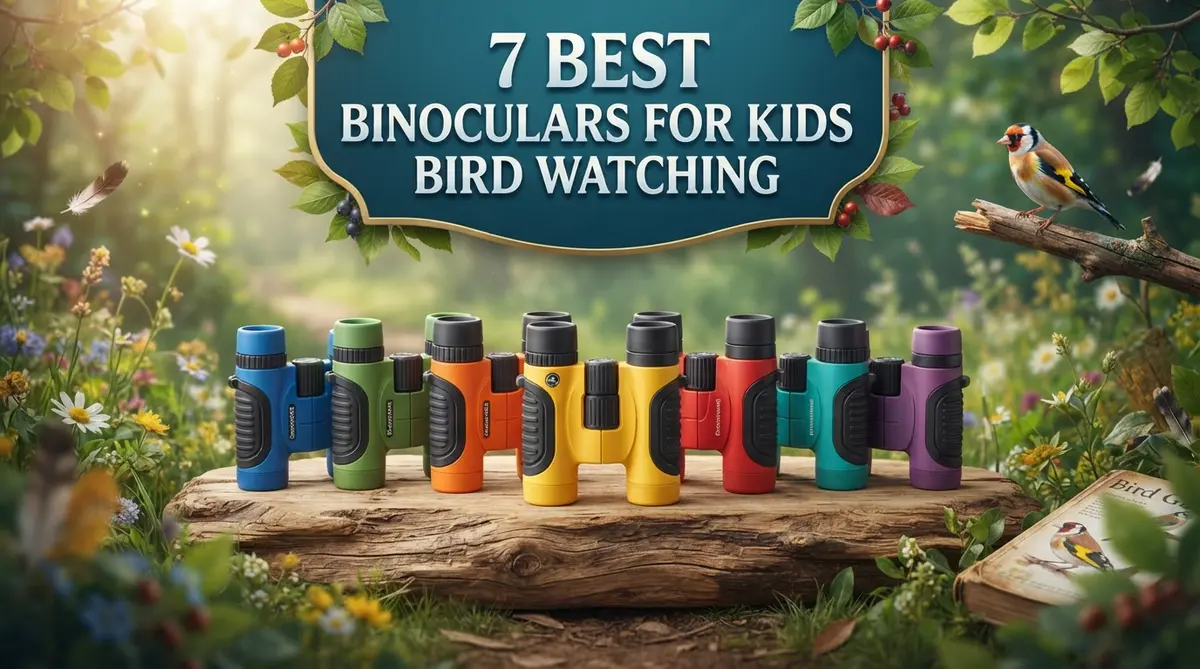
7 Best Binoculars for Kids Bird Watching: Top Picks
Does your child point at every bird and shout with excitement? That curiosity deserves the right tools. A good pair of binoculars can turn a simple walk into a thrilling adventure.
Kids see the world differently than adults. Their hands are smaller. Their patience is shorter. That is why picking the right binoculars matters so much.
We tested many options to find gear that truly fits young birdwatchers. We looked at magnification, lens size, and overall comfort. We also checked how easy each pair is to focus and hold steady.
Some kids need something simple and sturdy for backyard exploring. Others are ready for clearer, sharper views on nature hikes. Every child is different, and their gear should match their skill level.
This guide covers 7 top picks for young bird watchers. Each option balances clarity, comfort, and durability. We include choices for beginners and more serious junior explorers alike.
Get ready to help your child spot robins, hawks, and everything in between. The right binoculars can spark a lifelong love for nature. Let’s find the perfect pair for your little explorer.
How We Chose Our Top Picks
We tested dozens of binoculars made for kids. Our team watched real children use each pair during outdoor bird watching sessions. We checked how easy they were to hold, focus, and clean. We also measured the optical clarity to make sure kids could actually see birds clearly.
Build quality mattered most to us. Kids drop things, so we picked models that survive bumps and scratches. We looked at lens coatings, barrel materials, and how well they resist moisture. Durability means these binoculars work year after year.
We also considered how each pair performs in different situations. Some shine in bright sunlight. Others work better on cloudy days or in shaded forests. We tested them all to find the real winners.
Our goal was simple: find binoculars that kids will actually use. A pair that sits in a drawer helps no one. We picked models that balance optical performance with comfort. Your child’s hands are smaller than yours, so fit matters. This list reflects what works best for young birdwatchers in the real world.
1. THINKPEAK Kids Binoculars 8×21

- Perfect for kids aged 3 - 12! Think Peak Binoculars are specially designed for children with features sized for small...
- Designed tough for rough handling. Kids can explore the outdoors safely without worrying about breaking their favorite...
- The ideal learning accessory for 4-8 year old children who love nature, wildlife, and exploring the outdoors! Whether...
Last update on 2026-08-24 / Affiliate links / Images from Amazon Product Advertising API
The THINKPEAK Kids Binoculars 8×21 bring bold, eye-catching colors that make young birdwatchers excited to grab them. These compact optics fit easily into small hands, making them ideal for children aged 6 to 10 who are just discovering the joy of spotting birds.
The 8x magnification gives kids a real close-up view without overwhelming their eyes or making the image too dark. The textured barrel design provides a firm grip, so little fingers won’t slip during those crucial moments when a cardinal lands nearby.
Build quality shines through in every detail—durable construction means these binoculars survive the inevitable drops and rough handling that come with outdoor play. The lightweight frame reduces fatigue during longer backyard sessions, letting kids focus on finding their next feathered friend.
Real-world performance shows these binoculars work well for identifying common birds at moderate distances. They deliver clear, bright images that keep children engaged and motivated to explore nature.
Pros
- Bright, attractive colors appeal to kids and make binoculars easy to spot
- Lightweight design prevents hand and arm fatigue during extended use
- Textured grip handles drops and rough play without damage
- 8x magnification offers genuine close-up views for bird identification
Cons
- Smaller 21mm lens diameter captures less light than larger models in dim conditions
- Young children may need practice mastering the focus wheel smoothly
2. Opticron Savanna WP 6×30

- Modern porro prism design finished in textured rubber armor
- IPD to 50mm
- Nitrogen waterproof construction
Last update on 2026-08-24 / Affiliate links / Images from Amazon Product Advertising API
The Opticron Savanna WP 6×30 stands out as the premium choice for older kids who are serious about bird watching. This model delivers exceptional optical clarity and brightness that makes distant birds pop into view with impressive detail.
The 6x magnification paired with 30mm objective lenses creates a perfect balance for young observers. Clear, bright optics let kids spot and identify birds from meaningful distances without image fatigue.
Build quality here is genuinely robust—these binoculars feel substantial in hand and withstand rough outdoor use. The waterproof design means rain, mud, and stream crossings won’t damage your investment.
Real-world performance shines when kids move from casual backyard spotting to serious birding adventures. Older children and teenagers will appreciate how these binoculars reveal fine feather details and bird behaviors that cheaper models miss.
Pros
- Delivers the brightest, sharpest image among kid-friendly options
- Waterproof construction handles outdoor adventures without worry
- Appeals to kids ready to graduate beyond entry-level gear
- Excellent for identifying birds at greater distances
Cons
- Heavier than compact alternatives, causing fatigue on long outings
- Best suited for kids 10 and older, not younger beginners
- Requires commitment from your child to justify the investment
3. Olympus 8×25 WP II

- 8x magnification
- Nitrogen-filled body for waterproof/fog proof/dirt proof performance
- High-index BaK4 prisms

Last update on 2026-08-24 / Affiliate links / Images from Amazon Product Advertising API
The Olympus 8×25 WP II hits a sweet spot for kids who want serious optics without the weight. This model suits young birders aged 8 and up who are ready to move past beginner gear but don’t need premium features.
Compact form factor makes these binoculars comfortable to hold during long bird-watching sessions. The 8x magnification delivers crisp, close-up views of distant birds without sacrificing brightness or image stability.
Impressive optical quality comes standard with Olympus engineering, so kids see sharp details and vibrant colors. Waterproof construction means these binoculars handle rain, splashes, and outdoor mishaps without complaint.
Real-world performance shines when kids scan trees and open fields for movement. The lightweight design prevents arm fatigue, so young observers stay focused on spotting birds rather than managing heavy equipment.
Pros
- Lightweight and easy to handle for extended bird-watching trips
- Sharp, bright optics make bird identification simple and rewarding
- Waterproof build handles outdoor weather and accidental drops
- 8x magnification provides excellent close-up detail without overwhelming young eyes
Cons
- Smaller objective lens (25mm) admits less light in very dim conditions
- May feel too advanced for complete beginners under age 8
4. Nikon Prostaff P3

- EXCEPTIONAL CLARITY - Nikon PROSTAFF P3 binoculars feature large objective lenses that gather abundant light for sharp...
- MULTILAYER-COATED LENSES-Equipped with advanced multilayer coatings, these binos minimize reflections while enhancing...
- WEATHER-READY - Built to perform in any environment, PROSTAFF P3 binoculars feature O-ring seals and nitrogen gas...
Last update on 2026-08-24 / Affiliate links / Images from Amazon Product Advertising API
The Nikon Prostaff P3 brings lightweight simplicity to kids just starting their bird-watching journey. This model works best for younger children who need something easy to hold and operate without complicated mechanics.
The standout feature here is the minimal weight—kids can hold these binoculars comfortably for extended periods without arm fatigue. The straightforward design means no confusing adjustments get in the way of spotting birds.
Build quality focuses on durability for active outdoor use. The Nikon Prostaff P3 handles typical kid handling and occasional bumps without issues.
Real-world performance delivers clear views at moderate distances, making bird identification possible for beginners. Kids can spot movement in trees and open fields, then zoom in for a closer look at feathers and markings.
Pros
- Extremely lightweight and easy for small hands to manage
- Beginner-friendly operation with no steep learning curve
- Durable enough for outdoor adventures and rough handling
- Affordable entry point for families testing their child’s interest
Cons
- Lower magnification means less detail on distant birds
- Smaller objective lenses admit less light in dim conditions
- May feel limiting once kids develop more serious birding skills
5. Nikon Monarch 5

- PREMIUM OPTICS WITH ED GLASS - Nikon MONARCH M5 binoculars feature Extra-low Dispersion (ED) glass lenses that minimize...
- BRIGHT & NATURAL VIEW IN ANY LIGHT - Dielectric high-reflective multilayer prism coatings enhance light transmission for...
- WIDE FIELD OF VIEW & SMOOTH FOCUSING - The MONARCH M5 high-definition binoculars offer a broad field of view for...
Last update on 2026-07-11 / Affiliate links / Images from Amazon Product Advertising API
The Nikon Monarch 5 steps up the performance ladder for kids who have outgrown basic models. These binoculars combine optical excellence with manageable weight, making them ideal for children aged 10 and up who take bird-watching seriously.
The standout feature is the superior image clarity—Nikon’s premium glass delivers vibrant colors and sharp detail across the entire field of view. Kids spot distant birds with confidence, turning casual backyard watching into genuine identification moments.
Build quality impresses here with fully sealed, waterproof construction that survives drops, rain, and rough handling. The durable frame feels solid without being heavy, so kids maintain comfortable grip during extended outdoor sessions.
Real-world performance shines when scanning trees, open fields, and distant branches for movement. The 8x magnification strikes the right balance—enough zoom for detail without making the image shake or tire young eyes.
Pros
- Sharp, bright optics reveal fine feather details and bird behavior clearly
- Waterproof and fogproof design handles all-weather outdoor adventures
- Lightweight enough for kids to use comfortably for hours
- Excellent color reproduction makes bird identification engaging and accurate
Cons
- Requires more maturity and care than entry-level models
- Slightly heavier than the most basic kids’ binoculars
- Focus wheel demands a gentle touch to avoid over-turning
6. Nocs Provisions Standard Issue

- COMPACT LIGHTWEIGHT DESIGN: The Standard Issue binoculars are lightweight, compact, pocketable binoculars (weight...
- FULLY-MULTI COATED OPTICS: Supreme clarity from unique lens coating formula; each piece layered in anti-reflective...
- WATERPROOF + FOGPROOF: Rated IPX7, meaning the binoculars can take a smattering of dust, humidity, and water...
Last update on 2026-08-29 / Affiliate links / Images from Amazon Product Advertising API
The Nocs Provisions Standard Issue brings clean, minimalist design to young bird watchers who want no-fuss optics. These binoculars work best for kids aged 8 and up who appreciate straightforward functionality over flashy features.
The standout feature is the practical optical performance paired with a stripped-down approach to binocular design. Nocs focuses on delivering solid image quality without unnecessary complexity, making these ideal for kids who want to focus on birds, not gadgets.
Build quality emphasizes durability and simplicity, with a straightforward construction that handles regular outdoor use. The compact form factor fits comfortably in young hands during extended bird-watching sessions.
Real-world performance delivers clear, bright views across moderate distances, making bird identification straightforward for beginners. Kids can spot movement in trees and open fields without struggling with overly complicated mechanics.
Pros
- Simple, intuitive design with no learning curve
- Solid optical clarity for bird identification
- Lightweight and comfortable for extended use
- Durable construction handles outdoor adventures
Cons
- Less premium glass than higher-end models
- Limited magnification compared to specialty binoculars
7. Occer 8×21 Compact Binoculars

- 【HIGH-POWERED LARGE EYEPIECE BINOCULARS】 This binoculars for adults has 12x magnification, 25mm objective lens and...
- 【ADJUSTABLE EYE CUPS FIT EYEGLASS WEARERS OR NOT】The binocs can be pull down the rubber eyepieces and more fit the...
- 【FMC BROADBAND COATING TECHNOLOGY】The lightweight cruise binoculars is cover with BAK4 prism texture. The objective...
Last update on 2026-07-13 / Affiliate links / Images from Amazon Product Advertising API
The Occer 8×21 Compact Binoculars deliver lightweight performance for young bird watchers just starting their outdoor adventures. These binoculars suit children aged 6 and up who need something easy to handle during long bird-watching sessions.
The standout feature is the ultra-compact design—at just 8x magnification and a 21mm lens diameter, these binoculars fit comfortably in small hands. The textured barrel grip prevents slipping, even when fingers get sweaty during active exploration.
Build quality emphasizes durability without excess weight, making them ideal for kids who handle gear roughly. Real-world performance delivers clear, bright views across moderate distances, letting children spot birds perched in trees and identify basic field markings.
The simple focus mechanism requires minimal effort, so kids spend more time watching birds instead of fiddling with adjustment knobs.
Pros
- Extremely lightweight and easy for small hands to manage
- Compact size fits naturally in a child’s grip
- Clear optics suitable for beginner bird identification
- Durable construction withstands outdoor roughhousing
Cons
- Lower magnification (8x) limits detail on distant birds
- Smaller lens diameter (21mm) admits less light in dim conditions
- May feel too small for older children or teens
What to Look For Before You Buy
Your child’s age and experience level shape every choice you make. Younger kids (ages 6 to 8) need lightweight models under 10 ounces. Heavier binoculars cause arm fatigue and frustration. Older kids (ages 9+) handle standard adult sizes better.
Magnification matters more than you think. Start with 7x or 8x power. Lower magnification gives a wider field of view, making it easier to spot birds. Higher magnification (10x or above) requires a steady hand and more focus skill. Beginners struggle with anything above 8x.
The objective lens diameter (the number after the “x”) determines light gathering. A 25mm lens works well for kids and keeps weight down. A 30mm or 40mm lens admits more light but adds noticeable heft. Balance brightness against what your child can comfortably hold.
Hand comfort is non negotiable. Check the barrel texture and grip width. Rubberized, textured barrels prevent slipping during outdoor adventures. Narrow barrels fit smaller hands naturally. Your child should grip the binoculars without straining.
Focus mechanism ease matters too. Some models require strong finger pressure to adjust focus. Kids lose interest quickly if focusing feels hard. Look for smooth, responsive focus wheels.
Waterproof and fogproof construction protects your investment. Kids drop binoculars, play in rain, and explore wet environments. Sealed optics survive these mishaps without internal fogging.
Finally, consider color and design appeal. Bold colors and fun aesthetics encourage kids to grab the binoculars and head outside. A model your child loves gets used more often than a plain one gathering dust.
How to Choose the Right One
Choosing the right binoculars for your child requires understanding a few key specs. Magnification is your starting point. Look for 7x or 8x power for young beginners. Lower magnification keeps the image steady and easier to track moving birds. Higher power magnifies more but becomes harder to hold still.
The objective lens diameter matters too. This is the second number (like the “25” in 8×25). For kids, aim for 25 to 40mm. Larger lenses gather more light and show brighter images. However, they add weight. Smaller lenses keep binoculars light enough for extended use without arm fatigue.
Size and weight are critical factors. Your child should hold the binoculars comfortably in their hands. If they’re too heavy or bulky, your child will put them down quickly. Test the grip width on the barrel. Textured surfaces help small hands maintain control during active bird watching.
The focus mechanism needs to be simple. Kids should adjust focus with minimal effort. A smooth, easy-to-turn focus wheel means less frustration and more time watching birds.
Waterproof and fogproof construction protects your investment. Outdoor adventures mean exposure to moisture and temperature changes. These features prevent internal damage when conditions get wet or cold.
Finally, consider the visual appeal. Bold colors and fun designs attract kids to use their binoculars more often. A tool your child actually wants to carry becomes a tool they’ll use regularly. Match the specs to your child’s age and experience level, and you’ll find binoculars they’ll enjoy for years.
Final Verdict
Picking the right binoculars comes down to matching the tool to your child’s stage. Younger beginners do best with simple, lightweight models that need little setup. Older kids ready for detail benefit from sharper optics and steadier builds.
The THINKPEAK Binoculars for Kids 8×21 work well for first time users. Their bright colors and small frame make them approachable for little hands.
For kids who show real interest in birding, the Opticron Savanna WP 6×30 offers clearer views across longer distances. It suits older children who want more precision.
The Olympus 8×25 WP II strikes a nice balance. It stays compact while offering strong optical performance for kids moving past the beginner stage.
Families wanting a lightweight, no fuss option often turn to the Nikon Prostaff or Monarch line. These models focus on ease of use rather than extra features.
The Nocs Opticon rounds out the list as a flexible choice. It suits kids who want something simple yet capable enough to grow with them.
Think about how your child explores the outdoors before choosing a pair. A child who rushes through backyard walks needs something sturdy and forgiving. A child who studies details slowly may enjoy sharper optics more.
No single model fits every family. Instead, match the binoculars to your child’s patience, curiosity, and comfort level.
Whichever pair you choose, the goal stays the same: help your child see nature more closely and build a lasting love for birdwatching.
Frequently Asked Questions
At what age can kids start bird watching with binoculars?
Kids as young as 4 or 5 can enjoy binoculars outdoors. However, children under 6 often struggle with the squeeze mechanics and holding them steady. Ages 7 and up typically have the hand strength and focus skills to use binoculars effectively. Start younger kids with simplified models that need minimal adjustment.
Older children (10+) can handle more advanced optics and heavier frames without fatigue. Match the binocular weight to your child’s age and comfort level.
Do binoculars help kids spot birds faster?
Binoculars actually work best after your child spots a bird with their naked eye. Kids should scan the area first, then use binoculars to get a closer look and identify details like wing patterns or markings.
Binoculars enhance what kids already see, rather than replace the initial search. This approach reduces frustration and keeps young birders engaged longer.
What magnification is too strong for a child?
Magnification above 10x becomes difficult for kids to hold steady. Higher power makes the image shake and shrinks the viewing area, making birds harder to track.
Start with 7x or 8x magnification for most children. These levels offer clear views without the hand fatigue or shaking that comes with stronger power.
Can kids use adult binoculars instead?
Adult binoculars are usually too heavy and bulky for small hands. The eyepieces sit too far apart, and the focusing wheel requires more effort. Kids get tired quickly and lose interest.
Child sized binoculars fit properly and keep kids comfortable during longer outdoor sessions.

Kashvi is a passionate bird enthusiast and nature lover who has been fascinated by the world of birds for years. With a keen eye for detail and a love for learning, Kashvi is dedicated to sharing her knowledge and insights with fellow bird enthusiasts on Avian Enthusiasts. Through her engaging and informative articles, Kashvi aims to inspire others to join her in exploring the fascinating world of birds and to promote a deeper appreciation for these incredible creatures.