
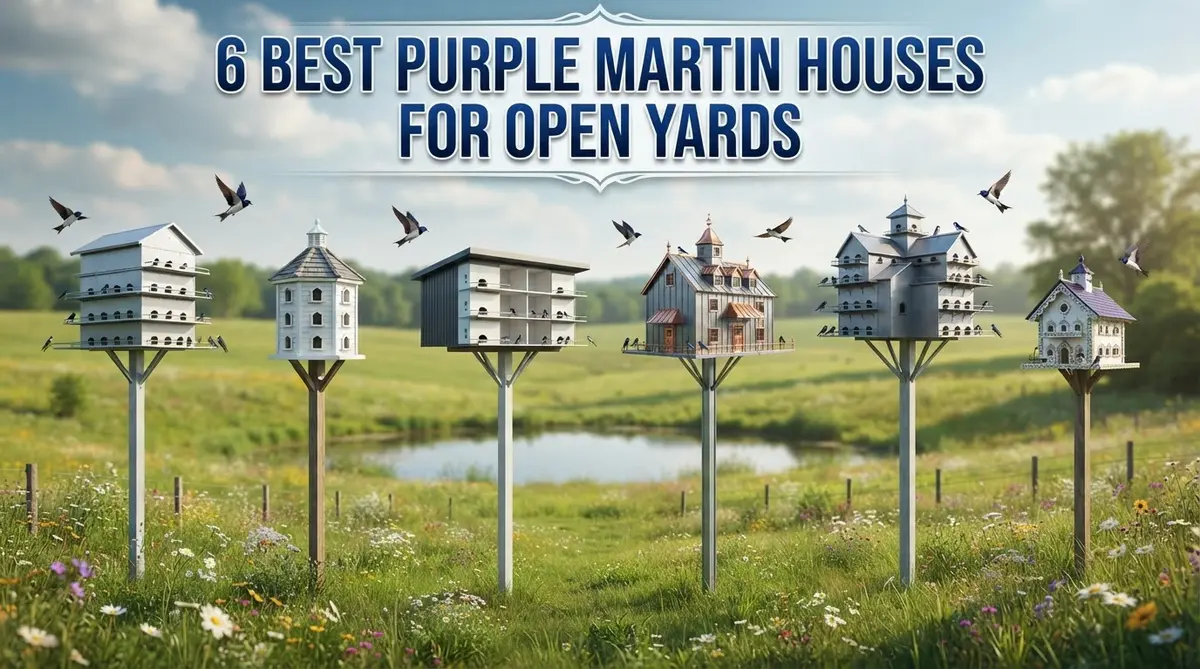
6 Best Purple Martin Houses for Open Yards
Purple martins bring joy to any backyard. These friendly birds fill the sky with graceful loops. They also eat tons of flying insects each day.
But martins are picky about their homes. They need open space to feel safe. Trees and buildings too close can scare them away.
That’s why picking the right house matters so much. A good house gives martins room to nest in colonies. It also keeps sneaky starlings from taking over.
Open yards are perfect for these birds. Martins love wide views and clear flight paths. They also enjoy homes near ponds or lakes.
The best houses balance strength and smart design. Look for starling-resistant entry holes. These holes use the martins’ short legs to keep intruders out.
A raise and lower system makes cleaning simple. You can check nests without hassle. This keeps your birds healthy each season.
Materials matter too. Cedar, cypress, and aluminum stand up to wind and rain. They protect martins through every storm.
We tested and researched top options for you. This guide covers six amazing purple martin houses. Each one fits beautifully into an open yard setting.
Ready to welcome these charming birds home? Let’s explore the best picks together.
How We Chose Our Top Picks
We know choosing a purple martin house feels overwhelming. That’s why we did the hard work for you. Our team researched real houses people actually use in open yards. We looked at what makes martins happy and what keeps them safe.
Starling resistance matters most. These unwanted birds steal nesting spots, so we prioritized houses with smart entry holes. We checked build quality too. Cedar, cypress, and heavy aluminum hold up against rain, wind, and sun. Flimsy materials fail fast.
We also evaluated raise and lower systems. You’ll need to access the house for cleaning and monitoring. Good mechanisms make this job easy. Poor ones frustrate homeowners every season.
Finally, we considered real world performance. Which houses survive storms? Which ones attract healthy martin colonies? Which designs work best in open yards far from trees? We gathered feedback from experienced martin enthusiasts and checked construction standards.
This list gives you houses that actually work. Each pick solves common problems. You can feel confident picking one for your yard.
1. Lonestar Aluminum Martin House

- Spacious 12-Room Purple Martin House: Give your martins a perfect place to nest with this three-story, 12-room aluminum...
- Starling Resistant Entrance Holes (SREH): Keep pesky European starlings out with crescent-shaped Starling Resistant...
- Durable All-Aluminum Construction: Made from high-quality aluminum and stainless steel, this lightweight yet sturdy...
Last update on 2026-09-13 / Affiliate links / Images from Amazon Product Advertising API
The Lonestar Aluminum Martin House stands out as a lightweight yet sturdy option for open yards. This model uses durable aluminum construction that resists rust and weather damage year after year.
The house features multiple compartments designed for colony nesting, allowing several martin pairs to live together comfortably. Its aluminum frame makes it easy to handle during installation and maintenance.
What really sets the Lonestar apart is its practical raise and lower system. You can lower the entire house for cleaning, inspections, and predator checks without climbing or struggling with heavy equipment.
Real-world users appreciate how well this house performs in open spaces. The aluminum holds up through storms, wind, and intense sun exposure better than many wooden alternatives.
Pros
- Lightweight aluminum resists rust and weather damage
- Easy raise and lower mechanism for quick maintenance
- Multiple compartments support colony-nesting behavior
- Performs well in open yards with minimal tree interference
Cons
- Aluminum conducts heat, requiring proper ventilation in extreme climates
- May need additional predator guards depending on your yard setup
2. Trio Aluminum Martin House

- All-In-One Package: Includes a 12-room plastic martin house, telescoping pole, decoys, and an informative guidebook...
- Spacious and Durable Design: The plastic birdhouse features 12 spacious compartments, providing a reliable and...
- Telescoping Pole Included: Triangular telescoping pole fits securely through the house, allowing for easy installation...
Last update on 2026-08-24 / Affiliate links / Images from Amazon Product Advertising API
The Trio Aluminum Martin House delivers reliable performance for open yards where space is plenty. This model suits homeowners who want a lightweight yet dependable home for multiple martin pairs.
What makes the Trio stand out is its aluminum construction and smart compartment design. The material resists rust and weather damage year-round, so your investment stays protected.
The raise and lower system makes seasonal maintenance quick and painless. Real-world users report smooth operation when cleaning or inspecting nesting areas.
This house performs consistently in open spaces with minimal tree interference. Colony-nesting compartments let several martin families live together comfortably.
Pros
- Lightweight aluminum resists rust and weather damage
- Multiple compartments support colony-nesting behavior
- Practical raise and lower mechanism for easy maintenance
- Performs well in open yards with minimal tree interference
Cons
- Requires significant open yard space away from trees
- Wind and storms can pose challenges to exposed installations
3. S&K T-14 Martin House
- All-In-One Package: Includes a 12-room plastic martin house, telescoping pole, decoys, and an informative guidebook...
- Spacious and Durable Design: The plastic birdhouse features 12 spacious compartments, providing a reliable and...
- Telescoping Pole Included: Triangular telescoping pole fits securely through the house, allowing for easy installation...
Last update on 2026-08-24 / Affiliate links / Images from Amazon Product Advertising API
The S&K T-14 Martin House brings solid wooden construction to open yards where durability matters most. This heavy-duty option suits homeowners who want a house built to last through seasons of weather and use.
What sets the T-14 apart is its robust wooden frame that resists warping and decay far better than lighter materials. The substantial build quality means you get a house that handles wind, rain, and sun exposure without breaking down.
The house features multiple compartments arranged for true colony living, letting several martin pairs nest comfortably side by side. Real users report that the solid construction keeps compartments stable and secure, even in challenging open-yard conditions.
The raise and lower system makes seasonal maintenance straightforward, so you can clean and inspect without climbing ladders repeatedly. Wooden construction combined with smart engineering delivers reliable performance year after year.
Pros
- Heavy wooden construction resists weather damage and lasts for decades
- Multiple compartments support healthy colony-nesting behavior
- Raise and lower mechanism simplifies maintenance tasks
- Performs reliably in open yards with minimal tree interference
Cons
- Heavier weight requires sturdy mounting and installation care
- Wooden material needs occasional inspection for wear or pest damage
- Requires significant open yard space away from trees and structures
4. Heath Modern Aluminum Birdhouse

- 1-1/2" ENTRANCE HOLE SIZE: SISTERBIRD bluebird houses for outside have a properly-sized entrance hole, through this blue...
- HIGH-QUALITY MATERIALS: SISTERBIRD birdhouse kits for kids and adults use untreated, unpainted cedar. bluebird nesting...
- SAFE HOME FOR FLEDGLINGS: SISTERBIRD Bluebird BirdHouse Box with copper predator guard around the entrance hole can help...
Last update on 2026-09-13 / Affiliate links / Images from Amazon Product Advertising API
The Heath Modern Aluminum Birdhouse serves open yards that need a sleek, contemporary design paired with reliable martin housing. This house appeals to homeowners who want function without the traditional wooden aesthetic.
Aluminum construction gives this house exceptional weather resistance and a modern appearance that complements any yard style. The material resists rust, fading, and warping over many seasons of outdoor use.
The house includes multiple compartments arranged for colony nesting, letting several martin pairs establish territories and raise families together. This design mirrors the natural behavior martins show in the wild.
Real users report consistent performance in open spaces where tree interference stays minimal. The aluminum frame handles wind and rain while maintaining its structural integrity year after year.
Pros
- Modern aluminum design resists rust and weather damage
- Multiple compartments support healthy colony-nesting behavior
- Lightweight yet durable construction for easy handling
- Contemporary look fits modern outdoor spaces
Cons
- Aluminum may heat up more than wooden alternatives in direct sun
- Requires significant open yard space away from trees
- No raise and lower mechanism mentioned (verify before purchase)
5. Coates 24 Room Bracket Martin House


Last update on 2026-08-24 / Affiliate links / Images from Amazon Product Advertising API
The Coates 24 Room Bracket Martin House delivers serious capacity for open yards where colony space matters. This model packs 24 compartments, making it one of the largest options available for martin enthusiasts who want to support substantial populations.
What sets this house apart is its bracket mounting system, which simplifies installation on poles or existing structures. The design focuses on maximum compartment density, giving multiple martin pairs ample nesting territory without requiring excessive yard footprint.
Construction uses weather-resistant materials built to handle seasonal changes and UV exposure over many years. Real users report consistent occupancy rates in properly positioned open yards, especially when placed 40+ feet from tall trees and near water sources.
The raise and lower capability makes annual maintenance manageable, so you can clean compartments and inspect for damage without specialized equipment. This feature proves essential for long-term house health and martin colony success.
Pros
- Offers 24 compartments for large, thriving martin colonies
- Bracket system simplifies pole or post mounting
- Weather-resistant construction withstands seasonal stress
- Raise and lower mechanism enables easy seasonal maintenance
Cons
- Requires significant open yard space free from tall tree interference
- Large size demands sturdy installation and secure mounting
- Needs regular monitoring to maintain healthy colony conditions
6. Purple Martin Gourd Rack System

Last update on 2026-07-11 / Affiliate links / Images from Amazon Product Advertising API
The Purple Martin Gourd Rack System brings a classic, natural approach to martin housing in open yards. This system uses dried gourds mounted on a sturdy rack frame, mimicking the birds’ preferred nesting cavities in nature.
Gourd construction offers excellent insulation and breathability that plastic or metal cannot match. The gourds naturally regulate temperature and humidity, creating healthier nesting environments for martin colonies.
The rack system features easy raise-and-lower mechanics, letting you maintain and inspect gourds without climbing or struggling. Multiple gourds hang from the frame, supporting several breeding pairs in one compact setup.
Real users report strong colony attraction when gourds are placed in truly open spaces away from trees. The natural appearance blends seamlessly into yards while delivering the starling-resistant design martins need to thrive.
Pros
- Natural gourd material provides superior insulation and humidity control
- Raise-and-lower system simplifies seasonal cleaning and inspections
- Supports multiple martin pairs in a compact footprint
- Starling-resistant entry holes protect your colony
Cons
- Gourds require periodic replacement as they age and weather
- Demands significant open yard space (40+ feet from tall trees)
- Wind exposure can topple the system without proper anchoring
What to Look For Before You Buy
Purple martins need specific conditions to thrive, so understanding what matters before purchase saves time and frustration. Starling resistant entry holes rank as your first priority. Starlings compete aggressively with martins for nesting space, but their shorter legs cannot reach entrance holes positioned correctly. This simple design feature protects your colony from unwanted invaders.
Open yard space is non negotiable. Your property needs at least 40 feet of clear distance from trees taller than the house itself. Martins avoid heavily wooded areas and prefer open terrain where they spot predators easily. Position the house 30 to 120 feet from your home for both martin comfort and your own peace.
Material durability determines how long your investment performs. Cedar, cypress, and redwood resist rot naturally. Aluminum options prevent rust entirely. Thick UV resistant plastic or traditional gourds also work well in sunny locations. Weather resistant construction keeps compartments dry during storms and seasonal changes.
The raise and lower mechanism makes maintenance realistic. You’ll need to clean compartments annually, inspect for parasites, and remove old nesting material. Houses without this feature become maintenance nightmares. Lightweight designs help too, especially for solo homeowners managing seasonal tasks.
Multiple compartments support healthy colonies where martins establish territories without constant conflict. Colony nesting behavior means several pairs occupy one structure, creating natural pest control benefits for your yard.
Check your yard’s water access. Martins hunt insects over ponds and lakes, so proximity to water bodies increases colony success. Verify your open space truly stays clear of tall structures that block flight paths and sight lines.
How to Choose the Right One
Choosing the right purple martin house starts with understanding your yard’s layout. Open space matters most. Martins need at least 40 feet of clearance from trees taller than the house itself. They also prefer 30 to 120 feet distance from your home. If your yard lacks this open area, the house won’t attract colonies no matter how well built it is.
Material selection directly impacts performance. Cedar, cypress, and redwood naturally resist weather damage. Aluminum models offer durability with minimal maintenance. Thick UV resistant plastic and gourds both work well in open yards. Pick materials that can handle your local climate without rotting or fading quickly.
Starling resistant entry holes are essential. These holes exploit martins’ shorter legs, keeping aggressive starlings out. This feature protects your colony from competition and predation. Always verify the house includes this design element before buying.
The raise and lower mechanism separates good houses from great ones. You’ll need to inspect compartments, remove nesting material, and clean between seasons. A system that lowers to ground level makes this work manageable instead of dangerous. Skip houses without this capability.
Multiple compartments support healthy colonies. Martins are social birds that nest in groups. A house with 12 to 24 compartments lets pairs establish separate territories and reduces conflict. Single or dual compartment designs rarely attract thriving populations.
Finally, check your yard’s water access. Ponds, lakes, or even large birdbaths nearby increase attraction. Martins hunt insects over water, so proximity matters. Combine proper materials, starling resistant design, maintenance capability, and adequate compartments with good placement, and you’ll create conditions where purple martins flourish.
Final Verdict
Picking the right purple martin house depends on your yard’s open space and your long term maintenance plans. Each option in this list serves a different type of birder.
If you want strength that lasts through storms, the Lonestar and Trio aluminum houses stand out. These models resist wind damage better than lighter materials.
For those who prefer classic wooden charm, the T-14 offers thick, heavy construction. It suits yards with steady open space and fewer weather extremes.
American-made options from Wild Bird Store Online give buyers confidence in quality control. These houses often use tested designs that martins already recognize and trust.
Starling-resistant entry holes remain a deciding factor across every model. Martins have short legs, so this design detail keeps unwanted birds out while welcoming the right guests.
Think about your yard’s distance from trees and buildings. Houses placed 40 feet from tall trees and within 30 to 120 feet of your home attract more nesting pairs.
Water access nearby also boosts your chances of success. Ponds or lakes near your open yard make any of these houses more appealing to migrating martins.
No single house fits every yard perfectly. Your final choice should match your available space, your willingness to maintain the structure, and your local predator risk.
Whichever model you choose, focus on durable materials and practical upkeep features. These two factors matter more than any other detail when housing purple martins successfully.
Frequently Asked Questions
Can I use a purple martin house in a small yard?
Purple martins require significant open space to thrive. Your yard needs at least 40 feet of clearance from trees that are taller than the house. If your property is heavily wooded or surrounded by tall structures, martins will struggle to navigate and feed safely.
Open yards near water sources work best. Ponds, lakes, or other water features attract more martins and support their natural hunting patterns. Small suburban lots often lack these conditions, making success difficult even with the best house.
What makes a purple martin house starling resistant?
Starlings cannot access martins’ homes through properly designed entry holes. Purple martins have short legs and can squeeze through smaller openings, while starlings cannot fit the same way.
Look for houses with entry hole specifications that exploit this physical difference. This feature prevents starlings from invading nesting compartments and competing for resources. It’s one of the most important protective elements you can choose.
How often do I need to maintain my purple martin house?
A raise and lower mechanism makes maintenance realistic for most homeowners. You should inspect compartments weekly during nesting season to monitor colony health and remove debris.
Seasonal cleaning happens before martins arrive in spring and after they depart in fall. Without easy access, maintenance becomes a burden that leads to neglected houses and unhealthy colonies.
Which materials last longest in outdoor conditions?
Cedar, cypress, redwood, and thick UV resistant plastic all perform well. Aluminum models like the Lonestar and Trio resist rust and weather damage effectively.
Wooden houses like the T-14 offer classic durability through heavy construction. Choose materials based on your climate’s moisture, sun exposure, and wind patterns.

Kashvi is a passionate bird enthusiast and nature lover who has been fascinated by the world of birds for years. With a keen eye for detail and a love for learning, Kashvi is dedicated to sharing her knowledge and insights with fellow bird enthusiasts on Avian Enthusiasts. Through her engaging and informative articles, Kashvi aims to inspire others to join her in exploring the fascinating world of birds and to promote a deeper appreciation for these incredible creatures.


