
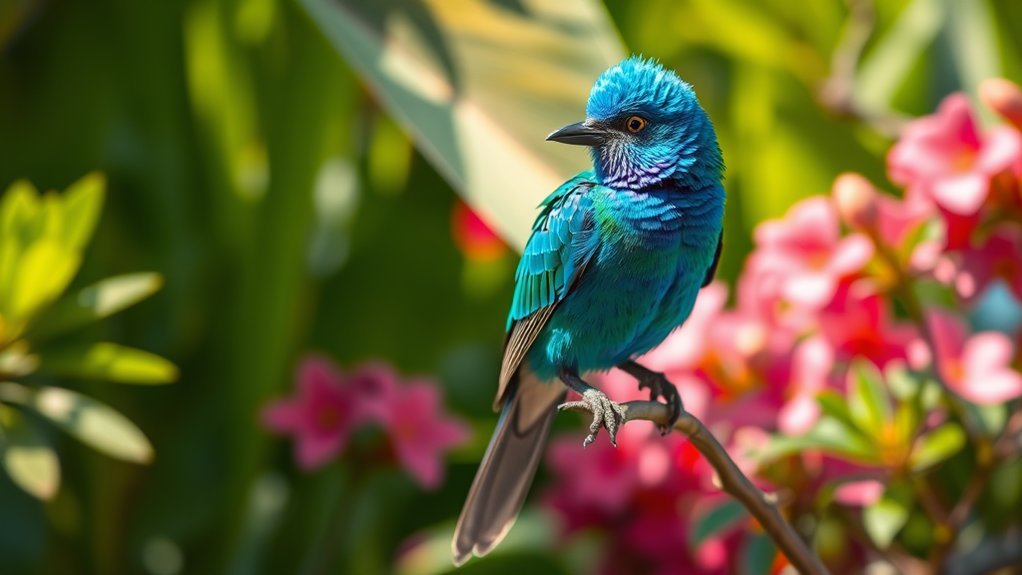
12 Blue-Headed Birds You Need to Know: Quick Guide
Blue-headed birds are known for their vibrant colors and interesting behaviors. Each species, including the Blue Jay and the Hyacinth Macaw, plays an important role in its ecosystem. By learning about their roles and differences, we can better understand their adaptations and habitats. These birds not only attract our attention but also impact their environments in unique ways. Let's look at what makes each of these blue-headed birds special.
Key Takeaways
- The Blue Jay has bright blue feathers and makes loud calls. It thrives in deciduous and mixed woodlands.
- Indigo Buntings are migratory songbirds with vibrant blue plumage. They are often found in open woodlands and fields.
- Eastern Bluebirds have bright blue feathers and a chestnut breast. They prefer open habitats for foraging and nesting.
- The Blue-headed Vireo features a blue-gray crown and sings melodic calls. It typically inhabits mixed woodlands.
- Blue Grosbeaks are colorful birds. They forage for seeds and insects in brushy fields and open woodlands.
Blue Jay

The Blue Jay is a colorful bird known for its bright blue feathers and unique crest. This bird is found mainly in deciduous and mixed woodlands, and it adapts well to various places, including parks and suburban areas.
Blue Jays are smart birds. They've loud calls and a curious nature. They can mimic the sounds of predators to alert others.
Blue Jays form strong family bonds. They often practice cooperative breeding and roosting together.
These birds help their ecosystems by spreading seeds. Learning about the Blue Jay's habitat and behavior can help you appreciate nature more.
Indigo Bunting
The Indigo Bunting is a small songbird known for its bright blue feathers. This migratory bird flies from Central America to North America to breed.
During the breeding season, it prefers open woodlands, fields, and shrubby areas. Male Indigo Buntings sing sweet, warbling notes at dawn and dusk. Their songs help attract mates and mark territory.
Watching these lovely birds can connect you with nature and build community among bird watchers.
Eastern Bluebird

The Eastern Bluebird features bright blue feathers and a chestnut breast, charming bird watchers everywhere.
This bird thrives in open woodlands, farmlands, and meadows with low plants and scattered trees. It forages on the ground, searching for insects and berries. You can see its graceful flight as it dives to catch food.
Eastern Bluebirds often nest close to one another, forming small colonies. They sing sweetly to mark their territory and attract mates.
Learning about their habitat and behavior enhances your appreciation for these beautiful birds and connects you with fellow bird lovers.
Blue-headed Vireo
The Blue-headed Vireo is an intriguing bird to spot in the forest. It features a blue-gray crown and yellow underparts. This bird prefers mixed woodlands with plenty of understory vegetation, which offers necessary cover.
Here are three notable features:
- Vocalizations: The Blue-headed Vireo makes melodic calls consisting of sharp, clear notes. These calls help them communicate, especially during breeding.
- Habitat: They thrive in mature forests and edges, showing they can adapt to different environments.
- Feeding: These birds search for insects and berries. They often perch quietly to look for food.
Watching the Blue-headed Vireo enhances your appreciation of bird diversity and nature as a whole.
Blue Grosbeak
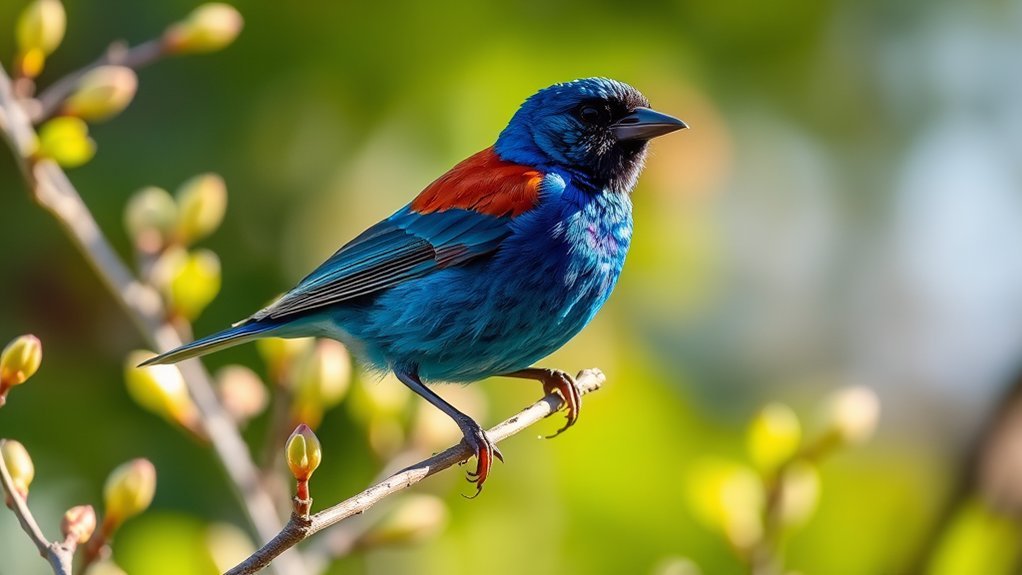
Spotting a Blue Grosbeak is an exciting moment for birdwatchers and nature lovers. This colorful bird likes habitats such as brushy fields, open woodlands, and river edges.
These areas often have dense underbrush.
The Blue Grosbeak mainly eats seeds, insects, and berries, with a special taste for legumes and sunflowers.
Watch their foraging in low plants as they look for food. The males' bright blue feathers make them easy to see among the greenery.
Learning about the Blue Grosbeak's habitat and diet can help you appreciate these beautiful birds more and improve your birdwatching experiences.
Blue-Gray Gnatcatcher
The Blue-Gray Gnatcatcher is a small bird with a unique charm. Here are some key points to know about it:
- Habitat: The Blue-Gray Gnatcatcher thrives in open woodlands, shrubby areas, and along woodland edges. These environments provide them with shelter and places to build nests.
- Diet: This bird primarily eats insects and spiders. You can watch them forage in the leaves or catch bugs in mid-air.
- Behavior: The Gnatcatcher is known for its high-pitched calls and quick movements. Observing these lively creatures adds joy to any outdoor experience.
Violet-green Swallow
Violet-green Swallows are beautiful birds known for their shiny colors and impressive flying skills. They catch insects mid-air with great speed and agility.
During nesting season, these birds choose natural holes or man-made structures and often return to the same nesting sites year after year. They prefer safe and sheltered locations for nesting. Violet-green Swallows build their nests using plant materials and feathers for warmth.
They're social animals that often nest in groups, showing strong family bonds. Learning about their habits and habitats can help you connect with these vibrant birds and appreciate the variety of birdlife around you.
Barn Swallow
The Barn Swallow (Hirundo rustica) is an interesting bird known for its sleek, forked tail and bright blue back.
Here are three key points about this species:
- Nesting: Barn Swallows build cup-shaped nests from mud. They often place these nests under roofs or bridges.
- Migration: Barn Swallows migrate long distances. They travel from their breeding areas in North America to warmer regions in Central and South America for the winter.
- Social Behavior: These birds gather in large flocks. This behavior promotes social interactions and communication among them.
Observing Barn Swallows can be delightful. Their graceful flight and social nature make them a joy to watch.
Lazuli Bunting
The Lazuli Bunting (Passerina amoena) is a colorful bird found in open woodlands and shrubby areas. Its vibrant blue feathers and warm orange underparts attract birdwatchers.
This bird prefers places with low plants and scattered trees, which provide shelter and food.
During the breeding season, male Lazuli Buntings sing beautiful songs to claim their territory and attract females. While searching for food, they eat mostly seeds and insects, showing their ability to adapt to different environments.
Watching these birds in their natural habitat lets you admire both their beauty and their important role in nature.
Connecting with other birdwatching enthusiasts can make observing Lazuli Buntings even more enjoyable. It creates a sense of community and shared passion for these stunning birds.
Hyacinth Macaw
Hyacinth Macaws (Anodorhynchus hyacinthinus) are the largest flying parrot species. They can have a wingspan of up to four feet. These birds are known for their vibrant blue feathers and interesting behaviors.
Here are some important points:
- Social Structure: Hyacinth Macaws live in groups. They form strong bonds with their mates and other flock members.
- Dietary Habits: Their diet mainly consists of palm tree nuts. They use their strong beaks to crack open these nuts.
- Habitat: Hyacinth Macaws live in Brazilian rainforests and savannas. They prefer to nest in tree cavities.
Learning about Hyacinth Macaws helps you appreciate their beauty and habits.
Blue-crowned Conure
Blue-crowned Conures (Aratinga acuticaudata) are lively birds with a bright blue crown and green bodies.
These intelligent parrots are social and playful. They create strong bonds with their human and avian friends.
They live in subtropical and tropical forests in South America. These birds prefer areas with lush vegetation for foraging.
Blue-crowned Conures are known for their sounds, which can range from gentle chirps to loud squawks. This adds to their charm.
Blue-faced Honeyeater
The Blue-faced Honeyeater (Entomyzon cyanotis) is an interesting bird with unique features and behaviors. Here are three key facts about this species:
- Habitat: Blue-faced Honeyeaters live in open woodlands, gardens, and mangroves found in northern Australia and New Guinea.
- Diet: They primarily eat nectar, fruits, and insects. This diet makes them important pollinators for their environment.
- Social Behavior: These birds are social and often gather in large flocks. This behavior helps them connect and interact with each other.
By learning about their habitat and diet, you can understand their role in the ecosystem.
Watching these vibrant birds can deepen your appreciation for nature and encourage a sense of community.
Frequently Asked Questions
What Do Blue-Headed Birds Eat in the Wild?
Blue-headed birds primarily eat insects. This diet shows their predatory habits. Additionally, they eat various fruits. Their fruit consumption highlights their adaptability. Their feeding habits help maintain balance in their ecosystems.
How Can I Attract Blue-Headed Birds to My Yard?
To attract blue-headed birds to your yard, set up bird feeders with seeds similar to their natural food. Add nectar and fruits to the feeders, and plant native plants nearby. These steps create a friendly environment and provide food options that blue-headed birds enjoy.
Are Blue-Headed Birds Migratory Species?
Blue-headed birds are migratory species. They move from their breeding areas to their winter homes. Understanding their breeding habits is important. This knowledge can help you attract these beautiful birds to your yard. By providing food and shelter, you can create a welcoming environment for them.
What Are the Common Predators of Blue-Headed Birds?
Common predators of blue-headed birds include snakes, raptors, and larger mammals. Their nesting habits can attract these threats. During territory disputes, aggression can expose vulnerable nests and chicks to danger.
Can Blue-Headed Birds Recognize Individual Humans?
Blue-headed birds can recognize individual humans. They show advanced social behavior through their interactions with people. When humans regularly feed or care for these birds, the birds learn to connect specific individuals with positive experiences. This recognition helps them adapt to their surroundings and build a bond with the people they encounter.

Kashvi is a passionate bird enthusiast and nature lover who has been fascinated by the world of birds for years. With a keen eye for detail and a love for learning, Kashvi is dedicated to sharing her knowledge and insights with fellow bird enthusiasts on Avian Enthusiasts. Through her engaging and informative articles, Kashvi aims to inspire others to join her in exploring the fascinating world of birds and to promote a deeper appreciation for these incredible creatures.


