8 Key Differences Between Crow and Raven Explained
Crows and ravens share many similarities, but they have important differences. These birds have unique traits that help them survive. From their appearance to their social behavior, each bird adapts in its own way. By learning these differences, you can gain a better understanding of crows and ravens. This knowledge can change how you view these smart birds in the wild. What interesting facts might you uncover?
Key Takeaways
- Crows have a fan-shaped tail. Ravens have a wedge-shaped, pointed tail that helps them fly better.
- Crows are smaller, weighing 10 to 20 ounces and measuring 16 to 20 inches. Ravens weigh 24 to 40 ounces and measure 22 to 27 inches.
- Crows make harsh caws. Ravens produce deeper, croaking sounds that are more melodic.
- Crows work well in teams while foraging for food. Ravens usually act more independently.
- Crows have thinner, straight beaks. Ravens have larger, curved beaks suited to their eating habits.
Physical Appearance

Crows and ravens belong to the same family, Corvidae, but they look different. Crows usually have a solid black color with a shiny finish. In contrast, ravens show additional colors, like blue or purple, depending on the light.
Their beaks also differ. Crows have thinner, straighter beaks, while ravens have larger, curved beaks.
These physical differences make each bird unique and help them survive in their environments. Knowing these details can enhance your appreciation for these intelligent birds.
Size and Weight
Crows and ravens differ in size and weight. Crows weigh between 10 to 20 ounces and measure about 16 to 20 inches long.
Ravens are larger, weighing 24 to 40 ounces and averaging 22 to 27 inches in length. This size difference affects their behavior and feeding habits.
Crows have a slender beak, while ravens have a thicker, stronger bill.
Both birds are mostly black in color, but ravens often appear shinier, showing a purplish or blue tint in sunlight.
Knowing these differences helps you appreciate these intelligent birds more fully.
Tail Shape
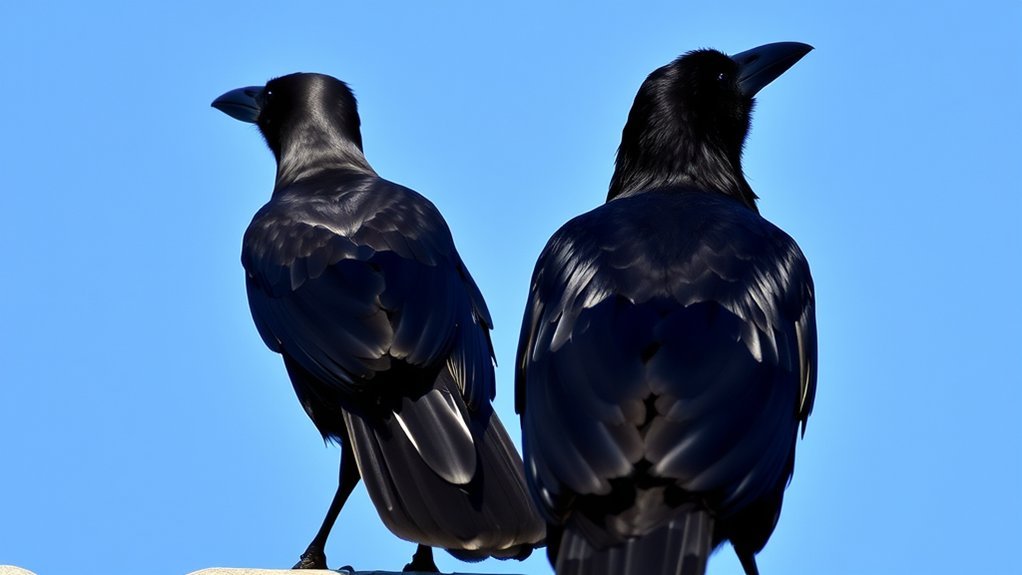
The tail shape of crows and ravens helps to identify each bird.
Crows have a fan-shaped tail with rounded edges. In contrast, ravens have a wedge-shaped tail that looks pointed.
This difference in tail shape serves a purpose. Crows' rounded tails allow for agile flying in urban and forest areas. Ravens' aerodynamic tails help them soar farther during flight.
Observing these tail shapes enhances your understanding of these birds and their adaptations. These details also connect you with other bird watchers and enthusiasts.
Vocalizations and Sounds
To identify crows and ravens, listen to their sounds. Each bird has a unique call, helping you tell them apart.
- Crows make a harsh, cawing sound.
- Ravens have a deeper, croaking noise.
- Crows often repeat series of caws.
- Ravens produce a more melodic range of sounds.
These vocal differences assist in recognizing each bird. Paying attention to their calls enhances your understanding of their communication.
This can deepen your appreciation of nature and the social interactions of these intelligent birds. Enjoy the experience of listening to them.
Behavior and Social Structure
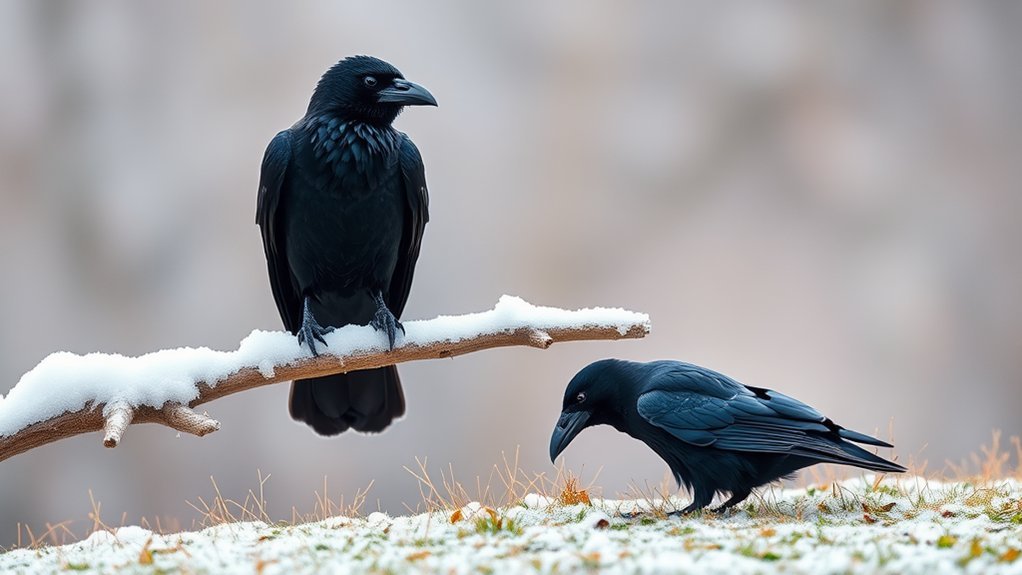
Crows and ravens display unique behaviors and social structures that illustrate their intelligence. Both species have complex social interactions and often form close communities.
Crows work together to find food, showing teamwork that helps build strong social ties. In contrast, ravens tend to be more independent but enjoy playful interactions with others when they choose to engage.
Their nesting habits also differ. Crows create large, strong nests in trees, while ravens prefer to nest in higher and more hidden spots.
This choice relates to their need for safety and their social preferences. By observing these behaviors, we can better understand the dynamics of their communities and how they adapt to different environments.
Habitat Preferences
Crows and ravens have different habitat preferences that reflect their lifestyles. Crows thrive in urban areas. They often nest in places like parks, rooftops, and trees, which shows their social nature.
In contrast, ravens prefer remote locations such as mountains and forests, where they can have larger territories.
Here are some key points to note about their habitats:
- Crows build nests in various settings, including human-made structures.
- Ravens usually nest on cliffs or large trees, which supports their solitary nature.
- Crows thrive in densely populated areas due to their adaptability.
- Ravens favor open spaces with little human disturbance.
Recognizing these habitat preferences can enhance your understanding of the unique behaviors of each bird.
Diet and Feeding Habits
Crows and ravens have different feeding habits. Crows eat a wide range of foods. They look for insects, fruits, and food leftovers from humans. They often forage together and communicate to find food.
Ravens, on the other hand, have specific food choices. They sometimes hide food for future meals. They search for food alone and can eat carrion and small animals.
Both birds are very intelligent. They solve problems and adjust their feeding methods to suit their environment.
Learning about their diets helps us see how they survive and their role in nature.
Cultural Significance and Symbolism
Crows and ravens are intriguing birds with deep cultural meanings. These birds symbolize different ideas in various societies around the globe. Their roles reflect how people relate to nature. In stories and folklore, crows and ravens often represent wisdom, change, and mystery.
- Crows act as messengers that signal change.
- Ravens stand for insight and knowledge in myths.
- Both birds connect life and death in many tales.
- They often warn communities about danger or changes.
Frequently Asked Questions
Do Crows and Ravens Have Different Lifespans?
Crows and ravens have different lifespans. Crows typically live for about 7 to 8 years. In contrast, ravens can live between 10 to 15 years. Their health significantly affects their lifespan. This health can vary based on their environment and living conditions. Understanding these differences helps us learn more about these birds.
Can Crows and Ravens Interbreed?
Crows and ravens cannot interbreed because their genetics are not compatible. This means they cannot produce hybrid offspring. Each species has evolved separately, which keeps their distinct traits and behaviors intact in their environments. This separation helps maintain the balance of ecosystems where they live.
What Are the Main Predators of Crows and Ravens?
Crows and ravens have several predators, with hawks being their main threat. Their risk of predation changes based on their environment. Human activities can modify their habitats and food sources. These changes can lead to more or fewer threats from predators. Crows and ravens are smart and can adapt to different situations, helping them survive despite the dangers they face.
Are Crows or Ravens More Intelligent?
Crows and ravens are both intelligent birds. Ravens show strong problem-solving skills. Crows excel in social interactions. Both birds have unique abilities that make them interesting to study.
How Do Crows and Ravens Interact With Humans?
Crows and ravens have interesting behaviors when they interact with humans. They often come close to people in search of food or out of curiosity. Their intelligence shines through in their playful actions, allowing you to appreciate their personality. Observing these birds can create a special connection and enhance your experience with nature.

Kashvi is a passionate bird enthusiast and nature lover who has been fascinated by the world of birds for years. With a keen eye for detail and a love for learning, Kashvi is dedicated to sharing her knowledge and insights with fellow bird enthusiasts on Avian Enthusiasts. Through her engaging and informative articles, Kashvi aims to inspire others to join her in exploring the fascinating world of birds and to promote a deeper appreciation for these incredible creatures.