How Birds Survive Winter: Adaptations and Behaviors
As winter arrives, birds encounter many challenges. To survive, they use different strategies. These include changing their eating habits and finding shelter. Each of these actions is important for their survival.
Birds often seek food sources that are available during winter. Some species flock together to find food more easily. Others store food in different locations to eat later. Birds also find places to stay warm, such as dense trees or sheltered areas.
Each bird species adapts in its own way. These adaptations show how birds interact with their environment. Understanding these strategies helps us appreciate their strength and ability to thrive in difficult conditions.
Key Takeaways
Birds prepare for winter by building energy reserves. They increase fat storage and eat high-calorie foods before winter starts. During winter, they adapt their feeding behaviors. They search for seeds, fruits, and alternative food sources as conditions change.
Birds have insulating and waterproof feathers. These feathers help them keep warm and protect against harsh weather. Flocking together helps birds stay warm and safe. Roosting in sheltered areas helps them conserve energy during cold nights.
Birds also make behavioral adjustments. They reduce their activity levels and use torpor to cope with food shortages and extreme cold. This helps them survive when resources are limited.
Migration: The Journey to Warmer Climates
Have you ever thought about how birds know when to migrate? Birds use temperature changes as signals to start their journey to warmer places. When temperatures decrease, they recognize this shift and prepare to travel. Birds use natural cues, like the position of the sun and Earth's magnetic field, to guide their routes.
Before flying, birds build energy reserves to endure tough weather during long trips. They stop at key locations along the way to rest and gather energy. These stopovers are essential, providing the resources needed for their journey to winter homes.
Migrating can be risky, but birds trust their instincts and learned skills to navigate this yearly trip. This showcases the incredible adaptability of birds.
Feather Adaptations: Insulation and Waterproofing
Birds migrate to warmer climates each year. Their survival depends on their feather adaptations.
These adaptations help with insulation and waterproofing in cold weather. Birds lose old feathers and grow new ones through a process called molting. The new feathers provide better insulation, trapping air to keep warm.
Additionally, birds have preen glands that produce oils. These oils coat the feathers, making them waterproof. This feature helps repel water and reduces heat loss.
Together, insulation and waterproofing allow birds to maintain their body temperature. This ability helps them thrive in cold environments.
Fat Storage: Energy Reserves for Survival
As winter approaches, birds implement energy reserve strategies to survive cold temperatures and food scarcity.
You'll notice changes in their feeding behavior, as many species increase their intake of high-calorie foods to build essential fat reserves.
This fat not only provides energy but also helps insulate them against frigid conditions.
Energy Reserve Strategies
During winter, birds face food shortages. To survive, they store fat as a key energy reserve. This strategy highlights the importance of energy management.
By gathering fat, birds improve their ability to function even in tough conditions. Here are the main parts of their fat storage approach:
- Energy Gathering: In the fall, birds focus on high-calorie foods to build fat reserves.
- Body Fat: They change extra nutrients into triglycerides, a more effective energy form.
- Fat Placement: Birds store fat in areas like the abdomen and under the skin for better insulation.
- Metabolic Control: They can change their metabolic rates, using stored fat during long food shortages.
These strategies help birds stay alive and thrive in winter conditions.
Feeding Behavior Changes
As colder weather arrives, birds change how they feed. They start looking for high-energy foods like seeds and nuts to build fat for winter survival.
Many birds change their diets to include more calorically dense options. This helps them store energy for the colder months ahead. Birds also increase how often they eat. They forage in nature but also visit feeders set out by people.
They instinctively know they need to consume more food as temperatures drop. Recognizing these changes in feeding behavior shows how birds adapt to survive in difficult conditions.
Altered Feeding Habits: Seeking Alternative Food Sources
In winter, many birds change their feeding habits to find food. They adapt to the lack of regular food sources.
Here are some ways they find food:
- Scavenging seeds in cities and parks where leftovers are available.
- Hunting insects by looking under tree bark or in fallen leaves.
- Foraging for fruit from bushes and trees, searching for berries and other fruits.
- Caching nuts to save energy-rich food for later.
These new feeding habits help birds share resources and improve their chances of survival in winter. They adapt their usual ways of finding food to meet the challenges of the cold season.
Social Behavior: Flocking for Safety and Warmth
Flocking helps birds stay safe and warm in winter. As temperatures drop, birds gather in tight groups. This closeness creates a small area where heat is retained better.
Birds use sounds and movements to signal changes and coordinate with each other. This communication helps them stay alert and work together to watch for predators. A larger group can spot threats more easily.
Roosting Strategies: Finding Shelter From the Cold
As winter approaches, birds must find safe places to roost and stay warm.
Their choice of shelter is crucial for protection against the cold. Here are some common roosting strategies:
- Tree Cavities: Birds use natural openings in trees to shield themselves from chilling winds.
- Dense Shrubs: Many birds hide in thick bushes or evergreen trees, which provide a barrier from severe weather.
- Group Roosting: Some birds gather in large groups. This helps them share body heat and lower individual exposure to cold.
- Human-Made Shelters: Birds in urban areas often find refuge in buildings and other man-made structures to increase their chances of survival.
Physiological Changes: Adjustments to Metabolism
As winter approaches, birds like you experience significant physiological changes to survive the harsh conditions.
You ramp up fat storage, enhancing your energy reserves for cold nights, while also improving thermoregulatory mechanisms to maintain body temperature.
Additionally, your body alters energy utilization, efficiently managing resources during periods of limited food availability.
Increased Fat Storage
In winter, many birds make significant changes to their metabolism to survive.
One important change is increased fat storage. This helps them maintain energy levels during tough conditions. By effectively using fat for energy, birds ensure they've enough reserves when food is scarce.
Here are four key points about increased fat storage in birds:
- Increased Feeding: Birds eat more food to build up fat reserves.
- Energy Allocation: They focus on converting energy into fat instead of muscle.
- Fat Types: Birds prefer to store unsaturated fats for better energy efficiency.
- Daily Energy Needs: Fat reserves are crucial, providing energy over long periods without foraging.
These adaptations improve a bird's chances of surviving the challenges of winter.
Understanding how birds manage fat storage can help us appreciate their resilience in harsh environments.
Enhanced Thermoregulatory Mechanisms
When temperatures drop, birds use special methods to keep their body heat. They increase their heat production to fight the cold. This often means their metabolism speeds up, helping them generate more internal warmth.
However, this higher metabolism also means they use more energy. Birds need to make sure they eat enough food to meet these energy needs.
They also use behaviors like fluffing their feathers to trap warm air and keep cool air out. These combined methods help birds survive cold winter conditions.
Altered Energy Utilization
Cold temperatures challenge birds, but many adapt their energy use to survive.
They can change how they get energy, allowing them to switch between sources based on what's available. Birds focus on using energy wisely to endure winter.
Here are key strategies they use:
- Increase fat storage: Birds build up fat to have energy when food is scarce.
- Change feeding habits: They eat high-energy foods, like seeds and nuts, to fuel their bodies.
- Lower metabolic rates: In cold weather, some birds slow their metabolism to save energy.
- Utilize torpor: Certain species enter a low-energy state called torpor to conserve energy during the night.
These methods help birds manage their energy resources during the challenges of winter.
Regional Variations: Different Strategies for Different Species
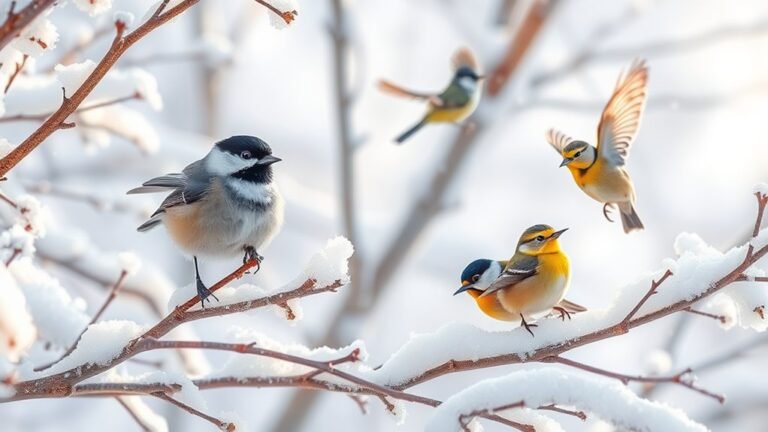
Bird species adapt to winter conditions in different ways based on their region. In colder areas, birds like chickadees stay warm by fluffing their feathers to trap air and keep heat in.
In milder climates, some birds form mixed flocks to share food sources. For instance, finches may migrate, but those in temperate zones often stay put, feeding on hardy seeds and using natural shelters.
This variability shows how environmental factors influence survival strategies, helping each species thrive despite winter challenges.
Recognizing these patterns helps us understand the relationship between birds and their habitats.
Behavior During Cold Snaps: Energy Conservation Techniques
When cold snaps hit, you'll see birds employing various energy conservation techniques to survive.
They actively seek shelter to minimize heat loss, adjust their foraging behaviors to optimize food intake, and may even enter states of torpor or hibernation.
Understanding these strategies highlights the remarkable adaptability of birds in harsh conditions.
Shelter Seeking Strategies
Many birds look for shelter during cold winter months to stay warm and save energy. They use different types of shelters to cope with harsh weather.
Here are some common ways birds find shelter:
- Tree Cavities: Birds often rest in natural hollows in trees. These spaces keep them insulated from wind and cold.
- Dense Shrubs: Thick bushes provide protection from weather and cover from predators.
- Urban Structures: Birds adapt to city life by using buildings, eaves, and ledges as safe spots.
- Ground Cover: Leaf litter and underbrush give birds excellent hiding places and help them conserve heat.
These strategies show how well birds adapt to survive in cold conditions while using less energy.
Foraging Behavior Adjustments
As temperatures drop, birds change how they find food to save energy and survive. They may shift from active hunting to eating seeds and berries that are easy to access. This change helps them conserve energy and stay out of severe weather.
During cold periods, food becomes harder to find, so birds may look for food in places where there's more to eat and less competition. They might also forage during warmer parts of the day, like midday, when food is easier to find.
Torpor and Hibernation Techniques
Birds have developed effective techniques, such as torpor and hibernation, to conserve energy during cold winter months. These strategies significantly improve their chances of survival in harsh conditions.
Here are some important details about these adaptations:
- Torpor Benefits: Birds reduce their metabolism, heart rate, and body temperature to save energy during sleep.
- Duration: Torpor typically lasts overnight, while hibernation can last for weeks.
- Hibernation Myths: Not all birds hibernate; many enter torpor instead.
- Energy Conservation: Both methods help birds use less food, which is vital when food resources are low.
These energy-saving techniques showcase how birds adapt to survive winter's challenges.
The Impact of Climate Change: Challenges for Winter Survival
Climate change significantly impacts winter conditions, creating serious challenges for birds. Changing temperatures disrupt food sources, affecting when seeds grow and when insects emerge. This inconsistency makes it hard for birds to find enough food to survive.
Habitat loss increases these problems. As forests and wetlands shrink, birds must move to areas that don't provide enough resources. This situation leads to more competition for limited food and increases stress among birds.
Additionally, changes in migration patterns can result in some birds being stuck in unsuitable climates. These factors contribute to declining bird populations.
This situation highlights the urgent need to address climate change to help birds survive the winter.
Frequently Asked Questions
How Do Birds Find Their Way During Migration?
Birds find their way during migration using different techniques. They observe the stars, sense magnetic fields, and recognize landmarks to follow their routes. Through practice, they improve these skills. This helps them reach their destinations accurately every year.
What Role Do Body Size and Shape Play in Winter Survival?
Body size and shape play a significant role in winter survival for birds. Larger birds stay warmer because they have a lower surface area-to-volume ratio, which means they lose heat more slowly. They also use feathers for insulation. Additionally, these birds can change their metabolic rates to save energy in cold conditions. This combination of factors helps them thrive during winter.
How Do Some Birds Tolerate Extreme Cold Temperatures?
Some birds can survive extreme cold due to their thick feathers, which provide insulation and trap warm air. They also store food efficiently, giving them the energy needed to keep their body temperature stable and stay active during winter.
Do All Birds Migrate to Survive Winter?
Not all birds migrate to survive winter. Some birds move to warmer areas, while others stay in the same place year-round. These resident birds adapt to harsh winter conditions by changing their behaviors. They find different food sources and seek shelter to help them endure the cold.
How Does Winter Survival Impact Bird Breeding Seasons?
Winter survival impacts the timing of bird breeding. Limited food can delay when birds begin to reproduce. Birds typically start nesting when food availability is high. This synchronization helps ensure the young have the best chance of survival in changing environments. By timing their breeding to when food is plentiful, birds increase their chances of successful chick rearing. Understanding this connection helps us appreciate how birds adapt to their surroundings.

Kashvi is a passionate bird enthusiast and nature lover who has been fascinated by the world of birds for years. With a keen eye for detail and a love for learning, Kashvi is dedicated to sharing her knowledge and insights with fellow bird enthusiasts on Avian Enthusiasts. Through her engaging and informative articles, Kashvi aims to inspire others to join her in exploring the fascinating world of birds and to promote a deeper appreciation for these incredible creatures.