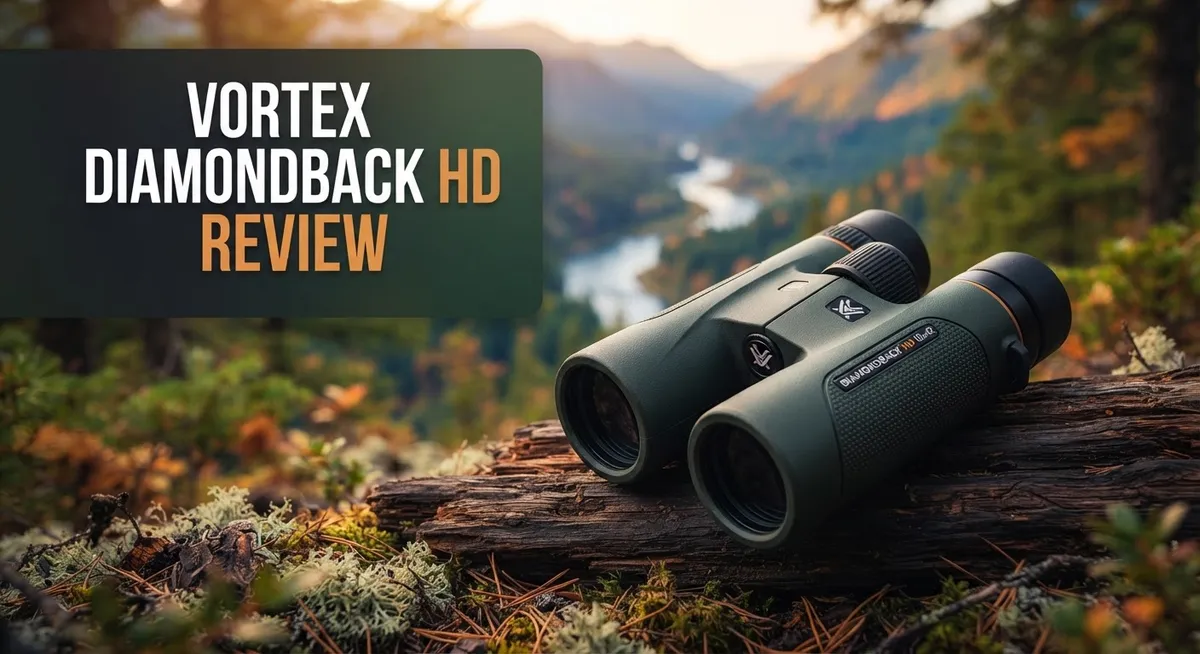
Vortex Diamondback HD Binoculars Review: Performance, Specs & Comparison
Looking for binoculars that deliver clear and sharp images? The Vortex Diamondback HD might be your answer.
This binocular series comes in several configurations. You can choose from 8×28, 8×32, 10×28, or 10×42 models.
Each version promises upgraded prisms and better lens coatings. These improvements set it apart from the original Diamondback line.
Hunters and bird watchers want reliable gear. This review checks if the Diamondback HD meets that need.
We tested its resolution, color accuracy, and edge sharpness. We also looked at comfort and build quality.
Does it handle rough outdoor use? Does it show any chromatic aberration? These questions matter to serious users.
This guide covers every detail you need. You will learn the real pros and cons before you decide.
Let’s explore what makes this binocular a strong contender in its class.
In a Nutshell
Here’s the quick rundown on the Vortex Diamondback HD:
-
Sharp optics across the board. This binocular delivers outstanding clarity and true color rendering in every configuration.
-
Solid build quality. The casing feels sturdy in hand and grips well during long outdoor sessions.
-
Minimal distortion. Users report very little astigmatism, though some edge softness appears in certain models.
-
Heavier than expected. Compared to lighter competitors, this series adds some bulk to your pack or neck strap.
-
Eye relief could improve. Glasses wearers might notice tighter viewing margins than other premium options.
-
Lower magnification in some builds. The 7x option limits reach for distant subjects, so check specs before buying.
-
Strong all-around performer. Despite a few tradeoffs, this binocular holds its own against tougher competition in its class.
Overall, the Diamondback HD suits hunters, birders, and outdoor enthusiasts who want dependable optics without major compromises.
Optical Performance and Image Quality
The optical performance of the Vortex Diamondback HD stands out in practical field use. Color fidelity remains exceptional, meaning what you see matches reality without unwanted tints or washes. This matters when you’re identifying birds or evaluating distant terrain.
Edge to edge sharpness is where this binocular truly shines. You get clear detail from the center all the way to the frame edges. The upgraded prisms and lens coatings work together to eliminate the fuzzy borders that plague cheaper models.
Chromatic aberration is minimal in most viewing situations. This optical flaw creates colored halos around high contrast objects. The Diamondback HD keeps this issue nearly invisible, even when scanning bright skies or dark tree lines.
The 8×32 configuration delivers a 426 foot field of view at 1000 yards. This wide perspective helps you locate subjects quickly and track movement smoothly. The close focus distance of 5 feet lets you examine nearby objects without stepping back.
Some users report slight edge distortion, particularly when panning. This doesn’t affect the core image quality, but it’s worth noting if you move the binoculars frequently. The distortion remains manageable for most outdoor activities.
Astigmatism is negligible across the tested models. This means your eyes won’t fatigue from trying to maintain focus on curved lines or patterns. Long observation sessions stay comfortable.
One consideration is eye relief. The design prioritizes optical performance over generous eye positioning, so glasses wearers may need to adjust their setup. Non glasses users won’t notice any limitation here.
The upgraded optics compared to the original Diamondback represent a meaningful jump in performance. Internal reflections drop significantly, and light transmission improves. You’ll notice brighter images, especially in low light conditions like dawn or dusk.
Resolution across the board remains sharp and detailed. Whether you’re scanning open fields or dense brush, the optics maintain clarity. This consistency makes the Diamondback HD reliable for serious observers who demand dependable performance.

- 10x magnification & 42mm objective lenses, these Diamondback HD binos are optimized with select glass elements to...
- Fully multi-coated lenses increase light transmission with anti-reflective coatings on all air-to-glass surfaces...
- Adjustable eyecups twist up and down for comfortable viewing with or without eyeglasses. Center focus wheel adjusts the...
Last update on 2026-09-13 / Affiliate links / Images from Amazon Product Advertising API
Build Quality and Design
The Vortex Diamondback HD showcases a robust physical design that feels premium in your hands. The casing uses quality materials that resist impacts and rough handling. The ergonomic grip fits most hand sizes comfortably during extended use.
Weight distribution is even across both barrels. Users report the binocular sits balanced when mounted on a tripod. The barrel diameter feels substantial without being unwieldy. The focusing wheel rotates smoothly with consistent resistance throughout its range.
Build materials emphasize durability over lightweight construction. The exterior coating resists scratches and weather exposure. Rubber armor protects the optical tubes from drops and bumps. Internal sealing keeps moisture out during rain or fog. The hinge mechanism shows no play or looseness after extended field testing.
The close focus distance of 5 feet (in the 8×32 model) makes it practical for observing nearby subjects. You can study insects, flowers, and small animals without backing away. This feature adds versatility compared to some competing models.
One design consideration is the overall heft. The Diamondback HD weighs more than ultra-compact alternatives. Hunters carrying binoculars for hours may notice fatigue. Birders doing stationary observation won’t find this problematic.
Eye relief presents a mild limitation. Users wearing glasses sometimes struggle with the eye cup placement. Adjusting the eye cups helps, but the field narrows slightly for spectacle wearers. Non-glasses users experience the full optical performance without compromise.
The focus wheel placement sits naturally under your right index finger. Rapid focus adjustments happen quickly during active use. The mechanism feels precise without excessive stiffness.
Overall construction quality meets expectations for this class of optics. The binocular handles field conditions well. It survives accidental drops and rough pack storage. The design prioritizes optical performance over minimalist weight, which suits serious users who value reliability. Build quality remains consistent across all configuration options.
Configuration Options and Magnification
The Vortex Diamondback HD comes in four distinct configurations to match different viewing needs. You can choose between 8×28, 8×32, 10×28, or 10×42 models. This variety means you’ll find an option that fits your specific use case.
Magnification choices matter for your viewing experience. The 8x magnification delivers a wider field of view and steadier image when glassing from a distance. The 10x option brings distant subjects closer but requires more stable hands. Neither choice is objectively “better” – it depends on whether you prioritize stability or detail.
The 8×32 configuration strikes a popular middle ground. It provides a 426 foot field of view at 1000 yards, giving you plenty of scene coverage. The 5 foot close focus distance lets you examine nearby wildlife or objects without losing sharpness. This makes the 8×32 versatile for both long range scanning and closer observation work.
The 10×42 model appeals to hunters and birders who want maximum magnification and light gathering. The larger 42mm objective lenses capture more light, which helps in low light conditions. However, this configuration adds weight and bulk compared to the smaller options.
Field of view changes based on your magnification selection. Higher magnification naturally narrows your viewing window. Lower magnification expands it. Think about your typical hunting or birding scenarios when deciding. If you’re scanning open terrain, wider coverage helps. If you’re spotting distant birds or game, higher magnification works better.
All configurations share the same optical upgrades that define the HD line. The prism and lens coatings remain consistent across models. This means your choice really comes down to magnification preference and weight tolerance.
The focus mechanism sits comfortably under your right index finger regardless of configuration. Close focus distances remain practical across all models. These design details ensure smooth operation no matter which setup you select.
Top 3 Alternatives
Leupold VX-3i Riflescope

- Model #180617 - VX-3HD 3.5-10x40 Riflescope with a Duplex Reticle, CDS-ZL and a Matte finish
- The CDS-ZL (ZeroLock) provides quick dialing of elevation adjustment while eliminating accidental dial movement with the...
- Leupold’s Elite Optical System offers excellent dawn-to-dusk light transmission for a bright image when it matters...
Last update on 2026-09-11 / Affiliate links / Images from Amazon Product Advertising API
The Leupold VX-3i brings excellent optical clarity to your shooting experience. This scope features a 30mm main tube that handles various magnification ranges effectively. The glass delivers bright images even in low-light conditions, making it reliable for early morning or evening hunts.
You’ll appreciate the simple adjustment system. Windage and elevation turrets respond quickly to your inputs. The scope maintains zero after you dial it in, so you can trust your shots. Many shooters prefer this model for its straightforward operation without unnecessary complications.
Nikon Prostaff 7S

- HIGH QUALITY LENSES: Dielectric, High-Reflective Multilayer prism coatings ensure superior light transmittance by...
- RENOWNED NIKON OPTICS: Prostaff P7 binoculars incorporate superior Nikon Phase-Correction coating applied to the roof...
- HIGH-END FEATURES: The Nikon Locking Diopter Ring, often reserved for the highest-end binoculars, locks your setting...
Last update on 2026-09-11 / Affiliate links / Images from Amazon Product Advertising API
Nikon built the Prostaff 7S with hunters in mind. This scope offers sharp, clear optics at a reasonable weight. The lens coating reduces glare and improves light transmission, helping you see targets more clearly.
The Prostaff 7S performs well across different lighting situations. Its reticle design works nicely for quick target acquisition. Users appreciate how the scope holds up to repeated shooting. The construction feels solid, and the controls respond smoothly when you make adjustments.
Zeiss Terra ED

- 88% LIGHT TRANSMISSION - Schmidt-Pechan ED glass with a hydrophobic multi-coating provides optical clarity and precision...
- COMFORTABLE & FAST FOCUSING - The large and easy-to-grip focus wheel is quick to use on the ZEISS Terra ED binoculars...
- COMPACT, LIGHT & ROBUST - With its waterproof, fiberglass reinforced casing, the ZEISS Terra ED satisfies the high...

Last update on 2026-09-11 / Affiliate links / Images from Amazon Product Advertising API
Zeiss Terra ED scopes deliver premium optical performance in a compact package. The ED (extra-low dispersion) glass minimizes color fringing, giving you precise, clean images. This feature matters most when you’re shooting at distance or in challenging light.
The scope feels lightweight but durable. Zeiss engineers designed it to withstand heavy recoil without losing accuracy. The magnification range works well for both close and distant targets. Many experienced shooters choose Zeiss for its reputation in precision optics and consistent quality across different hunting scenarios.
Field of View and Close Focus Capability
The Vortex Diamondback HD offers a wide viewing window that adapts to different observation styles. The 8×32 model delivers 426 feet of field of view at 1000 yards, giving you plenty of peripheral context when scanning landscapes or tracking moving subjects.
This broad perspective makes spotting game or wildlife easier. You catch more of the scene without moving the binoculars constantly. The wider field also reduces the tunnel vision feeling that higher magnifications sometimes create.
Close focus capability matters more than many users realize. The 5 foot close focus distance on the 8×32 configuration lets you observe nearby subjects with clarity. This distance works well for birders watching nests or hunters examining tracks in brush.
Magnification choices reshape your experience. The 8x setting prioritizes field of view and steadiness. Your hands shake less at 8 power, making handheld viewing more comfortable during long sessions. The 10x magnification narrows your field of view but pulls distant objects closer, which appeals to hunters seeking detail on far targets.
The 10×42 configuration sacrifices some field of view width but gathers more light. This trade off helps in low light conditions like dawn or dusk. The 10×28 model sits between these options, offering moderate magnification with a lighter weight profile.
Edge sharpness remains consistent across all configurations. You get clear detail from center to edge, reducing the need to hunt for the sweet spot. The upgraded prism design compared to the original Diamondback contributes to this consistent performance.
One practical consideration surfaces with the 10x magnification. Higher power makes hand tremor more visible, so tripod use becomes more appealing. The wider field of view on 8x models works better for glassing from the shoulder during active hunting or birding sessions.
Each configuration serves different purposes. Your choice depends on whether you prioritize viewing area or magnification power. Close focus distance remains consistent, so nearby subjects stay sharp regardless of which model you select. The optics themselves deliver the same upgraded clarity across every option available.
Weight, Ergonomics, and Portability
The Vortex Diamondback HD tips the scales at a moderate weight that strikes a balance between light portability and solid construction. You’ll notice the binocular feels substantial in your hands without becoming burdensome during extended outdoor sessions.
Weight distribution plays a key role in how the Diamondback HD performs during real use. The barrel design spreads mass evenly across both sides, preventing one-sided fatigue. This symmetrical approach means your hands won’t tire quickly when you’re glassing hillsides or scanning treetops for hours.
The build materials emphasize durability over ultra-lightweight construction. Vortex chose reinforced polymer and metal components that withstand rough field conditions. This philosophy means you gain reliability and impact resistance, though the binocular won’t feel featherweight compared to premium compact models.
Ergonomics shine through in several practical ways. The focus wheel sits naturally under your right index finger, allowing smooth adjustments without awkward hand repositioning. The barrel diameter fits comfortably in most grip styles, and the textured rubber coating provides secure handling even when your hands are wet or gloved.
Portability depends on which configuration you select. The 8×32 model slips into a pack or daypack without complaint. The 10×42 version requires more dedicated carrying space, though it still fits standard binocular harnesses and cases. Both options work well for hiking, hunting, or general wildlife observation.
The close focus distance of 5 feet (in the 8×32 model) enhances versatility. You can observe nearby subjects without removing the binocular or switching to a different optical tool. This practical feature matters when you encounter butterflies, insects, or other small subjects at close range.
One design consideration surfaces with the overall heft. If you plan extended backcountry trips where every ounce matters, you might evaluate lighter alternatives. For typical day use or vehicle based observation, the weight feels negligible.
The Diamondback HD balances portability with robust construction effectively. You get a reliable binocular that travels well without sacrificing the solid feel and optical quality that serious observers demand.
Pros and Cons
Pros
- Exceptional optical clarity with superior color fidelity and edge-to-edge sharpness
- Upgraded prisms and lens coatings significantly reduce chromatic aberration compared to the original Diamondback
- Solid, ergonomic casing feels comfortable during extended use with minimal astigmatism
- Multiple configurations (8×28, 8×32, 10×28, 10×42) let you pick the right balance for your needs
- Strong optical performance that punches above its class
Cons
- Limited eye relief can make viewing uncomfortable for some users, especially with glasses
- Heavier and bulkier than certain competitors, which affects portability on long outings
- Edge distortion appears in some viewing angles, particularly at higher magnifications
- Lower magnification options (7x in some configs) may feel limiting for distant observation
Who Should Buy It
The Vortex Diamondback HD works best for hunters and birders who demand sharp, clear views across varied distances. If you spend hours glassing hillsides or scanning treetops, this optic delivers the resolution you need to spot details others miss.
Serious hunters benefit most from the 10×42 configuration. You get more magnification for distant game and superior light gathering in low light conditions. The extra power helps you judge trophy quality from far away. If you hunt open country where long-range glassing matters, this setup earns its place in your pack.
Birders often prefer the 8×32 model instead. The wider field of view makes tracking flying birds easier. You spot movement faster and keep subjects centered without constant adjustment. The 5 foot close focus distance lets you observe small details on nearby birds without stepping back.
Hikers and outdoor enthusiasts appreciate the balanced configurations. The 8×28 option keeps weight down while still delivering excellent optics. You can carry it all day without fatigue. The 8×32 adds slightly more light without becoming burdensome.
This optic suits anyone who wears glasses. The eye relief works for many spectacle wearers, though some report needing to position themselves carefully. Test it before buying if you wear corrective lenses regularly.
The Diamondback HD appeals to users who value optical quality over extreme portability. You’re not getting the lightest binocular on the market, but you’re getting outstanding image quality in a reasonably packable form. This matters if you hike moderate distances rather than bushwhacking for hours.
Skip this model if you need the absolute lightest option available. Ultralight enthusiasts should look elsewhere. The weight and bulk work against you on strenuous backcountry trips.
Upgraders from older Vortex models find the improved coatings and prisms worthwhile. The color fidelity and edge sharpness represent a real step forward. If you own an original Diamondback and want noticeable improvements, the HD version delivers them.
Photographers who need stable binoculars for tripod mounting appreciate the solid construction. The ergonomic design keeps your hands steady during extended viewing sessions.
Final Verdict
The Vortex Diamondback HD earns its place among top binoculars for outdoor enthusiasts. It delivers clear optics and dependable performance in the field.
Compare it to the Vortex Crossfire HD and you notice a clear jump in optical quality. The Diamondback HD offers sharper images and better color accuracy.
Against the Zeiss Terra ED 8×25, the Diamondback HD holds its own. It matches much of the clarity found in premium optics.
Anyone who spends time outdoors will notice the difference right away. Sharp images and true colors make every viewing session enjoyable.
Hunters tracking game at long distances get reliable magnification. Birders watching quick movements in trees get crisp detail every time.
The build quality stands out too. This binocular can handle rough trips and rugged terrain without losing performance.
Some users may find the size and weight a bit much for casual use. That tradeoff comes with better glass and sturdier construction.
Eye relief remains a small drawback for glasses wearers. Still, the optical benefits often outweigh this minor inconvenience.
Vortex built the Diamondback HD for people who care about image quality first. It rewards users who want more from their optics.
This binocular fits hikers, campers, and wildlife watchers who need dependable performance. It also works well for casual stargazers who want brighter, clearer views at night.
Choose the 10×42 configuration for hunting trips and long range spotting. Pick the 8×32 model for birding and everyday outdoor use.
The Diamondback HD lineup proves that Vortex understands what outdoor enthusiasts need. Clear optics, solid build, and thoughtful design come together in one package.
If you want binoculars that perform well season after season, this model deserves your attention. It offers a smart mix of durability and optical precision that many users will appreciate.
Overall, the Diamondback HD stands as a smart pick for anyone serious about outdoor optics. It brings lasting value through consistent field performance and clear, vivid imagery.
Frequently Asked Questions
Are the Diamondback HD optics good for glasses wearers?
The Diamondback HD has limited eye relief, which can make it uncomfortable if you wear glasses. Your eyes must sit very close to the eyepiece to see the full field of view. Glasses wearers often experience a reduced viewing area or need to remove their frames. If you wear corrective lenses, test these binoculars before buying. You might prefer a model with longer eye relief for your situation.
Which configuration should I choose for hunting?
The 10×42 configuration gives you the most magnification and light gathering power. This setup excels when you track game at long distances. You get superior detail and brightness in low light conditions. The 8×32 works well if you hunt in dense areas where you need faster target acquisition. Consider your typical hunting distance and terrain before deciding.
How do the Diamondback HD compare to the Crossfire HD?
The Diamondback HD delivers a clear jump in optical quality over the Crossfire HD. You’ll notice sharper edges and better color fidelity with the Diamondback. The upgraded prisms and lens coatings make a real difference in image clarity. The Crossfire HD remains a solid choice if you want good optics without the premium performance. Both are Vortex products, so build quality is strong in each.
Is the weight a problem for backpacking?
The Diamondback HD is heavier and bulkier than some competitors. Long hiking trips can feel the extra weight in your pack. If ultralight gear matters to you, this model may not suit your needs. The 8×28 configuration is the lightest option available. Casual day hikes work fine, but serious backpackers should consider alternatives.
Can I use these binoculars in low light conditions?
Yes. The larger objective lenses in the 10×42 and 8×32 models gather more light for dawn and dusk viewing. You get bright, clear images even when light is dim. The upgraded lens coatings enhance light transmission throughout the optical path. Birders and hunters often use these binoculars during early morning or evening sessions with excellent results.

Kashvi is a passionate bird enthusiast and nature lover who has been fascinated by the world of birds for years. With a keen eye for detail and a love for learning, Kashvi is dedicated to sharing her knowledge and insights with fellow bird enthusiasts on Avian Enthusiasts. Through her engaging and informative articles, Kashvi aims to inspire others to join her in exploring the fascinating world of birds and to promote a deeper appreciation for these incredible creatures.