
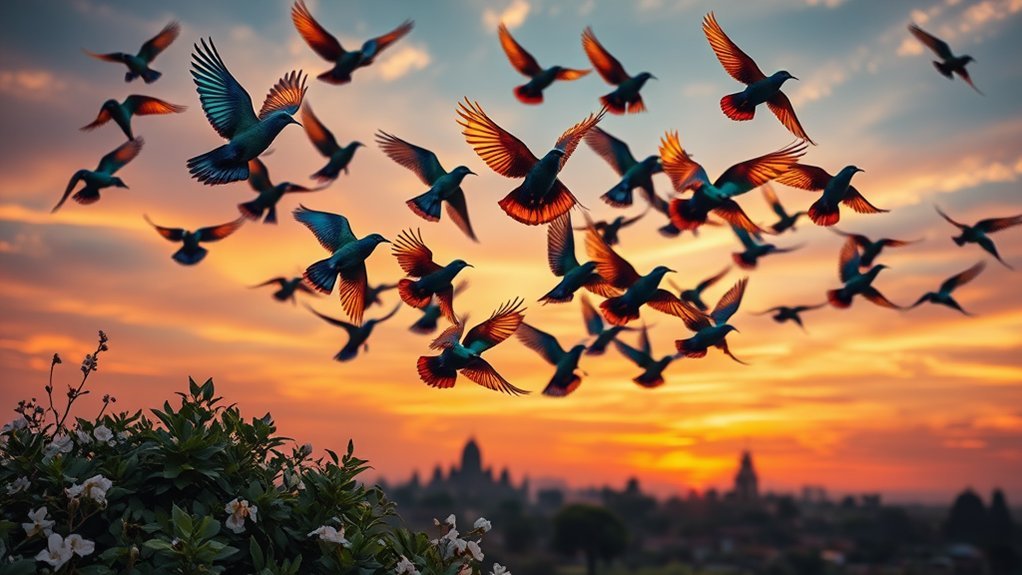
What Do Birds Symbolize Across Cultures?
Birds symbolize various themes in different cultures. They often represent strength, wisdom, and transformation. For example, the eagle stands for majesty, while the dove symbolizes peace. Each bird has its unique meaning that resonates across societies. These symbols can influence personal and collective identities. What connections do you see in these bird symbols?
Key Takeaways
Birds represent different meanings in various cultures:
- Eagles symbolize strength and power. Many cultures view them as symbols of freedom.
- Doves represent peace and hope. They are often seen as messengers of unity and reconciliation.
- Owls symbolize wisdom and intuition. They provide insights that others may miss and are seen as spiritual guides.
- Crows are linked with mystery and change. They encourage people to explore hidden aspects of life and embrace transformation.
- Hummingbirds symbolize joy and resourcefulness. They encourage positivity, love, and appreciation for the small moments in life.
These meanings connect people to nature and carry lessons relevant to everyday experiences.
The Eagle: A Symbol of Power and Freedom
The eagle symbolizes power and freedom in many cultures. It represents strength, courage, and resilience.
In Native American cultures, the eagle serves as a spiritual guide, linking the earth and the sky. In Roman culture, it symbolizes military strength and authority.
The eagle's ability to soar high reflects humanity's desire for freedom and personal growth. This rich symbolism connects you to those who view the eagle as a protector and leader.
Embracing the qualities of the eagle can motivate you to find your own strength and pursue freedom in your life.
The Dove: Emblems of Peace and Hope
The dove symbolizes peace and hope in many cultures. It represents unity and reconciliation.
Doves are often released at weddings and memorials, creating feelings of calm and positivity for the future. In various traditions, doves act as messengers, carrying prayers to a higher power.
Their soft cooing promotes a sense of peace and community. Whether seen in religious texts or modern symbols, doves encourage you to embrace harmony and remind you that you aren't alone in your journey for connection with others.
The Owl: Wisdom and Intuition in Various Cultures
The owl symbolizes wisdom and intuition in many cultures. It has a reputation for seeing what others cannot. Owls represent night-time wisdom and help guide individuals through uncertainty. They're often considered spiritual guides or protectors.
- In Greek mythology, the goddess Athena chose the owl as her symbol.
- Native American tribes see owls as guardians, representing intuition.
- Many African cultures view owls as sources of knowledge.
- In Japan, owls signify good fortune and protection.
- Celtic traditions see them as mystical beings linked to the spirit world.
The owl encourages trust in instincts and deeper understanding.
The Crow: Signifier of Mystery and Transformation
The crow represents mystery and transformation in many cultures. This bird has cultural significance that sparks curiosity.
In Native American mythology, the crow is a creator or trickster. Folklore often links crows to omens, evoking feelings of fascination and fear. Their dark feathers symbolize hidden aspects of life, prompting you to accept change.
The crow encourages you to face the unknown, turning secrets into growth opportunities. It reminds you that transformation often appears in shadows, inviting you to explore life's mysteries.
The Swan: Beauty, Love, and Transformation
Crows and swans symbolize transformation. Across many cultures, swans are linked to beauty, love, and renewal. They represent:
- Spiritual growth
- The balance of beauty and vulnerability
- Lasting love in relationships
- Purity
- Grace and elegance
Watching swans can inspire feelings of belonging. Their partnerships and care for each other highlight the importance of connection.
Embracing the lessons of swans can motivate personal growth and transformation, much like the stories they've inspired throughout history.
The Phoenix: Rebirth and Renewal
The Phoenix is a fascinating symbol of renewal found in many cultures. Its stories exist from ancient Egypt to Greece, showcasing a common desire for change.
The Phoenix rises from its ashes, representing hope and resilience. This symbolizes that endings can lead to new beginnings. Many people find comfort in this idea during difficult times.
When facing challenges, the Phoenix encourages you to embrace change. It celebrates strength and the enduring spirit within everyone, reminding you that rebirth is always possible, even during tough moments.
The Hummingbird: Joy, Energy, and Resourcefulness
The hummingbird brings joy and energy to life. Its movements are quick and lively, symbolizing pure happiness. This bird appears across cultures, representing vibrant energy and resourcefulness.
Key symbols of the hummingbird include:
- Joy: It embodies happiness and positivity.
- Energy: Its rapid flight shows enthusiasm and liveliness.
- Resourcefulness: The hummingbird adapts to many environments.
- Spiritual meaning: Many see it as a messenger of love and peace.
- Curiosity: Its behavior inspires exploration and discovery.
By embracing these traits, you can foster personal growth and build connections in your community.
The hummingbird reminds us to appreciate the beauty in small moments.
Frequently Asked Questions
How Do Different Cultures View Birds in Mythology?
Different cultures have unique views of birds in mythology. These views often reflect their beliefs and values. By exploring these origins, we can see how birds connect communities. They serve as symbols of transformation and shared stories. Birds unite people through their meanings and representations in various cultures. Understanding these symbols can deepen our appreciation for both birds and the cultures that honor them.
What Role Do Birds Play in Religious Beliefs Worldwide?
Birds act as symbols in many religions around the world. They represent a link between the earth and the divine. In various beliefs, birds signify transformation, hope, and spiritual guidance. They help people feel connected to broader spiritual beliefs and inspire personal reflection.
Are There Negative Symbolisms Associated With Certain Birds?
Certain birds, like crows and owls, have negative symbolism. Many cultures view them as omens of bad luck or misfortune. This perception often appears in folklore, showing how different societies interpret the significance of these birds. Such interpretations can shape your feelings about them.
How Do Regional Differences Affect Bird Symbolism?
Regional beliefs impact how cultures view birds. A bird that is cherished in one area may symbolize bad luck in another. This shows how context influences feelings and connections to community identity. Cultural interpretations of birds can vary widely, creating rich meanings tied to local traditions. Understanding these differences enhances appreciation for bird symbolism across various regions.
What Scientific Studies Support Cultural Beliefs About Birds?
Scientific studies show that bird behavior affects cultural beliefs. Researchers find patterns that connect bird actions to symbolic meanings. This connection helps us understand how cultures view birds and their roles in nature. Such studies reveal our shared relationship with these creatures, enriching our appreciation for them. Understanding these links allows us to connect more with the world around us.

Kashvi is a passionate bird enthusiast and nature lover who has been fascinated by the world of birds for years. With a keen eye for detail and a love for learning, Kashvi is dedicated to sharing her knowledge and insights with fellow bird enthusiasts on Avian Enthusiasts. Through her engaging and informative articles, Kashvi aims to inspire others to join her in exploring the fascinating world of birds and to promote a deeper appreciation for these incredible creatures.


