
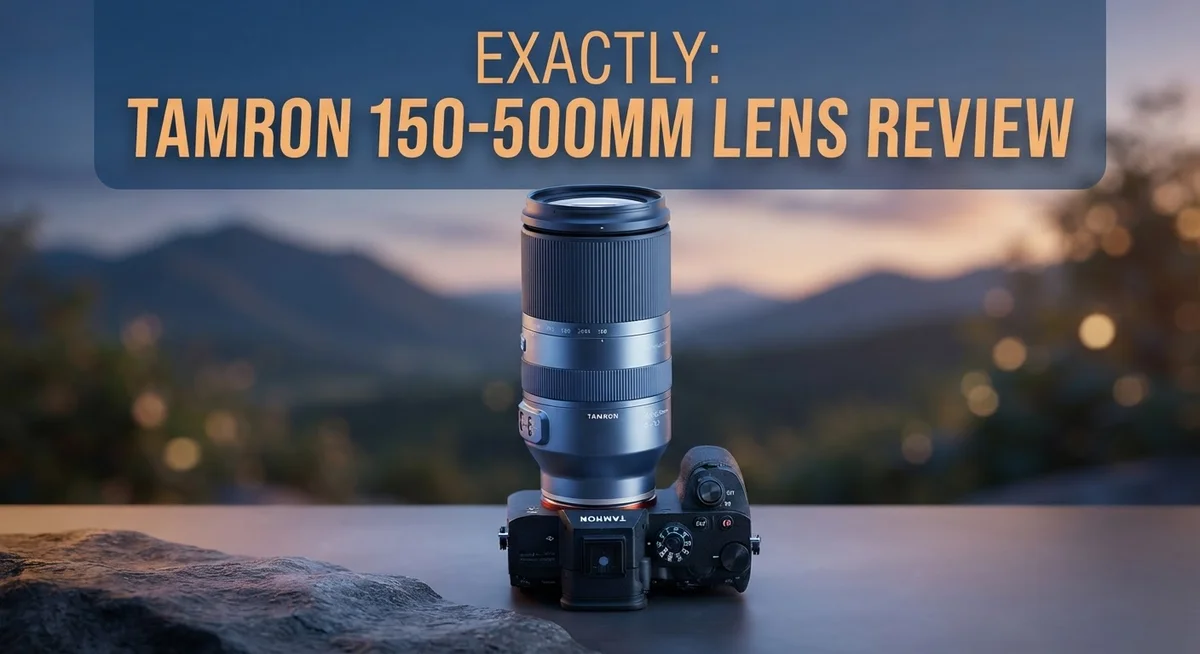
Tamron 150-500mm F/5-6.7 Di III VC VXD Lens Review 2026
Do you want a lens that brings distant subjects close? The Tamron 150-500mm F/5-6.7 Di III VC VXD might be your answer. This lens covers a huge zoom range for wildlife and sports.
Many photographers search for a telephoto lens that performs well without feeling heavy. This Tamron model fits that need perfectly. It stays compact compared to bulkier rivals like the Sony 200-600mm.
The build quality feels solid in your hands. It does not feel like a cheap third party product at all.
Autofocus speed also impresses many users. The VXD motor tracks moving subjects with great accuracy.
In this review, we will explore every feature closely. You will learn about its sharpness, stabilization, and real world handling. Let’s see if this lens deserves a spot in your camera bag.
In a Nutshell
This lens gives you serious reach without extra bulk. Here is what stands out most:
-
The 150-500mm zoom range lets you capture wildlife, sports, and distant scenes with ease. You get flexibility for many shooting styles.
-
VXD autofocus locks onto subjects fast. It tracks movement smoothly, so you rarely miss a shot.
-
Vibration Compensation keeps your shots steady. Even handheld shots at 500mm look sharp and clear.
-
Compared to rivals like the Sony 200-600mm and Nikon Z 180-600mm, this lens feels lighter. You can carry it for long hours without strain.
-
Image quality stays crisp across most of the zoom range. Details pop, and colors look natural.
-
The variable aperture does narrow as you zoom in. This means less light at 500mm, especially in dim settings.
-
On some high-resolution APS-C cameras, sharpness dips slightly. Full-frame users will notice this less.
Overall, this lens blends portability with strong performance. It suits photographers who want reach without sacrificing comfort.
Optical Design and Focal Range
The optical design of the Tamron 150-500mm F/5-6.7 Di III VC VXD centers on delivering exceptional reach without forcing you to carry excessive weight. The lens spans a 150-500mm focal range, giving you flexibility across wildlife, sports, and distant landscape work.
The variable aperture starts at F/5 at 150mm and closes to F/6.7 at the telephoto end. This design choice keeps the lens compact and manageable. You still get enough light for most shooting situations, though lower light work may require higher ISO or slower shutter speeds.
Tamron equipped this lens with BBAR-G2 coating technology. This coating reduces reflections and flare, helping you achieve clean, high-contrast images even when shooting toward bright light sources. The circular aperture produces smooth bokeh when you want blurred backgrounds.
The optical formula includes internal focusing via the VXD autofocus motor. This approach keeps the lens length constant as you focus, which benefits tripod users and video creators. The motor itself responds quickly and tracks moving subjects with impressive accuracy.
Sharpness remains excellent across most of the zoom range. Wide open at F/5, the lens delivers crisp detail at the center and edges. At longer focal lengths, slight softening occurs on high-resolution APS-C sensors like Fujifilm’s X-Trans systems, though full-frame users see minimal difference.
The 70-degree zoom ring rotates smoothly without grinding or grinding sounds. This smooth operation makes it easy to adjust framing quickly during fast-paced shooting. The ring’s damping feels professional grade, not loose or overly stiff.
Vibration Compensation (VC) technology works alongside your camera’s in-body stabilization. Together, they provide effective handholding at shutter speeds several stops slower than you’d normally risk. This combination proves especially valuable when zoomed to 500mm.
The lens accepts 67mm filters, making it simple to add circular polarizers or ND filters for specialized shooting. Overall, the optical design balances reach, portability, and image quality in a way that appeals to photographers who refuse to compromise on any single factor.

- Mastering the magical world of 500mm ultra-telephoto zoom lenses
- Enjoy comfortable handheld shooting with a compact full-featured, full-frame 500mm lens
- Uncompromising high image quality throughout the entire zoom range
Last update on 2026-09-28 / Affiliate links / Images from Amazon Product Advertising API
Autofocus Performance and Image Stabilization
The VXD autofocus motor in this lens delivers fast and accurate tracking. It locks onto moving subjects quickly, making it reliable for wildlife and sports photography. The motor operates nearly silently, so you won’t hear grinding sounds during continuous shooting.
Autofocus speed compares well against premium competitors. When tested alongside the Sony 200-600mm, the Tamron keeps pace without hesitation. This performance matters when you’re chasing birds in flight or tracking athletes on a field.
The autofocus also maintains accuracy across the entire 150-500mm range. At 150mm, it snaps to focus instantly. Even at 500mm, the motor responds smoothly without hunting or overshooting. This consistency means you spend less time adjusting and more time capturing moments.
Vibration Compensation (VC) works as a second layer of protection against camera shake. The stabilization system reduces blur effectively, especially when shooting handheld at longer focal lengths. At 500mm, steady hands still matter, but VC gives you extra margin for error.
VC pairs well with your camera’s in-body stabilization. Many modern mirrorless cameras offer their own stabilization, and combining both systems creates a powerful anti-shake solution. You’ll notice sharper images in low light or when using slower shutter speeds.
The circular aperture design helps with autofocus performance too. It allows light to pass through smoothly, giving the camera’s sensor clearer information for focusing calculations. This design choice contributes to the lens’s overall responsiveness.
One thing to remember: the variable aperture narrows from F/5 to F/6.7 as you zoom. This means autofocus performance remains consistent, but light gathering decreases at the telephoto end. In bright daylight, this matters less. In dim conditions, you may need a faster shutter speed or higher ISO.
Overall, the autofocus and stabilization systems work together seamlessly. They make this lens practical for handheld shooting in real-world conditions. Whether you’re photographing distant wildlife or fast-moving sports, these features keep your shots sharp and your workflow smooth.
Build Quality and Ergonomics
The Tamron 150-500mm feels solid in your hands from the moment you pick it up. The barrel construction uses quality materials that resist flex and wobble. You won’t hear creaks or rattles when you zoom through the entire range. The lens maintains its rigidity even during extended shooting sessions.
The grip zone sits in the right spot for most hand sizes. Your fingers rest naturally on the zoom ring without strain. The rubber coating provides good traction, even when your hands are wet or sweaty. Balancing the lens on a camera body feels natural and well-distributed.
The zoom ring operates with smooth, consistent resistance throughout its full rotation. You can rack focus from 150mm to 500mm without grinding or hesitation. The 70 degree rotation angle means you don’t need excessive wrist movement to zoom. This design reduces fatigue during long shooting days.
The focus ring sits near the front of the lens barrel. It rotates with precision and offers tactile feedback as you make adjustments. The ring diameter feels comfortable whether you use your thumb or fingers for manual focus adjustments.
Weather sealing comes into play here too. Rubber gaskets line the barrel where sections connect. The lens resists dust and moisture better than many third-party competitors. You can shoot in light rain or dusty conditions without worry.
The 67mm filter thread accepts standard accessories easily. You can attach circular polarizers, ND filters, or protective glass without complications. The front element doesn’t rotate, which matters if you use polarizing filters.
Weight distribution deserves mention as well. The lens sits forward of your camera’s balance point, but not excessively. Your camera’s grip handles the heft without requiring excessive arm strength. Tripod mounting feels stable with the included collar.
The overall build quality punches above typical third-party standards. Every component feels intentional and durable. You sense that Tamron invested in solid engineering rather than cutting corners. This lens will survive years of regular use and occasional rough handling.
Top 3 Alternatives
Sigma 150-600mm Contemporary

- Canon EF Lens/Full Frame
- Aperture Range: f/5-6.3 to 22
- One FLD and Three SLD Elements
Last update on 2026-09-11 / Affiliate links / Images from Amazon Product Advertising API
The Sigma 150-600mm Contemporary lens offers exceptional reach for wildlife and sports photography. This lens delivers sharp images across its entire zoom range, making it a solid choice for photographers who need versatility.
The build quality feels premium. The lens includes optical stabilization, which helps you capture steady shots even in challenging light. The autofocus system responds quickly to moving subjects. Many users appreciate the relatively lightweight design compared to other super-telephoto options.
The Contemporary version balances performance with portability. You get professional-grade optics without carrying excessive weight. The zoom range covers most scenarios where you need distance without switching lenses.
Canon RF 100-500mm

- High Performance L-series versatile Super-Telephoto Zoom RF Lens.
- Optical Image Stabilization with up to 5 stops* of Shake Correction.
- Three Image Stabilization Modes (Standard, Panning, and during exposure only) Provided for Creative Versatility.

Last update on 2026-09-11 / Affiliate links / Images from Amazon Product Advertising API
Canon’s RF 100-500mm lens brings native compatibility to Canon’s mirrorless ecosystem. This lens performs exceptionally well on Canon R5 and R6 bodies, where it benefits from the camera’s advanced autofocus system.
The optical performance impresses across the board. You get crisp details and accurate colors from 100mm all the way to 500mm. The stabilization works effectively, allowing handheld shooting in various conditions. The lens feels balanced and comfortable during extended shooting sessions.
The RF mount design enables faster communication between lens and camera. This integration produces snappier autofocus and more responsive tracking. Canon users find this lens particularly valuable for professional work.
Nikon Z 100-400mm

- Camera compatibility: Compatible with FX and DX format Nikon Z series mirrorless (100mm-400mm on an FX format Z camera...
- Vibration Reduction: Achieves up to 5.5 stops of compensation*. On full-frame Z cameras like Z 5, Z 6, Z 6II, Z 7 or Z...
- Autofocus: Two high-speed STM stepping motors move in sync with each other in near silence for thrilling close focusing...
Last update on 2026-09-11 / Affiliate links / Images from Amazon Product Advertising API
Nikon’s Z 100-400mm lens integrates seamlessly with Nikon’s Z-series cameras. This native Z-mount lens delivers outstanding optical quality and reliable performance.
The compact design makes this lens surprisingly portable for its capabilities. Nikon engineered it to be lighter than many competitors, which matters during long shooting days. The autofocus system tracks subjects smoothly and accurately.
The lens excels in various lighting conditions. You get consistent sharpness and minimal distortion throughout the zoom range. Professional photographers appreciate the reliable performance and build durability that Nikon consistently delivers.
Sharpness and Image Quality Across Sensors
When you mount the Tamron 150-500mm on a full-frame Sony camera, sharpness peaks from 200mm to 400mm. The lens delivers crisp detail and minimal aberrations in this sweet spot. Beyond 400mm, edge sharpness remains solid, though you’ll notice a slight softness creep in at 500mm.
The BBAR-G2 coating plays a key role here. It reduces internal reflections and flare, which keeps contrast high across the entire zoom range. This means your images stay punchy and vibrant, even in backlit situations.
On APS-C sensors, the story shifts slightly. Sony APS-C bodies like the a6700 show excellent results throughout the range. However, Fujifilm X-mount users will notice sharpness dips a touch on high-resolution sensors like the X-H2S. The extra pixel density reveals minor softness that full-frame users won’t detect. This isn’t a flaw. It’s simply how high-megapixel APS-C sensors interact with third-party glass.
The VXD autofocus motor keeps sharpness consistent during tracking shots. Fast, accurate focus means you rarely miss the critical moment. Paired with the VC image stabilization, handheld shots at 500mm stay tack-sharp at shutter speeds as low as 1/125th of a second. This stability advantage matters when you’re shooting birds, wildlife, or distant subjects.
Chromatic aberration remains minimal across all focal lengths. The circular aperture helps here too. It renders out-of-focus areas smoothly, which enhances perceived sharpness in the focal plane.
One more detail: the internal focusing design means the lens barrel doesn’t extend or rotate during autofocus. This keeps the front element steady, reducing internal element movement that could degrade sharpness. The result is reliable, repeatable image quality whether you’re shooting at 150mm or maxing out at 500mm.
Portability and Handling
The Tamron 150-500mm lens strikes an excellent balance between power and practicality. You get a 350mm zoom range packed into a body that feels genuinely portable compared to its full-frame competitors.
Weight sits at a reasonable level for extended shooting sessions. The lens doesn’t fatigue your arms during wildlife photography or sports events. The barrel diameter stays slim enough that you can tuck it into most camera bags without excessive bulk. This portability matters when you’re hiking to remote locations or moving between shooting positions.
Handling characteristics shine through in everyday use. The zoom ring rotates smoothly with consistent resistance, so you won’t accidentally drift focal lengths mid-shot. Your thumb finds natural purchase on the ribbed surface. The focus ring placement near the front keeps your hand position stable during manual focus adjustments. Balance improves significantly when you use a tripod collar, which this lens includes.
The lens extends slightly during focusing, but the internal design means the barrel stays fixed. This stability helps when you’re shooting handheld in challenging light. Your grip remains secure throughout the zoom range, from 150mm to 500mm.
Weather sealing adds practical confidence to your kit. You can shoot in light rain or dusty conditions without constant worry. The rubber gaskets around the barrel and filter threads keep moisture out effectively.
One consideration: the lens weighs enough that monopod support becomes attractive during longer sessions. This isn’t a featherweight telephoto, but it’s noticeably lighter than the Sony 200-600mm alternative. Fujifilm X-mount users gain an advantage here since APS-C sensors amplify the effective reach without adding weight.
The 67mm filter thread accepts standard accessories, so you’re not locked into proprietary solutions. Circular polarizers and ND filters attach without adapters or extensions. This simplicity keeps your kit lean and functional.
Overall, the Tamron 150-500mm delivers serious reach without demanding excessive physical commitment. You can carry it comfortably, handle it intuitively, and pack it efficiently. This lens rewards active photographers who value both performance and practicality.
Pros and Cons
Pros
- Fast and accurate autofocus that rivals Sony’s native 200-600mm lens
- Compact and portable compared to competing telephoto zooms from Sony and Nikon
- Excellent sharpness from 200mm to 400mm on full-frame sensors
- Sturdy construction that feels premium despite being a third-party option
- Effective vibration compensation keeps images sharp during handheld shooting
Cons
- Aperture narrows from F/5 to F/6.7 as you zoom toward the telephoto end
- Sharpness drops slightly when used on high-resolution APS-C sensors like Fujifilm bodies
- Lens weight makes monopod support attractive for extended shooting sessions
Who Should Buy It
The Tamron 150-500mm serves specific shooter types exceptionally well. If you shoot wildlife, sports, or birds, this lens becomes your reliable partner. The 150-500mm range gives you flexibility to frame subjects from various distances without constantly swapping lenses.
Professional and semi-professional photographers benefit most from this lens. You get fast autofocus that tracks moving subjects with confidence. The VXD motor keeps pace with action sequences. Your keeper rate climbs when autofocus performs this reliably.
Sony E-mount users find particular value here. You gain access to serious telephoto reach without being locked into expensive native options. The compact size means you can travel with this lens more comfortably than larger competitors. Fujifilm X-mount shooters gain similar advantages on their system.
Travel photographers appreciate the balance this lens strikes. You want reach without carrying excessive weight. The Tamron delivers 500mm of focal length without the bulk of competing telephoto zooms. Your camera bag stays manageable during extended trips.
Enthusiasts upgrading from kit lenses should consider this carefully. The jump to 500mm telephoto reach opens creative possibilities. You can isolate subjects with compression. You can capture distant details clearly. The learning curve remains gentle because autofocus and stabilization do heavy lifting for you.
Monopod users find this lens particularly rewarding. While handheld shooting works, extended sessions benefit from support. The vibration compensation helps, but mechanical stability improves your results further.
Budget-conscious professionals gain access to telephoto capability without premium pricing structures. You receive premium build quality and optical performance. The third-party origin never compromises the output you capture.
Hybrid shooters who mix video and stills appreciate the smooth zoom ring. The 70-degree rotation feels natural during operation. Your footage remains steady thanks to effective image stabilization.
This lens doesn’t suit every shooter. If you demand F/4 constant aperture or shoot exclusively APS-C high-resolution sensors, alternatives exist. If you rarely use telephoto focal lengths, this represents overkill. But for serious reach combined with practical handling, the Tamron 150-500mm addresses real shooting needs effectively.
Final Verdict
The Tamron 150-500mm earns its place as a strong telephoto choice for Sony and Fujifilm shooters. It combines sharp optics with fast autofocus in a package that won’t weigh down your camera bag.
This lens shines brightest when you need reach without bulk. Wildlife photographers get close to distant subjects. Sports shooters track fast action with confidence.
Image quality stays consistent across most of the zoom range. You get results that rival lenses costing more from bigger brand names.
The variable aperture remains the main tradeoff. Low light performance suffers slightly at 500mm compared to fixed aperture options.
Who should buy this lens?
Choose the Tamron 150-500mm if portability matters to you. Choose it if you shoot mostly in good light or use it alongside other fast primes.
Who should look elsewhere?
Skip this lens if you shoot low light action constantly. A fixed aperture telephoto might serve you better in those specific conditions.
Compared to the Sony 200-600mm and Nikon Z 180-600mm, the Tamron holds its own in autofocus speed and sharpness. It simply asks less from your back and shoulders during long shoots.
The Fujifilm X-mount version performs well too, though full-frame Sony bodies show slightly cleaner results at the telephoto end.
This lens fits photographers who value versatility over specialized performance. It handles birds, sports, portraits, and travel scenarios with equal competence.
Third party lenses often carry a stigma. The Tamron 150-500mm breaks that pattern through solid build quality and reliable performance.
If you want telephoto reach without carrying a tripod everywhere, this lens deserves serious consideration. It delivers professional results in a body that respects your mobility and your comfort during real world shooting sessions.
Frequently Asked Questions
Does the Tamron 150-500mm work with both Sony and Fujifilm cameras?
Yes, it does. Tamron makes this lens in both Sony E-mount and Fujifilm X-mount versions. Sony full-frame bodies show slightly cleaner results at the telephoto end. Fujifilm X-mount users still get excellent performance, though high-resolution APS-C sensors may show a small sharpness reduction compared to full-frame.
How does autofocus speed compare to Sony’s native 200-600mm?
The VXD autofocus motor performs at a comparable level. You get fast and accurate focusing that tracks moving subjects well. Most shooters won’t notice a meaningful difference in real-world shooting situations.
What’s the main tradeoff with this lens?
The variable aperture is the biggest consideration. It starts at F/5 at 150mm but narrows to F/6.7 when you zoom to 500mm. This means less light reaches your sensor at the telephoto end. Low-light action photography becomes trickier. If you shoot mostly in daylight or well-lit conditions, this rarely causes problems.
Should I use a monopod with this lens?
Many shooters find monopod support helpful during extended sessions. The lens weight makes handheld shooting manageable but not effortless. A monopod reduces arm fatigue and helps you maintain sharp framing for longer periods. It’s not required, but it’s a smart companion for this telephoto.
Is the image stabilization effective?
Yes, the VC system works well. It keeps handheld shots sharp during normal shooting. Combined with good autofocus, you get reliable results without needing a tripod for most situations.

Kashvi is a passionate bird enthusiast and nature lover who has been fascinated by the world of birds for years. With a keen eye for detail and a love for learning, Kashvi is dedicated to sharing her knowledge and insights with fellow bird enthusiasts on Avian Enthusiasts. Through her engaging and informative articles, Kashvi aims to inspire others to join her in exploring the fascinating world of birds and to promote a deeper appreciation for these incredible creatures.


