Baby Eastern Bluebirds: Complete Egg to Fledgling Journey
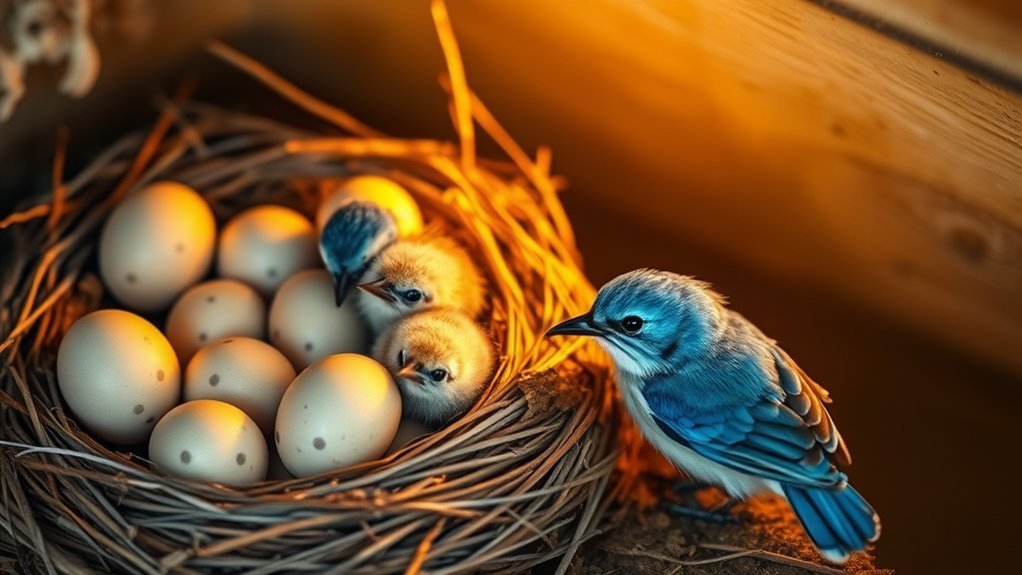
As you watch baby Eastern Bluebirds grow, you see both parents actively caring for their young. The mother builds a nest, creating a safe space for her eggs. The father helps by finding food and protecting the nest. Together, they support their young through the important stages of development. Next, the eggs will hatch, leading to new challenges for the baby birds as they prepare to leave the nest and survive in the wild. Their growth and learning are essential for their future.
Key Takeaways
Eastern Bluebirds create nests using grasses and feathers. This provides a safe and warm place for their eggs and chicks. The female bluebird incubates the eggs for 12 to 14 days. During this time, she keeps the eggs at the right temperature for embryo development.
When the chicks hatch, they have closed eyes and soft downy feathers. They instinctively look for warmth and food from their siblings right after hatching. The male bluebird plays an important role too. He feeds the female during incubation and guards the nest, which helps the chicks grow stronger after they hatch.
As the chicks grow, they become fledglings. They learn to fly, find food, and interact with others. These skills are crucial for their survival in the wild.
The Nesting Process
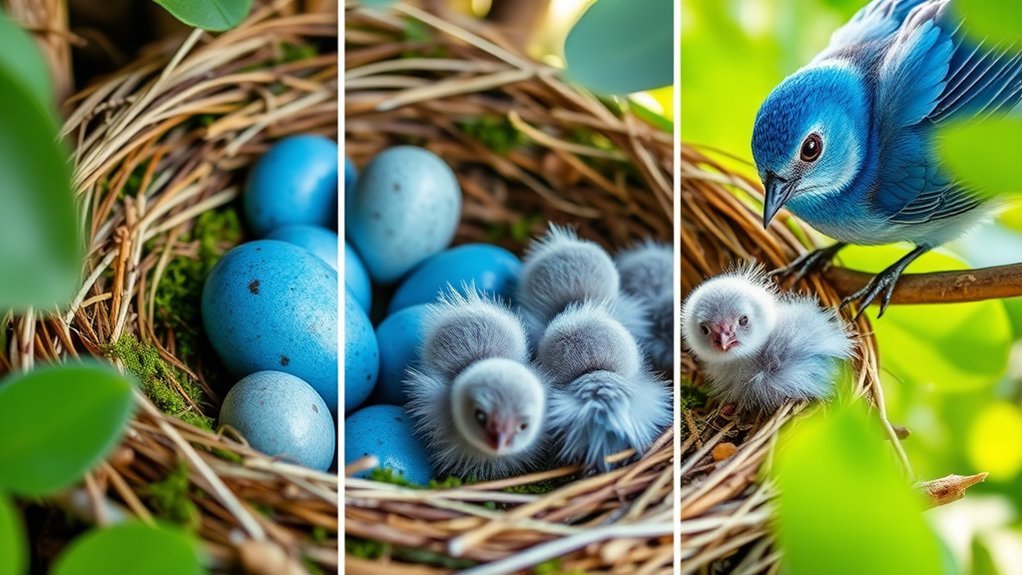
The nesting process for Eastern Bluebirds follows a clear sequence. First, they choose a safe location, such as tree cavities, woodpecker holes, or birdhouses. This site selection is crucial for their success.
After finding the right spot, they gather materials like grasses, pine needles, and feathers. These items help create a comfortable and insulated nest, which is important for keeping their young safe and warm.
Observing these actions shows how each step contributes to a stable environment for the birds. Their attention to detail strengthens their bond and supports the growth of future generations.
This process isn't only important for breeding but also showcases their commitment to family and survival.
The Role of the Female Bluebird
The female Eastern Bluebird plays an essential role in nesting and incubation. She gathers materials like grass, feathers, and twigs to build a safe and comfortable nest.
Her careful selection of the nesting location ensures the eggs are secure. During incubation, she sits on the eggs to keep them warm and shield them from danger.
Her nurturing behavior helps create a safe environment for her future chicks. Observing her commitment during this time is impressive.
The Laying of the Eggs
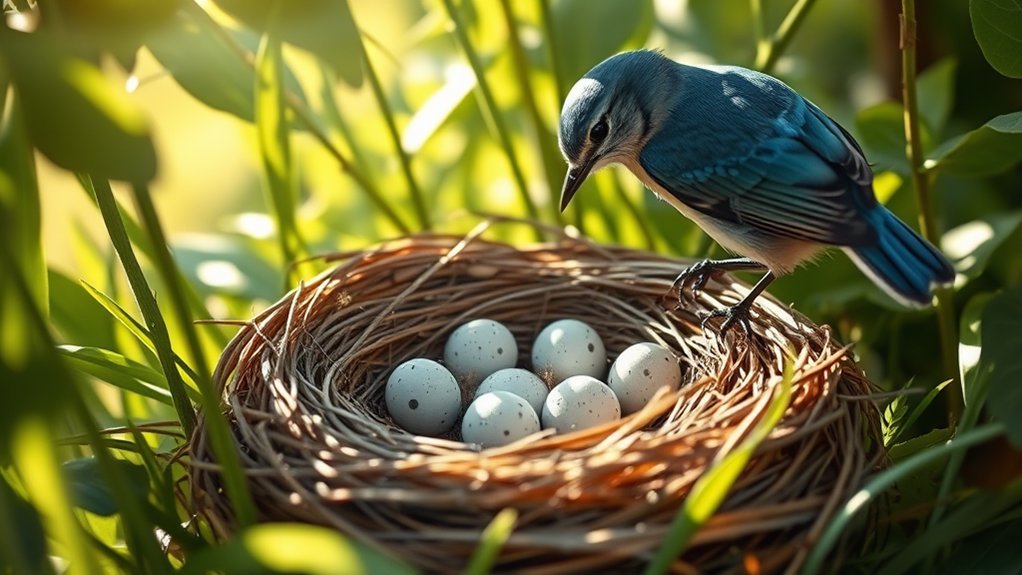
After the female Eastern Bluebird finds a safe spot, she begins to lay her eggs. This happens in late spring or early summer.
Here are some key details about the eggs:
- Color: The eggs are light blue, with some having small brown spots.
- Size: Each egg is about 2.5 centimeters long, just right for the chicks.
- Shape: The eggs have a slight oval shape, which helps them fit well in the nest.
- Number: She typically lays 3 to 7 eggs, balancing survival with the resources available.
With each egg laid, you can sense her commitment to caring for her future chicks.
Incubation Period
After the last egg is laid, the female Eastern Bluebird starts the important incubation period, lasting about 12 to 14 days.
During this time, she keeps the eggs at a consistent temperature of 95 to 100 degrees Fahrenheit. She rarely leaves the nest because she knows that even small temperature drops can affect the growth of the embryos.
As she turns the eggs, she ensures they receive even warmth, demonstrating her strong connection to the future chicks.
Knowing this incubation period helps us understand nature's process better. You can feel the excitement building as the female bluebird prepares to welcome new life.
The Hatching Process
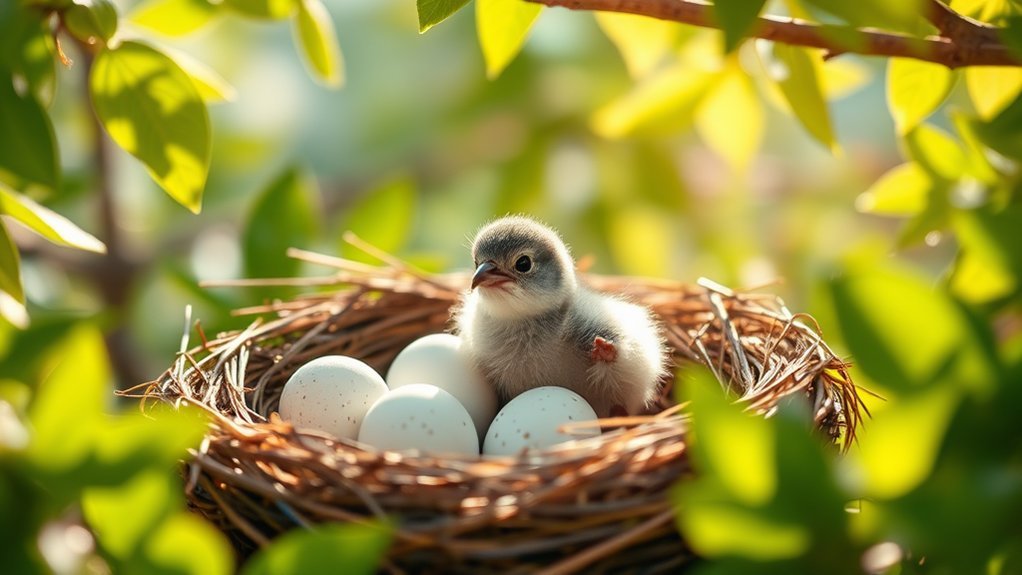
The hatching process for baby Eastern Bluebirds occurs between days 12 and 14 of incubation. Several important factors contribute to this event:
- Hatching conditions must be ideal to help the chicks break free.
- The egg temperature should stay constant, around 37–38°C (98.6–100.4°F).
- The embryos begin to move, indicating they're ready to hatch.
- The inner membranes soften, allowing the chicks to crack their way out.
During this time, the parents watch the environment closely. They ensure that humidity and warmth are at the right levels.
This careful attention creates a safe space for the chicks, preparing them for life outside the egg. This process strengthens the bond between the parents and their young, promoting a sense of belonging in the Eastern Bluebird community.
Characteristics of Hatchlings
Hatchlings are delicate yet strong animals that emerge right after they break free from their eggs. They've soft, downy feathers that are usually gray or light brown. This color helps them blend in while they're in their nest.
Their eyes are closed for the first few days, which shows how vulnerable they are.
Hatchlings move instinctively, often scrambling toward their siblings for warmth and safety. They open their beaks wide, begging for food. This behavior is driven by their strong survival instinct.
Even though hatchlings are fragile, they adapt quickly using their natural behaviors to find nourishment and comfort.
Watching these small creatures helps us appreciate the beautiful journey of life in the Eastern Bluebird.
The Importance of Parental Care
Parental care is crucial for the survival and growth of Eastern Bluebird hatchlings. Both parents play vital roles, demonstrating behaviors that are essential for their young.
Their actions include:
- Building a secure nest for safety.
- Keeping the nest clean to avoid disease.
- Brooding the chicks to provide warmth.
- Protecting the hatchlings from predators.
This involvement helps strengthen the bond between the parents and their chicks. It supports the emotional and social growth of the hatchlings.
Such nurturing behaviors ensure immediate survival and create a sense of belonging and security. This is important for overcoming future challenges in the wild.
Observing these caring actions highlights a fascinating aspect of nature.
Feeding and Nutrition for Growth
Feeding is essential for the growth of Eastern Bluebird chicks. Both parents work hard to find food for their young. They look for insects, worms, and berries in shrubs and grass. These foods provide the protein and energy needed for bone and muscle growth. Each meal is vital because the survival of the chicks depends on the quality of food they receive during this important time.
The parents work together well to ensure that each chick is fed. They communicate to prevent any chick from going hungry. This teamwork not only helps their chicks grow strong but also creates a safe and caring environment for them.
The chicks benefit from this supportive atmosphere and thrive as a result.
Developing Feathers and Skills
As the chicks grow, their feathers develop, marking an important step toward flight readiness.
You'll see their soft down turn into bright feathers, signaling their upcoming independence.
During this time, pay attention to these signs of feather growth and fledging abilities:
- Color Shift: Bright colors show health and readiness.
- Feather Development: The appearance of wing and tail feathers means they're getting ready to fly.
- Preening Habits: When they preen, they improve their feather quality.
- Wing Flapping: Flapping wings builds muscle and confidence for flying.
Each sign of feather development and fledgling skill supports their growth into strong, independent birds ready to explore.
Social Interactions Among Siblings
As the chicks grow, their social interactions with each other become important. You'll see how they interact through play, communication, and competition for food and attention from their parents.
Stronger chicks often take more food during feeding times, which can create tension. Watching this competition is interesting; it helps them develop survival skills and builds bonds as they face challenges together.
Living closely in their nest increases their awareness of each other and encourages them to establish a pecking order. These interactions are crucial for shaping their future social behaviors as they mature into fledglings and adults.
The Transition to Fledging
As chicks develop, they begin to shift from depending on their parents to becoming independent. This change, known as fledging, comes with specific behaviors that show they're ready to fly:
- Wing Flapping: Chicks start to flap their wings, which helps them build strength and confidence.
- Perching Practice: They practice balancing on branches, improving their coordination.
- Vocalizations: Chicks increase their calls, communicating with both siblings and parents, which strengthens their social ties.
- Exploratory Movements: They begin to explore areas beyond the nest, driven by curiosity.
These behaviors prepare the chicks for flight. They enhance their physical abilities and reinforce their connections to their family and environment during this important time.
The First Flight Experience
The first flight of a baby Eastern Bluebird is a key moment in its life. This event highlights its physical abilities and the natural urge for independence.
As you observe, the chick stands at the edge of the nest. You can see its struggle between fear and excitement. Guided by instincts, the fledgling spreads its wings and feels the breeze.
The first flight is both exciting and scary. It tests the bird's determination and promotes its growth.
The fledgling flutters awkwardly, landing close by before trying again. This jump into a larger space shows its reliance on natural skills. It moves from a safe nestling to an adventurous fledgling.
In this moment, you see how vital this experience is in shaping its future. You witness the journey of bravery and discovery as it learns to embrace the sky.
The Role of the Male Bluebird
As Eastern Bluebird chicks prepare for their first flights, the male bluebird's role becomes clear. His duties are vital for his family's survival.
- Courtship: The male attracts the female with songs and displays to form a pair bond.
- Nest protection: He guards the nest and feeds the female during incubation.
- Territory defense: The male protects his territory from intruders, creating a safe home for his young.
- Fledgling care: After the chicks hatch, he continues to feed and guide them as they learn to survive.
Each action is important and highlights the male's vital role in his family's success.
The Journey to Independence
Eastern Bluebird fledglings leave their nests to begin their journey to independence. They take their first flights and face important milestones that help them survive.
At first, they learn to fly by watching their parents and practicing on branches to build their confidence.
Next, they acquire the skill of foraging. They identify insects and berries by mimicking their parents.
Social interactions are crucial as fledglings connect with other young birds, improving their communication skills.
As they gain experience, they start to distance themselves from their parents. This journey highlights their ability to adapt and thrive in nature.
Frequently Asked Questions
How Long Do Eastern Bluebirds Typically Live in the Wild?
Eastern bluebirds typically live up to six years in the wild. Their lifespan can be influenced by factors such as predators and habitat conditions. These birds show resilience and adaptability in their environment, which is interesting to observe.
What Predators Pose a Threat to Bluebird Nests or Young Birds?
Bluebird nests face threats from predators like snakes, raccoons, and house cats. These animals can harm young bluebirds and their eggs. Understanding the behavior of these predators is important for protecting bluebird nests and ensuring the survival of the chicks. By being aware of these risks, you can help create a safer environment for bluebirds.
How Do Environmental Factors Affect Bluebird Breeding Success?
Environmental factors, such as climate change and habitat destruction, significantly influence bluebird breeding success. Warmer temperatures can affect food sources for bluebirds. When habitats are lost, there are fewer places for them to nest. These changes can reduce their reproductive rates and impact the stability of bluebird populations.
Understanding these factors helps us recognize what bluebirds need to thrive. Protecting their habitats and addressing climate change are essential for supporting their breeding and overall health. By taking action, we can help ensure bluebirds continue to flourish in our landscapes.
Are Eastern Bluebirds Monogamous or Do They Have Multiple Partners?
Eastern bluebirds form monogamous pairs during the breeding season. They engage in courtship behaviors and special mating rituals that strengthen their relationship. These birds remain loyal to their partners during the nesting period, which helps create a stable family unit. Observing their interactions can be both fascinating and rewarding.
What Habitats Do Eastern Bluebirds Prefer for Nesting and Feeding?
Eastern Bluebirds prefer open woodlands, fields, and pastures for nesting. They use tree hollows or artificial boxes as nesting sites. For feeding, they look for insects and berries in grassy areas. This habitat provides the essentials they need to thrive.

Kashvi is a passionate bird enthusiast and nature lover who has been fascinated by the world of birds for years. With a keen eye for detail and a love for learning, Kashvi is dedicated to sharing her knowledge and insights with fellow bird enthusiasts on Avian Enthusiasts. Through her engaging and informative articles, Kashvi aims to inspire others to join her in exploring the fascinating world of birds and to promote a deeper appreciation for these incredible creatures.